Hawaii
Hawaii Celebrates Blessing of New Water Tank at Schofield Barracks


SCHOFIELD BARRACKS, Hawaii — Representatives from U.S. Army Garrison Hawaii and the U.S. Army Corps of Engineers participate in a Maile ceremony for a new water tank, April 17, 2025. The new concrete tank replaces the old decommissioned steel tank that was out of service for extended period of time, will support the needs of 35,000 soldiers and their families.
VIEW ORIGINAL

SCHOFIELD BARRACKS, Hawaii — Representatives from U.S. Army Garrison Hawaii and the U.S. Army Corps of Engineers participate in a Maile ceremony for a new water tank, April 17, 2025. The new concrete tank replaces the old decommissioned steel tank that was out of service for extended period of time, will support the needs of 35,000 soldiers and their families.
VIEW ORIGINAL
SCHOFIELD BARRACKS, Hawaii — Representatives from U.S. Army Garrison Hawaii and the U.S. Army Corps of Engineers participate in a Maile ceremony for a new water tank, April 17, 2025. The new concrete tank replaces the old decommissioned steel tank that was out of service for extended period of time, will support the needs of 35,000 soldiers and their families.
VIEW ORIGINAL
SCHOFIELD BARRACKS, Hawaii — Representatives from U.S. Army Garrison Hawaii and the U.S. Army Corps of Engineers participate in a Maile ceremony for a new water tank, April 17, 2025. The new concrete tank replaces the old decommissioned steel tank that was out of service for extended period of time, will support the needs of 35,000 soldiers and their families.
VIEW ORIGINAL
SCHOFIELD BARRACKS, Hawaii — Representatives from U.S. Army Garrison Hawaii and the U.S. Army Corps of Engineers participate in a Maile ceremony for a new water tank, April 17, 2025. The new concrete tank replaces the old decommissioned steel tank that was out of service for extended period of time, will support the needs of 35,000 soldiers and their families.
Highlights include acknowledgments of the project’s completion, actions taken during a previous water crisis, and the significance of the water infrastructure improvements. Key speakers include Col. Rachel Sullivan and Lt. Col. Adrian Biggerstaff, who both expressed gratitude to the engineers, plumbers, and other essential workers involved. Additionally, Maj. (CH) Kim performed an invocation, and Kahu Kordell Kekoa led a traditional Hawaiian blessing and untying of the lei ceremony, emphasizing the cultural and practical importance of water.
VIEW ORIGINAL
SCHOFIELD BARRACKS, Hawaii — Representatives from U.S. Army Garrison Hawaii and the U.S. Army Corps of Engineers participate in a Maile ceremony for a new water tank, April 17, 2025. The new concrete tank replaces the old decommissioned steel tank that was out of service for extended period of time, will support the needs of 35,000 soldiers and their families.
Highlights include acknowledgments of the project’s completion, actions taken during a previous water crisis, and the significance of the water infrastructure improvements. Key speakers include Col. Rachel Sullivan and Lt. Col. Adrian Biggerstaff, who both expressed gratitude to the engineers, plumbers, and other essential workers involved. Additionally, Maj. (CH) Kim performed an invocation, and Kahu Kordell Kekoa led a traditional Hawaiian blessing and untying of the lei ceremony, emphasizing the cultural and practical importance of water.
VIEW ORIGINAL
SCHOFIELD BARRACKS, Hawaii — Representatives from U.S. Army Garrison Hawaii and the U.S. Army Corps of Engineers participate in a ribbon-cutting and Maile ceremony for a new water tank, April 17, 2025. The new concrete tank replaces the old decommissioned steel tank that was out of service for extended period of time, will support the needs of 35,000 soldiers and their families.
Highlights include acknowledgments of the project’s completion, actions taken during a previous water crisis, and the significance of the water infrastructure improvements. Key speakers include Col. Rachel Sullivan and Lt. Col. Adrian Biggerstaff, who both expressed gratitude to the engineers, plumbers, and other essential workers involved. Additionally, Maj. (CH) Kim performed an invocation, and Kahu Kordell Kekoa led a traditional Hawaiian blessing and untying of the lei ceremony, emphasizing the cultural and practical importance of water.
VIEW ORIGINAL
SCHOFIELD BARRACKS, Hawaii — Representatives from U.S. Army Garrison Hawaii and the U.S. Army Corps of Engineers participate in a Maile ceremony for a new water tank, April 17, 2025. The new concrete tank replaces the old decommissioned steel tank that was out of service for extended period of time, will support the needs of 35,000 soldiers and their families.
Highlights include acknowledgments of the project’s completion, actions taken during a previous water crisis, and the significance of the water infrastructure improvements. Key speakers include Col. Rachel Sullivan and Lt. Col. Adrian Biggerstaff, who both expressed gratitude to the engineers, plumbers, and other essential workers involved. Additionally, Maj. (CH) Kim performed an invocation, and Kahu Kordell Kekoa led a traditional Hawaiian blessing and untying of the lei ceremony, emphasizing the cultural and practical importance of water.
VIEW ORIGINAL
SCHOFIELD BARRACKS, Hawaii — Representatives from U.S. Army Garrison Hawaii and the U.S. Army Corps of Engineers participate in a Maile ceremony for a new water tank, April 17, 2025. The new concrete tank replaces the old decommissioned steel tank that was out of service for extended period of time, will support the needs of 35,000 soldiers and their families.
Highlights include acknowledgments of the project’s completion, actions taken during a previous water crisis, and the significance of the water infrastructure improvements. Key speakers include Col. Rachel Sullivan and Lt. Col. Adrian Biggerstaff, who both expressed gratitude to the engineers, plumbers, and other essential workers involved. Additionally, Maj. (CH) Kim performed an invocation, and Kahu Kordell Kekoa led a traditional Hawaiian blessing and untying of the lei ceremony, emphasizing the cultural and practical importance of water.
VIEW ORIGINAL
SCHOFIELD BARRACKS, Hawaii — In a ceremony rooted in tradition, partnership, and shared responsibility, U.S. Army Garrison Hawaii commemorated a new 2-million-gallon concrete water tank—a key milestone in the Army’s $1.2 billion, 10-year plan to modernize water infrastructure across its Oahu installations.
On behalf of the garrison, Deputy to the Garrison Commander David Roudybush welcomed guests and opened the event, which featured spiritual blessings from Capt. (CH) David Kim and Kahu Kordell Kekoa, and musical performances by the 25th Infantry Division Woodwind Quintet—each reinforcing the ceremony’s emphasis on unity, cultural respect, and community care.
“This tank is more than steel and concrete,” said Col. Rachel Sullivan, commander of U.S. Army Garrison Hawaii. “It’s part of a promise we’ve made—to rebuild, modernize, and secure our water system not just for the Army, but in a way that complements and respects our neighboring communities and shared resources.”
Awarded in late Fiscal Year 2021 at a cost of $16 million, the project replaces an aging water tank with a new, resilient structure designed to meet the daily needs of Schofield Barracks and Wheeler Army Airfield. Importantly, the project supports the Army’s efforts to be a responsible steward of local water infrastructure—preserving access for residents within and beyond the installation footprint.
Sullivan noted that the tank’s added capacity is critical to emergency response and system resilience—not just for Army families, but for the surrounding region that relies on a common aquifer system.
“Our role is to ensure our infrastructure supports readiness without compromising the broader community’s access to water,” said Sullivan. “This project strengthens our system without taking away from our neighbors.”
She also reflected on a near-crisis in 2023, when three of five Clearwell pumps failed. Thanks to emergency conservation and assistance from the Honolulu Board of Water Supply, the Army was able to maintain water service without interruption. When a fourth pump failed, an emergency replacement was quickly installed, and water was carefully distributed across 12 linear miles of pipeline—preventing outages for more than 5,000 homes and 40 barracks.
Department of Public Works employees Burt and Dan Ewen, plant operators Jareth and Josh, and key engineers from the Hawaii Infrastructure Task Force were among those recognized for their around-the-clock efforts during the emergency and beyond.
Lt. Col. Adrian Biggerstaff, District Commander for the U.S. Army Corps of Engineers Honolulu District, reinforced the shared benefit and fiscal responsibility of the project.
“This tank holds the equivalent of three Olympic swimming pools, or 16 million bottles of water,” Biggerstaff said. “And we built it at a fraction of that bottled cost—without a single reportable injury and with long-term resilience in mind. It’s a win for the Army and for the people of Hawaii .”
The tank was delivered in partnership with CCI Facility Support Services, with oversight from the U.S. Army Corps of Engineers’ Schofield Barracks Area Office, ensuring every aspect met safety and engineering standards, from 757 cubic yards of concrete to intricate post-tensioned cable systems.
The ceremony concluded with a traditional Hawaiian blessing led by Kahu Kordell Kekoa, who invited key contributors to place handprints on the tank using sacred rainwater—symbolizing the living, communal value of water and the people it sustains.
“Water is life,” said Kekoa. “And it must always be shared and protected—with aloha—for all who live here now and for the generations yet to come.”
As the lei was untied and the Army song echoed across the installation, the new tank stood as a lasting symbol of partnership, preparation, and shared stewardship—a commitment not only to the Army’s mission, but to the island community it calls home.



HONOLULU (HawaiiNewsNow) – The Hawaii Attorney General‘s office issued its regular biweekly update Friday regarding an ongoing criminal public corruption investigation.
The case concerns the disclosure of about $35,000 to a Hawaii politician.
The AG’s Special Investigation and Prosecution Division has reviewed thousands of pages of subpoenaed materials and conducting 18 interviews, which have helped shed light on the circumstances under investigation.
According to this latest update, they are getting a more refined timeline of events surrounding the transaction in question, bringing investigators closer to some of the key answers they need.
Hawaii Attorney General Anne Lopez addressed the lengthy process as the public waits for details.
“I understand that people want answers, and we want the same,” Lopez said. “Following the rule of law is paramount to ensure that individual constitutional rights are protected. Releasing information for any purpose other than to further the investigation would violate my oath of office and my promise to the people of Hawaii.”
Lopez also took a moment to praise the work of the news outlets coverage of the case.
“I appreciate the responsible reporting from the news media,” Lopez said. “More than anyone, journalists understand the importance of being absolutely certain of the facts before releasing information.”
The AG has not identified any individuals involved because the investigation is active.
The next public update is scheduled for Friday, April 24.
Previous coverage
Copyright 2026 Hawaii News Now. All rights reserved.

HONOLULU (HawaiiNewsNow) – Faith Kealohapau‘ole Paredes of Hālau Kekuaokalāʻauʻalaʻiliahi (Nā Kumu Haunani & ‘Iliahi Paredes) was crowned Miss Aloha Hula Thursday night at the Merrie Monarch Festival, topping a field of 13 competitors in the festival’s first night of competition.
The contest features performances in hula kahiko, hula ʻauana and oli, showcasing both technical precision and artistic interpretation.
Judges scored competitors on a range of elements, including kaʻi; interpretation and expression; posture and precision; hand gestures; foot and body movement; hoʻi; authenticity of costume and adornments; grooming; and overall performance.
The 21-year-old from Maui received 1,161 points.
“It’s surreal,” she said. “I’m just so honored and blessed to be able to show and share my lineage and share the hula from my hello with all of Hawaii and all of the world.”
Paredes also won the Hawaiian Language Award.
“Hula will forever live,” she said. “It is through us speaking out in ʻŌlelo Hawaiʻi. It is through us (to) not be ashamed of who we are and to hula on. Dance with your heart out.”
Paredes is a Kamehameha Schools graduate and attends Dartmouth College. She won the title of Miss Keiki Hula in 2015.
The rest of the finalists were as follows:
1st runner up: Keoe Momilani Michiko Hoe (1,156)
2nd runner up: Lahela Hoʻokela Medina Maio (1,134 points)
3rd runner up: Leimana Kaleinamanu Purdy (1,115 points)
4th runner up: Jelacia Naomi Waiauokalaniākea Peralta (1,098 points)
The festival continues Friday night with group hula kahiko.
View our Merrie Monarch Festival online hub here.
Samantha Makanani Aguon Newman
Nā Kumu Hula Karl Veto Baker & Michael Lanakila Casupang
Haily Kamakahukilani Nawahine Nascimento
Nā Kumu Hula William Kahakuleilehua Haunu‘u “Sonny” Ching & Lōpaka Igarta-De Vera
Kēhaulani Kaleikaumakamaeʻiʻomakamae Rubonal
Kumu Hula Keolalaulani Dalire
Mālie Kapuaonaonaikamauʻuuaolalokoikealohaokalaniākea Moe
Kumu Hula Kapua Dalire-Moe
Lilia Kaleialohaokealohalani Ka’ōnohi’ula Keohokapuakeakua Iokepa-Guerrero
Kumu Hula Niuliʻi Heine
Jovian Kauanoeokalaulani Range-Semisi
Nā Kumu Hula Kunewa Mook & Kau‘ionālani Kamana‘o
Keoe Momilani Michiko Hoe
Kumu Hula Robert Ke‘ano Ka‘upu IV
Lahela Hoʻokela Medina Maio
Nā Kumu Hula Tracie & Keawe Lopes
Faith Lynn Kealohapauʻole Paredes
Nā Kumu Hula Haunani & ‘Iliahi Paredes
Jelacia Naomi Waiauokalaniākea Peralta
Kumu Breeze Ann Kalehuaonālani Vidinha Pavao
Hiʻileilanikauakapukapuokeānuenue Puchalski
Kumu Hula Keli‘iho‘omalu Puchalski
Leimana Kaleinamanu Purdy
Kumu Hula Nāpua Silva
Līlianani Maya Rae Pi
Kumu Hula Kenneth Dean Alohapumehanaokalā Victor
Copyright 2026 Hawaii News Now. All rights reserved.

HONOLULU (HawaiiNewsNow) – The Hawaii State Legislature is entering the final weeks of the 2025 session with at least one point of agreement: income taxes will continue to decline for most families.
Both the House and Senate rejected the governor’s plan to cancel some tax relief, despite earlier uncertainty about the state’s financial situation.
“So what the Senate’s position is, is we want to make sure that the promises that were made are kept, especially with those families that make $350,000 a year or less,” said Senate Ways and Means chair Donovan Dela Cruz.
House Finance chair Rep. Chris Todd agreed the priority is ensuring ongoing tax relief.
Energy tax credits targeted to offset revenue loss
Continuing to reduce taxes means nearly $2 billion has to come from somewhere else. The Senate Ways and Means Committee voted to eliminate state energy tax credits for things like solar power and electric cars in 2029.
The credits could be saved if the economy improves.
“So this becomes a shared approach. Government cuts, business tax credits, get sunset, and then we’re still charging some of the higher end income brackets,” Dela Cruz said. “Their tax breaks are going to get repealed.”
House proposes tax increase on high earners
The House moved along a redesigned tax package that makes tax credits for spending on child care and food more generous and raises income taxes on families with incomes over $350,000.
“It would provide some ongoing tax relief to low to middle income families, but in return, we would request a 1% tax increase on very high income families,” Todd said.
The financial picture is clearer now, even with flood disaster costs, because of the federal disaster declaration.
“Now the state’s eligible to get reimbursed for a lot of these funds. We’re not sure what it’s going to look like, but that’s going to be positive for us,” Dela Cruz said.
Todd said the state is sitting on a solid reserve, a luxury not many states have right now.
All the proposals from the House and the Senate are now going into conference committee, where the final details will be worked out over the next month.
Copyright 2026 Hawaii News Now. All rights reserved.

Kai Trump shares photos from Augusta National after Tiger Woods’ DUI arrest, treatment departure

Fox News AI Newsletter: Lowe’s $250M bet on blue-collar jobs that AI can’t do
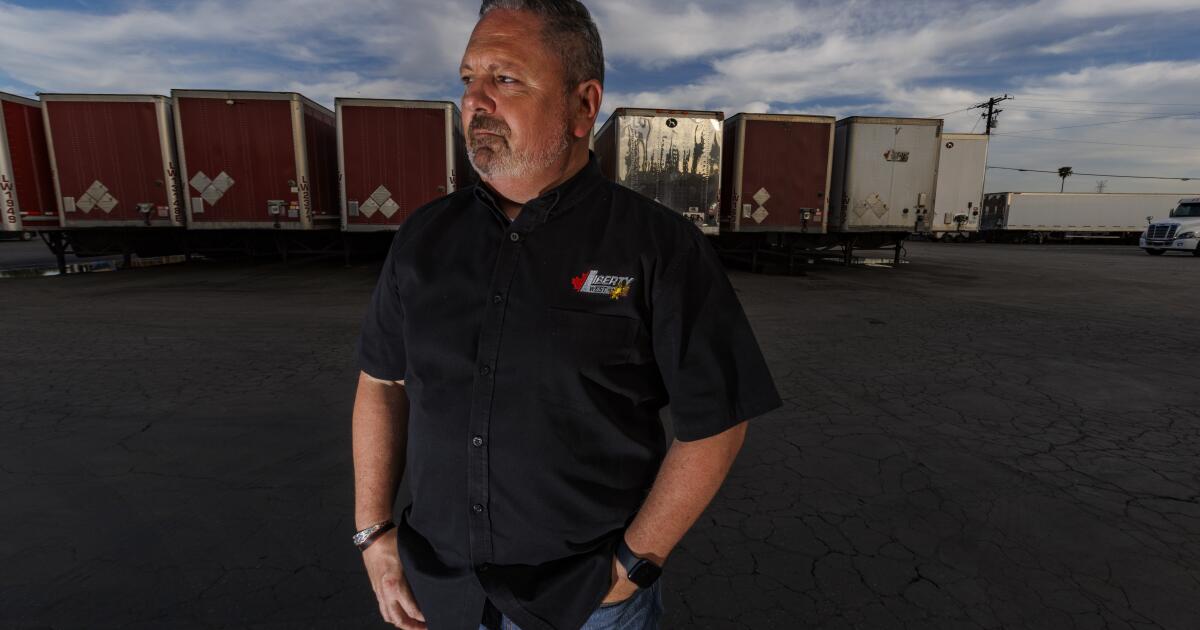
‘It’s killing everything.’ California’s truckers are buckling under country’s priciest diesel

Review: As Trump rains down terror on Iran, Sanaz Toossi’s Pulitzer-winning ‘English’ has its L.A. premiere

Dolce & Gabbana Co-Founder Resigned as Chair

Florida High School Football Rankings: Top 25 teams – Oct. 21

How old is Bo Nix? What to know about Oregon quarterback ahead of 2024 NFL Draft

Cleary's 21 help Le Moyne down Central Connecticut State 69-64 in OT

99th annual Pony Swim held in Virginia

Indiana Members Credit Union announced as new anchor tenant at Bottleworks District

Russian propaganda unit targets Hungary’s elections

WATCH: Artemis II astronauts splash down on Earth

Swalwell’s former female staffer drops bombshell allegations of sexual assault, exposing himself: report

NASA’s Artemis II prepares for splashdown on Earth

Trump proposes painting executive office building white
-

 Atlanta, GA6 days ago
1 teenage girl killed, another injured in shooting at Piedmont Park, police say
-

 Education1 week ago
Video: Toy Testing with a Discerning Bodega Cat
-

 Movie Reviews1 week ago
Vaazha 2 first half review: Hashir anchors a lively, chaos-filled teen tale
-

 Georgia4 days ago
Georgia House Special Runoff Election 2026 Live Results
-

 Pennsylvania4 days ago
Parents charged after toddler injured by wolf at Pennsylvania zoo
-

 Arkansas18 hours ago
Arkansas TV meteorologist Melinda Mayo retires after nearly four decades on air
-
 Milwaukee, WI5 days ago
Potawatomi Casino Hotel evacuated after fire breaks out in rooftop HVAC system
-
 Entertainment1 week ago
Inside Ye’s first comeback show at SoFi Stadium