Hawaii
Elon Musk dominates space launch. Rivals are calling foul.


WASHINGTON — Elon Musk aggressively elbowed his way into the space launch business over the past two decades, combining engineering genius and an entrepreneurial drive with a demand that the U.S. government stop favoring the big, slow-moving contractors that had long dominated the industry.
Today, it is Musk who is dominant. His company, SpaceX, is the primary provider of launch services to NASA and to the Pentagon. His rockets carry far more commercial satellites into orbit than anyone else’s, including those for his own Starlink communications network. He has set new standards for reaching space cheaply and reliably.
But in one striking way, the former outsider has come to resemble the entrenched contractors he once fought to topple: He is increasingly using his vast power and influence to try to keep emerging rivals at bay, his competitors say, even as his success is prompting qualms within the government about such heavy reliance on a mercurial billionaire.
The new generation of space entrepreneurs trying to emulate Musk is sufficiently concerned about what they see as his anticompetitive tactics that some of them are now willing to take him on publicly.
Tim Ellis started Relativity Space after being inspired by Musk’s pursuit of a rocket that could carry humans to Mars. Then he heard from other industry executives that individuals with ties to SpaceX were trying to block his efforts to raise money for his own Mars project.
Jim Cantrell worked with Musk at the founding of SpaceX in 2002. When he started to build his own launch company, Phantom Space, two potential customers told his sales team they could not sign deals because SpaceX inserts provisions in its contracts to discourage customers from using rivals.
Peter Beck, an aerospace engineer from New Zealand, met in 2019 with Musk to talk about Beck’s own launch company, called Rocket Lab. Several months later, SpaceX moved to start carrying small payloads at a discounted price that Beck and other industry executives said was intended to undercut their chances of success.
“I don’t think this is an accidental monopoly,” Beck said in an interview about SpaceX and Musk. “These are business decisions that are being made.”
None of these executives said they had taken legal action against SpaceX. And no one in the industry disputes that Musk and SpaceX deserve enormous credit for making spaceflight more affordable and almost routine.
But his tactics are generating a backlash within the industry. And they are adding to concerns in the government about relying so heavily for a critical technology on someone known as much for his divisive public statements, his increasingly outspoken political positions that are at odds with U.S. policy and his deep business ties to rivals like China as he is for his engineering prowess.
Musk endorsed an antisemitic theory late last year on his social media platform X. He has nurtured relationships with right-wing leaders around the world. And he has publicly stated that Russia will not lose its war against Ukraine, endorsing an argument that the United States should not have provided Ukraine with additional military assistance.
“Elon Musk’s rhetoric and behavior undermines his credibility and reliability on a global scale,” said Sen. Jeanne Shaheen, D-N.H., who this spring questioned Pentagon officials about Musk. “Commercial services, including SpaceX, that do business with the U.S. government need to be thoroughly vetted to ensure that the U.S. military can depend on them in times of crisis.”
Last month, a bipartisan group of 36 House lawmakers sent a letter to Frank Kendall, the Air Force secretary, urging him to make sure that the Air Force pushes for “increased competition among launch providers.”
SpaceX did not respond to requests for comment. But when interviewed at a recent industry conference, one of SpaceX’s senior executives disputed any suggestion that the company was trying to force other new launch companies out of business.
“I don’t buy that, not at all,” Gary Henry, who works on national security contracts for SpaceX after earlier posts with Boeing and the Air Force, said in the interview. “I can see if you are on that end of it, it might feel that way. But people in those companies who know us personally know that is not the case.”
In a presentation to SpaceX employees in Texas this year, Musk did not directly address claims of anticompetitive behavior from rivals in the launch industry. But he noted that SpaceX had carried cargo to orbit, or agreed to do so in the future, for competitors in related businesses including Amazon, Telestat, OneWeb and Apple-backed Globalstar, all of which are rivals of SpaceX’s Starlink communications network.
“We’re actually on contract to launch Amazon’s Kuiper constellation,” Musk said, evoking a round of laughter from the gathered SpaceX employees. “And we treat everyone fairly.”
SpaceX’s defenders also point out that the launch business appears to be growing more competitive, not less.
Jeff Bezos’ Blue Origin is close to its first launch for its New Glenn rocket. Rocket Lab is building what it calls Neutron, and Relativity Space is working on its Terran R, among other new entrants. After years of delays, Boeing is soon expected to start launching NASA astronauts into space on its new Starliner spacecraft.
For now, though, the ability of the United States to reach orbit, particularly for its most vital classified military and spy satellites, remains largely dependent on Musk and his Falcon 9 rocket.
“Heaven forbid we have a mishap with a Falcon 9 launch,” said Col. Richard Kniseley, who helps run Space Force’s Commercial Space Office. “That means it is grounded, right? And that means we could be without launch. So that’s where my concern is.”
SpaceX has collectively been awarded $14.7 billion in federal launch prime contracts over the past decade, according to an analysis performed by The New York Times by the Center for Strategic and International Studies.
Last year alone, SpaceX secured $3.1 billion in federal prime contracts, according to the data, nearly as much as the combined amount the federal government committed for space transportation and related services from its nine competitors, from giants like Boeing and Northrop Grumman to startups like Blue Origin.
SpaceX is privately held, so it does not release revenue figures, but Payload, an industry research site, estimated that nearly 60% of SpaceX’s launch-related revenue last year came from the federal government.
This means that despite Musk’s early disdain for government subsidies granted to his rivals, including Lockheed and Boeing, SpaceX’s own rise has been bankrolled in large part by NASA and the Pentagon.
At the same time, SpaceX has increasingly adopted business tactics that Musk once condemned, including expanding its lobbying presence in Washington and hiring top Pentagon and NASA executives after they played key roles in awarding contracts to SpaceX.
Beck, the CEO of Rocket Lab, started the company in 2006, just four years after SpaceX was created and before SpaceX had sent its first rocket to orbit.
Since then, Rocket Lab’s Electron launch vehicle has had more than 40 successful trips to orbit, delivering almost 200 satellites to space at one of the lowest costs in the industry.
Now the second most frequent orbital commercial launch company globally behind SpaceX, Rocket Lab is moving to build Neutron, a larger rocket that will compete directly with SpaceX’s Falcon 9.
Beck said he had observed early on that SpaceX was willing to go after its business rivals.
He and other industry executives said they were convinced that SpaceX had set the price for its Transporter service — where small satellite companies can book slots on a Falcon 9 launch — with the explicit goal of undermining the financial plans of emerging competitors.
Transporter’s low price — initially $5,000 per kilogram — was below what some industry executives calculated was SpaceX’s basic cost. They concluded that SpaceX could only offer such a low price by subsiding those flights with some of its government contracting revenue.
More recently, SpaceX started what it called Bandwagon, which offers satellite makers launches to orbits that provide them better coverage over key sections of the world. SpaceX is selling these flights at far below its own costs to undermine its competition, Beck said, citing his own estimates.
“Bandwagon is like, the most bold and obtuse anticompetitive thing you can do,” said Beck, whose company charges about $21,500 per kilogram for its launches to specific orbits.
Henry disputed that SpaceX might be using its market dominance to hurt its competitors.
“We make money on all our launches,” he said.
Flights that carry multiple private and government payloads on a single Falcon 9 launch, he said, are benefiting the commercial space industry by making it more affordable for small firms to get satellites into orbit.
Ellis of Relativity Space said SpaceX had made explicit and repeated efforts to limit the growth of his business.
“Every single funding round that was done once we started to become a larger company, and every single customer deal we have signed, has been followed with a swift and large number of outreach calls from SpaceX to all of those entities berating them for doing things with us,” he said. “This is not theoretical.”



A statewide Flood Watch is in effect across Hawaii from Wednesday morning, April 8, through Friday afternoon, April 10, as a developing low-pressure system northwest of the islands, described by the National Weather Service (NWS) public guidance as a kona low, is forecast to bring prolonged heavy rainfall and elevated flood risk.
The NWS office in Honolulu reports that the system will draw deep tropical moisture northward across the state, creating conditions favorable for widespread showers and thunderstorms. Excessive rainfall may lead to flash flooding in urban areas, low-lying locations, and regions with poor drainage, while steep terrain remains susceptible to landslides.
All major islands, including Kauai, Oahu, Maui, Molokai, Lanai, Kahoolawe, and the Big Island, are included in the Flood Watch. Forecasters note that antecedent wet conditions from recent rainfall events have left soils saturated, increasing runoff efficiency and the likelihood of rapid stream rises under heavier rainfall rates.
Multiple kona low systems affected the islands between March 10 and March 22, producing extreme rainfall totals, including more than 330 mm (13 inches) in about 12 hours on Oʻahu’s North Shore and multi-day accumulations reaching approximately 1 170 mm (46 inches) on Maui.
The events triggered widespread flooding, landslides, evacuations, and infrastructure stress, including emergency warnings tied to Wahiawā Dam and power outages affecting more than 130 000 customers statewide.
Despite several days of drier trade wind conditions, soil moisture remains elevated, allowing new rainfall to convert more efficiently into surface runoff, increasing the likelihood of rapid stream rises and flash flooding under the current forecast system.
The heaviest rainfall associated with the new system is forecast to develop during the midweek period, with conditions deteriorating from Wednesday into Thursday as the low-pressure system strengthens west of the state. Forecast guidance indicates that the western islands may experience the initial phase of heavier rainfall before activity gradually shifts eastward later in the event.
In addition to heavy rain, the system is expected to generate strong southerly winds, with gusts of 64–80 km/h (40–50 mph) possible across many areas and locally stronger gusts exceeding 93 km/h (58 mph) in exposed locations or near convective activity. A Wind Advisory may be issued as conditions develop.
Winter weather conditions are also possible at higher elevations on the Big Island, resulting in a Winter Storm Watch in effect for summits above 3 810 m (12 500 feet), where a combination of snow and freezing rain is forecast during the same period.
Heavy rainfall is likely to persist into Thursday and Friday, with the flash-flood threat remaining elevated into the weekend, but periods of heavy rain may continue beyond the initial peak as moisture remains in place around the system.
The setup reflects a kona low pattern, characterized by a low-pressure system northwest of the islands producing southerly flow and transporting deep tropical moisture into the region over multiple days.
References:
1 Area Forecast Discussion for Hawaii – NWS Honolulu – April 7, 2026
2 Flood Watch – NWS Honolulu – April 7, 2026

HONOLULU (HawaiiNewsNow) – Oahu residents aren’t taking any chances with emergency preparedness ahead of the latest round of severe weather.
City Mill has been working to keep shelves stocked with supplies.
“We’ve been selling a lot of sand and sandbags. We have a product called Quick Dam, and we have sold out at a couple stores. We’re trying to move them around so that everybody has something,” City Mill Merchant Iris Wilhelm-Norseth said.
Tape, batteries and flashlights have also been moving quickly among customers, along with pumps and rain boots.
City Mill and other officials are stressing emergency preparedness as recent storms have shown flooding can happen anywhere at any time.
“The little flash flood in Manoa kind of flipped people out too. That came out of nowhere. So people are very concerned,” she added.
Hawaiian Electric said it is also ready, following emergency preparedness procedures to ensure communities aren’t left without power for prolonged periods.
“It doesn’t take a named storm to really cause significant damage to the public infrastructure, whether it’s roads or other types of infrastructure, or the electrical, grid. We know that these heavy rains and very strong winds can have significant impacts,” HECO spokesperson Darren Pai said.
If the Public Safety Power Shutoff program is implemented, the utility said it would be a coordinated decision with emergency responders in the interest of keeping communities safe.
The Board of Water Supply is also asking customers to store water in case service is interrupted for an extended time.
And for storm supplies that don’t get put to use this time around, officials say not to toss them too quickly.
“This is also a great opportunity for people if they don’t use it to hold on to it because we are going into hurricane season starting in May again,” Wilhelm-Norseth added.
Copyright 2026 Hawaii News Now. All rights reserved.

Anyone who’s grown up in the Islands has either given, received or marveled at a piece of Hawaiian heirloom jewelry, the highly ornate, hand-engraved bracelets and pendants emblazoned with Hawaiian names or initials in an Old English-style font.
But where did this jewelry and its unique style come from?
Turns out the first Hawaiian bracelet was made in 1862 for the young Lydia Park, who later became Queen Liliʻuokalani, the last sovereign monarch of the Hawaiian Kingdom. The bracelet, which is now at ʻIolani Palace on Oʻahu, is inscribed with the words, “Hoomanao Mau,” which translates to “a lasting remembrance.” It was handcrafted by Honolulu-based jeweler Christian Eckart and emulated English Victorian designs popular at the time.
Photo: Aaron K. Yoshino
Since then, the Hawaiian bracelet has evolved to include tropical flower designs, raised lettering and scalloped edges. Today—more than a century and a half later—Hawaiian heirloom jewelry is still a symbol of love and friendship.
This story was originally published in our SPRING 2023 Issue. Buy a copy here. Better yet, subscribe and get HAWAIʻI Magazine delivered to right to your mailbox.
Catherine Toth Fox is the former editor of HAWAIʻI Magazine and continues to contribute to the website and print publication.

The Good, The Bad, and The Ugly From Atlanta’s Loss to the Knicks

With Minneapolis medical center’s survival threatened, staff and leaders call for state action

IMPD asks for help to find missing 26-year-old man

Below freezing temperatures to return Wednesday morning, ahead of 80-degree weather this weekend

Is the World Cup in DC? Here’s where you can watch games

Florida High School Football Rankings: Top 25 teams – Oct. 21

How old is Bo Nix? What to know about Oregon quarterback ahead of 2024 NFL Draft

Cleary's 21 help Le Moyne down Central Connecticut State 69-64 in OT

99th annual Pony Swim held in Virginia

Indiana Members Credit Union announced as new anchor tenant at Bottleworks District

Ilhan Omar calls Trump an ‘unhinged lunatic,’ urges booting him out of office
Between Budapest and Brussels: Péter Magyar’s political tightrope
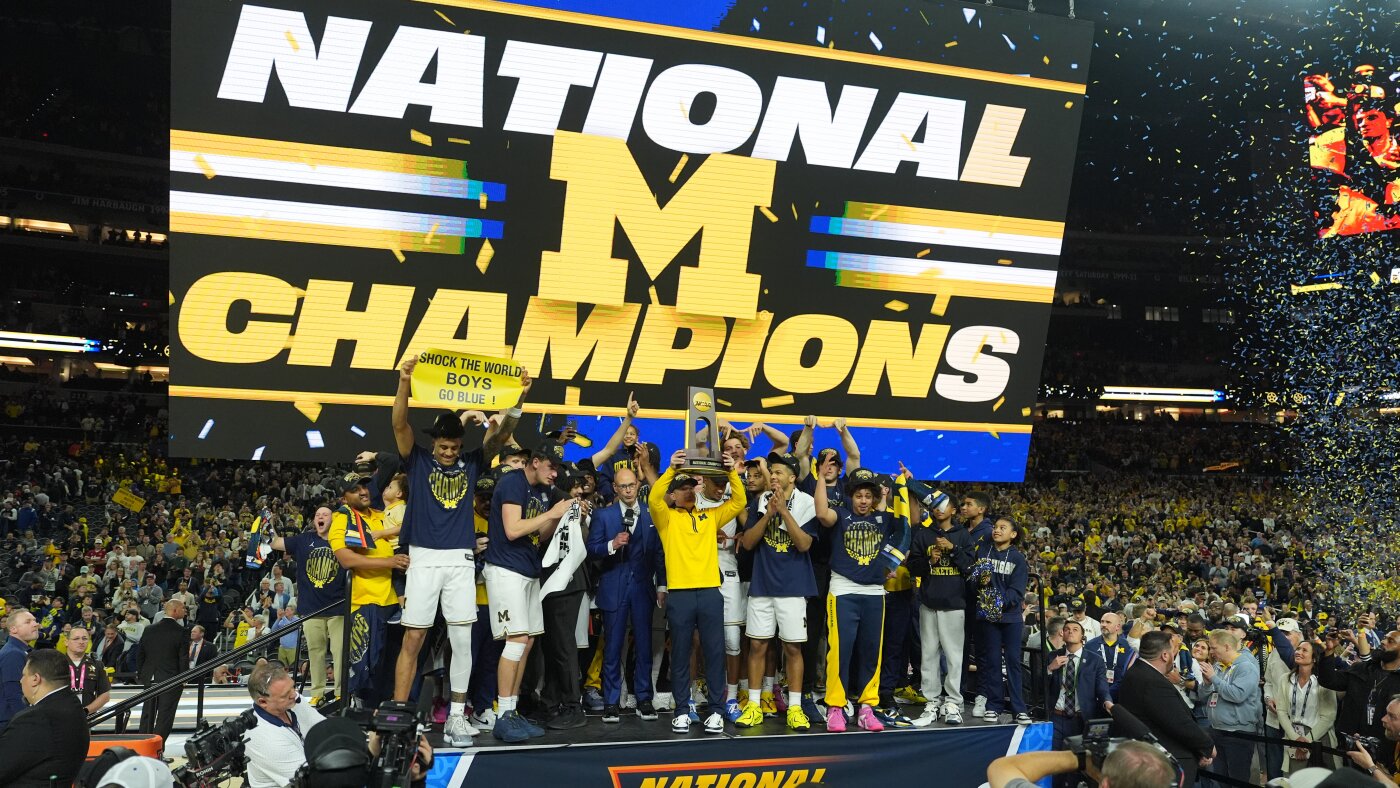
Michigan muscles its way to program’s 2nd NCAA basketball title, beating UConn

Map: Minor Earthquake Strikes Near San Diego

Trump claims he’d win as the president of Venezuela — just needs to ‘quickly’ learn Spanish
-

 Atlanta, GA3 days ago
1 teenage girl killed, another injured in shooting at Piedmont Park, police say
-

 South-Carolina1 week ago
South Carolina vs TCU predictions for Elite Eight game in March Madness
-

 Movie Reviews5 days ago
Vaazha 2 first half review: Hashir anchors a lively, chaos-filled teen tale
-

 Vermont1 week ago
Skier dies after fall at Sugarbush Resort
-

 Politics1 week ago
Trump’s Ballroom Design Has Barely Been Scrutinized
-

 Politics1 week ago
JD Vance says he was ‘obsessed’ with UFOs, believes aliens are actually ‘demons’
-

 Politics1 week ago
Jeffries declines to break with indicted Democrat after ethics panel’s guilty verdict
-
 Entertainment5 days ago
Inside Ye’s first comeback show at SoFi Stadium