Hawaii
Alleged Trump Gunman Was My Hawaii Pickleball Partner


Before Ryan Wesley Routh allegedly became the second man to try and kill Donald Trump in as many months, he was something else entirely: A fiend on the pickleball court.
“He was a reasonably good player. He played really hard,” Bryant Schultz told The Daily Beast in a phone interview. “He was the only one out at the courts who would dive for the ball. Most pickleball players do not dive to make a shot.”
Schultz, 62, of Kaneohe, Oahu, played frequently with Routh, 58, over a period of several years as part of a loose coalition of residents who showed up at Swanzy Beach Park three mornings a week to get their pickleball on.
Both on and off the court, Routh was “always personable and good-natured,” Schultz said, as well as chatty, on friendly terms with many of the park’s regulars. Hard on himself when he made mistakes, he never chastised his partners. “Except for his own errors, he was the most mild-mannered player out there.”
Routh first appeared at the park after the worst of the pandemic had passed, Schultz recalled. “He never appeared to have a bunch of money,” he said. “He was often borrowing paddles. For quite a while, he played with a really chewed-up wooden paddle—because of his dive, you know.”
During a federal court appearance on Monday, Routh was charged with two firearm possession counts. He told the court that he had “zero funds” in savings and had no assets beyond two trucks in Hawaii, according to CNN.
It wasn’t totally clear to his teammates what Routh did for a living. Schultz heard that he “worked on building tiny houses” and would do odd-job repairs around the community, including on a local pier. “He wasn’t paid or contracted,” as far as Schultz knew, he said. “He just went out and made the surface safe for people to walk on.”
On his LinkedIn page, which remained live on Monday, Routh advertised his work with a company called Camp Box Honolulu, which he wrote builds storage units and “very simple housing structures for the less fortunate.” In 2019, a year after Routh moved to Oahu, the Honolulu Star-Advertiser reported that he’d pledged to build tiny homes for Kalaeloa’s homeless community.
One thing Routh didn’t appear to be—at least on the pickleball court—was political.
“I can’t recall him ever talking politics,” Schultz said. He’d had no idea Routh had self-published a 291-page book last year in which he called for Trump’s assassination, criticizing the former president for his 2018 withdrawal from the Iran nuclear deal. (Authorities have not yet laid out a possible motive in Sunday’s assassination attempt.)
In a section apparently directed at Iran’s government, Routh wrote, “You are free to assassinate Trump as well as me for that error in judgment and the dismantling of the deal,” according to The Wall Street Journal. “No one here in the US seems to have the balls to put natural selection to work or even unnatural selection.”
Routh has a scattered political history tracing back to his time in his native North Carolina, where he registered as an “unaffiliated” voter in 2012. In his book, he groused that he was “so tired of people asking me if I am a Democrat or Republican as I refuse to be put in a category and I must always answer independent.”
On social media, he had professed support for Bernie Sanders, Tulsi Gabbard, President Joe Biden, and Trump, whom he disavowed in mid-2020.
“I and the world hoped that president Trump would be different and better than the candidate, but we all were greatly disappointment and it seems you are getting worse and devolving…” he tweeted that June. “I will be glad when you gone.”
Schultz and his fellow picklers were aware, however, that Routh left Hawaii for Ukraine shortly after the Russian invasion, intent on fighting for Kyiv.
With no military experience and a lengthy criminal record, however, Routh was rebuffed by the Ukrainian defense ministry, he told Newsweek Romania in an article recently unearthed by CBS News.
“My initial goal was to come fight… but I’m 56, so initially they were like, I have no military experience, so they were like, you’re not an ideal candidate,” he told the magazine. “So they said, not right this minute. So plan B was to come here to Kyiv and promote getting more people here.”
Routh spent some time in the city trying to act as an informal recruiter for Ukraine’s International Legion, and spoke to both The New York Times and Semafor last year about his efforts. But several foreign soldiers involved with the legion told Slate on Sunday night that Routh “was not associated with them, recruited nobody to the cause, and did little during his time in Ukraine aside from garner publicity for himself.”
In a statement to NBC News, a spokesperson for the legion said, “We would like to clarify that Ryan Wesley Routh has never been part of, associated with, or linked to the International Legion in any capacity. Any claims or suggestions indicating otherwise are entirely inaccurate.”
After failing in his recruitment efforts, Routh eventually made his way back to Hawaii, where he took up pickleball again. The last time Schultz saw him was around four or five weeks before the assassination attempt, he said. Nothing seemed out of the ordinary; it was just another day on the court.



The Hawaii Rainbow Wahine Water Polo Team has secured the number 1 seed in the Big West Championship Tournament.
“I think everyone understands the importance of the tournament and, what we want to do,” said Hawaii Junior Daisy Logtens.
Hawaii enters the tournament 13-5 overall and 6-0 in conference play.
UH will open up the conference tournament against 8th seed UC Santa Barbara. UH recently defeated UCSB 18-4 on March 28th in Manoa.
The 1st match for UH is set for Friday at 7:00am HT in Long Beach, California.
The winner of (1) Hawaii vs (8) UCSB will take on the winner of (4) vs (5) UC San Diego.

HONOLULU (HawaiiNewsNow) – Anxiety ran high in Manoa ahead of Wednesday’s impending storm, which comes about two weeks after a second Kona low flooded 14 residential units along Koali Road.
It was not the first time the homes were swamped in recent months.
Last November, a water main break overflowed the same ground-level units near UH Manoa, causing extensive damage.
Now, as tenants clean up and repair their homes after the latest storm, they are bracing for yet another storm expected to hit Wednesday.
“It sounds like a movie, it sounds a little surreal, a little not real,” Koali Road resident Carlos Jimenez said.
Jimenez, whose home was flooded both times, recalled the recent one, which covered his home in about two feet of water, describing the deluge as “a little bit above knee high.”
The damage to Jimenez’s unit went beyond the floor, too, because of the heavy rain.
“The ceiling got water-damaged. From what I saw, it was soaking water, sagging, and it was about to collapse,” Jimenez said.
Fortunately, crews repaired his roof days before the third storm could send another round of downpours.
Outside, both of Jimenez’s vehicles sat damaged and dead.
After all that he has seen at his Koali Road home, Jimenez said he would take the new storm seriously.
“Get ready, you know, with my mother. She lives with me. She’s 87,” Jimenez said.
After witnessing the devastation in the neighborhood, Jimenez’s neighbor, Dario Aricala, whose home was spared, is not taking it for granted during this week’s wet weather.
“The last storm, we almost got flooded. We are hoping for the best that this storm is not such bad,” Aricala said.
Click here to donate to Jimenez’s GoFundMe page.
In the meantime, other residents have been staying elsewhere during cleanup and repairs, and the property manager said he has been helping them.
Copyright 2026 Hawaii News Now. All rights reserved.

A statewide Flood Watch is in effect across Hawaii from Wednesday morning, April 8, through Friday afternoon, April 10, as a developing low-pressure system northwest of the islands, described by the National Weather Service (NWS) public guidance as a kona low, is forecast to bring prolonged heavy rainfall and elevated flood risk.
The NWS office in Honolulu reports that the system will draw deep tropical moisture northward across the state, creating conditions favorable for widespread showers and thunderstorms. Excessive rainfall may lead to flash flooding in urban areas, low-lying locations, and regions with poor drainage, while steep terrain remains susceptible to landslides.
All major islands, including Kauai, Oahu, Maui, Molokai, Lanai, Kahoolawe, and the Big Island, are included in the Flood Watch. Forecasters note that antecedent wet conditions from recent rainfall events have left soils saturated, increasing runoff efficiency and the likelihood of rapid stream rises under heavier rainfall rates.
Multiple kona low systems affected the islands between March 10 and March 22, producing extreme rainfall totals, including more than 330 mm (13 inches) in about 12 hours on Oʻahu’s North Shore and multi-day accumulations reaching approximately 1 170 mm (46 inches) on Maui.
The events triggered widespread flooding, landslides, evacuations, and infrastructure stress, including emergency warnings tied to Wahiawā Dam and power outages affecting more than 130 000 customers statewide.
Despite several days of drier trade wind conditions, soil moisture remains elevated, allowing new rainfall to convert more efficiently into surface runoff, increasing the likelihood of rapid stream rises and flash flooding under the current forecast system.
The heaviest rainfall associated with the new system is forecast to develop during the midweek period, with conditions deteriorating from Wednesday into Thursday as the low-pressure system strengthens west of the state. Forecast guidance indicates that the western islands may experience the initial phase of heavier rainfall before activity gradually shifts eastward later in the event.
In addition to heavy rain, the system is expected to generate strong southerly winds, with gusts of 64–80 km/h (40–50 mph) possible across many areas and locally stronger gusts exceeding 93 km/h (58 mph) in exposed locations or near convective activity. A Wind Advisory may be issued as conditions develop.
Winter weather conditions are also possible at higher elevations on the Big Island, resulting in a Winter Storm Watch in effect for summits above 3 810 m (12 500 feet), where a combination of snow and freezing rain is forecast during the same period.
Heavy rainfall is likely to persist into Thursday and Friday, with the flash-flood threat remaining elevated into the weekend, but periods of heavy rain may continue beyond the initial peak as moisture remains in place around the system.
The setup reflects a kona low pattern, characterized by a low-pressure system northwest of the islands producing southerly flow and transporting deep tropical moisture into the region over multiple days.
References:
1 Area Forecast Discussion for Hawaii – NWS Honolulu – April 7, 2026
2 Flood Watch – NWS Honolulu – April 7, 2026

Tell us: What’s the best book you’ve ever read in a book club?

How Selfridges Plans to Lock in the 1%
Commentary: In Texas and beyond, a political impulse: If you don’t like it, leave
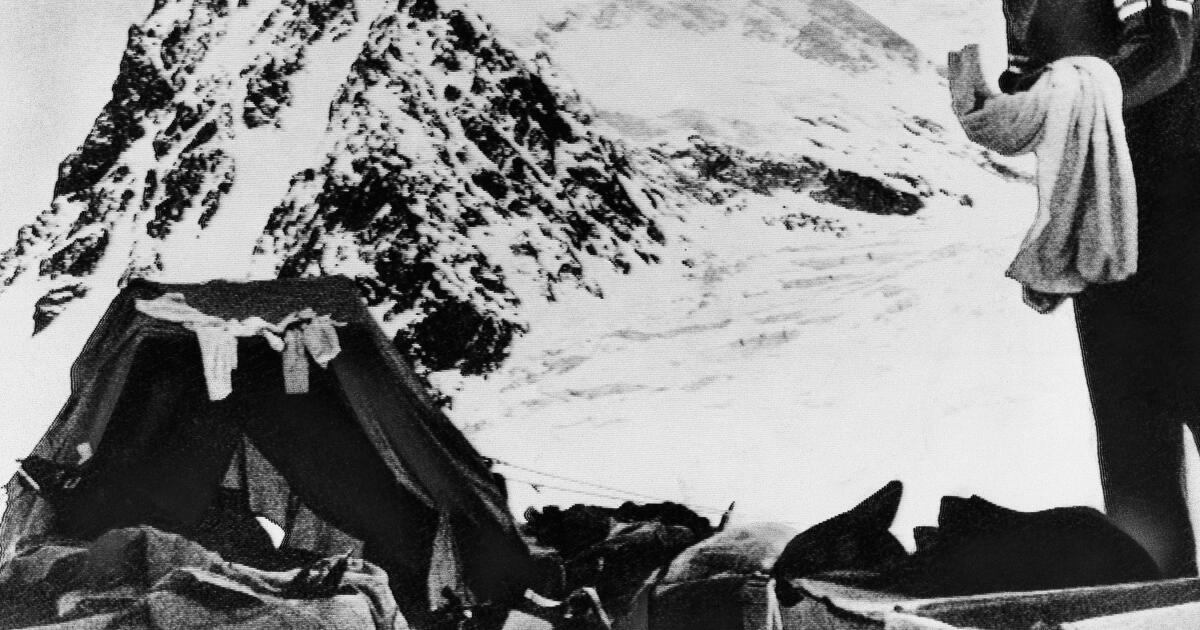
Jim Whittaker, first American climber to scale Mount Everest, has died

Newsletter: NATO holds amid fragile Iran ceasefire

Florida High School Football Rankings: Top 25 teams – Oct. 21

How old is Bo Nix? What to know about Oregon quarterback ahead of 2024 NFL Draft

Cleary's 21 help Le Moyne down Central Connecticut State 69-64 in OT

99th annual Pony Swim held in Virginia

Indiana Members Credit Union announced as new anchor tenant at Bottleworks District
Newsletter: NATO holds amid fragile Iran ceasefire
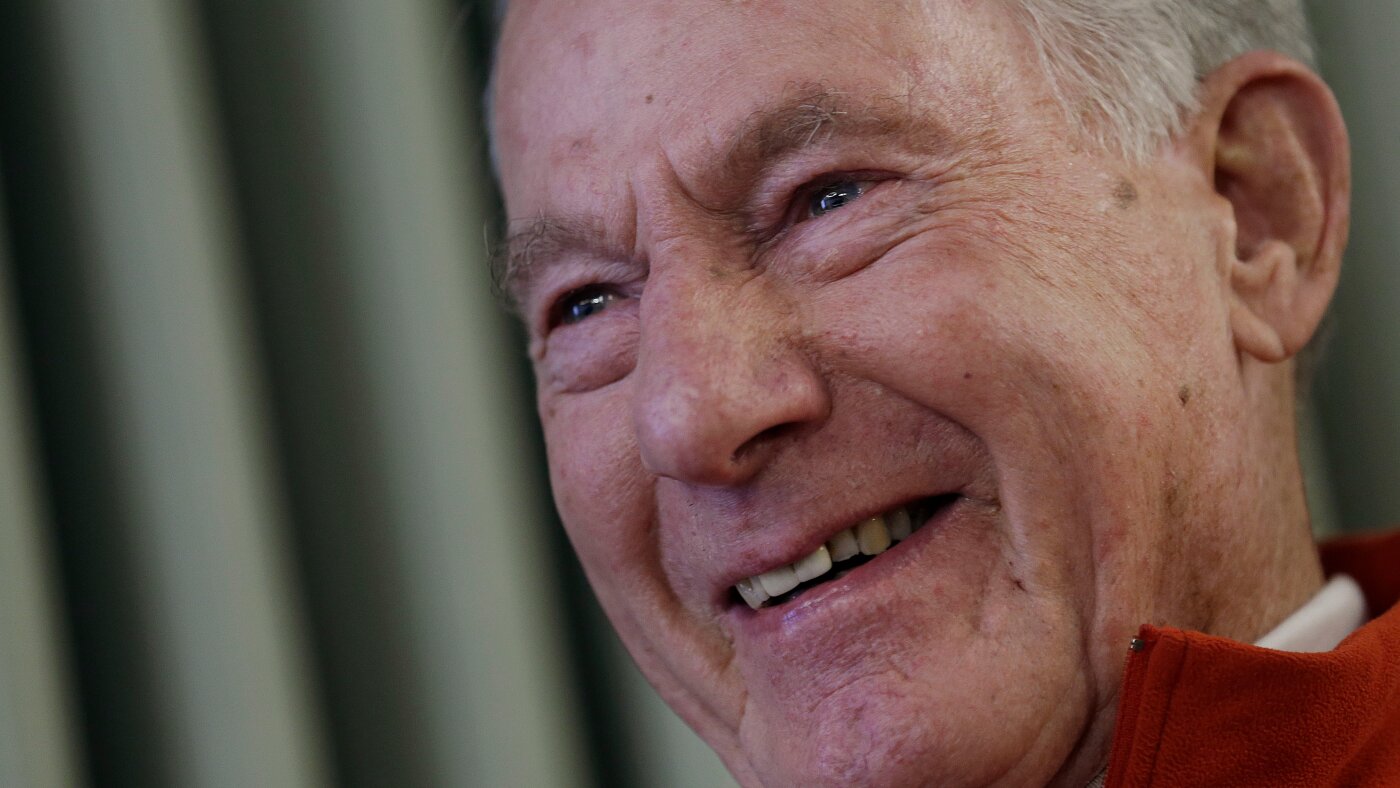
Jim Whittaker, the first American to summit Mount Everest, dies at 97

Video: Military Families Bear the Burden of War, Again

Fox News Poll: Record number say taxes are too high; government spending seen as wasteful

‘Even the street cats ran’: Inside Israel’s deadliest attack on Beirut
-

 Atlanta, GA4 days ago
1 teenage girl killed, another injured in shooting at Piedmont Park, police say
-

 Culture1 week ago
Do You Know Where These Famous Authors Are Buried?
-

 Movie Reviews7 days ago
Vaazha 2 first half review: Hashir anchors a lively, chaos-filled teen tale
-

 Georgia2 days ago
Georgia House Special Runoff Election 2026 Live Results
-

 Pennsylvania2 days ago
Parents charged after toddler injured by wolf at Pennsylvania zoo
-

 Education1 week ago
Video: We Put Dyson’s $600 Vacuum to the Test
-
 Milwaukee, WI3 days ago
Potawatomi Casino Hotel evacuated after fire breaks out in rooftop HVAC system
-
 Entertainment1 week ago
Inside Ye’s first comeback show at SoFi Stadium