West
'Gone Girl' kidnapper charged in California home invasion cases from 2009

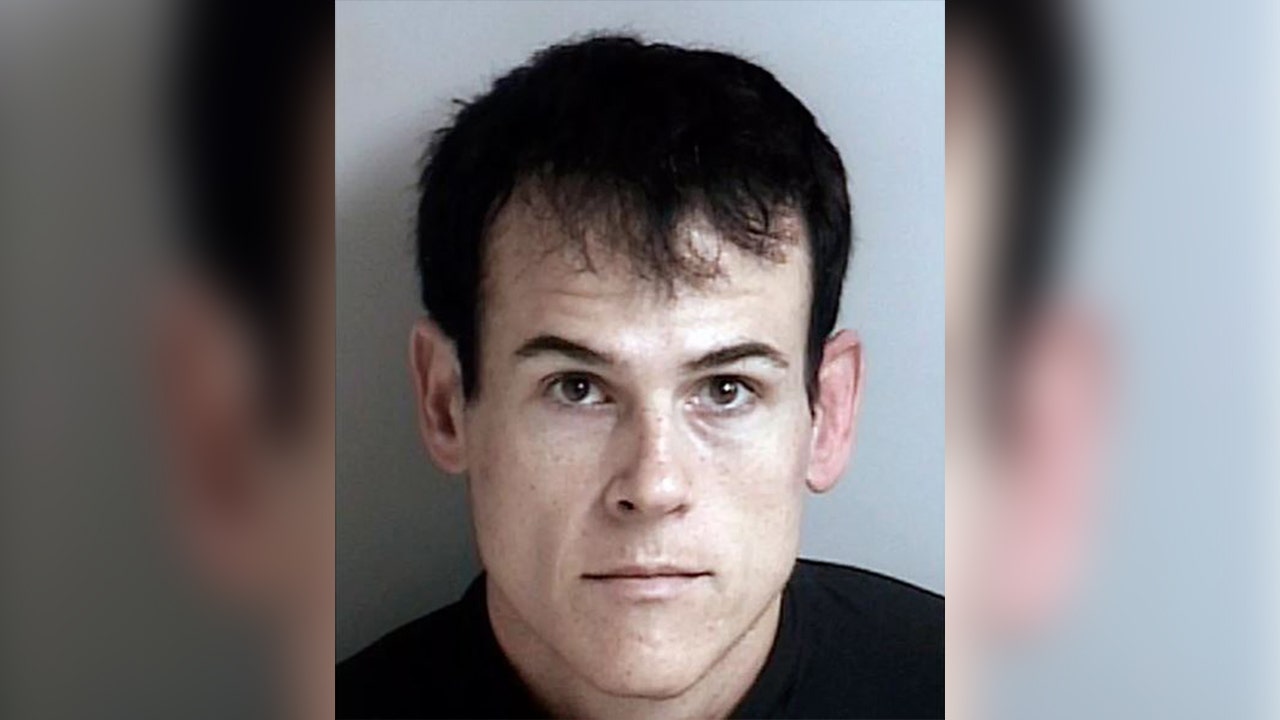
Prosecutors announced new charges against a man who kidnapped and sexually assaulted a Northern California woman, which was originally thought to be a hoax, and has become known as the “Gone Girl” kidnapping.
Matthew Muller, 47, the man who abducted Denise Huskins in Vallejo in 2015, is now being charged in two home invasion cases from 15 years ago.
Muller broke into women’s homes in Palo Alto and Mountain View in 2009, with the intent to rape them, according to the Santa Clara District Attorney’s Office.
Thanks to a new lead and advances in forensic DNA testing, the Santa Clara County District Attorney’s Office, along with Palo Alto and Mountain View Police, were able to ID Muller in the cases.
CALIFORNIA COUPLE IN ‘GONE GIRL’ CASE VINDICATED AFTER ACCUSATIONS OF STAGED KIDNAPPING
Matthew Muller, a disbarred, Harvard-educated immigration attorney, was finally arrested for Huskins’ kidnapping after he was implicated in a similar home invasion by his forgotten cell phone. (Solane County Sheriff’s Department)
Muller’s DNA was found on straps he used to bind one of the victims in one of the 2009 cases, the DA’s office said.
Muller now faces two felony counts of committing sexual assault during a home invasion for the 2009 crimes. If convicted, he faces life in prison, officials said.
“The details of this person’s violent crime spree seem scripted for Hollywood, but they are tragically real,” District Attorney Jeff Rosen said. “Our goal is to make sure this defendant is held accountable and will never hurt or terrorize anyone ever again. Our hope is that this nightmare is over.”
In the early hours of Sept. 29, 2009, officials said Muller broke into a woman’s Mountain View home, attacked her, tied her up, made her drink a concoction of medications, and said he was going to rape her. After the victim, who officials said was in her 30s, persuaded him against it, he suggested the victim get a dog, then fled.
Less than a month later, on Oct. 18, officials said Muller broke into a Palo Alto home, where he performed the same routine and bound and gagged a woman in her 30s. He then made her drink Nyquil and began to assault her, before being persuaded to stop. Muller gave the victim crime prevention advice, then fled.
DR. PHIL CALLS OUT ‘GONE GIRL’ FAKE ABDUCTEE FOR ‘GIGGLING’ AS SHE LIED ABOUT IMPRISONMENT
Denise Huskins and Aaron Quinn appear at a news conference with attorney Doug Rappaport (left) in San Francisco, Calif. on Thursday, Sept. 29, 2016. Huskins and Quinn were victims in the bizarre Vallejo kidnapping case in March 2015. Matthew Muller has pleaded guilty to kidnapping Huskins. (Paul Chinn/The San Francisco Chronicle via Getty Images)
Both cases were investigated at the time and went unsolved.
Muller gained national attention six years later as the subject of “American Nightmare,” a Netflix documentary series that chronicles his 2015 “Gone Girl Hoax” kidnapping of Denise Huskins from Vallejo and her harrowing 48 hours in captivity.
On March 23, 2015, Muller broke into a Vallejo home, where he drugged, and tied up Huskins and her boyfriend. He kidnapped Huskins, brought her to a cabin in South Lake Tahoe, and sexually assaulted her. Two days later, Muller drove his victim to Southern California and released her.
The Vallejo Police initially believed the invasion and kidnapping were a hoax orchestrated by her boyfriend, Aaron Quinn, a twist that the media deemed a “real-life ‘Gone Girl’,” referring to the hit Ben Affleck thriller and novel “Gone Girl,” in which a small-town wife stages her own murder to get back at her cheating husband.
TEXAS COUPLE CHARGED AFTER ALLEGEDLY ATTEMPTING TO KIDNAP, KILL MAN WIFE WAS HAVING AFFAIR WITH
Vallejo’s police department headquarters is seen in Vallejo, Calif. on Tuesday, July 14, 2015. (Paul Chinn/The San Francisco Chronicle via Getty Images)
Although they said in a press conference that they were treating the case as a kidnapping, KRON4 reported, the Vallejo Police Department suspected Quinn of murdering his girlfriend and fabricating his account. He endured 18 hours of questioning, according to the docuseries.
The couple sued the Vallejo Police Department for $2.5 million, but not before enduring months of public scrutiny.
Huskins and Quinn told filmmakers Misty Carausu, a rookie detective who solved the case, was their hero. On June 5, 2015, a couple woke in the middle of the night to a near-identical home invasion.
After reaching out to police departments in the Bay Area, NBC Bay Area reported, Carausu learned that Muller had been a suspect in a 2009 Palo Alto home invasion. Also at the scene were a pair of swimming goggles blacked out with duct tape that had a blonde hair attached.
While the wife hid in a bathroom and called police, her husband managed to fight off the attacker. But he left crucial evidence behind: zip-ties, duct tape, a glove and a cellphone.
Carausu traced the phone to the stepfather of a man named Matthew Muller, a Harvard-educated immigration attorney and Marine veteran.
At that point, Carausu contacted the FBI, and Muller was arrested for the Dublin, California, home invasion on June 8.
THE DISAPPEARANCE OF CHARLEY ROSS, THE FIRST KNOWN VICTIM OF KIDNAPPING FOR RANSOM IN US
Denise Huskins and Aaron Quinn are pictured at a press conference. They both hired defense attorneys after they were publicly accused of faking the home invasion, and feared losing their jobs as physical therapists. (MIKE JORY/THE TIMES-HERALD via AP)
Evidence in his home, including Quinn’s laptop, finally linked him to Huskins’ kidnapping. Muller’s confession matched Quinn and Huskins’ stories perfectly, down to the audio recordings, blacked-out goggles and liquid sedatives.
Muller pleaded guilty to one count of federal kidnapping in September 2016 and was sentenced to 40 years behind bars. Muller also faced state charges for burglary, robbery, kidnapping and two counts of rape by force.
FOLLOW THE FOX TRUE CRIME TEAM ON X
The Vallejo Police Department publicly accused Denise and Aaron of staging their ordeal, welcoming a barrage of negative press before their attacker was arrested for a similar home intrusion. (Associated Press)
But he was deemed incompetent to stand trial for those charges in November 2020, according to the documentary. Muller allegedly suffered from “Gulf War illness” after his military service, and his attorney claimed he was diagnosed with bipolar disorder, NBC News reported.
Muller was then sentenced in 2022 to 31 years in state prison after pleading no contest to two counts of forcible rape of Huskins.
He is currently incarcerated in federal prison in Tucson, Arizona.
Huskins and Quinn previously told People magazine they have no idea why Muller targeted them.
“Like many victims, or many people who have gone through tragedy, you don’t get all the answers,” Quinn told the magazine. “And that can be a sticking point to recovery. So, for us, we don’t rely on finding those answers, but what we have to do is move forward in the unknown and focus on things that matter the most to us, like our family, our kids, our work. Those are sustainable things. And having the answers of why they targeted us doesn’t change what we do as far as moving forward.”
The pair married in 2018, released a book on their ordeal in 2021 and welcomed daughters in 2020 and 2022.
Fox News Digital’s Christina Coulter and The Associated Press contributed to this report.
Stepheny Price is writer for Fox News Digital and Fox Business. Story tips and ideas can be sent to stepheny.price@fox.com
Read the full article from Here

San Francisco, CA
Discovery Bay driver arrested for San Francisco fatal vehicle collision | Contra Costa Herald

Killed pedestrian, struck 3 more people
By San Francisco Police Department
On May 25, 2026, at approximately 12:13 am, San Francisco Police officers responded to the area of 16th and Mission Streets regarding a vehicle collision.
Officers were advised that a collision occurred between a vehicle and a pedestrian.
Officers arrived on scene and located a pedestrian victim being treated by paramedics for life threatening injuries. Paramedics transported the victim to a local hospital.
Despite lifesaving efforts of medical staff, the victim was later declared deceased at the hospital.
A preliminary investigation revealed that a vehicle collided with a pedestrian and struck three additional victims.
The three victims were medically assessed on scene for non-life-threatening injuries.
Through the course of the investigation, officers located the suspect vehicle and detained the occupant of the vehicle.
The Traffic Collision Investigations Unit (TCIU) responded to scene and conducted their investigation.
Through the course of the investigation, TCIU investigators developed probable cause to arrest the driver identified as 57-year-old Samuel Powell of Discovery Bay on June 30, 2026.
Powell was arrested and charged for vehicular Manslaughter 192(c)(2) PC and the driver’s responsibility to exercise due care for the safety of any pedestrian within the roadway 21955(b)(3) CVC.
Although an arrest has been made, this remains an open and active investigation. Anyone with information is asked to contact the SFPD at 415-575-4444 or text a tip to TIP411 and begin the message with SFPD.

After an extended wait of no activity from the Denver Nuggets in this year’s free agency period, the team has finally made its first new signing.
That signing just so happens to be the No. 2 pick from the 2018 NBA Draft, Marvin Bagley III.
According to ESPN‘s Shams Charania, the Nuggets and Bagley have agreed to a one-year, veteran minimum deal for the 2026-27 season, effectively providing some solid depth in the frontcourt.
Free agent center Marvin Bagley III has agreed to a one-year deal with the Denver Nuggets, sources tell ESPN. A critical frontcourt addition for the Nuggets. pic.twitter.com/enHBVxgfYl
— Shams Charania (@ShamsCharania) July 2, 2026
With Denver’s first free agency signing now officially in the books, here’s what the move to bring in Bagley might mean for the Nuggets moving forward into free agency and this offseason, as well as entering next season.
Marvin Bagley Brings Frontcourt Depth to Denver’s Lineup
Bagley split his time between the Washington Wizards and Dallas Mavericks this past season to put together one of his better years of production in recent memory.
In the 60 combined games he played, Watson averaged 10.5 points, 6.1 rebounds, and 1.4 assists while shooting a career-high 61.8% from the field and 46.2% from three on a little less than one attempt per game.
Bagley’s a big who’s game centers more around his offensive skillset. He spent most of his time shooting last season at the rim or in the mid-range, shooting a stout 64.1% on two-pointers last season that can bring a bit of an interior presence into Denver’s frontcourt.
Defensively, he leaves a little bit more to be desired. And he’s still not quite the most impressive three-point shooter, even coming off his most efficient season from deep.
But for the cost of a veteran minimum contract, he acts as a nice budget-friendly addition who can shoulder some of the load offensively, and has shown value as an offensive rebounder as well. It’s tough to find much better for the price Denver’s paying.
While entering the league slotted in primarily as a power forward, it’s been in the past few seasons that Bagley’s settled in more as a full-time five; having spent 95% of his minutes during the 2025-26 campaign playing at the five.
That might give you a bit of a hint as to how the Nuggets plan to use him this next season, though they might also have some stretches where he’s placed alongside Nikola Jokic at the four for a bit of a larger frontcourt lineup.
The Writing’s On the Wall for Jonas Valanciunas
Looking at what Bagley’s addition might mean for the Nuggets’ current roster, no one in the picture gets more impacted by Jonas Valanciunas.
Valanciunas was Denver’s primary backup behind Jokic at the five last season following his trade from the Sacramento Kings, and entered this offseason with an uncertain future because of his contract situation.
The veteran big man has an expiring $10 million contract heading into the 2026-27 season, but one that’s not fully guaranteed, giving the Nuggets the opportunity to release him and save $8 million, while incurring a dead cap hit of $2 million that can be stretched over multiple years.
Such a move can give the Nuggets further cap flexibility that they’ll need this offseason to re-sign key pieces like Peyton Watson and Spencer Jones, which to this point haven’t been done, but becomes a bit easier now that Denver can take that next step in pivoting off of Valanciunas.
Perhaps Denver might also look deeper into a trade involving Zeke Nnaji, now that they’ve got a cheaper option in Bagley that might even sit ahead of him on the initial depth chart. However, it remains to be seen if the Nuggets have any takers on the two years remaining on his contract. To this point, they haven’t found anyone to bite.
When factoring in Valanciunas and Nnaji though, Bagley’s addition now brings the Nuggets to a total of 10 players signed onto traditional contracts for the 2026-27 season.
That leaves them with four open spots left to utilize in the days and weeks ahead. How they decide to use that space remains to be seen, but at the very least, the Nuggets’ long-awaited first offseason signing has now officially come to light.
Sign up for our free Denver Nuggets On SI newsletter, and get breaking Nuggets news delivered to your inbox daily!
 Add us as a preferred source on Google
Follow

(2024 reader photo of fireworks damage on Nino Cantu SW Athletic Complex turf)
Here’s the annual announcement from Seattle Parks – we’ve excised the non-local parks:
Seattle Parks and Recreation will turn on field lighting on ballfields throughout the city on the evening of Friday, July 3 and Saturday, July 4 to protect the surfaces. The ballfield lights will be turned on at approximately 9 PM.
The lights will be turned on to discourage the use of fireworks. Fireworks are illegal in the city of Seattle and will destroy the artificial turf on the fields or surrounding facilities. The approximate replacement cost for the synthetic surface based on per average full-size field (110,000 square feet) is $1.2 million. All the fields have been renovated in the past several years and benefit field users including soccer, football, baseball, ultimate frisbee and lacrosse.
The fields will be monitored from 9 PM to 3 AM
Lights at the following synthetic fields will be turned off at 3 AM on July 3 and 4:
Delridge Playfield, 4458 Delridge Way SW
Hiawatha Playfield, 2700 California Ave. SW
South Park Playfield, 8319 8th Ave S
Walt Hundley Playfield, 6920 34th Avenue SWLights will be turned off at the following grass fields at 11 PM on July 3 and 4:
West Seattle Stadium, 4432 35th Ave. SW
Comparing this to last year’s announcement, the lights will be on longer the night before the 4th, and the “monitoring” will be an hour later.
-

 Los Angeles, Ca59 minutes ago
Family of boy, 8, killed by falling tree branch at Calabasas park to get $14.6M
-

 Detroit, MI1 hour ago
The worst Detroit sports uniform from every pro team
-

 San Francisco, CA1 hour ago
Discovery Bay driver arrested for San Francisco fatal vehicle collision | Contra Costa Herald
-

 Dallas, TX2 hours ago
Erling Haaland’s Dallas Western wear purchase goes viral
-

 Miami, FL2 hours ago
Miami’s FIFA Fan Fest draws thousands to Bayfront Park to watch Team USA win World Cup match against Bosnia
-

 Boston, MA2 hours ago
2026 Yukon Denali Ultimate gets pricey, but tops the charts
-

 Denver, CO2 hours ago
Nuggets Sign Marvin Bagley to 1-Year Deal: What It Means
-

 Seattle, WA2 hours ago
FOURTH OF JULY 2026: Here’s where Seattle Parks will leave the lights on longer

