West
Five key things could sway Kohberger murder trial

NEWYou can now listen to Fox News articles!
The man accused of killing four University of Idaho students in 2022 is set to stand trial later this summer, with jury selection beginning July 30, 2025.
Bryan Kohberger has been charged with four counts of murder in the stabbings of victims: Kaylee Goncalves, Xana Kernodle, Madison Mogen, and Ethan Chapin. Kohberger has entered a plea of not guilty. Though, if convicted, he may face the death penalty.
As the trial date nears, here are five things to keep an eye on:
‘DOOMSDAY MOM’ LORI VALLOW’S ARIZONA MURDER CONSPIRACY TRIAL: WILDEST MOMENTS IN COURT SO FAR
1. Will Kohberger testify?
In any murder trial, calling the defendant to testify is a risk. On one hand, it’s impactful for the jury to hear the defendant claim innocence with information to support that claim. However, it sets up a cross-examination from the prosecution, which can rattle a defendant in what’s already a highly charged situation.
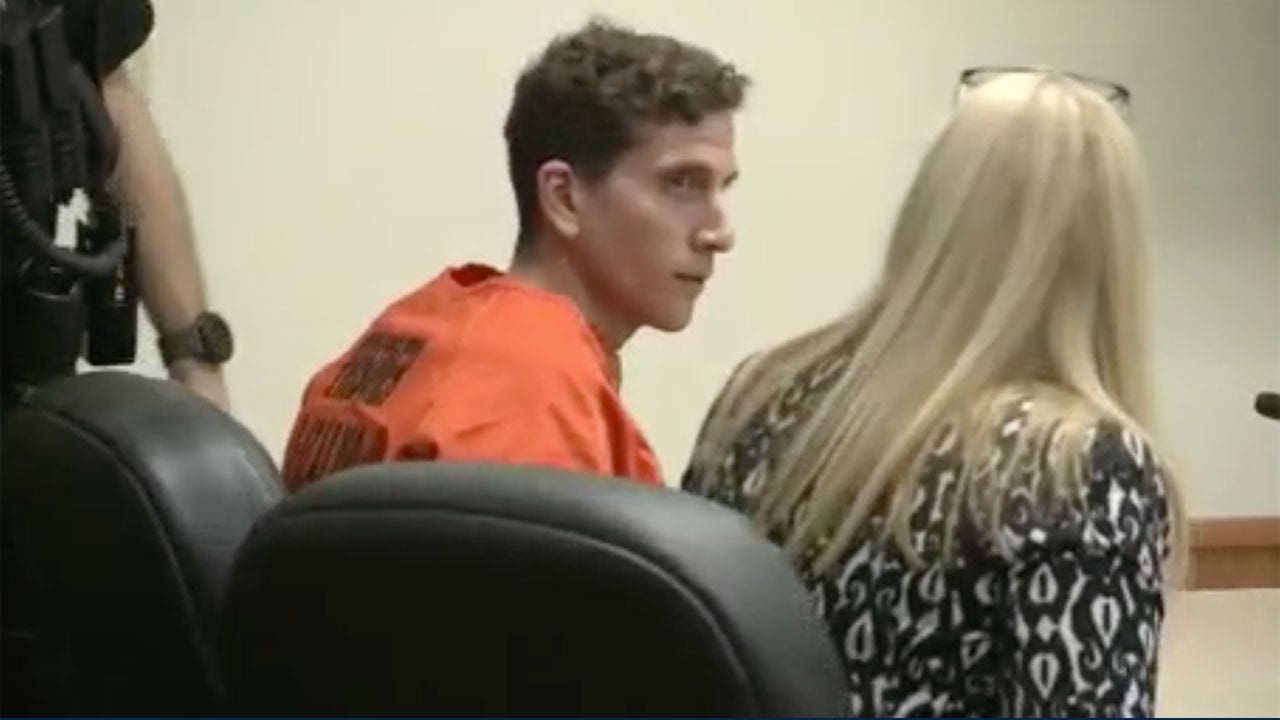
Brian Kohberger in a Latah County Court for his Jan. 5, 2023, initial appearance (POOL)
Evoking anger or frustration will help prosecutors paint a picture of the possibility that Kohberger could have performed such a heinous act. The prosecution in this case wants to use Kohberger’s testimony to disprove his alibi, though the defense is looking for other ways to corroborate it.
2. What is the defense?
No motive has been established, and Kohberger’s defense team wants to make the argument that someone else could have planted the knife sheath with his DNA at the scene of the crime.
If Kohberger’s defense team plans to argue the possibility of another attacker or multiple attackers, a jury is going to want evidence that points to a specific person or persons.
Even if the possibility of an anonymous attacker is on the table, there needs to be support through DNA evidence or some type of surveillance footage that captures someone other than Kohberger at or near the crime scene at the time of the murders.
3. Key evidence in the case
As of early April, the deputy prosecutor for the case, Ashley S. Jennings, filed the evidence list with the Idaho trial judge who will be presiding. It includes records from a Pittsburgh, Pennsylvania, Dick’s Sporting Goods where the prosecution claims relevance for Kohberger’s purchase of a black balaclava in January 2022.
This type of mask was the one described by the student who also lived in the house of the four victims and witnessed the killer fleeing through the back door.
Prosecutors also want to introduce video footage at the Sunset Mart in Moscow, Idaho, a half a mile from the crime scene. It allegedly captures Kohberger driving to and from the home where the students were murdered.
The evidence is meant to support a timeline of Kohberger’s activity leading up to and after the crimes took place and fill in any gaps that dismantle the argument that another attacker was involved.
Jay Logsdon, center, an attorney representing Bryan Kohberger, second from left, speaks during a hearing in Latah County District Court, Wednesday, Sept. 13, 2023, in Moscow, Idaho. Kohberger is accused of killing four University of Idaho students in November 2022. (AP Photo/Ted S. Warren, Pool)
4. Jury selection
Because the case has been so highly publicized, it’ll be challenging to find an impartial jury.
A change of venue was already court-ordered by the Idaho Supreme Court, moving the trial to Ada County in Idaho, rather than Latah County, where the murders took place.
5. Witnesses expected to take the stand
It’ll be interesting to see who the state calls as its first witness, since it’s usually the strongest witness to set the narrative.
Expected witnesses to be called in this three-month-plus trial include members from various law enforcement agencies and forensic experts. The prosecution’s list includes: Moscow Police Forensic Detective Lawrence Mowery, an investigator on the case; Latah County Coroner Cathy Mabbutt, and Spokane County chief medical examiner, Dr. Veena Singh.
Other potential experts to be called are FBI Special Agents Tony Imel and Nick Ballance. Ballance is prepared to speak about the location of Kohberger’s cell phone before and after the student homicides.
Another expert the prosecutor may call is Shane Cox. As a manager with Amazon’s Law Enforcement Response team, Cox is responsible for subpoena responses and search warrant requests.
CLICK HERE FOR MORE FOX NEWS OPINION
This testimony may not provide the full context of the workings of Amazon or Kohberger’s account and would oppose his testimony as well. However, prosecutors argue the purchase of a Ka-Bar knife and sheath allegedly used to stab the four students makes it relevant.
Boise-based expert Dr. Gary Dawson is also expected to be called to the stand by the prosecution to rebut the defense’s claim that there were multiple attackers. His testimony is expected to include information about the victims’ intoxication levels, which would render them unable to fight back against a single assailant.
The evidence is meant to support a timeline of Kohberger’s activity leading up to and after the crimes took place and fill in any gaps that dismantle the argument that another attacker was involved.
Continuing to build a case in State v. Bryan C. Kohberger
Though both sides have submitted their legal expert list, they have until later this month to disclose other non-expert witnesses to testify to their personal experiences. This may include the surviving roommates who were not harmed during the homicide.
Also, although the state claims it may call Kohberger’s family members, they’ve said they have no interest in helping.
As the trial date nears, more evidence, experts and potential documents will be filed on both sides to sway favor before the case is presented to a jury. The trial date is currently set for August 11, 2025.
CLICK HERE TO READ MORE FROM KELLY HYMAN
Read the full article from Here


San Francisco’s upzoning plan has passed. On Jan. 12, 2026, the day it goes into effect, developers will be able to build taller, denser buildings on thousands of sites in the western and northern parts of the city. As the debate over how and where to upzone raged in City Hall, flyers taped to utility poles across the city signaled the launch of a much more DIY campaign to reignite a plan that took shape — and fell through — over five years ago.
“Mayor Lurie has the chance to fund social housing,” the simple, black-on-white flyers read.

The posters refer to Proposition I, a ballot measure that passed in 2020 with 57 percent of the vote. Prop. I doubled the real estate transfer tax rate on buildings valued at $10 million or more. Proponents expected the new city revenue to be earmarked for new housing projects.
But the city’s mayors, who hold most of the power over the city’s budget, have so far declined to do so. Instead, it goes to the general fund.
Enter Honest Charley Bodkin and Dylan Hirsch-Shell, the duo behind San Franciscans for Social Housing. They call themselves SHIMBYs, or “Social Housing in My Back Yard.” An offshoot of the YIMBY movement, they think that, with enough public pressure, Lurie could be persuaded to change tack and start funding social housing in San Francisco. Their signs urge readers to sign an online petition pushing the mayor to establish a fund for “housing that is municipally-owned (or non-profit owned), permanently affordable, and available to a wider mix of income than traditional public housing.” Some 650 signatures have been collected so far in what appears to be a modest launch.
Hirsch-Shell is a former Tesla engineer who self-funded his mayoral campaign last year to the tune of $160,000; Bodkin was his campaign manager.
“I wasn’t so much convinced that I would win necessarily, but my interest was in promoting policy ideas that I thought were important,” Hirsch-Shell said. His platform included support for universal social housing and a universal basic income.
Bodkin was also a mayoral candidate before he met Hirsch-Shell on the campaign trail and joined his team. Shortly after getting into local politics, he was perhaps best known for being 86’ed from bars across his Haight Street neighborhood for alleged antics like inciting customers and striking a bartender in the head with a chair, according to a short documentary by Vincent Woo.

Bodkin says he’s six months sober now, and is focused on affirming local programs such as social housing and the public bank. He’s joined forces with Hirsch-Shell on the SHIMBY line, and they are plastering flyers in English, Spanish and Chinese across the city. They’re starting with Prop. I as a fund for social housing because “the will of the voters has been spoken.”
“I put my struggle, my efforts not into arguing with people at bars,” Bodkin said, “but with those that actually matter, those at City Hall.”
Former Supervisor Dean Preston, who authored Prop. I, is not formally allied with the SHIMBYs. Neither are the Democratic Socialists of America — arguably the most politically powerful socialist organization at the moment.
Still, Preston agrees with the SHIMBY thrust — he has been fighting for at least a portion of Prop. I funds to be spent on social housing for years. “The transfer tax is the one opportunity you have to tax these huge real estate speculators buying and selling mega-mansions and skyscrapers downtown to raise funds,” Preston said.
The plan, he said, was to utilize the Prop. I funds towards rent relief and social housing. The latter would be open to a variety of income levels, and owned or financed by the city, as opposed to traditional affordable housing which typically depends on subsidies and non-profit developers.
But no such funding mechanism was written into the proposition. Special taxes — taxes that go into dedicated funds — generally require a two-thirds vote, and a special tax of this nature would have been, according to the city attorney’s office, unconstitutional in California.
Instead, the Board of Supervisors passed a resolution saying the city should use Prop. I funds for affordable housing programs, including social housing. Because resolutions aren’t legally binding, the money went into the city’s general fund, where it has been flowing ever since. A report published in June of 2024 found that some $200 million were spent on a mix of housing related issues.
In 2024, Preston requested a report from the city that found a social housing program based on Prop. I revenue was feasible. The report indicated that cumulative revenue from the increase could total upwards of $400 million by 2026.
Although Preston, a democratic socialist, and the hundreds-strong DSA have long been vocal in the cause of social housing, San Franciscans for Social Housing is an organization of two (and “hundreds of other people that call themselves San Franciscans for social housing,” Bodkin said, referring to petition signers).
Without formal alliances, the pair may continue to address the Board of Supervisors during the minutes allotted for public comment during meetings at City Hall, or approach individual supes in public (as Bodkin has done to Mayor Lurie a couple of times before).
Even then, options are limited: Supervisors could pass another non-binding resolution asking for the money to be rerouted, but Lurie has given no indication that he would do so.
Bodkin and Hirsch-Shell are not the first to try to carve a third way through the YIMBY vs. NIMBY divide. In 2018, the short-lived PHIMBY (“Public Housing in My Back Yard”) acronym was rolled out by the Los Angeles chapter of the DSA, which saw it as a way to mitigate the risk of gentrification posed by SB 827, a bill championed by state Sen. Scott Wiener that would have exempted most new construction near public transit from local zoning laws.
The SHIMBYs are trying to pitch a wider tent. Bodkin said he has “paid dues” to SF YIMBY and lobbied in Sacramento with Wiener and California YIMBY. More recently, he said, he also joined the San Francisco DSA.

That hasn’t stopped Jane Natoli, the organizing director for YIMBY Action, from taking to Bluesky to refute the strategy of the nascent SHIMBY movement.
“San Franciscans didn’t pass a property transfer tax that funds social housing. They passed a tax that goes to the general fund,” Natoli wrote. “You can’t just wish funds for things.”
Preston is not surprised that YIMBY leaders like Natoli aren’t lining up to rally around the cause of social housing.
YIMBYs and socialists might look like allies “on paper,” Preston said. But as far as the YIMBY organizations are concerned, he continued, “There’s a consistent pro-industry theme that is very much at odds with developing social housing in San Francisco.”
On top of all that, Prop. I may be on the chopping block next year — local and state officials are looking for ways to repeal it, or mitigate its effects.
The flyers keep going up, for now. Bodkin and Hirsch-Shell say they’re trying to build a movement. Hirsch-Shell says it’s a lesson from the campaign trail:
“Retail politics is not dead.”


KANSAS CITY, Mo. — With a little nod, a little flick of the eyebrows, Alex Forsyth acknowledged fate.
He is a believer, he affirmed in a dingy locker room in Kansas City, the place that could’ve broken him. A believer in what, he didn’t say. He simply believes things happen for a reason. And that meant Thursday night on Christmas must’ve happened for a reason, 411 days since the special-teams rep that made him infamous.
“It was just a special, special day,” Forsyth said. “Special night.”
The cards fell. On Monday, three days before a return to Arrowhead Stadium, reserve offensive lineman Forsyth found out he’d be starting at center for the Broncos. And starting for a while, in the most critical juncture of the season for Denver. Incumbent Luke Wattenberg had a shoulder injury, bad enough to land him on injured reserve. Forsyth would need to stare down the Chiefs, and with All-Pro defensive tackle Chris Jones.
Forsyth, too, would need to stare down the memory of a play he acknowledged he could “never forget.”
On Nov. 14, 2024, a younger Broncos team was poised to shatter a streak of eight straight losses to the Chiefs at Arrowhead Stadium. Kicker Wil Lutz set up for a 35-yard field goal with Denver down 16-14 and a second left to play. Ex-punter Riley Dixon set up a hold, and Lutz swung. But on the snap, Chiefs outside linebacker Leo Chenal bowled Forsyth over.
Chenal swatted Lutz’s try away. Ballgame. Broncos tight end Lucas Krull stood on the sideline, head on hands. Denver had its most painful loss of the season, and one of its most painful losses to the Chiefs in a recent franchise history of painful Chiefs losses, and Forsyth was the goat.
“It’s always tough to come back from that — kinda get your mind off it, as much as you want to say focus on the next game and stuff,” Forsyth reflected on Thursday. “After a game like last year’s, it’s always tough to bounce back.”
That being said?
“Can’t let a bad play,” Forsyth noted, “ruin a career.”
And the story of Forsyth bloomed Thursday night, in a 20-13 win that served as some vindication for the entire franchise after a decade of misery at Arrowhead — and vindication for Forsyth. The Broncos’ offensive front surrendered just one sack and six hits on quarterback Bo Nix in a grind-it-out affair, and Forsyth, Nix’s teammate back at Oregon in 2022, was at the center. Jones did not beat him. Chenal was hurt. Forsyth opened up holes in the run game, with the Broncos totaling 128 yards on the ground.
He earned a game ball in the process, as the Broncos’ front didn’t skip a beat without Wattenberg.
“It was a tough trip home last year,” head coach Sean Payton said postgame, on Forsyth. “And it’s a little life lesson for someone like him to come back. And starting role, that was pretty cool.”
Payton dismissed Denver’s decade-long struggles at Arrowhead as “someone else’s demons.” Not the demons of this particular Broncos team. But in a way, those demons only piled on Forsyth’s shoulders after surrendering that field-goal block in 2024. Enough criticism floated Forsyth’s way that Nix and guard Quinn Meinerz came to their teammate’s very vocal defense.
Facing those demons again, Meinerz knows, is hard. The Broncos’ last time playing on Christmas came in Meinerz’ second season in 2022, when Denver got blitzed by the Rams 51-14. Even the prospect of playing again on such a holiday three years later, Meinerz told The Post, brought anxiety.
“Everybody gets scars a couple times here and there throughout their career,” Meinerz reflected.
Forsyth has scars deeper than most. Still, his Instagram and Twitter bios read “RIP Dad,” the man who’s served an inspiration in his journey. In general, the center is “extremely mentally tough,” as Meinerz said. And in warm-ups, as the memory of 2024 could’ve descended along with twisting tendrils of fog at Arrowhead, Forsyth didn’t pay much mind to the past.
“I gotta flush it, and move on,” he said postgame.
Since he was drafted in the seventh round in 2023, that sheer professionalism has endeared Forsyth to those in his room and beyond. Take Meinerz.
“Alex was ready for this moment,” the All-Pro guard told The Denver Post, on Thursday night.
Or take right tackle Mike McGlinchey.
“He works as hard as anybody in the (expletive) building,” McGlinchey said. “He’s been waiting for his opportunity to come in and do what he needed to do and there was never a doubt from us that that was how it was going to go today.”
Or take Nix himself, who gushed over Forsyth at the podium Thursday, after the Broncos’ second-year quarterback finished 26-of-38 for 182 yards, a touchdown and an interception in the Chiefs win.
“Nobody prepares more in this league than he does,” Nix said. “I would say that he’s one of the most in-depth preparers I’ve ever seen. And it’s awesome to play behind him.
“I knew going into this game that he wasn’t going to leave a stone unturned, and he prepares like no other, and he’s going to do the best to put the team in the best chance of succeeding.”
The Broncos will need plenty more from Forsyth in the weeks ahead. The soonest Wattenberg’s eligible to return is the AFC championship game, if Denver makes it that far. Forsyth filled in for Wattenberg in a four-game stretch last season, with up-and-down results: eight pressures and a couple of sacks allowed in that timeframe, according to Pro Football Focus. The Broncos need a bigger leap in Forsyth’s third season.
They got the first jump, on Thursday. And they, and Forsyth, left the past behind at Arrowhead.
“I think it’s just sort of a God wink that he got to come back here and start and play the full game,” Nix said, “and we get our first win here in a long time.”
Want more Broncos news? Sign up for the Broncos Insider to get all our NFL analysis.

Christmas came a little early for Seattle Mariners fans who had been waiting not-so-patiently for a new bat following the departure of Jorge Polanco. On Monday, the club struck a one-year, $6.25 million deal with veteran outfielder Rob Refsnyder.
He’s at least half the big bat the Mariners need to account for Polanco’s absence, but there is the awkward question of how, exactly, he’s going to get regular at-bats in 2026. As of now, he looks like a platoon DH with Dominic Canzone, with time in the corner outfield spots walled off by Randy Arozarena in left and a Victor Robles/Luke Raley platoon in right.
Jon Morosi floats an unexpected Mariners trade after Rob Refsnyder signing
Then again, there is the possibility that another shoe will drop that would open up more playing time for the 34-year-old Refsnyder, who had a .924 OPS against lefties in four seasons with the Boston Red Sox. To this end, Jon Morosi of MLB Network floated an interesting possibility on Monday.
“The signing of Refsnyder, for me, is the type of move you would make if you were expecting to flip Robles for a left-handed bat somewhere,” Morosi said on Wyman and Bob of Seattle Sports. “That’s where my brain goes. Your outfield is a little bit right-handed and maybe we’re about to see a re-balancing of the lineup in some way.”
Trade Robles? Sure. Why not?
That would free up Refsnyder to be the right-handed component of platoons at DH and right field. It’s always good to have flexibility like that, especially given that right-on-left platoon hitters get limited opportunities by default. This year, 72.6 percent of all pitches were thrown by right-handers.
The catch is that Robles only has so much trade value. His 77-game stint with the Mariners in 2024 is a big success in a greater sea of mediocrity, accounting for 3.1 of just 4.4 total rWAR dating back to 2020. He might not have much surplus value on top of even his $5.125 million salary for 2026.
Still, it could be possible for the Mariners to throw Robles into a bigger trade as a money-saving tactic. It could be possible in a Ketel Marte trade, and it might even be realistic in a trade for Brendan Donovan. The St. Louis Cardinals would technically save money on Donovan’s $5.4 million projected salary, and they could perhaps be willing to do so it it also meant getting back Lazaro Montes or Jurrangelo Cijntje.
Granted, the Mariners would be selling low on Robles if they moved on from him like this. That could prove to be a case of judging him too harshly for not finding his hitting stroke (i.e., .611 OPS) after badly injuring his shoulder in April.
But with a World Series trip in their sights for 2026, the Mariners simply need to field the best team they can. If they can subtract Robles but still upgrade their offense via a better hitter and more at-bats for Refsnyder, they’ll need to do it.

Kwanzaa begins in downtown Detroit with kinara candle lighting

Who’s behind those ‘SHIMBY’ posters across San Francisco?

PREVIEW: Blackhawks Head to Dallas to Take On Stars | Chicago Blackhawks

Man detained after woman shot in SW Miami-Dade: Sheriffs

Indiana Pacers-Boston Celtics Injury Report, Betting Lines, How to Watch, Lineups & More

Florida High School Football Rankings: Top 25 teams – Oct. 21

Cleary's 21 help Le Moyne down Central Connecticut State 69-64 in OT

How old is Bo Nix? What to know about Oregon quarterback ahead of 2024 NFL Draft

99th annual Pony Swim held in Virginia

Video: ‘It Didn’t Have to Happen This Way:’ U.Va. Faculty Call for Review of Police Response to Protests

Pro-police group asks DOJ to probe Soros-backed Virginia prosecutor using Biden-era law once aimed at cops

Israel becomes first country to recognise Somaliland

A murder, a manhunt and the grandmother who wouldn’t stop the search for her daughter’s killer

Nonprofit uses underwater technology to search for missing service members

Best of 2025: Top five defining moments in the European Parliament
-

 Massachusetts1 week ago
MIT professor Nuno F.G. Loureiro, a 47-year-old physicist and fusion scientist, shot and killed in his home in Brookline, Mass. | Fortune
-

 New Mexico1 week ago
Family clarifies why they believe missing New Mexico man is dead
-

 Connecticut1 day ago
Snow Accumulation Estimates Increase For CT: Here Are The County-By-County Projections
-

 Culture1 week ago
Try This Quiz and See How Much You Know About Jane Austen
-

 World7 days ago
Putin says Russia won’t launch new attacks on other countries ‘if you treat us with respect’
-
 Entertainment2 days ago
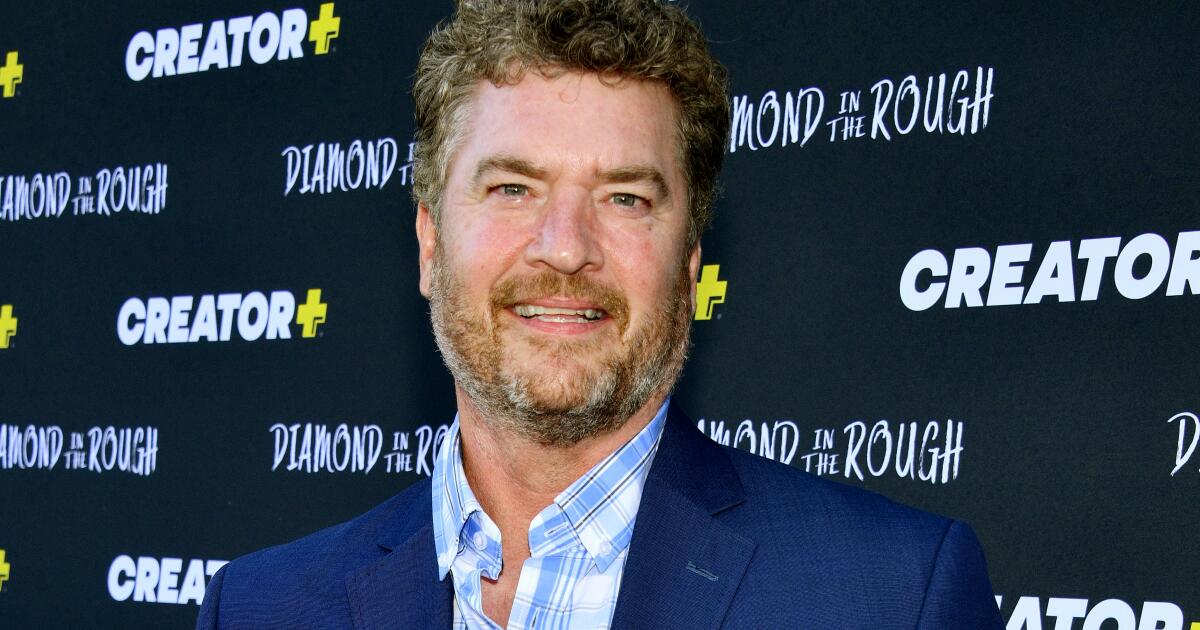
Pat Finn, comedy actor known for roles in ‘The Middle’ and ‘Seinfeld,’ dies at 60
-

 Maine1 week ago
Family in Maine host food pantry for deer | Hand Off
-

 Milwaukee, WI3 days ago
16 music and theater performances to see in Milwaukee in January 2026