Denver, CO
Xavier Truss might be a diamond in the rough for the Denver Broncos


The Denver Broncos have one of the greatest track records in the National Football League when it comes to finding and developing talent as undrafted free agents.
In all but one season over the past 21 years, the Broncos have had an undrafted rookie make their final 53-man roster. The franchise signed fifteen college free agents at the end of the 2025 NFL Draft, but one of them certainly stands above the rest. That would be 6’7” Georgia offensive lineman Xavier Truss.
A four-star recruit, the highest in the history of Rhode Island, Truss’ path to Athens was an exercise in patience. Known for sending offensive line talent to the NFL every season, he had to wait his with the Bulldogs—a championship caliber collegiate program with incredible depth on the offensive line.
His first three years was as a backup, but in 2022 he finally got his chance to start and held his own for the National Champions with 14 games at left guard. In 2023, he started 13 games with 8 of them at right tackle, 4 at left guard, and 1 at right guard. As a sixth-year senior, he was the Bulldogs’ right tackle for 14 games.
According to reports, the Broncos’ initial plan is to have him start out at guard. The team’s starters are set in stone with Ben Powers and Quinn Meinerz, but a backup spot will certainly be up for grabs. Let’s take a more in-depth look at Truss and what to reasonably expect for him during his rookie campaign.
Player Profile
Age: 23 | Experience: Rookie | College: Georgia | Height: 6’7” | Weight: 309 pounds
Arm Length: 33” | Hand Size: 10-1/2” | Bench Press: N/A | Broad Jump: 8’7”
Vertical Jump: 26 inches | 10-Yard Split: 1.82 seconds | 40-yard dash: 5.24 seconds
Xavier Truss’ 2025 outlook with the Broncos
One of the Broncos’ biggest strengths is their starting offensive line unit which ranked at the top of most metrics for their efforts in 2024. It’s safe to assume that their starting five from last season are set in stone. Though they will need to have some versatile backups to round out their roster.
Versatility is Truss’ calling card. With over 2,000 reps between three positions during his collegiate tenure with the Bulldogs, he has a lot of quality playing experience against top-tier competition. Prospects like him who offer multi-position flexibility often punch above their weight in battles to make a final roster over those who are relegated to one.
While his athletic scores at the NFL Combine weren’t great, his tape shows a player with adequate lateral agility and the ability to get to the second level. I also like his physicality and toughness on the field. He gives it his all ever snap and I liked how quick he was to initiate contact in his reps.
Unfortunately, his decision to forgo the bench press at the NFL Combine or Pro Day emphasizes concerns about his strength. It’s a fair and noticeable critique. Truss needs to improve in that regard though that’s not uncommon for linemen coming into the league.
Outside of his play on the field, his former college coach Kirby Smart raved about his character, toughness, and leadership. All of those are traits Head Coach Sean Payton seeks in his payers. He certainly seems to fit the mold and vision for the culture Payton’s seeking to establish here.
#Broncos UDFA OL Xavier Truss (Georgia #73) completely washing Que Robinson out of the play on back to back snaps
Love Que, but we got an absolute DAWG in our UDFA haul! Gonna be fun to watch these two compete this summer pic.twitter.com/CVUw35QyiM
— Kodiak Broncos Podcast (@KodiakBroncos) April 30, 2025
Final Thoughts
The Broncos haven’t spent significant draft capital in Payton’s tenure on the offensive line. However, they have put a major emphasis signing undrafted collegiate prospects to round out their roster. One could call it the Zach Strief path—a rising star in the coaching ranks who Payton signed as an undrafted free agent years ago with the New Orleans Saints.
According to Mike Klis, Truss received one of the highest bonuses and guarantee amounts of any player in their 15-man undrafted free agent class. That doesn’t make him a shoo-in for the final 53-man roster, but I believe it indicates they feel confident about his ability to develop into a starting-level player.
The Broncos had nine offensive linemen on their initial 53-man roster. For this upcoming training camp, Truss’ main competition will be Alex Palczewski and Frank Crum. Both were also undrafted players that wound up making the Broncos’ roster each of the last two seasons.
Who earns backup spots on the Broncos’ offensive line will be one of the best battles to watch. There’s no doubt Truss is certainly going to be in the mix. The concerns with his strength and being behind the aforementioned relative to the playbook are marks against him. If he doesn’t crack the final 53-man roster, he certainly merits continued development on the team’s practice squad.



LAS VEGAS – Wisconsin had Denver under its thumb, but somehow the Pioneers slipped away.
Denver scored twice in the final 12 ½ minutes to score a 2-1 victory over the Badgers at T-Mobile Arena. The win gave the Pioneers their third national championship in five seasons and their 11th overall, and it came on a night when they were held to a season-low 15 shots on goal.
How did the Pioneers escape with a championship that easily could have been the Badgers’? To get an answer from the UW players, they would need more than the 15 minutes they got in the locker room to regroup before postgame interviews.
The pain they felt, however, needed no explanation.
“I think I’m still a little shocked right now,” senior captain Ben Dexheimer said. “I’m definitely going to settle in in the next few days, but I couldn’t be prouder of this team from the ups and downs throughout the year. I just love every one of those guys in that room.”
Rieger Lorenz and Kyle Chyzowski scored during a 7-minute stretch in the third period for Denver, which closed the season with a 29-11-3 record and a 17-game unbeaten streak.
The Badgers (24-13-2) were also pretty good at the end of the season, winning nine of 12 games to reach their first NCAA final since 2010. UW’s first championship since 2006 proved elusive, but the program defeated three top-10 teams to get to the title game.
It was a heck of a run, just not the greatest finish.
Here are three takeaways from the game.
Badgers defense held up its end of the bargain
The improvement Wisconsin made defensively as the season went on was critical to its run to the title game. The Badgers had some defensive gems in the postseason, but this may be have been their best effort.
They held Denver to two shots in the first period, tying the fewest ever in a championship game, and then allowed just three in the second. The Pioneers’ 15 shots? That was also the fewest ever in a Frozen Four game.
Both Denver goals were hard earned.
On Lorenz’s goal, UW’s Daniel Hauser made the initial save. It was the rebound that got him. And Chyzowski’s game-winner came on an extended possession that, from the UW perspective, felt longer because Hauser lost his stick halfway through it.
“I’d probably say it’s the hardest team we’ve played against all year, just how they were on it,” Denver coach David Carle said. “Their forecheck made it real challenging to be able to break pucks out. We saw it against North Dakota, as well. It was an excellent team on their end.”
A 2-0 lead may have done the trick for UW
For the fourth time in the tournament, the Badgers scored first. Freshman Vasily Zelenov took an outlet pass from Weston Knox through the neutral zone and fired his only shot of the game from just outside the left circle.
The challenge was getting a second goal.
“We needed to in my opinion, get it to two, and we just couldn’t do that,” Badgers coach Mike Hastings said.
Similar to what Hauser has done for UW at times this season, Pioneers goaltender Johnny Hicks, the most outstanding player of the Frozen Four, kept his team in games. He finished the season 16-0-1.
“We were throwing everything we had at the net, but we just couldn’t find a way to get one through,” sophomore Gavin Morrissey said.
Denver’s defenders sacrificed their bodies in win
Wisconsin finished with 30 shots. Denver tallied 31 blocks, 10 better than its previous season best.
It is rare to see a team have more blocks than its opponents has shots in a game. Given UW’s struggle to get a second goal, Maybe if one of those got through …
“Obviously we only had one, so if I had to ask for something, it’d be one to get by them,” Hastings said. “Their commitment level, just like our commitment level, is at an all-time high when we get to this moment.”

LAS VEGAS – One more win and the Wisconsin men’s hockey team brings home a national championship and completes a heck of a postseason run.
The Badgers (24-12-2) face Denver (28-11-3) in the NCAA championship game at 4:30 p.m. Saturday, April 11, at T-Mobile Arena with a chance to bring home their first national championship since 2006.
A win would also give UW its fourth straight postseason win over a higher seed. All those teams were ranked among the top eight in the final USCHO regular-season poll.
With a Wisonsin win …
The Badgers will sweep the men’s and women’s titles in the same season for the first time since 2006. No other college program has accomplished the feat.
The Big Ten would win its ninth title this school year. Here is the rundown: Football, Indiana; men’s basketball, Michigan; women’s basketball, UCLA, women’s hockey, Wisconsin; men’s soccer, Washington, wrestling, Penn State; field hockey, Northwestern, and water polo, UCLA.
Check for updates on the UW-Denver NCAA final throughout the day.
Wisconsin-Denver tale of the tape
Scoring offense: Wisconsin 3.71 (fifth nationally); Denver 3.62 (8).
Scoring defense: Wisconsin 2.97 (32); Denver 2.12 (4)
Scoring margin: Wisconsin .74 (14); Denver 1.50 (I5)
Power-play percentage: .265 (6), Denver .188 (37)
Penalty-kill percentage: .722 (58); Denver .818 (23)

A look at Wisconsin hockey’s final practice of the season
On the eve of the national championship game, the Wisconsin men”s hockey team went through a short workout at T-Mobile Arena on Friday Apri 10.
Coaching legend offers Mike Hastings advice
After the Badgers defeated North Dakota in the semifinals Thursday, Badgers coach Mike Hastings received a text message from former Boston College coach Jerry York.
“He just said enjoy tomorrow’s practice,” Hastings said. “We always thought it was the best practice of the year and then he put dot, dot, dot, but it was hard to schedule that one.”
Getting to the final possible practice of the season means reaching the national championship game. York coached for 50 seasons. He spent the final 28 at Boston College where he led the Eagles to eight NCAA finals and four championships.
As Hastings planned the team’s final practice of the season, he kept York’s message in mind.
“To me it’s about us having energy tomorrow because we’re going to need a lot of it,” Hastings said. “And so we went out for a short period of time. (The players) had a lot to do with what we were doing with practice.
“I went to the leadership group and said, ‘Hey, here’s some ideas I’ve got. What are you guys feeling?’ And so they ended up putting into that. It was a good 25-minute scheme.”
Denver, CO
Recap: Denver Nuggets B squad defeats Oklahoma City Thunder C squad 127-107. – Denver Stiffs

Neither the Denver Nuggets nor the Oklahoma City Thunder elected to put their best foot forward on Friday night. The Nuggets rested all of their starters and the Thunder rested basically everyone who plays in their rotation with the exception of Lu Dort. That made for an interesting game but the Nuggets still found plenty of production from guys like Jonas Valanciunas, Julian Strawther and local college hero David Roddy. All three of those players put up 20+ points and led a big run in the fourth quarter to put the Thunder away 127-107. The Nuggets also end up securing homecourt advantage in the first round of the playoffs with the win.
The offenses were understandably clunky on both sides as the game opened. The Nuggets were playing a lot of one on one and were able to get a small lead. Aaron Wiggins was the main catalyst on the Thunder’s side. Valanciunas bullied his way to points and kept Denver in front as the quarter progressed. The Nuggets stayed in the lead by a couple buckets past the halfway point of the first and then they started hitting some threes which grew their advantage up near double digits. Jalen Pickett had some strong minutes and the lead got past ten as the quarter winded down. The Thunder pushed back, Kenrich Williams started attacking and got some buckets. Both teams started firing away from three to close the first. When it ended Denver led 34-27.
The Nuggets kept their lead in the early going of the second quarter but OKC had started to find some rhythm on offense. After a few minutes the quarter slowed down with some officiating reviews, first for a challenge and then with Lu Dort elbowing Roddy in the face on a rebound attempt (ruled a common foul). The Thunder kept within a couple buckets until Valanciunas came back in and started dominating the glass. Unfortunately the reserves were still inevitably clunky and turnovers let OKC get back within four again when there was just over four minutes to go in the half. Strawther heated up and helped Denver to a strong close. After two quarters they led 59-51.

The Nuggets were a little sluggish coming out of the locker room but Big Val kept them in front early in the third quarter. Eventually the rest of Denver’s starting group got going as well while Branden Carlson was scoring for the Thunder. The Nuggets were still sloppy with the basketball, Wiggins and Williams were making shots for OKC and the lead started to dwindle. Tim Hardaway Jr., who had a terrible first half shooting, hit a much needed three to stop the latest Thunder run and keep Denver in front but the turnovers and Nikola Topic were making things difficult. Oklahoma City was definitely playing with more effort but the Nuggets kept getting a key bucket here or there to not fully relinquish the lead. Carlson was giving Denver problems again, including a poster jam on Zeke Nnaji. It wasn’t a strong close to the third for the Nuggets, but after three they still led 90-85.
Denver opened the fourth on a 10-0 run that was led mostly by Roddy who was shooting with confidence. After a timeout by the Thunder, Valanciunas had a big putback dunk and kept the momentum on the Nuggets side. It took until almost the seven minute mark before OKC finally hit a shot and by that time the lead was creeping up near twenty. It continued to be all Denver. Strawther (who had a couple nice steals in the game) poked the ball away from Topic and highlighted the Nuggets run with an impressive fastbreak dunk. The energy started to wane after that with the score making the game look pretty well in hand. Denver settled for jump shots and the Thunder went on a run to cut the lead back down to a dozen. David Adelman took a timeout and that got the defense refocused. Roddy hit another three and the clock started to work against OKC. Denver’s bench was able to wind it out and get some points at the free throw line to finish it off. They secure the victory, 127-107.
Final Thoughts
Got to love the effort from the less heralded guys
Valanciunas was the big star of the game and showed that he can still be a very effective player with his size and skill. Roddy was probably the best story of the night though, the Colorado State Ram alum got significant minutes in the second half and was the key to Denver’s big run to open the fourth quarter. There’s no guarantees he is on an NBA roster next season and as a two-way player he won’t be eligible to play in the playoffs so these two games are a great opportunity for him to start his audition for a spot on someone’s team next season. He definitely helped himself tonight. Other guys who have stepped up during the season but lost playing time in the rotation squeeze when the starters got healthy looked great tonight too. Pickett played a strong mid-range game and gave Denver a boost off the bench, Strawther looked like the scoring threat we know he can be. All around a really great effort from some players who haven’t got a lot of regularity in terms of playing time.

This win puts Denver in the driver seat for seeding
Shortly after the Nuggets sealed up this win, the Houston Rockets fell to the Minnesota Timberwolves. That means Houston cannot catch Denver and thus the Nuggets will have homecourt advantage in the first round. The Los Angeles Lakers, however, defeated the Phoenix Suns by double digits tonight and can still secure the three seed with a win on Sunday against the Utah Jazz coupled with a Nuggets loss to the San Antonio Spurs on the same day. The Spurs have nothing to play for so in theory Denver is in the driver’s seat in terms of who they want to see in the first round and what side of the playoff bracket they’d like to land on. Beat the Spurs, take on the Minnesota Timberwolves and avoid the Thunder until the Western Conference Finals. Lose to the Spurs and face the Houston Rockets in the first round while likely facing the Thunder in round two. I’d take option one but we’ll see where the Nuggets organization’s head is at when the injury report comes out tomorrow evening. An interesting side note to this decision is Nikola Jokic will need to play at least 15 minutes on Sunday to qualify for season awards.
Credit is due to David Adelman
I assume Denver wants to get the three seed, it makes the most sense given that T-Wolves star Anthony Edwards is fighting runner’s knee and the Nuggets would avoid a matchup with OKC until the Western Conference Finals. It was a bit of a calculated gamble tonight to sit the entire starting lineup and risk the opportunity to play for the three seed on Sunday. In the end it looks like a brilliant call. There’s no doubt the Nuggets starting group can benefit from a night off. Aaron Gordon, Cameron Johnson, Christian Braun and Jokic all missed time this season with injuries and you can still see the occasional winces or additional padding that indicate those injuries aren’t fully healed. Meanwhile, Jamal Murray’s been putting in a herculean effort leading the team when those guys haven’t been available. Denver was able to get all of their starters a night off and still ended up with a twenty point victory playing guys who have got minimal live game minutes together this year. Oh by the way, it was their eleventh straight victory. Great win all around, including from Denver’s coach.

How Michigan DC Jay Hill will use the secondary to power the defense

Lawmakers close door on Massachusetts online casino legalization

Minnesota’s Pohlkamp helps Denver beat Wisconsin 2-1 for 11th national hockey title, 3rd in 5 years

Mississippi reveals its full history for America’s anniversary year, a contrast to federal efforts
KCPD investigating after 1 man hurt in Saturday shooting

Florida High School Football Rankings: Top 25 teams – Oct. 21

How old is Bo Nix? What to know about Oregon quarterback ahead of 2024 NFL Draft

Cleary's 21 help Le Moyne down Central Connecticut State 69-64 in OT

99th annual Pony Swim held in Virginia

Indiana Members Credit Union announced as new anchor tenant at Bottleworks District

Carney casts himself as NATO defender amid Trump beef, despite Canada missing key benchmark for decades

‘Enough of war!’ says Pope Leo XIV who grows increasingly frustrated
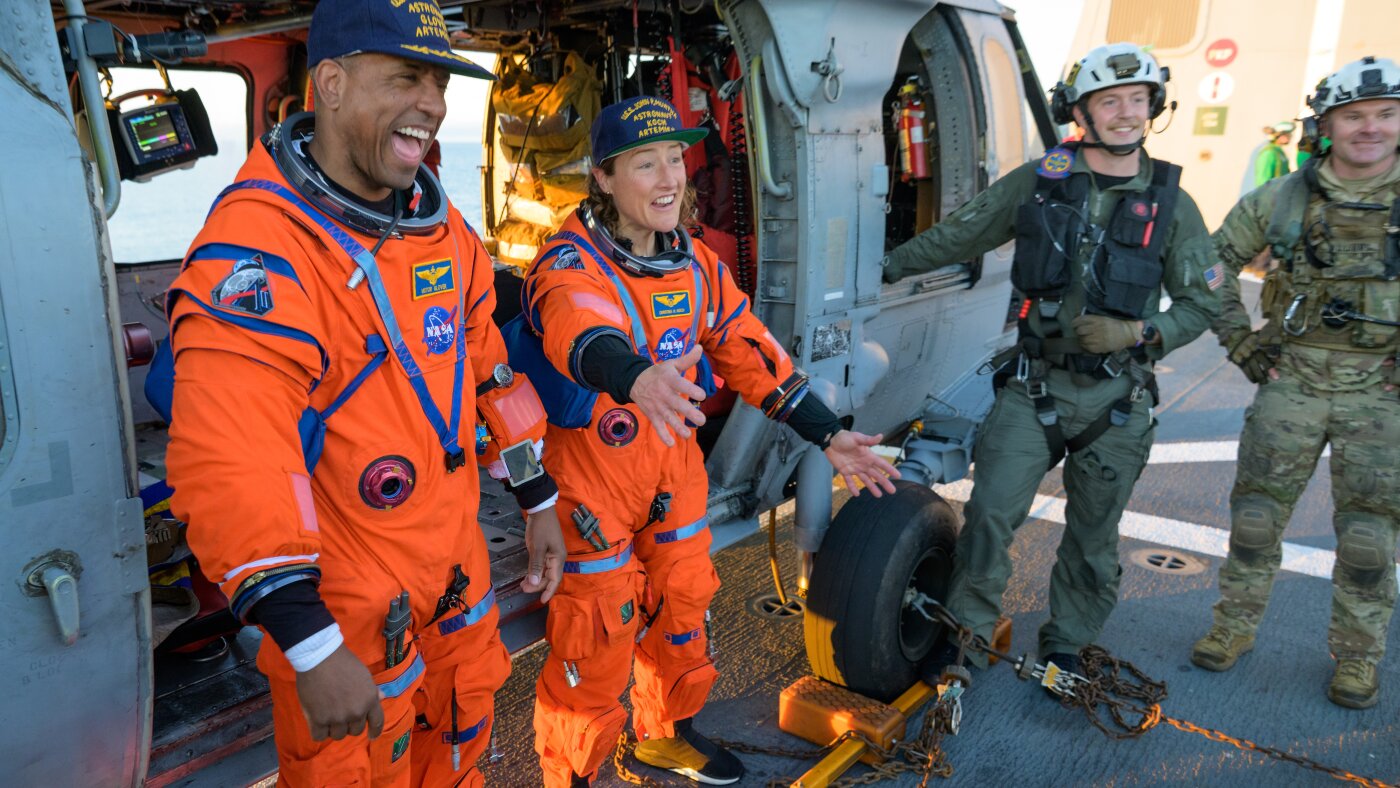
Artemis II splashdown captures nationwide attention

Video: Police Fatally Shoot Man After Stabbings at Grand Central Subway Station

Trump blasts Spanberger ahead of Virginia meetings, says state faces tax base exodus like New York, California
-

 Atlanta, GA1 week ago
1 teenage girl killed, another injured in shooting at Piedmont Park, police say
-

 Georgia5 days ago
Georgia House Special Runoff Election 2026 Live Results
-

 Pennsylvania6 days ago
Parents charged after toddler injured by wolf at Pennsylvania zoo
-

 Arkansas2 days ago
Arkansas TV meteorologist Melinda Mayo retires after nearly four decades on air
-
 Milwaukee, WI6 days ago
Potawatomi Casino Hotel evacuated after fire breaks out in rooftop HVAC system
-

 Indianapolis, IN1 week ago
Fighting Illini begin Final Four preparations in Indianapolis
-

 Technology1 week ago
Anthropic essentially bans OpenClaw from Claude by making subscribers pay extra
-

 Detroit, MI1 week ago
Puppy rescued after getting stuck on chimney in Detroit