Denver, CO
‘I’ll never be the person that I was’: Denver police recruit recalls ‘brutal hazing’


Former Denver Police Department recruit Victor Moses spoke with USA TODAY about his lawsuit against the department and what happened the terrible day that a training drill cost him his legs.
Victor Moses knew he wanted to be a police officer in middle school.
He was introduced to the profession while he was growing up in Tallahassee, Florida in 2005, when he would see a neighbor’s friend who worked for the Tallahassee Police Department coming and going from the job.
“I just enjoyed hearing her tell her stories and seeing her,” Moses recently told USA TODAY in an interview. “I was always intrigued as a child just watching her and seeing the police car.”
But tragedy struck not long after Moses decided to pursue his dream of becoming an officer 18 years later. And it’s a dream that may never come true.
During a training exercise while he was a recruit for the Denver Police Department, Moses says that department officials and paramedics forced him to participate in “Fight Day,” a “brutal hazing ritual” that cost Moses both his legs, according to the a lawsuit filed about a month ago.
The lawsuit alleges that Moses’ mistreatment during the training was the culmination of a “culture of violence, hazing, and training that causes unnecessary injuries among recruits,” pointing to a 2014 incident where a trainer allegedly threatened to, “slap the (expletive) out of” the recruit and put the recruit in a chokehold.
“I wish I would have gone further into research,” said Moses, 29. “One shouldn’t have to apply to a police academy and say ‘Am I going to be in danger at an academy?’”
What happened during police training?
On Jan. 6, 2023, Moses was participating in a so-called dynamic action drill during Denver police academy training, according to the lawsuit, which says the drill involves four stations intended to teach future officers how to escalate and de-escalate force. It’s also known as “Fight Day” in the department, the lawsuit says.
At the second station, Moses was knocked to the ground, hit his head and passed out in a simulated attack by multiple department personnel, the lawsuit says. The personnel then forced Moses to his feet to continue the drill until he passed out again when an officer called paramedics over, the lawsuit says.
Moses told the paramedics that he was “extremely fatigued” and experiencing “extreme leg cramping,” a sign of distress in people with sickle cell trait, something Moses informed the department he had in a police application form, the lawsuit says.
Although paramedics found that Moses’ blood pressure was extremely low, they cleared him to continue training, the lawsuit says. But, it continues, Moses was so exhausted that officers had to bring him to the third station, a ground-fighting drill during which an officer put his body weight on Moses, causing the recruit to say, “I can’t breathe,” before he became unresponsive.
“I felt something I’ve never felt before,” Moses said. “It’s really hard to explain, like, how it feels like to die, and I’ve never had that, but I felt what death feels like.”
What happened to Victor Moses after the training drill?
Moses was taken to a hospital. He required multiple surgeries to save his life, had to have his legs amputated and was hospitalized for four months, according to the suit.
Moses says he didn’t really understand the extent of his injuries at first because of how heavily medicated he was.
“When they started weaning down on the drugs, I felt, ‘Why am I still here? Why am I not home, what’s going on?’” Moses said, with the traces of pain evident in his voice. “You’re just in pain, your parents are there for some reason and it was just living hell. It really became real to me when my classmates were visiting me and started explaining what happened and then you see your rotting body.”
Denver Police did not respond to a request for comment.
Lawsuit accuses paramedics of lying to doctors
Moses’ lawsuit includes multiple text exchanges from recruits who were there during the training that day Moses was hurt.
“What got me was the lack of attention from the paramedics, they should have stepped in way sooner and stopped it,” then-recruit Zachary Vasquez said in a group chat, according to the lawsuit.
The lawsuit alleges that paramedics with Denver Health lied to doctors at the hospital, denying that there was a “significant traumatic mechanism of injury,” causing Moses’ care to be compromised.
“I mean the bulk of us witnessed him fall headfirst on the tile, they don’t have much of an argument against it,” Vasquez said in the group chat, the lawsuit says.
Moses developed severe compartment syndrome, rhabdomyolysis, malignant hyperthermia, and severe hyperkalemia in the hospital, according to the lawsuit.
The paramedics helped “enable continued violence and brutality, holding the gate open for additional infliction of trauma even if the recruit has been rendered unconscious,” according to Darold Killmer, Moses’ attorney.
The lawsuit alleges the department continued to cover up their actions, telling news media at the time that Moses’ injuries were caused by undisclosed conditions.
Denver Health declined to comment but pointed to a previous statement to USA TODAY saying that “safety and well-being is a top priority for Denver Health and its paramedics.”
Moses willing to return to policing
Moses told USA TODAY that despite the traumatic incident, he would be willing to work in or around the policing profession in the future.
“I will always support the police. There’s so many good police officers out there,” Moses said. “Yes, my life was ruined, I was turned permanently disabled. But it doesn’t negate the fact that there are a lot of good cops out there. It’s just unfortunate when the actions of a bad police officer, in this case, a group of bad officers, overshadow their work.”
If returning to a police force is not possible, Moses would consider being an advocate for police recruits.
“I know what it’s like, it’s a six-month commitment. It’s not easy. And God forbid if there was ever any other hazing in the future” Moses said. “All police start as a recruit and it’s really important to have good police recruits that aren’t abused and demoralized.”
Moses underwent his most recent surgery in July and continues to recover from his injuries.
“I never feel like it will never be a 100% recovery,” Moses said. “Yes, I’m doing therapy but I’ll never be who I was when I woke up the morning of January 6. I’ll never be that person that I was.”



After making fans wait all through the first round only to trade back, the Denver Nuggets finally get their man as they select with the 35th pick in the draft: Trevon Brazile, the 6’9 combo forward from Arkansas.
So who is Brazile?
Trevon is a freak athlete at 6’9.5 barefoot with a wingspan of almost 7’4 and a 41″ vertical jump. He can fly, with transition dunks that amaze and helpside blocks that astound. He can also hit from behind the arc if you leave him open, and he has soft hands around the rims for lobs and finishes. He can also be a good perimeter defender using that wingspan and his quick feet to get in position and make life tough. As I said about him before the draft: “When he is playing hard and engaged, he looks like a first round talent who can spot up for 3 or kill you at the rim while hounding ball-handlers on the perimeter.”
He is 23 years old already, however, and he still hasn’t found the necessary motor to bring that explosion and game-changing play for the whole time he’s on the court. He only shoots 66% from the charity stripe and doesn’t have much of an in-between game, so if he’s not driving the hoop or taking open threes his creation bag is a little thin. He spent his freshman year at Missouri, the alma mater of both Michael Porter Jr. and Josh Kroenke, so Josh would obviously have some insight into him from early in his college career.
But Denver has been in dire need of some size and athleticism and they just got both in the same package. Brazile at his best absolutely looks the part of an NBA player who can make an impact at both ends of the floor. Whether he can grow his game in shorter bench stints early in his career is certainly going to be intriguing to watch – and the Nuggets finally have a drafted player to pour some interest and effort into themselves.
Welcome to the Nuggets, Trevon Brazile!
Denver, CO
Denver Broncos Foundation launches extension of ‘ALL IN. ALL COVERED.’ emphasizing youth football participation

DENVER (KKTV) – In extension of the Denver Broncos Foundation’s helmet distribution program, they have launched the “ALL IN. ALL COVERED.” Statewide Youth Football Participation Program, in partnership with Every Kid Sports and Good Sports.
Over the course of five years, the program will aim to reduce financial barriers to play by providing financial support and essential equipment to increase youth participation in tackle and flag football.
The Foundation will fund registration fees for underserved youth through Every Kid Sports, while increasing access to both individual and shared team equipment through Good Sports.
The program aims to serve more than 17,000 children across Colorado, using football as a pathway to drive equitable access and sustained participation in sport.
“We’re excited to work with Every Kid Sports and Good Sports to grow youth football participation across Colorado and help open doors to the sport for both boys and girls,” said Bobby Mestas, Broncos Senior Director of Youth & High School Football.
Coaches and players from across the Pikes Peak Region had their first look at the new helmets they received for free from the Denver Broncos Foundation back last year.
Copyright 2026 KKTV. All rights reserved.

Draft day in Denver ended with a yawn.
But behind the scenes, the Nuggets were pleased by their anticlimactic outcome.
On the clock Tuesday night with the 26th pick in the NBA Draft, the Nuggets chose to trade out of the first round, beginning to replenish an asset pool that was drained by the previous front office regime. San Antonio moved up to No. 26 in exchange for giving Denver the No. 35 overall pick in Wednesday’s second round and two additional future second-round picks.
Denver now controls a 2028 Minnesota second-round pick and a 2031 Sacramento second-rounder, according to league sources. The Spurs selected Connecticut big man Tarris Reed Jr. at No. 26. The Nuggets will go into Wednesday with two picks — 35th and 49th. Multiple teams had already called them to inquire about No. 35 by the end of Tuesday night, one source told The Post.
Co-general managers Jon Wallace and Ben Tenzer have less than 24 hours to decide if they want to use that pick or parlay it into more future draft capital. Part of their rationale for trading back, multiple team sources told The Post, was that they felt the 2026 draft class had a substantial drop-off in talent around No. 20.
What the Nuggets eventually do with their new picks will determine how Tuesday’s trade is evaluated. Second-rounders are often used as trade assets rather than to select playable talent, and Denver’s shortage of them has inhibited its ability to get involved in trade conversations around the league recently. Wallace and Tenzer inherited the NBA’s most depleted war chest when they took over the front office in 2025, whereas adversaries like Oklahoma City and San Antonio are practiced in the art of asset accumulation.
If one first-round pick can slowly grow into a wider swath of lower-quality picks that can subsequently be put to good use in other trades to improve the roster, then No. 26 will have been a worthy sacrifice. That could take lots of time, hard work and negotiating tact.
But the Nuggets are also faced with awkward luxury tax decisions this offseason, and they’re tied to multiple contracts that are widely perceived as having negative value, namely Christian Braun and Zeke Nnaji. If they promptly use their new picks to dump either of those salaries without bringing back any helpful players, it would be a clear indicator that team ownership is prioritizing tax savings over roster improvement.
The front office’s challenge will be to balance and accomplish both goals, which tend to be at odds with each other. At least one salary-shedding move is essentially guaranteed to occur as Denver attempts to retain Peyton Watson in restricted free agency, as The Post reported in April.
Wallace and Tenzer still have not made a draft pick yet in their tenure. For now, Denver will treat it as a win if they can stockpile future picks and right some old wrongs. A seemingly tedious trade elicited applause inside the Nuggets’ war room Tuesday, even as team president Josh Kroenke was caught on camera looking disgruntled by something. His bemusement, according to a source, was in response to some confusion on the other end of the line as Denver was trying to call in the 26th pick on behalf of the Spurs.
San Antonio walked away from the first round with two prospects secured in Reed and Jayden Quaintance. Oklahoma City snagged Aday Mara 12th and Bennett Stirtz 16th — sobering reminders that talent is going to keep on flowing into the two rosters that pose the biggest existential threats to Denver.
Nuggets recent draft history
The Nuggets haven’t drafted in the top 20 since 2018 — the cost of becoming a perennial playoff team as Nikola Jokic entered his prime. They’ve gotten mixed results from their late first-round picks since then, which is typical at that stage of the draft. Five of their six first-rounders this decade are still on the active roster, though only two of them were in the everyday rotation last season: Christian Braun (21st) and Peyton Watson (30th), both of whom were selected by former GM Calvin Booth in 2022.
Nnaji (22nd in 2020) is the third-longest tenured player on the team, but the four-year, $32 million contract extension he signed in 2023 has turned out to be a small-scale albatross on Denver’s cap sheet. Bones Hyland (26th in 2021) was shipped off to the Clippers at the 2023 trade deadline after he caused locker room frustration by walking off the bench during a game. He plays for Minnesota now.
Braun was a bench contributor during Denver’s 2023 run to the championship and signed a five-year, $125 million extension last October. Watson will be a restricted free agent and an offseason priority for Denver’s front office in the coming weeks.
Julian Strawther (29th in 2023) has been in and out of the rotation throughout the first three years of his career, and his role was scaled back last season with Tim Hardaway Jr. slotted in at backup shooting guard. Strawther is eligible to sign a rookie-scale extension before next season, or he’ll become a restricted free agent in 2027. Denver traded three second-round picks to Phoenix to move up six spots for DaRon Holmes II (22nd in 2024), who tore his right Achilles tendon in his first Summer League game and spent most of last season developing in the G League.
The Nuggets’ 2025 first-rounder belonged to Orlando as part of their trade for Aaron Gordon. Their 2027 first currently belongs to Oklahoma City as part of the trade for the pick that became Watson.
Booth’s tenure was characterized by his willingness to mortgage future draft capital for immediate gain — or immediate salary relief. Most notably, he burned through six second-round picks in a matter of weeks during the 2024 offseason to get rid of Reggie Jackson and to move up for Holmes.
-
 News10 minutes ago
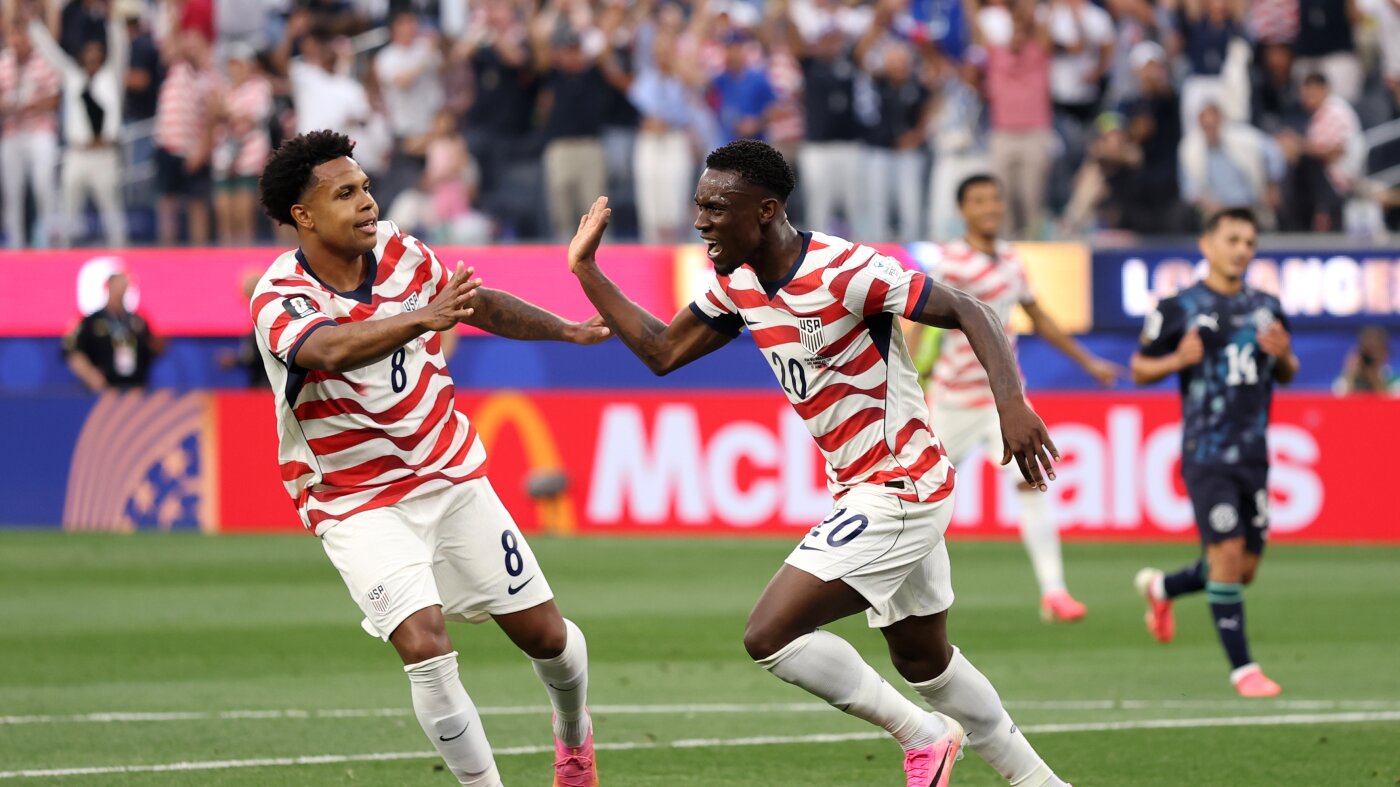
With a Round of 32 spot already clinched, the U.S. takes on Turkey in the World Cup
-

 Los Angeles, Ca1 hour ago
Hospital needs help identifying man found unconscious in downtown Los Angeles
-

 Detroit, MI2 hours ago
Large police presence for an investigation on Detroit’s west side
-

 San Francisco, CA2 hours ago
No tolerance for hate or crime at SF Pride this weekend, officials say
-

 Dallas, TX2 hours ago
Alanna Smith injury update: Dallas Wings player in concussion protocol
-

 Boston, MA2 hours ago
Boy, 13, hospitalized after being found unresponsive in swimming pool at Beverly home
-

 Denver, CO2 hours ago
Denver Nuggets draft Trevon Brazile in the second round of the NBA Draft – Denver Stiffs
-

 Seattle, WA2 hours ago
Council eyes street barricades in fight against violence, sex trafficking in north Seattle

