Colorado
President Trump denies Colorado’s disaster declaration request for wildfire, flood recovery efforts, Polis says


Colorado Gov. Jared Polis and Sens. Michael Bennet and John Hickenlooper are asking President Trump to reverse a decision, saying the president denied disaster declaration requests for major wildfires and flooding across the state earlier this year.
In August, lightning strikes near the town of Meeker sparked two massive wildfires that burned over 150,000 acres in Rio Blanco County. The Lee fire became the fifth-largest wildfire in the state’s history. Polis declared a disaster emergency for the Elk Fire on Aug. 3, which was updated on Aug. 6 to include the Lee Fire. That declaration unlocked over $18.5 million in state funding to help with suppression and recovery efforts.
The Elk and Lee Fires and subsequent mudslides caused approximately $27.5 million in damage, according to state estimates validated by FEMA. State officials expect that estimate to grow as recovery efforts continue.
Polis said the region’s Piceance Basin produces between 2 and 5% of the United States’ daily consumption of natural gas and that the two local utility providers in the area suffered almost $24 million in damage to their infrastructure. He warned that a lack of support could stall production, damaging the local economy and causing rate increases that reach far beyond the region.
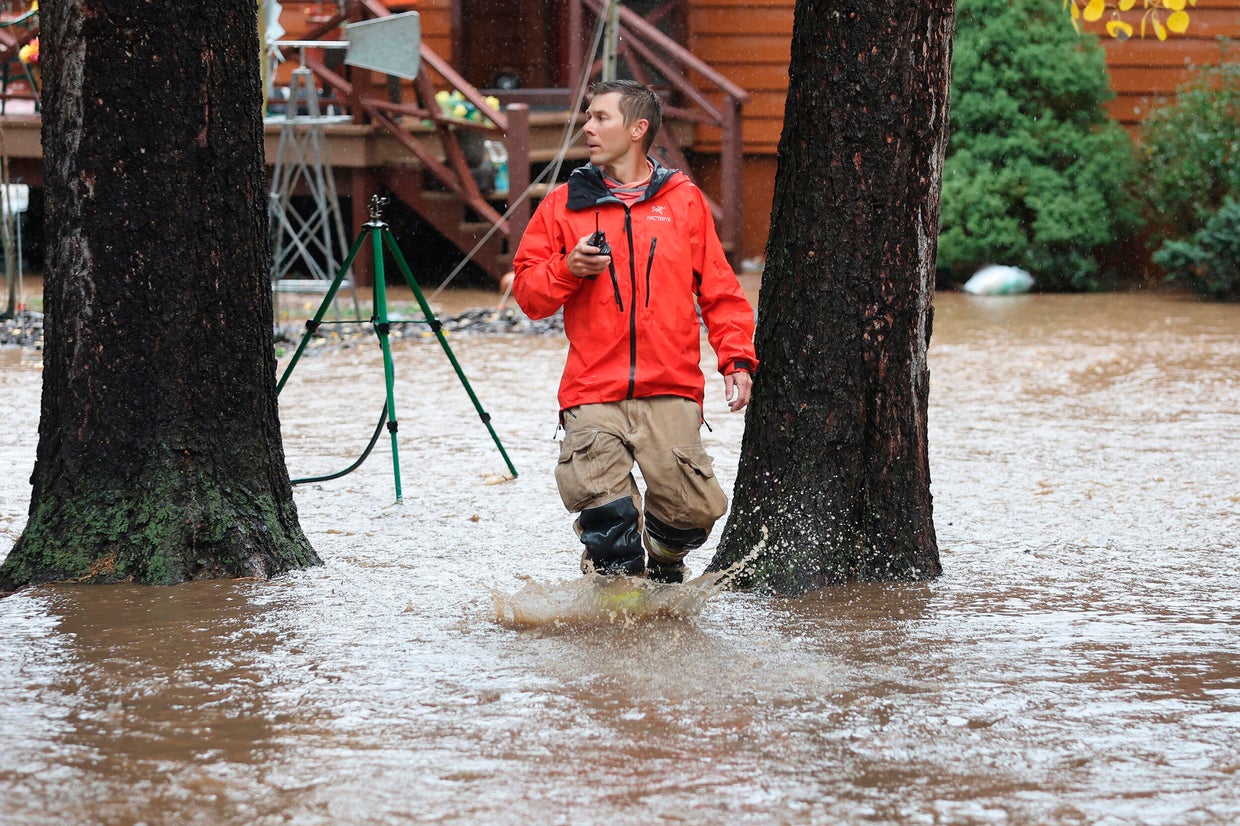
Polis declared another disaster emergency in October when areas of southwest Colorado along Vallecito Creek, the Piedra River, and the San Juan River basin were struck by intense flooding.
According to a statement from the governor’s office, “The Western Colorado Flooding destroyed or damaged essential drinking water and wastewater infrastructure, including near-total sewer system failures in the Pagosa Springs area. Floodwaters breached levees, triggered evacuations for nearly 400 homes, prompted multiple boil-water advisories, and caused at least 11 high-water rescues by local first responders. Rivers reached historic levels — including the San Juan River’s third-highest crest since 1911 — and debris flows, sediment deposits, and rechanneling of waterways have created long-term risks for residents living along Vallecito Creek, the Piedra River, and the San Juan River basin.”
Polis made a formal request for support in September. Colorado’s entire congressional delegation — four Democrats and four Republicans — along with both Democratic senators, asked the president to support the request and to issue a major disaster declaration to help the people affected by the fires and floods.
According to the governor’s office, that request was denied Saturday night. In a joint statement, Colorado’s governor and senators called on the president to reconsider.
“Coloradans impacted by the Elk and Lee fires and the flooding in Southwestern Colorado deserve better than the political games President Trump is playing. One of the most amazing things to witness as Governor has been the resilience of Coloradans following a natural disaster. Their courage, strength, and willingness to help one another is unmatched – values that President Trump seems to have forgotten. I call on the President’s better angels and urge him to reconsider these requests. This is about the Coloradans who need this support, and we won’t stop fighting for them to get what they deserve. Colorado will be appealing this decision,” Polis said.
Bennet condemned the denial, claiming that the president is using Coloradans for “political games” and calling the move “malicious and obscene.
“A disaster is a disaster, regardless of what state in the country it took place. Together with Governor Polis and the Colorado delegation, I will take every available step to appeal this decision,” he asserted.
“Coloradans are trying to rebuild their lives after fires and floods destroyed homes and communities across our state. Trump’s decision to reject our disaster requests, and therefore, withhold resources as our communities continue to recover, is unacceptable. This isn’t a game. These are people’s lives,” Hickenlooper said.
In response to CBS News Colorado’s request, White House Spokeswoman Abigail Jackson provided the following statement regarding the denial:
“During the fires, the Administration prioritized and mobilized two Modular Aerial Fire Fighting Systems, which are jointly managed by the U.S. Forest Service and Department of War, and retrofitted to C-130s operated by the Air National Guard. These systems enhanced aviation support to Colorado as they battled the Lee and Elk fires.
The President responds to each request for Federal assistance under the Stafford Act with great care and consideration, ensuring American tax dollars are used appropriately and efficiently by the states to supplement-not substitute, their obligation to respond to and recover from disasters.
There is no politicization to the President’s decisions on disaster relief, unlike under the Biden Administration where FEMA officials refused aid to disaster survivors who displayed political signs and flags they disagreed with. The Trump administration remains committed to empowering and working with State and local governments to invest in their own resilience before disaster strikes, making response less urgent and recovery less prolonged.”
CBS News Colorado reached out to FEMA for comment on Sunday. Its Denver regional office referred questions to its national office in Washington, D.C., but as of the time of this story’s publishing, it has not yet responded.



DENVER (KDVR) — A Colorado teenager who lost her leg in a shark attack isn’t just walking again; she’s sharing the spotlight with one of her favorite hockey players.
Seventeen-year-old Annabelle Carlson took the runway Sunday at the Colorado Avalanche’s annual charity brunch, an event that raises money for community programs supported by Kroenke Sports Charities. The fundraiser, now in its third decade, is considered one of the team’s most impactful events of the year.
Carlson walked arm-in-arm with Avalanche captain Gabriel Landeskog, drawing applause from a crowd of more than 450 attendees.
Standing tall again has been a long journey for the Colorado high school student. Carlson lost her leg after surviving a shark attack during a family trip to Belize in 2024. Since then, she has undergone multiple surgeries and extensive rehabilitation.
“I think being negative about things like this — it takes such a toll on how you view yourself and how you get through things,” Carlson said. “But I’d rather see everything like, not everything you lose is a loss.”
Carlson has now returned to skiing and hopes to pick back up with playing her favorite sport, lacrosse. But it took a lot of guts and resilience to get to where she is now.
“In my eyes, she’s extraordinary,” Landeskog said. “What she’s gone through at that age, it’s not easy to do.”
The charity event highlights children who have overcome serious medical challenges, pairing them with Avalanche players for a runway walk to spotlight their strength. Players also served brunch and helped auction off team gear and game tickets.
“It was really cool to meet him,” Carlson said of Landeskog. “It’s definitely a flex. Not everyone gets to meet the Avalanche. I’m super lucky and super excited to be here.”
Having gone through some injuries of his own, including damage to his knee, which took him out of play for several seasons, Landeskog said Carlson’s attitude is remarkable.
“She’s young, she’s brave,” he said. “I feel like she’s got a better head on her shoulders than I do, so I feel like I can learn a lot from her as well.”
The team said many players stay in touch with the children and their families long after the event ends, adding that the annual brunch is a day the whole team looks forward to each year.
![++[LIVESTREAMS]TV!! New Mexico United vs Colorado Springs Switchbacks FC Live 𝖲𝗍𝗋𝖾𝖺𝗆](https://i1.wp.com/res.cloudinary.com/pgatour-prod/w_854,h_480,c_fill,f_auto,q_auto/pgatour/pages/pga-tour-live/live-header-tl.png?ssl=1 "++[LIVESTREAMS]TV!! New Mexico United vs Colorado Springs Switchbacks FC Live 𝖲𝗍𝗋𝖾𝖺𝗆")
New Mexico United vs Colorado Springs Switchbacks FC
New Mexico United vs Colorado Springs Switchbacks FC live: New Mexico United vs Colorado Springs Switchbacks FC look to seize control of thrilling New Mexico United vs Colorado Springs Switchbacks FC . Every team in the New Mexico United vs Colorado Springs Switchbacks FC has two wins apiece as we go into the final two game weeks. New Mexico United vs Colorado Springs Switchbacks FC will host New Mexico United vs Colorado Springs Switchbacks FC at New Mexico United vs Colorado Springs Switchbacks FC Park Stadium with the New Mexico United vs Colorado Springs Switchbacks FC a single point ahead of New Mexico United vs Colorado Springs Switchbacks FC in the standings and just one behind leaders New Mexico United vs Colorado Springs Switchbacks FC .

New Mexico United vs Colorado Springs Switchbacks FC
New Mexico United vs Colorado Springs Switchbacks FC LIVE GAME: New Mexico United vs Colorado Springs Switchbacks FC look to seize control of thrilling New Mexico United vs Colorado Springs Switchbacks FC. Every team in the New Mexico United vs Colorado Springs Switchbacks FC has two wins apiece as we go into the final two game weeks. New Mexico United vs Colorado Springs Switchbacks FC will host New Mexico United vs Colorado Springs Switchbacks FC at New Mexico United vs Colorado Springs Switchbacks FC Park Stadium with the New Mexico United vs Colorado Springs Switchbacks FC a single point ahead of New Mexico United vs Colorado Springs Switchbacks FC in the standings and just one behind leaders New Mexico United vs Colorado Springs Switchbacks FC.

Wolverines make Frozen Four

Bay Area residents hold rally in SF as war with Iran enters 2nd month

Dallas Jenkins says he is the ‘evangelical mascot of the LDS church’ and talks Easter celebrations

New video shows aftermath of police shooting in Downtown Miami

Boston Celtics Star Jayson Tatum Made History In Hornets Game

Florida High School Football Rankings: Top 25 teams – Oct. 21

How old is Bo Nix? What to know about Oregon quarterback ahead of 2024 NFL Draft

Cleary's 21 help Le Moyne down Central Connecticut State 69-64 in OT

99th annual Pony Swim held in Virginia

Indiana Members Credit Union announced as new anchor tenant at Bottleworks District

Scathing report claims nation’s oldest labor union ‘betrayed’ MAGA members through ‘shocking’ spending

Republican US lawmaker demands Congress vote on any Iran troop deployment

So you went to a No Kings protest. Now what?

JD Vance says he was ‘obsessed’ with UFOs, believes aliens are actually ‘demons’
The EU's recipe for trade deals : easy on beef, tough on wine
-

 Sports1 week ago
IOC addresses execution of 19-year-old Iranian wrestler Saleh Mohammadi
-

 New Mexico1 week ago
Clovis shooting leaves one dead, four injured
-

 Miami, FL4 days ago
Jannik Sinner’s Girlfriend Laila Hasanovic Stuns in Ab-Revealing Post Amid Miami Open
-

 Tennessee6 days ago
Tennessee Police Investigating Alleged Assault Involving ‘Reacher’ Star Alan Ritchson
-

 Minneapolis, MN4 days ago
Boy who shielded classmate during school shooting receives Medal of Honor
-

 Politics1 week ago
Schumer gambit fails as DHS shutdown hits 36 days and airport lines grow
-

 Science1 week ago
Record Heat Meets a Major Snow Drought Across the West
-

 Technology1 week ago
YouTube job scam text: How to spot it fast