Colorado
Mysterious monolith appears in Colorado days after one was taken down in Las Vegas


An alien-like monolith popped up in northern Colorado, days after a similar structure was taken down from a mountain range near Las Vegas.
A Reddit user posted pictures of a metallic monolith jutting out of a grassy area in a Fort Collins, Colorado, subreddit on Wednesday – 10 days after the initial otherworldly object unexpectedly showed up in Nevada, KDVR reported.
It’s unclear if the two structures were created or put up by the same person — or why they were put up in the first place.
The Reddit user tried to figure out why the strange-looking object was installed.

“Apparently the story is, one of the homeowners in the area believes in aliens, and conspiracies; so his neighbor decided to build one, and set it up on the hill, to mess with him,” the user wrote. “Sadly nothing out of this world.”
The Independent has not independently verified this claim.
Mystery still swirls around the Nevada-based monolith.

Days after its discovery, the Las Vegas Metropolitan Police Department removed the 77-inch mirrored structure on June 21, citing “public safety and environmental concerns.”
Police wrote on X: “It remains unknown how the item got to its location or who might be responsible. At this time, there is no LVMPD investigation into the object or the circumstances surrounding its existence.”
But these structures are late to the 2020 trend, when a string of monoliths were materializing all around the globe.
A monolith was found in the Utah desert on November 18, 2020. The same day the first monolith disappeared, on November 27, a second one appeared outside the Romanian city of Piatra Neamt.
On the same day the Romanian structure was taken down, yet another jutted out of the Pine Mountain in Atascadero, California. A fourth emerged in Albuquerque, New Mexico.



A year after being diagnosed with bladder cancer, Deion Sanders insists he’s in good health.
Sanders was very hands-on during Colorado’s spring scrimmage on Saturday, being seen all over the gridiron at Folsom Field.
“Everybody inside these doors can tell you, it’s different when I’m here,” Sanders told reporters, according to the Associated Press. “I’m going to take my breaks, like every other coach, but I love to be here.”
Sanders, who recently departed from the team while dealing with blood clots, repeatedly told reporters “I’m good, I’m good,” when asked about his health.
The main task on Sanders’ mind for the Buffaloes is to have a rebound season this fall, after posting a disappointing 3-9 record in 2025.
“We’re going to make it better,” Sanders said. “We already have with the staff as well as the players that are inside the locker room. I love it. I love that everyday grind of it.
“Things definitely are, I’m not going to say 100%, but things are tremendously better on the field as well with the staff.”
Sanders revamped his coaching staff going into next season, adding offensive coordinator Brennan Marion and Chris Marve to lead the defense.

“We’ve got some good things going on,” Sanders said. “You can see the fruit thereof.”
Going forward this spring, Sanders said he was open to scrimmaging another team, but admitted teams do not value offseason games as much anymore.
“No one’s valuing spring anymore,” he said. “You’ve got several major colleges not even having spring games. The only thing that will bring that back is we compete against another school. I’ve been saying that for the last several years.
“Glad I didn’t say what I was thinking. But I can’t be the first one to say it. That’s what’s needed. … People get tired of the same old, same old, at a certain point. You want more.”

This story was produced as part of the Colorado Capitol News Alliance. It first appeared at cpr.org.
Hundreds of Republican Party faithful are gathering in Pueblo starting today to help pick the party’s primary candidates.
There are two routes to the primary ballot. One is by submitting signatures, which a number of Republican candidates have done, including state Sen. Barbara Kirkmeyer, who’s running for governor, as well as incumbent GOP congressional Reps. Jeff Crank, Gabe Evans and Jeff Hurd.
The second is by making a pitch to the delegates assembled in an auditorium at Colorado State University and winning the support of at least 30% of them. GOP Rep. Lauren Boebert is going through this route for her place on the ballot.
Republicans gather on Friday to pick congressional candidates, and at least one nomination from the floor is expected. Former state Rep. Ron Hanks, will try to make a last-minute play for the primary ballot in the 3rd Congressional District, hoping to set up a rematch against Hurd, who defeated him in the primary two years ago. Hurd was originally facing a challenge from Republican Hope Scheppelman, but she dropped out of the primary last month, in a surprise move originally announced by President Donald Trump.
On Saturday, GOP delegates will select primary candidates for statewide races. This year all major state-wide offices are open and there is a race for U.S. Senate.
More than a dozen Republicans have filed paperwork to run for governor, including state Rep. Scott Bottoms, combat veteran Joshua Griffin, Teller County Sheriff Jason Mikesell, Air Force veteran Maria Orms and financial coach Jason Clark. Republican Victor Marx, founder of the All Things Possible ministry, submitted petitions and is also expected at the Assembly, where he’ll need to get 10% of the vote to make it onto the ballot.
There are four candidates running for Secretary of State: JJ McKinzie, Ross Taraborelli, James Wiley and Cory Parella.
Two Republicans are running to be eventual nominee for Attorney General: Shawn Bennett and Conner Pennington.
Only Fremont County Commissioner Kevin Grantham has filed to run for State Treasurer.
The other statewide race delegates will get to weigh in on is the Republican nominee for U.S. Senate. Among the candidates looking for at least 30% of delegate support are Janak Joshi, George Markert, Dathan Jones, Mark Baisley, and Sean Pond.
This gathering will also mark the end of Brita Horn’s rocky tenure as party chair. After facing a no-confidence vote in early-March, she said she would step down after the state assembly.
Republicans held their last state assembly in Pueblo. It was also the site of this year’s Democratic state assembly, two weeks earlier.
The Colorado primary will be held on June 30.

On Friday, the United Food and Commercial Workers Local 7 announced that it has reached a tentative agreement with the JBS meat processing plant in Northern Colorado.
The union held a three-week strike beginning in March over what it called unfair labor practices and low wages. The company and the labor union, which represents approximately 3,800 workers, announced that workers would return to work on Tuesday without a new agreement or change to JBS’s offer.
The new agreement comes after UFCW Local 7 says parties returned to the bargaining table for two days of negotiations.
In a statement to CBS Colorado, JBS confirmed it has reached a tentative agreement with the union.
The agreement will be presented to the membership for a ratification vote on Sunday.

Illinois eyeing an unconventional transfer portal replacement for Keaton Wagler

Where to watch Detroit Pistons vs Indiana Pacers: TV channel, start time, streaming for April 12

McKenna Woliczko ‘just as excited’ to join Iowa women’s basketball as before

Person stabbed to death in downtown Kansas City Sunday morning: KCPD

Ohio State Transfer Andrija Jelavic Brings Kentucky Experience and Croatian Roots to Columbus

Florida High School Football Rankings: Top 25 teams – Oct. 21

How old is Bo Nix? What to know about Oregon quarterback ahead of 2024 NFL Draft

Cleary's 21 help Le Moyne down Central Connecticut State 69-64 in OT

99th annual Pony Swim held in Virginia

Indiana Members Credit Union announced as new anchor tenant at Bottleworks District

Carney casts himself as NATO defender amid Trump beef, despite Canada missing key benchmark for decades

‘Enough of war!’ says Pope Leo XIV who grows increasingly frustrated
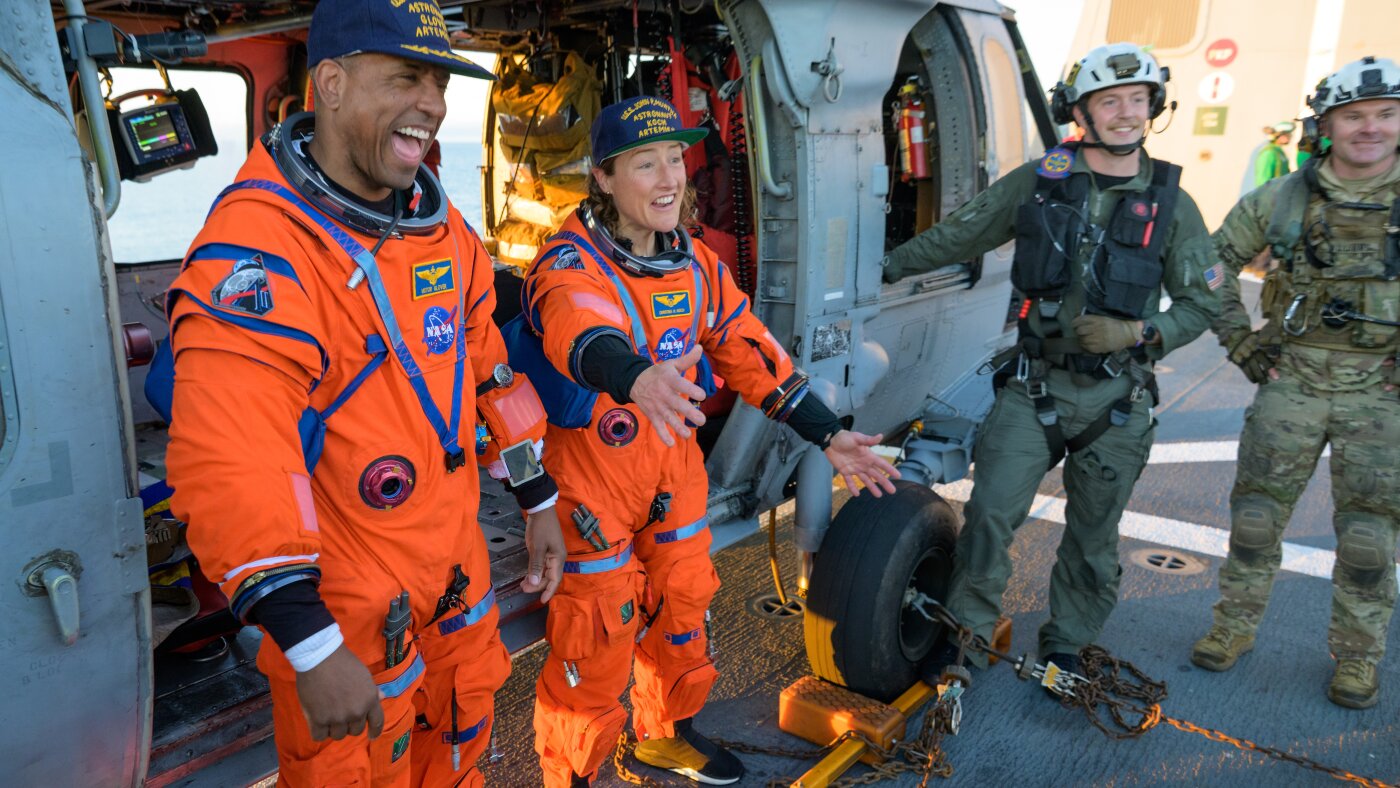
Artemis II splashdown captures nationwide attention

Video: Police Fatally Shoot Man After Stabbings at Grand Central Subway Station

Trump blasts Spanberger ahead of Virginia meetings, says state faces tax base exodus like New York, California
-

 Atlanta, GA1 week ago
1 teenage girl killed, another injured in shooting at Piedmont Park, police say
-

 Georgia5 days ago
Georgia House Special Runoff Election 2026 Live Results
-

 Pennsylvania6 days ago
Parents charged after toddler injured by wolf at Pennsylvania zoo
-

 Arkansas2 days ago
Arkansas TV meteorologist Melinda Mayo retires after nearly four decades on air
-
 Milwaukee, WI6 days ago
Potawatomi Casino Hotel evacuated after fire breaks out in rooftop HVAC system
-

 Indianapolis, IN1 week ago
Fighting Illini begin Final Four preparations in Indianapolis
-

 Technology1 week ago
Anthropic essentially bans OpenClaw from Claude by making subscribers pay extra
-

 Austin, TX4 days ago
ABC Kite Fest Returns to Austin for Annual Celebration – Austin Today