Colorado
Colorado buys 1,800 acres near Fairplay as playground for hunters, anglers, bird watchers, wildlife lovers


Colorado Parks and Wildlife has acquired Collard Ranch in Park County and will turn it into a state wildlife area, an acquisition Gov. Jared Polis hailed Friday as an “enormous opportunity” for hunters, anglers, bird watchers, wildlife lovers and photographers.
The 1,860-acre property located near Fairplay provides an important elk migration corridor, officials say, and offers five miles of good fishing habitat along Tarryall Creek.
“Within 60 miles of the Denver metro area, to be able to have a breathtaking, significant 1,800-acre property with hunting and fishing for Coloradans to enjoy is absolutely incredible,” Polis said.
Colorado Parks and Wildlife will open it as the Collard Ranch State Wildlife Area following the completion of infrastructure and accessibility projects.
The purchase was completed in partnership with the Western Rivers Conservancy and Great Outdoors Colorado. GOCO contributed $6.25 million from state lottery proceeds. Another $2 million came from CPW’s habitat-stamp program from fees raised through the sale of hunting and fishing licenses.
“The state is able to engage in this kind of meaningful public access enhancement and improvement because of the lottery and fees paid by hunters and anglers,” Polis said.
“Tarryall Creek is a special area to so many people in Colorado, with easy access for Park County residents and folks living on the Front Range,” said Allen Law, Interior West Project Manager for the Western Rivers Conservancy, in a news release. “We are proud to partner with CPW to forever protect this stretch of the creek, especially given its importance to a critical wildlife corridor and its iconic views of Kenosha Pass.”
The conservancy acquired Collard Ranch in December to preserve it for public access under CPW management.
“One of the South Platte River’s principal tributaries is Tarryall Creek, which flows from the 13,823-foot Mount Silverheels and is known for its excellent brown and rainbow trout fishing,” according to a post on the conservancy’s website. “Roughly 10 miles northeast of the town of Fairplay, Tarryall Creek flows through the 1,860-acre Collard Ranch, which sits immediately off of Highway 285. For five miles, the stream meanders through the ranch’s open grasslands in beautiful horseshoe bends, with 360-degree views of the Lost Park Wilderness, the Kenosha Mountains and the Mosquito Range.”
Sales of habitat stamps have helped CPW guarantee hunting and fishing access to more than 146 million acres of land since 2006 with 316,000 acres of important fish and wildlife habitat.
“Colorado Parks and Wildlife’s acquisition of the Collard Ranch property marks a significant conservation success for our state,” CPW director Jeff Davis said in the release. “The purchase underscores CPW’s mission to preserve land for outdoor enthusiasts.”
Great Outdoors Colorado has invested $1.4 billion in Colorado Lottery proceeds since 1992 to help the state acquire and preserve land for public access. Through its Centennial Program, GOCO targets “once-in-a-generation” parcels.
“Western Rivers Conservancy and Colorado Parks and Wildlife have given us exactly that kind of opportunity with the Collard Ranch project,” GOCO executive director Jackie Miller said in the release, “and we are proud to help make it a reality for Colorado with our $6.25-million investment.”
According to the governor’s office, since Polis became governor, CPW has acquired 558,000 acres of new land for public access through fee titles, public access easements, and public access leases.
Subscribe to our weekly newsletter, The Adventurist, to get outdoors news sent straight to your inbox.



Colorado
Colorado’s New Speed Cameras Can’t Be Outsmarted by Waze or Radar Detectors for Good Reason

- Colorado has launched an automated speed camera program on a stretch of I-25, where cameras calculate average speed versus a single instant reading.
- The cameras make radar detectors and alerts from apps such as Waze obsolete, but they’ve greatly reduced excessive speeds in high-risk areas like work zones.
- Violators face a $75 fine mailed to their registered address, with no points added to their license; vehicles without license plates can evade fines.
Since 2023, the Colorado Department of Transportation has had the power to implement speed cameras in what it deems high-risk corridors where speeding is prevalent, such as work zones. The Colorado Speed Enforcement Program has been used in the past to better patrol a stretch of Colorado Highway 119 between Boulder and Longmont during construction, and it’s now popping up along a stretch of I-25 south of Fort Collins, about 35 miles north of Denver, where workers are adding new express lanes.
Speeding in construction zones has obvious dangers for drivers and workers, as well as law enforcement. Using automated detection is easier and safer than trying to patrol construction zones, which tend to have narrow lanes and little or no usable shoulders.
Enforcement for the five-mile corridor began on April 2. Prior to that, there was a 30-day warning period during which would-be violators received a notice but no fine by mail. Before monetary penalties went into effect, CDOT saw a 90 percent reduction of excessive speed in the targeted zone.
Waze May Not Help
Alerts from apps like Waze that warn you to slow down for speed cameras won’t necessarily save you from a fine here. Instead of taking an instant speed reading at one location like radar-based units, the system uses pairs of cameras—officially automated vehicle identification systems—set a distance apart that snap photos of each car, specifically its license plates. Average speed over the stretch is then calculated using the time it took to cover the known distance.
If that average is over the posted speed limit—some outlets are reporting a grace threshold of 10 mph—a bill of $75 for the civil penalty will be mailed to the vehicle’s registered address. In part because the system doesn’t know who was driving at the time, the owner and driver do not receive points on their license. CDOT says most of the revenue collected goes back into funding the Speed Enforcement Program.
The cameras are marked and preceded by warning signs set at least 300 feet up the highway. If you happen to be speeding when passing the first photo location, you still have a shot at avoiding a fine. As long as you slow down enough before reaching the next camera, you can bring the average down to something legal.
License Plates Required
Unfortunately, this is yet another incentive for drivers in Colorado to run their cars without license plates or skip registering them at all (ahem, sovereign citizens), which is already a big problem in the state. License-plate readers used to enforce express-lane tolling have the same issue. We have contacted CDOT to ask what happens if a vehicle without a license plate speeds through the enforcement zone; we’ll update this story if we hear back.
➡️ Skip the lot. Let Car and Driver help you find your next car.
Shop New Cars Shop Used Cars

Ever since David was a wee Car and Driver intern, he has kept a spreadsheet listing all the vehicles he’s driven and tested. David really likes spreadsheets. He can parallel-park a school bus and once drove a Lincoln Town Car 63 mph in reverse. After taking a break from journalism to work on autonomous vehicles, he’s back writing for this and other automotive publications. When David’s not searching for the perfect used car, you can find him sampling the latest in gimmicky, limited-edition foodstuffs.
Colorado
Road to Mount Blue Sky expected to open Memorial Day weekend after 2024 closure, construction


The Colorado Buffaloes and coach Deion Sanders hosted one of the top offensive linemen from the state of Maryland on a recruiting visit on Thursday.
Three-star interior offensive line prospect Jaiden Lindsay spent two days in Boulder on an unofficial visit, just a few months removed from landing a scholarship offer from the Buffs.
Offensive Lineman Jaiden Lindsay’s Rise
Lindsay is listed as a three-star recruit by 247Sports in the class of 2027. His play at Our Lady of Good Counsel High School in Olney, Maryland, has earned him the No. 22 prospect ranking in the state according to 247Sports, which also lists him as the No. 56 interior offensive lineman in the class and the No. 900 overall recruit.
The current high school junior stands 6-3 and weighs in at an impressive 275 pounds. With plenty of time for development, a frame like that has certainly caught the attention of many Power Four programs.
He has offers from 14 FBS programs, with some key names being the reigning national champion Indiana Hoosiers, the Penn State Nittany Lions, Kentucky Wildcats, West Virginia Mountaineers and Pittsburgh Panthers.
But Colorado’s primary competition will come from Lindsay’s hometown school. The Maryland Terrapins are currently listed as his first choice, as they are also the only team 247Sports has given an interest level of warm to at this stage of the recruiting process.
Colorado is currently listed second on his interest list, and is the only other program Lindsay has scheduled an official visit to.
How Jaiden Lindsay Would Benefit the Colorado Buffaloes
Colorado is in a rebuilding period with its offensive line. While sophomore guard Yahya Attia seems to be the future of the interior offensive line for the Buffaloes as it currently stands, the Buffs will be looking to build around him and sure up their future for when he’s gone as well.
Lindsay is a prospect flying under the radar at the moment, preventing Colorado from having to engage in a long-term, neck-and-neck battle with many other high-profile programs and lots of NIL money involved. But he still has all the physicals and the flashes on film of a player who, while he may be a project, could pan out at the next level.
He has one more season of high school to develop, and with the right training program under offensive line coach Gunnar White and the Colorado staff, he could see his full potential realized in Boulder.
What’s Next in Jaiden Lindsay’s Recruitment
All of this leads up to June 2026. In the span of that month, Lindsay is set to visit both Colorado (on June 5) and Maryland (on June 19). Those two official visits will be crucial in determining the last legs of his recruitment process.
The key thing to note about how the visits are staggered: Colorado gets to make the first impression. Depending on how his visit with Colorado goes, Coach Prime and the Buffaloes could force Maryland to fight an uphill battle during his visit on the 19th if his mind is at all made up by then. So Buffs fans should pay close attention when the mid-summer rolls around.
Sign up to our free newsletter and follow us on Facebook for the latest news.

Hypersonic aircraft company moves headquarters from Atlanta to El Segundo

Sony Pictures Entertainment to cut hundreds of film and TV jobs

On Highway 78, I watched the valleys awaken in vibrant blooms — a dramatic springtime show
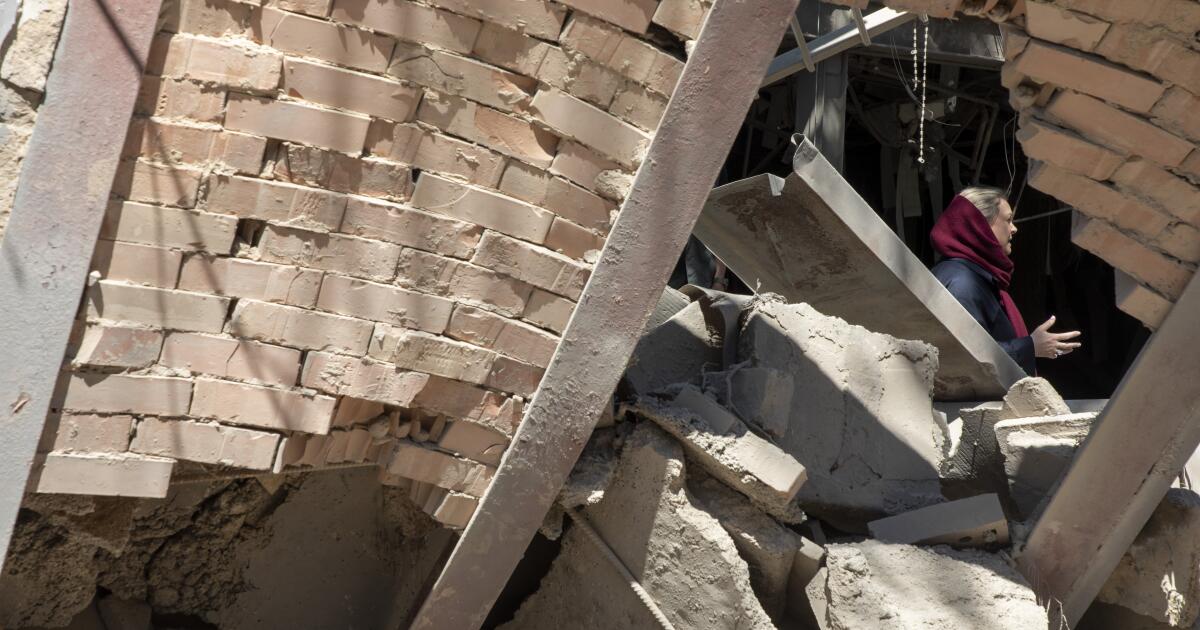
Iran attempting cyberattacks against U.S. critical infrastructure, officials say

Chicago Bears Pro Bowler Steve McMichael diagnosed with CTE a year after ALS death

Florida High School Football Rankings: Top 25 teams – Oct. 21

How old is Bo Nix? What to know about Oregon quarterback ahead of 2024 NFL Draft

Cleary's 21 help Le Moyne down Central Connecticut State 69-64 in OT

99th annual Pony Swim held in Virginia

Indiana Members Credit Union announced as new anchor tenant at Bottleworks District

‘Policy of abuse’: Women march in Cuba against US energy blockade

Acting AG says ‘Nobody has any idea why’ Pam Bondi was fired except for Trump | CNN Politics

Ilhan Omar calls Trump an ‘unhinged lunatic,’ urges booting him out of office
Between Budapest and Brussels: Péter Magyar’s political tightrope
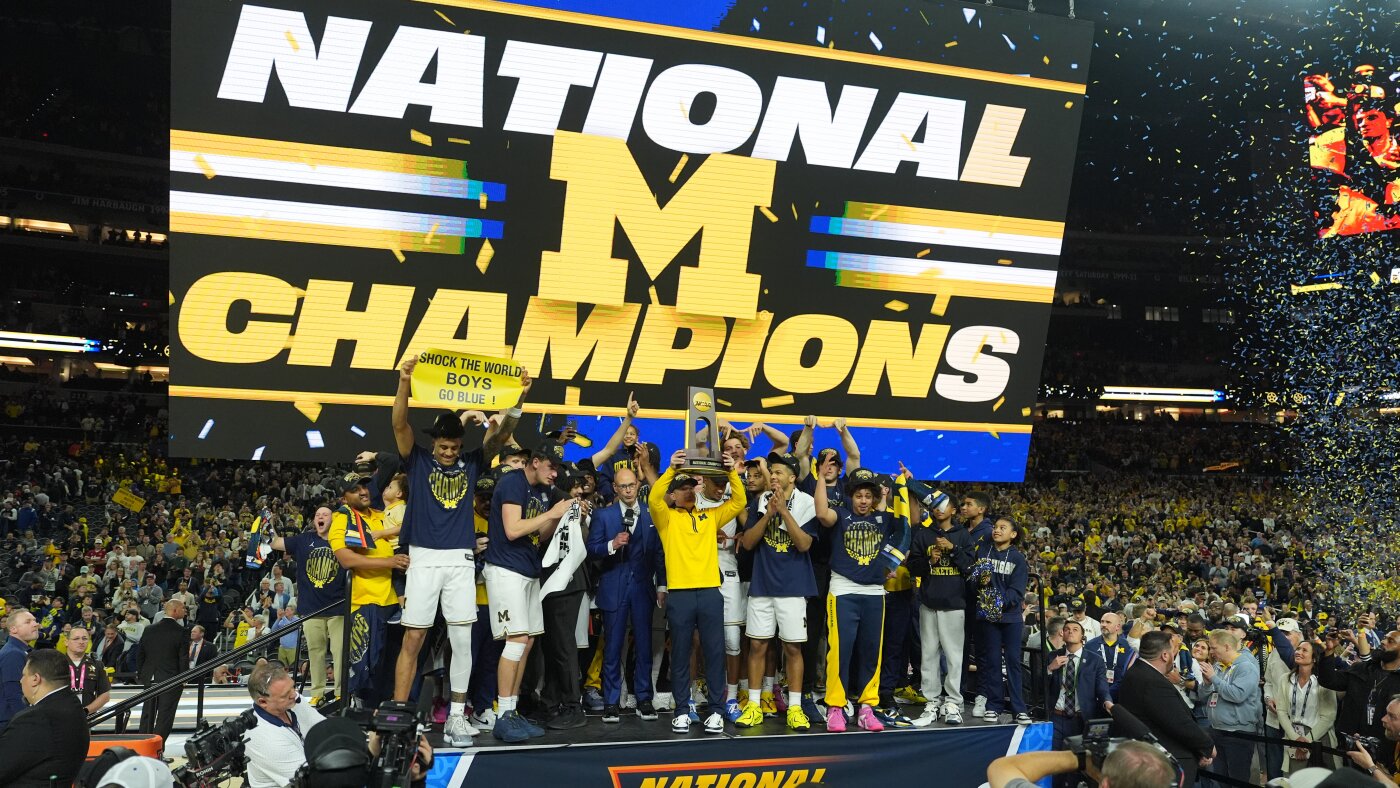
Michigan muscles its way to program’s 2nd NCAA basketball title, beating UConn
-

 Atlanta, GA3 days ago
1 teenage girl killed, another injured in shooting at Piedmont Park, police say
-

 South-Carolina1 week ago
South Carolina vs TCU predictions for Elite Eight game in March Madness
-

 Movie Reviews5 days ago
Vaazha 2 first half review: Hashir anchors a lively, chaos-filled teen tale
-

 Vermont1 week ago
Skier dies after fall at Sugarbush Resort
-

 Politics1 week ago
Trump’s Ballroom Design Has Barely Been Scrutinized
-

 Politics1 week ago
JD Vance says he was ‘obsessed’ with UFOs, believes aliens are actually ‘demons’
-

 Atlanta, GA1 week ago
Fetishist ‘No Kings’ protester in mask drags ‘Trump’ and ‘JD Vance’ behind her wheelchair
-
 Entertainment6 days ago
Inside Ye’s first comeback show at SoFi Stadium