Colorado
Can Colorado make CFP? How Iowa State, Kansas State losses open door for Buffaloes


US LBM Coaches Poll: Oregon steady at No. 1, Ohio State shaky in victory
The latest US LBM Coaches Poll is here is here and while there isn’t much in the way of changes, Ohio State’s shaky win against Nebraska raises questions moving forward.
Sports Pulse
Colorado football may have been idle this week, but Deion Sanders and the Buffaloes picked up two big wins for their postseason playoff picture.
With Texas Tech and Houston pulling off upsets against No. 10 Iowa State and No. 15 Kansas State, respectively, there is a legit path for Colorado to make not only the Big 12 championship game, but also the newly expanded 12-team College Football Playoff. The losses for the Cyclones and Wildcats move Colorado into a tie for second place at 4-1 in the Big 12 Conference with ISU.
The Buffaloes, who became ranked in the AP Top 25 poll last week, are currently in the midst of their best season since 2019 when they finished with five wins. Last week, Colorado became bowl-eligible for the first time under Sanders.
Here’s the path that is now presented for Colorado to make the College Football Playoff as Iowa State and Kansas State both lost in Week 10:
Can Colorado make College Football Playoff?
Yes. Barring any drastic falloff for the Buffaloes in their final four games, Colorado has a path to make the College Football Playoff — likely through the Big 12 championship game.
A big reason for Sanders’ squad playing in the CFP has to do with the expansion of the field from four teams to 12 teams this year. The expansion also comes with an automatic bid and first-round bye for the four highest-ranked conference champions, which almost certainly will include the Big 12 Conference.
But for the Buffaloes to make the playoff, they would not only have to win out in the regular season, but also, most likely, need to win the Big 12 championship. ESPN’s Football Power Index had Colorado with an 8.8% chance of winning the Big 12 entering Saturday.
Looking at Colorado’s remaining schedule — which includes contests against Texas Tech, Utah, Kansas and Oklahoma State — winning out the regular season seems like a reasonable feat. Of the four teams that the Buffaloes will face to end the season, three of them are at the bottom of the Big 12 standings.
Additionally, if Colorado wins out, the Buffaloes’ odds of finishing as a top-two team in the conference can be also helped from the outside. If Iowa State loses to Kansas State during Rivalry Week on Nov. 30, Colorado would be in the Big 12 championship game.
ESPN Analytics currently has Colorado winning each of its final four games, which would mark the first time the Buffaloes would finish the regular season with 10 wins since 2016. But if this season of college football has shown anything, you can’t rely on win-loss probability analytics.
All told, get the popcorn ready for a potential fun playoff push over the next four weeks for Colorado and Coach Prime.
Big 12 football tiebreakers
The Big 12 announced in September that if two teams are tied in the conference standings, the following tiebreakers will be used until a determination is made on who makes the Big 12 championship game:
- A — The tied teams will be compared based on their head-to-head record during the season.
- B — The tied teams will be compared based on win percentage against all common conference opponents.
- C — The tied teams will be compared based on win percentage against the next highest-placed common opponent in the standings (based on the record in all games played within the Conference) proceeding through the standings.
- D — The tied teams will be compared based on combined win percentage in conference games of conference opponents.
- E — The tied teams will be compared based on total number of wins in a 12-game season.
- F — The representative will be chosen based on highest ranking by SportSource Analytics (team rating score metric) following the last weekend of regular-season games.
- G — The representative will be chosen by a coin toss.
Big 12 football standings
Here’s a look at the Big 12 football standings as of Saturday, Nov. 2 at 7:30 p.m. MT:
Records listed indicate Big 12 play
- 1. BYU: 5-1
- T-2. Iowa State: 4-1
- T-2. Colorado: 4-1
- T-4. Kansas State: 4-2
- T-4. Texas Tech: 4-2
- T-6. Arizona State: 3-2
- T-6. Cincinnati: 3-2
- T-6. TCU: 3-2
- T-6. West Virginia: 3-2
- T-10: Houston: 3-3
- 11. Baylor: 2-3
- 12. UCF: 2-4
- T-13. Utah: 1-4
- T-13. Kansas: 1-4
- 15. Arizona: 1-5
- 16. Oklahoma State: 0-6
Colorado football schedule 2024
Here’s a look at Colorado’s football schedule in 2024:
- Thursday, Aug. 29: vs. North Dakota State (W, 31-26)
- Saturday, Sept. 7: at Nebraska (L, 28-10)
- Saturday, Sept. 14: at Colorado State (W, 28-9)
- Saturday, Sept. 21: vs. Baylor* (W, 38-31, OT)
- Saturday, Sept. 28: at UCF* (W, 48-21)
- Saturday, Oct. 5: BYE
- Saturday, Oct. 12: vs. No. 20 Kansas State* (L, 31-28)
- Saturday, Oct. 19: at Arizona* (W, 34-7)
- Saturday, Oct. 26: vs. Cincinnati* (W, 34-23)
- Saturday, Nov. 2: BYE
- Saturday, Nov. 9: at Texas Tech*
- Saturday, Nov. 16: vs. Utah*
- Saturday, Nov. 23: at Kansas*
- Friday, Nov. 29: vs. Oklahoma State*
* Denotes Big 12 game



DENVER — Five of the seven law enforcement officers in a rural Colorado county, including the sheriff, have been indicted in an investigation into allegations of misconduct, prosecutors said Friday.
A grand jury indicted Costilla County Sheriff Danny Sanchez and former Deputy Keith Schultz on charges of allegedly mishandling human remains discovered in October 2024, according to court documents. A man who found the remains and reported them to the sheriff’s office said Sanchez and Schultz took only the skull and left the other remains behind, including teeth, court documents state.
Two months passed before Schultz wrote a report, saying he left bones in a bag on his desk and went on another call, the documents state. A coroner’s official said he received the skull in an unlabeled paper bag from the sheriff’s office, the documents state.
Separately, Undersheriff Cruz Soto, Sgt. Caleb Sanchez — the sheriff’s son — and Deputy Roland Riley are charged in connection with the use of a Taser against a man who was suffering a mental health crisis in February and tried to leave when they insisted he go to the hospital, according to the documents. The man said he was “roughed up” by deputies and was left with broken ribs, according to the indictments.
Soto was charged with failing to intervene and third-degree assault, according to court documents. Caleb Sanchez and Riley were charged with second- and third-degree assault.
In announcing the indictments, 12th District Attorney Anne Kelly said she’s committed to investigating and prosecuting crimes no matter the offender.
“I cannot and will not ignore violations of the trust that a community should have in their police. No citizen of the San Luis Valley should have any doubts about the integrity of their police force,” Kelly said at a news conference Friday evening.
A person who answered the phone Friday at the sheriff’s office said it had no immediate comment but planned to post a statement online. Phone numbers listed for Danny Sanchez, Soto and Riley did not work. Caleb Sanchez did not have a listed number. An unidentified person who answered a number for Schultz referred The Associated Press to an attorney, Peter Comar. The AP left a message Friday for Comar seeking comment.
__

As a result of a snow drought and a heat wave that have both set records, some Colorado residents face the earliest restrictions on their water use ever imposed.
Denver Water announced Wednesday that it is seeking a 20% cut in water use, asking people to turn off automatic watering systems until mid-May and restricting the watering of trees and shrubs to twice a week.
“The situation is quite serious,” said Todd Hartman, a spokesperson for the utility. “We’re in such a dire situation that we could be coming back to the public in two or three months and saying you’re limited to one day a week.”
It is the earliest in the year that Denver Water has ever issued a restriction, Hartman said.
Colorado’s snowpack peaked at extremely low levels on March 12 — nearly a month earlier than usual — then cratered during the recent heat wave that cooked nearly every state in the West.
“We already had the lowest snowpack we’ve seen since at least 1981, and now, with the heat wave conditions, we’ve already lost about 40% of the statewide snowpack” since the March 12 peak, said Peter Goble, Colorado’s assistant state climatologist. “Conditions are looking more like late April or early May.”
The water restrictions are a harbinger of what’s to come in many Western states as officials try to manage widespread drought concerns. Nearly every snow basin in the Mountain West had one of its warmest winters on record and is well behind normal when it comes to water supply, according to the U.S. drought monitor. The dwindling snowpack is likely to raise the risk of severe wildfires, hamper electricity generation at hydropower dams and force water restrictions for farmers.
Hartman said nearly every community east of the Rockies, along Colorado’s front range, is in much the same boat as Denver.
City Council members in Aurora are considering similar water restrictions; reservoirs there stand at about 58%, according to the city’s website. In the town of Erie, officials declared a water shortage emergency on March 20 after they observed a massive spike in consumption.
Gabi Rae, a spokesperson for the town, said Erie was perilously close to having taps run dry because so many residents had started watering their lawns early amid the unseasonable heat.
“We were a day away from running out of water. That’s why it was such an emergency,” she said.
Erie officials demanded that residents stop using irrigation systems altogether.
Goble said this month’s heat wave has set records in every corner of Colorado, sometimes by double digits.
“I can’t remember seeing a single heat wave that broke this many records, and seeing it across such a large portion of the country is certainly eye-popping,” he said, adding: “I’m located in Fort Collins, and we got up to 91 last Saturday. The previous record for March was 81, so we smashed that record. And it wasn’t just one day, either.”
Denver Water, which serves about 1.5 million residents in the city and its surrounding suburbs, gets about half of its water from the Upper Colorado River Basin and the South Platte River Basin. The latter’s snowpack was at about 42% of normal Tuesday, the utility reported. The Upper Colorado River Watershed was at 55%.
Systemwide, Denver Water’s reservoirs are about 80% full, which is only about 5 percentage points lower than in a typical year.
“That sounds pretty good,” Hartman said. “Except that what we’re not going to be able to rely on is that rush of water that will bring those reservoirs back up, because the snowpack is so low.”
In other words, the snowpack — a natural water reservoir — is mostly tapped already and won’t replenish reservoirs later this spring and into summer, when runoff usually peaks.
In Erie, city workers plan to aggressively police water use until sometime next week using smart meters that monitor residential usage. Rae said the city is also sending utility workers to patrol neighborhoods and look for sprinklers that are turned on.
“People have been kind of annoyed with how aggressive we were, and I don’t necessarily think they understand the ramifications if we weren’t,” Rae said. “It is an actual serious emergency situation. We were so close to reaching empty, there would literally be no water coming out of the taps — hospitals, schools, fire hydrants, your home would have no water.”
Although the limits on outdoor watering will be lifted soon, Rae expects more restrictions later this spring and summer.
Colorado
Suddenly hazy skies in Denver prompt some residents concerned about wildfire smoke to call 911

Some people who live in the Denver metro area on Thursday afternoon were making calls to 911 after skies became noticeably hazy and winds kicked up. It was due to smoke from wildfires in Nebraska moving into Colorado. A cold front also was moving through the Front Range, and there is dust in the air.
The poor air conditions led to reduced visibility downtown after 3 p.m. Several of CBS Colorado’s City Cams showed dust or smoke in the air.
Temperatures were expected to drop by as much as 20 to 30 degrees with the cold front.
The suddenly dusty skies prompted at least one fire agency to put out a plea to residents to please only call 911 “if you see flames.” That warning was put out by South Metro Fire Rescue, which shared a photo on X of an office building with haze visible outside.
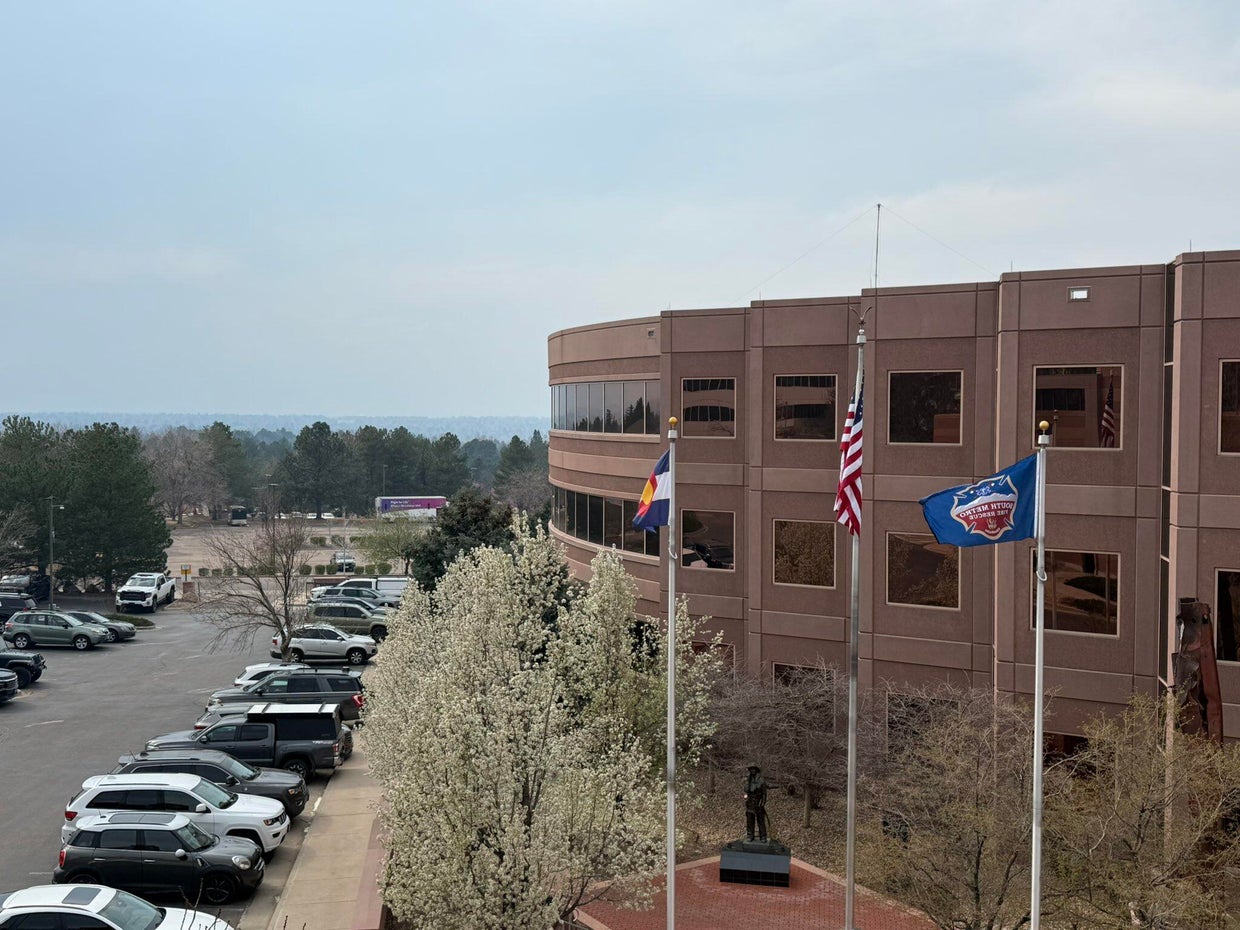
South Metro Fire Rescue said in their post that the smoke is from Colorado’s neighbor to the east. They called it a “significant haze” in the air.
Earlier this month, the Morrill Fire and the Cottonwood Fire burned a significant amount of Nebraska grassland and ranchland. They have mostly been contained by firefighters. Nebraska Gov. Jim Pillen said those two fires combined with several others have burned approximately 800,000 acres of land. On Thursday, Pillen announced that he is signing several executive actions intended to ease the burden caused by the fires.
There were no wildfires burning in the Denver metro area on Thursday afternoon.

Don’t want to miss the bloom? This L.A. scientist created a poppy forecast

DHS attorney said agents in Los Angeles should have ‘started hitting’ protesters, emails show
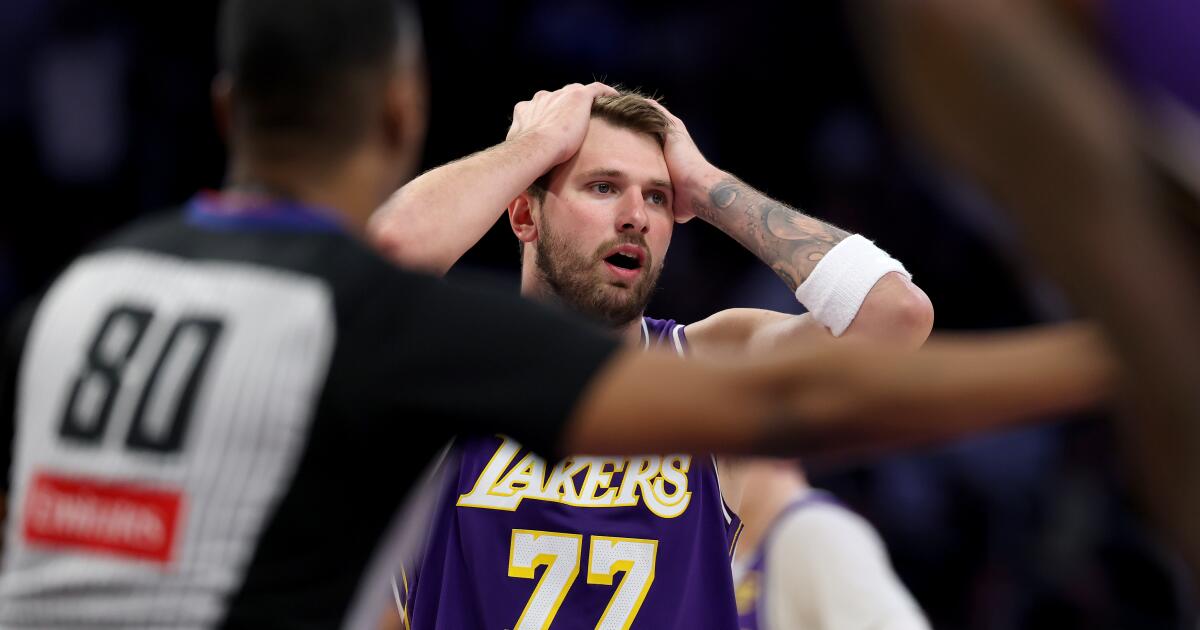
Lakers beat Nets, but Luka Doncic is facing suspension again after 16th technical

EU Parliament unblocks key political hurdle in digital euro talks
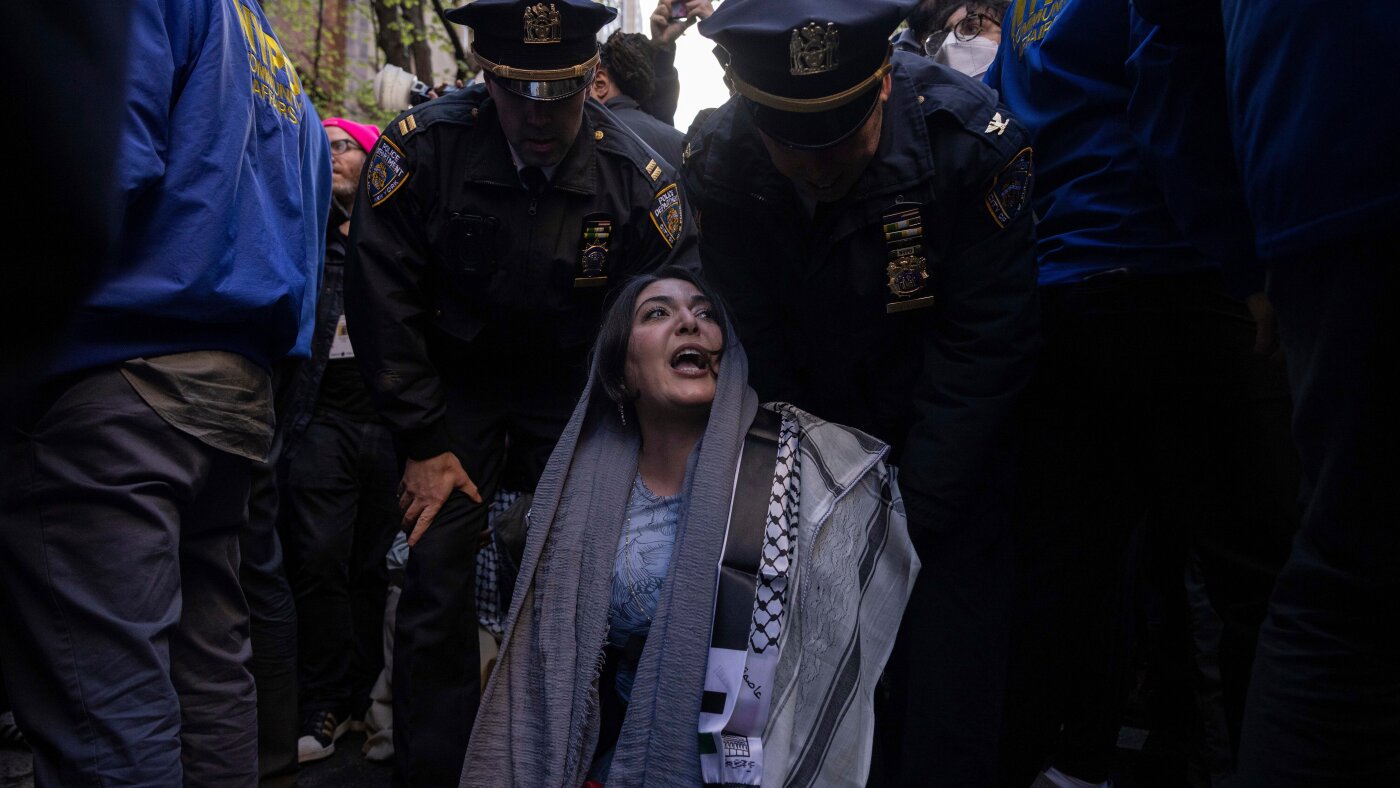
Man arrested in plot to firebomb Palestinian activist’s home after undercover op

Florida High School Football Rankings: Top 25 teams – Oct. 21

How old is Bo Nix? What to know about Oregon quarterback ahead of 2024 NFL Draft

Cleary's 21 help Le Moyne down Central Connecticut State 69-64 in OT

99th annual Pony Swim held in Virginia

Indiana Members Credit Union announced as new anchor tenant at Bottleworks District
EU Parliament unblocks key political hurdle in digital euro talks
Man arrested in plot to firebomb Palestinian activist’s home after undercover op

WATCH: Senate hearing goes silent after Angel Father confronts top Dem over daughter’s death

US diplomat Marco Rubio denounces settler violence, tolls in Hormuz strait

Iran-linked hackers have breached FBI Director Kash Patel’s personal emails | CNN Politics
-

 Detroit, MI1 week ago
Drummer Brian Pastoria, longtime Detroit music advocate, dies at 68
-

 Movie Reviews1 week ago
‘Youth’ Twitter review: Ken Karunaas impresses audiences; Suraj Venjaramoodu adds charm; music wins praise | – The Times of India
-

 Sports7 days ago
IOC addresses execution of 19-year-old Iranian wrestler Saleh Mohammadi
-

 New Mexico5 days ago
Clovis shooting leaves one dead, four injured
-
 Business1 week ago
Disney’s new CEO says his focus is on storytelling and creativity
-

 Technology6 days ago
YouTube job scam text: How to spot it fast
-

 Tennessee4 days ago
Tennessee Police Investigating Alleged Assault Involving ‘Reacher’ Star Alan Ritchson
-

 Texas1 week ago
How to buy Houston vs. Texas A&M 2026 March Madness tickets