West
Colorado city council member fires back after governor's office dismisses armed gang takeover as 'imagination'

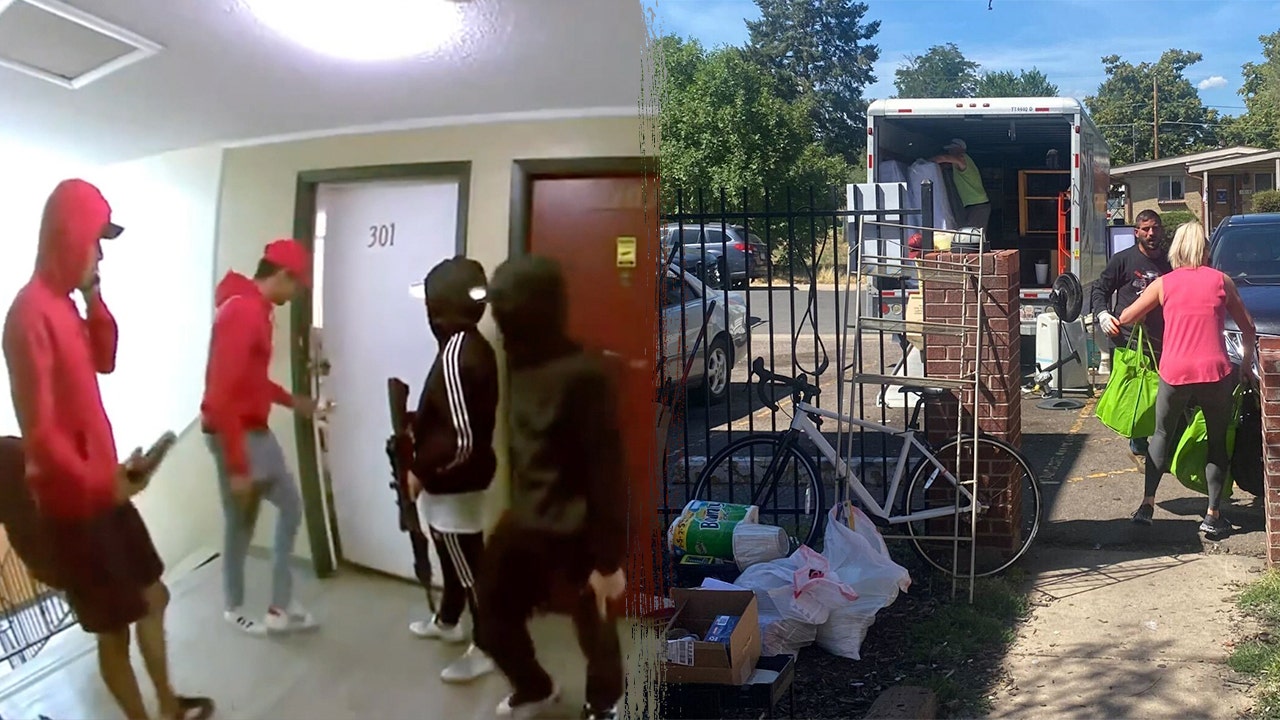
Democrat governor of Colorado Jared Polis dismissed outrage over a video showing what appears to be armed Venezuelan gang members in an apartment building as “imagination” despite significant evidence.
Aurora City Council member Danielle Jurinsky fired back after the governor’s denial, saying “I am so disappointed.”
In a statement shared to the New York Post, Polis’ spokeswoman Shelby Wieman claimed, “The Governor has already let the Mayor know that the State is ready to support the local police department with assistance from state troopers and the Colorado Bureau of Investigation if needed.”
COLORADO MAYOR SPEAKS OUT AFTER VIDEO OF ARMED VENEZUELAN GANG IN APARTMENT GOES VIRAL: ‘FAILED POLICY’
“But, according to police intelligence this purported invasion is largely a feature of Danielle Jurinsky’s imagination,” added Wieman.
The video below shows several armed men in an Aurora, Colorado apartment that some say has been taken over by members of Tren de Aragua, a notorious Venezuelan gang.
City Council Member Danielle Jurinsky has been at the forefront of this issue, including evacuating several residents from an armed gang-occupied apartment building on Wednesday.
In an exclusive interview with Fox News Digital, Jurinsky fired back at Polis, asking “My question back to the governor is, is this also a figment of the Romeros’ imagination? And the other resident that I helped to get out of there, and the other residents that I am going to continue to get out of there?”
Spokeswoman Shelby Wieman responded to Fox News Digital, saying “[Governor Polis] hopes that the city council members in charge stop trashing their own city when they are supposed to keep it safe.”
VIDEO SHOWS ARMED GANG AT TROUBLED COLORADO APARTMENT BUILDING BELIEVED TO HAVE BEEN TAKEN OVER BY MIGRANTS
“We know violent crime in Aurora went down between 2022-2023, fully expect the data will show further declines for 2024, and the recent misinformation campaign threatens actual criminal investigations and could hurt the climate for small businesses in Aurora,” Wieman concluded.
According to reporting from the New York Post, more than 40,000 migrants have arrived to the Denver area since December 2022.
Former Congressman and current Mayor of Aurora, Colorado Mike Coffman joined America Reports on Thursday to update the nation on Venezuelan gangs in his city. (Larry French/Getty Images for SiriusXM)
“The situation is real but it also needs to be put into context so that the reputation of an entire city of over 400,000 residents is not adversely impacted by what has occurred in several isolated apartment buildings owned by the same out-of-state slum lord,” said Aurora Mayor Mike Coffman in an exclusive statement to Fox News Digital.
“There are people behind this that are solely, playing politics,” said Danielle Jurinsky. “That is so sad to me because they’re real human beings, just like the Romeros suffering on the other side of those doors, living behind four deadbolt locks and a door brace and living in fear every day in these complexes.”
Aurora City Council member Danielle Jurinsky moved out several residents from one taken over apartment building on Wednesday. (Danielle Jurinsky)
“It is very promising that across the board, people are really seeing what is happening,” said Jurinsky. “Video footage is only undeniable for our governor in Colorado. Everybody else across the country is seeing this for themselves.”
The Aurora Police Department did not immediately respond to Fox News Digital’s request for comment.
Read the full article from Here


BUTTE — Butte’s annual Montana Folk Festival is drawing crowds to six stages set up across Uptown Butte, bringing art, food and music — along with some high temperatures.
WATCH: Heat can’t stop the Montana Folk Festival in Butte
Montana Folk Festival brings heat along with music, food, and art
Reggae artist Prezident Brown and his band iSound are among the performers taking the heat in stride. Brown said the dry mountain climate is nothing compared to what he’s used to back home.
“I can honestly say hundred degrees in Jamaica is a whole different story.”
When asked how he’s staying cool, Brown kept it simple.
“Yeah! I just do what I do. I drink water…orange juice!”
The Legendary Ingramettes, a gospel group from Virginia, are also finding Butte’s climate agreeable.
“We have a lot of humidity, and Butte does not. So, I’m enjoying the heat! The dry air!!”
MTN NEWS
With temperatures peaking around 90 degrees, food vendors are feeling the warmth more directly. Bozeman-based vendor Vickie Backus is working over a hot grill, serving pierogies, a food originating in Eastern Europe.
I ask her how she is keeping cool.
“You know? I’m not. I’m drinking lots of water. I have sunscreen on and I’m just leaning into it.”
Festival-goers wandering between the six stages are largely dressed for the heat — big hats, long sleeves, and sunglasses. At least one person is going barefoot —first-time festival attendee Sean Villere from Missoula says the pavement doesn’t phase him.
MTN NEWS

“It’s not that hot yet. I think it might get hotter, but it’s okay right now.”
Villere said he hasn’t worn shoes in a couple of years, including through two winters, and the callouses he’s built up protect his feet from the hot pavement.
Over the years, extreme weather has impacted festival attendance, but this year most people seem comfortable with the conditions.
This story was reported on-air by a journalist and has been converted to this platform with the assistance of AI. Our editorial team verifies all reporting on all platforms for fairness and accuracy.

New Mexico’s top prosecutor says federal officials are slow-walking key Jeffrey Epstein files, and it may be costing the state its chance to build a case. In a sharply worded June 30 letter released on Thursday, Attorney General Raul Torrez accused the Justice Department of blocking access to unredacted records tied to Epstein’s Zorro Ranch, warning that evidence degrades and witnesses disappear with each passing day, reports CNN. The agency’s refusal to release the files “is causing real and escalating harm,” Torrez wrote in a letter last week to acting US Attorney General Todd Blanche, per the New York Times.
The state reopened its criminal probe in February after the federal release of millions of Epstein-related documents, including an unverified tip about two foreign girls allegedly buried near the property at the behest of Epstein and a “Madam G.” The DOJ says it responded to New Mexico last month and stands ready to assist if the state uncovers possible federal crimes, notes Reuters.
Torrez counters that his office has made six attempts since February to secure documents or at least an in-person meeting, calling the more than 130-day delay “unreasonable,” per CNN. The dispute unfolds as lawmakers condemn heavy redactions in the Epstein files and an internal DOJ watchdog reviews the process. Zorro Ranch, near Santa Fe, has been named by multiple survivors, including Chauntae Davies and the late Virginia Giuffre, as a site of sexual abuse.

JACKSON COUNTY, Ore. (KATU) — Additional firefighting resources are being sent to the fast-moving East Evans Creek Road fire in Jackson County as the blaze grows and threatens homes and nearby communities.
In a statement posted at 6:26 a.m. on July 11, the Oregon State Fire Marshal said it is mobilizing four structural task forces and its Blue Incident Management Team to support local response efforts. The fire sparked Friday and “quickly grew to over 1,500 acres,” the agency said.
By Saturday morning, the Oregon Department of Forestry’s Southwest Oregon District estimated the fire at approximately 2,000 acres. Firefighters are working on private and Bureau of Land Management lands about 26 miles north of Medford near the 18000 block of East Evans Creek Road.
The fire was reported Friday afternoon just after 2:40 p.m., according to ODF, when dispatch received a report of a car crash involving a power pole and a downed power line.
Firefighters arrived to find fire burning in nearby vegetation. ODF and the Jackson County Sheriff’s Office are conducting a further investigation into the incident.
Evacuation information
Evacuation orders remained in place as of the Jackson County Sheriff’s Office morning update on Saturday. The sheriff’s office issued Level 3 “Go Now,” Level 2 “Be Set” and Level 1 “Be Ready” evacuation notices for areas surrounding the fire.
Evacuation Level 3 Go Now: JAC-148A
Evacuation Level 2 Be Set: JAC-016, JAC-124, JAC-147, JAC-148B
Evacuation Level 1 Be Ready: JAC-003, JAC-004, JAC-017, JAC-026, JAC-036, JAC-109, JAC-126, JAC-149B
The above zone names can be understood by visiting the following map through Genasys Protect at protect.genasys.com. The map lets users plug in their address to see what zones are under evacuation.
The state fire marshal urged people looking for further evacuation information to follow the local sheriff’s office or check the map at the following website with the latest evacuation information: Jacksoncountyor.gov.
An evacuation shelter for residents and domestic pets has been established at Hanby Middle School, 806 6th Avenue, Gold Hill.
Road closures and traffic blocks remained in effect. The Jackson County Sheriff’s Office said there is an additional roadblock at the 8 mile marker of Antioch Road.
Traffic remains blocked on East Evans Creek Road at Meadows Road on the east side and West Fork Evans Creek Road on the west side. ODF also reported traffic is blocked on East Evans Creek Road at Meadows Road, and said residents will be allowed through the closure when it is safe to do so. The public is asked to avoid the area to allow firefighters and heavy equipment to operate safely.
Livestock shelters
Livestock sheltering options are also available. Horses can be taken to the Jackson County Expo at 21 Peninger Road in Central Point, where expo staff and volunteers are prepared to receive horses. Owners are asked to bring feed, water containers and any necessary medications when possible. Josephine County Fairgrounds can take pigs, goats and smaller animals at 1451 Fairgrounds Road, Grants Pass, OR 97527. Anyone needing livestock sheltering assistance can call 541-776-7206.
Emergency Conflagration Act invoked
Gov. Tina Kotek invoked the Emergency Conflagration Act on Friday night for the East Evans Creek Road Fire in Jackson County, allowing the Oregon State Fire Marshal to mobilize additional resources through the Oregon Fire Mutual Aid System.
The Jackson County Fire Defense Board chief requested assistance with life, safety and structural fire protection, and the state fire marshal concurred with that request.
The agency said it is the first time the Emergency Conflagration Act has been invoked in 2026.
Task forces from Lincoln, Linn, Marion and the south coast—Coos, Curry, Lane and Douglas counties—are being mobilized, according to the state fire marshal. Those resources will join a task force from Klamath County and a strike team from Douglas County that were mobilized Friday evening through Immediate Response to support local structural resources.
“This fire is a reminder how quickly things can change with the dry conditions we have across the state,” Oregon State Fire Marshal Chief Deputy Travis Medema said. “We have a long way to go this fire season, and I ask every Oregonian to do their part to prevent wildfires.”
ODF said warm, dry and breezy conditions were expected to continue across southwest Oregon Saturday, increasing the potential for active fire behavior and spotting.
More than 400 personnel were assigned to the incident Saturday, including 20-person hand crews, engines, dozers, water tenders, heavy equipment, aviation resources and structural task forces, according to ODF. Aviation resources include one Type 3 helicopter with Air Attack, three Type 2 helicopters and two Type 1 helicopters.
Firefighters worked through the night strengthening fire line, reinforcing wet line and mitigating hazardous snags, ODF said. Saturday’s objectives include reinforcing and strengthening existing fire line, extending hose lays along East Evans Creek Road and improving access for firefighters working throughout the incident. Crews are operating in steep terrain, across an old burn scar and around numerous hazard trees.
The Oregon State Fire Marshal Blue Incident Management Team is expected to be in unified command with the Oregon Department of Forestry Team 1, according to the state fire marshal. ODF said Incident Management Team 1 will assume command of the incident this evening, citing the fire’s size and complexity and the need to maintain initial attack capability across southwest Oregon.
Traffic is blocked on East Evans Creek Road at Meadows Road, ODF said. Residents will be allowed through the closure when it is safe to do so, and the public is asked to avoid the area to allow firefighters and heavy equipment to operate safely.
ODF said updates on the East Evans Creek Fire will be provided each morning and evening on their Facebook page at ODF Southwest Oregon District, with additional updates shared throughout the day as significant information becomes available.
Sign up for emergency alerts from Jackson County at this link: Jacksoncountyor.gov.
Gert Zoutendijk, a public information officer for the Oregon State Fire Marshal’s Blue Team, confirmed the fire was caused by a downed power line that came down because of a motor vehicle crash.
Zoutendijk said an Oregon Department of Forestry local unit engine was on scene “within 30 seconds,” rendered aid to passengers and noticed the fire started.
As of today, fire officials were estimating the blaze at around 2,000 acres, though Zoutendijk said that number could change because crews have not yet been able to get an infrared flight to confirm the perimeter. An infrared flight was planned for tonight, and the acreage estimate could go up or down once the fire line is mapped more accurately.
Firefighting resources include both wildland and structural protection teams. Zoutendijk said local fire departments and districts have been overwhelmed protecting structures, and the Oregon State Fire Marshal has sent a conflagration delegate. Zoutendijk said six different counties sent resources from five different fire agencies—equipment and firefighters—on the structural side. On the wildland side, Zoutendijk said resources include the Oregon Department of Forestry, the Bureau of Land Management and private resources.
He said the total number of firefighters on the fire, not including structural firefighters who arrived today, was reported at 750.
Evacuations were in place at multiple levels. Zoutendijk said a briefing mentioned that in Level 3 evacuation zones, approximately 100 people were evacuated or affected, including 73 structures. Zoutendijk noted those structures are not all homes and could include commercial buildings. In Level 2 zones, Zoutendijk said about 166 structures were affected, including about 300 people.
Zoutendijk said Gov. Kotek invoking the Conflagration Act allows the state to send additional resources when local fire jurisdictions are overwhelmed and cannot safely and adequately protect their communities.
He stated that local agencies requested resources from the state yesterday because conditions changed quickly. Two task forces arrived and began work, and additional resources were brought in today after the conflagration was enacted last night, including four task forces from four different counties. Those resources are intended to focus on protecting structures in and around threatened areas and to relieve local jurisdictions so they can return to day-to-day emergency response.
Zoutendijk urged Oregonians statewide to sign up for emergency alerts through local fire agencies, emergency management offices, counties or cities, saying the systems can send evacuation notices and other emergency messaging for large-scale incidents.
-

 Iowa3 minutes ago
Iowa State Football Predicted for Tough First Season Under Jimmy Rogers
-
 Kansas10 minutes ago
New season of ‘Ted Lasso’ brings Kansas City back into global spotlight
-
Kentucky13 minutes ago
Lucas Glover hangs onto lead in ISCO Championship in Kentucky
-

 Louisiana18 minutes ago
LSP: Ascension Parish resident dies in two-vehicle crash
-

 Maine25 minutes ago
Collins confident as Maine Democrats move to replace Platner
-

 Maryland28 minutes ago
The Final Stretch for Maryland’s 2027 Class: Identifying the Remaining Must‑Gets
-

 Michigan33 minutes ago
Michigan football lands four-star offensive lineman Lincoln Mageo
-

 Massachusetts40 minutes ago
Man arrested after injuring Massachusetts State trooper, K-9 in wrong-way crash in Chicopee


