West
College softball player, coach dead after being involved in head-on collision while traveling from game


NEWYou can now listen to Fox News articles!
A college softball player and her coach are dead after their team bus was involved in a head-on collision in Oregon while traveling home from a game, school officials and law enforcement confirmed over the weekend.
Kiley Jones, a freshman on the Umpqua Community College’s softball team, and head coach Jami Strinz were tragically killed on Friday night when the team’s bus was struck by another vehicle while driving home from a game in Coos Bay, Oregon.
A flower is posted on a direction sign to Umpqua Community College, Oct. 2, 2015, in Roseburg, Ore. (AP Photo/Rich Pedroncelli, File)
“We are deeply saddened to confirm that one of our student-athletes, Kiley Jones, and one of our coaches, Jami Strinz, lost their lives in the accident. Additional staff and students remain in hospitals in Eugene and Portland. UCC hearts are breaking with this news, and we ask the community to keep the families and all of those affected in their thoughts and prayers,” UCC President Dr. Rachel Pokrandt said in a statement.
“These individuals were cherished members of our campus—an exceptional student-athlete, and a passionate and talented coach. Our entire community is grieving this tragic loss, and our heartfelt condolences are with their families, teammates, and loved ones. We ask that you keep them in your thoughts and offer privacy for the families during this difficult time. Support services are available to all students, faculty, and staff. Please join us in holding space for grief and reflection as we honor these individuals.”
According to an accident report from the Oregon State Police, Strinz was driving the team bus at around 9:56 p.m. when a driver in a Chevrolet Silverado traveling in the opposite direction crossed the centerline into the lane the bus was traveling in and struck them head-on.
Jones, 19, was declared dead on the scene, and Strinz, 46, was taken to the hospital in critical condition, where she later died. There were 10 members of the softball team on the bus at the time of the crash.
A softball catcher’s mask and glove sit behind the plate at Tuscora Park in New Philadelphia. (IMAGN )
BRITISH SOCCER PLAYER JOE THOMPSON DEAD AT 36 FOLLOWING THIRD BATTLE WITH CANCER
Eight other people on the bus were said to sustain “moderate to serious injuries.”
The driver of the Chevrolet Silverado, 32-year-old Johnathan James Dowdy, suffered “serious injuries” and was transported to an area hospital. The investigation into the fatal crash remains ongoing, law enforcement said.
Jones played first base in her 28 appearances for the team. Strinz was named the “first head coach in program history” this season. She leaves behind her partner Steve Williams and their daughter, Sari, according to the team’s website.
The team’s bus was struck by another vehicle while driving home from a game in Coos Bay, Oregon. (Jamie Schwaberow/NCAA Photos via Getty Images)
Oregon Gov. Tina Kotek released a statement on X saying, “My heart aches for the @umpquacc family reeling from this tragedy. Oregon is here for you in your grief and loss. You are in my prayers. Many thanks to @ORStatePolice and other emergency responders for their compassionate response.”
The Umpqua Community College softball team canceled both games on Saturday following the tragic deaths. They are due to play next on Friday.
Follow Fox News Digital’s sports coverage on X, and subscribe to the Fox News Sports Huddle newsletter.
Read the full article from Here


HELENA — On Monday, Montana Attorney General Austin Knudsen sent a letter to the City of Helena claiming the municipality is not in compliance with the state’s law banning “sanctuary cities.” The letter comes just under a month after the State of Montana launched an investigation into a city resolution on Helena Police policy and Helena’s involvement in federal immigration enforcement.
In the letter, Knudsen laid out the ways he believes the city’s resolution violated state law. The attorney general gave Helena 15 days to respond or reverse the policy. If the city does not comply, his office will pursue legal action.
“Helena’s resolution appears to contain blatant violations of this law,” wrote Knudsen.
MTN News
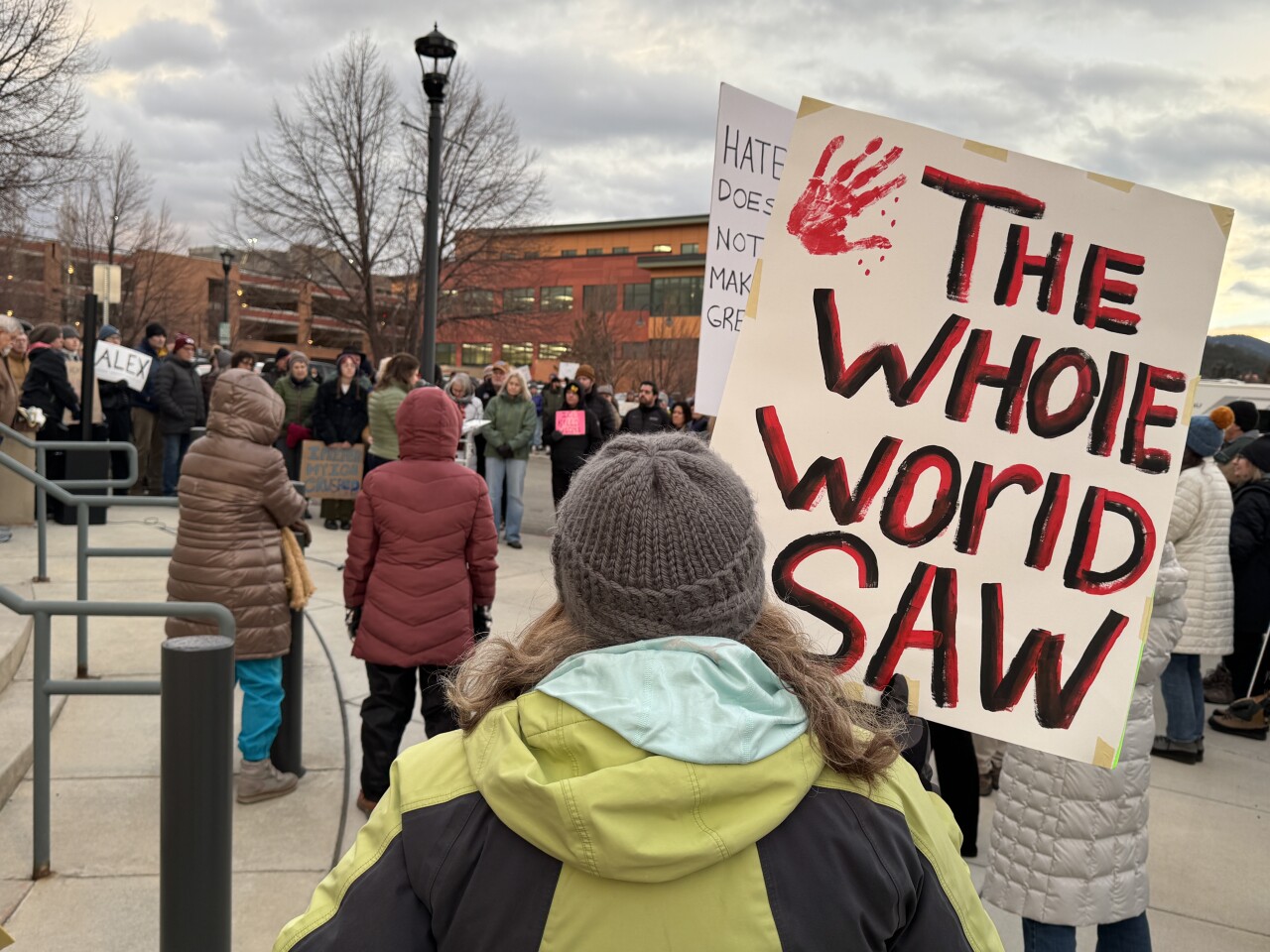
On January 26, 2026, the City of Helena adopted a resolution clarifying when and how the Helena Police Department will cooperate with federal immigration officials. The vote was 4 to 1. The Helena commission seats and the mayor are elected in non-partisan races.
In the letter, Knudsen alleges the resolution established “a broad sanctuary city policy” that seeks to protect every illegal immigrant, regardless of whether the individual had committed a serious crime or not. The state further claims the resolution gives illegal immigrants “special privileges” in plea deals and establishes a “free-for-all policy” where a police officer can request the unmasking of Department of Homeland Security and ICE officers.
Knudsen has requested that the City of Helena, in their response, specifically describe in detail how the resolution complies with Montana law, provide emails and correspondence from city staff and the commission regarding the resolution.
Helena City manager Alana Lake told MTN in a statement: “The City of Helena is aware of the issues being raised by the Attorney General’s Office and is reviewing the matter. While we cannot discuss the details of a potential legal issue, the City is committed to transparency and compliance with the law. The City takes these matters seriously and will continue to cooperate with the appropriate authorities while remaining focused on serving our community.”
MTN News 
Passed in 2021, Montana House Bill 200 prohibits a state agency or local government from implementing any policy that prevents employees or departments from communicating with federal agencies regarding immigration or citizenship status for lawful purposes. It also states governments must comply with immigration detainer requests if they are lawfully made.
HB 200 was backed by Republicans and passed with only Republican votes. Gov. Greg Gianforte signed the legislation into law on March 31, 2021.
Passage of the resolution by the Helena City Commission has drawn ire from conservative voices in Montana politics and on the national level.
MTN News
The resolution said the commission supported the Helena Police Department avoiding “committing its resources to federal action for which it has no authority,” such as entering into an agreement with the federal government to directly enforce immigration laws. Under federal law, immigration enforcement is conducted by federal agencies under the Department of Homeland Security. However, under the Immigration and Nationality Act, state and local governments can voluntarily enter into 287 (g) agreements with the federal government that allow them to enforce immigration laws.
The commission further supported HPD’s policy not to stop, detain, or arrest a person solely on suspected violations of immigration law, including assisting other agencies in an arrest based solely on immigration law.
DEEPER LOOK: Helena has seen a growing debate over ICE and local police involvement
In the resolution, the commission also supported an HPD officer, using their own discretion, requesting the identification and unmasking of a Department of Homeland Security Officer if the HPD officer “feels it will not be interfering with the actions of federal officers exercising their jurisdiction.”
“This adversarial relationship by local law enforcement toward federal officers itself undermines public safety and forces immigration officers to fear for their safety when they are simply carrying out their lawful duties,” wrote Knudsen.
The resolution further supports the City of Helena’s policy not to consider immigration consequences in a plea agreement with a defendant.

Mack Carmack, MTN News
The commission also supports the City of Helena not disclosing any sensitive information about any person – including immigration status, sexual orientation, or social security number – except as required by law.
“This is a restriction that directly conflicts with Montana’s prohibition on sanctuary jurisdictions, specifically ‘sending to, receiving from, exchanging with, or maintaining for a federal, state, or local government entity information regarding a person’s citizenship or immigration status for a lawful purpose,’” the attorney general wrote.
If a government is found to be violating Montana’s law banning “sanctuary cities”, the state could fine them $10,000 every five days, prevent them from receiving new grants from the state, and have their projects with the state re-prioritized. A government in violation can avoid penalties by becoming compliant with the law within 14 days of being notified of the violation.
Read the full letter from the Montana Attorney General to the City of Helena:

Watch CBS News

ALBUQUERQUE, N.M. — Country Music Hall of Fame inductee Tanya Tucker will perform at the 2026 New Mexico State Fair, officials announced Tuesday.
Tucker will take to the stage Friday, Sept. 18, after the Chevron PRCA rodeo. The Grammy Award-winning icon has racked up 10 No. 1 country hits since her first hit, “Delta Dawn,” at age 13.
“We couldn’t be more thrilled to bring the legendary Tanya Tucker to the New Mexico State Fair,” said Dan Mourning, general manager of the New Mexico State Fair. “Tanya is one of the greatest icons in country music history and is the perfect fit for the Fair.”
Tucker has 23 Top-40 albums and 56 Top 40 singles on the Billboard country music charts. She has won two Country Music Association awards, two Academy of Country Music awards, three CMT Awards and two Grammys for Best Country Album and Best Country Song.
Tickets are set to go on sale on Friday at 10 a.m.
Here is the full 2026 New Mexico State Fair rodeo-concert lineup:
Friday, Sept. 11
Turnpike Troubadours with Chevron PRCA Xtreme Bulls
Saturday, Sept. 12
Ian Munsick with Chevron PRCA Xtreme Bulls
Wednesday, Sept. 16
Chevron PRCA Standalone Rodeo
Thursday, Sept. 17
Everclear with Chevron PRCA Rodeo
Friday, Sept. 18
Tanya Tucker with Chevron PRCA Rodeo
Saturday, Sept. 19
The Warning with Chevron PRCA Rodeo
Sunday, Sept. 20
Chevron PRCA Rodeo – Matinee

Proposal would ban crypto ATMs in Minnesota

Mississippi First Congressional District Primary 2026: Live Election Results, Buck vs. Johnson

Missouri Supreme Court hears arguments on congressional redistricting map – Missourinet
Montana AG letter alleges Helena violates law banning ‘sanctuary cities’

Shelter in place issued after suspicious object found in mailbox

Florida High School Football Rankings: Top 25 teams – Oct. 21

How old is Bo Nix? What to know about Oregon quarterback ahead of 2024 NFL Draft

Cleary's 21 help Le Moyne down Central Connecticut State 69-64 in OT

99th annual Pony Swim held in Virginia

Indiana Members Credit Union announced as new anchor tenant at Bottleworks District

Map: 2.3-Magnitude Earthquake Reported North of New York City

Trump stirs GOP primary drama with visit to Massie’s Kentucky home turf

Israeli air strike targets building in south Lebanon

Ed Martin, outspoken Justice Department lawyer, is formally accused of ethical violations | CNN Politics

Trump reveals top issues GOP should focus on to secure midterms victory: ‘I’ve never been more confident’
-

 Wisconsin1 week ago
Setting sail on iceboats across a frozen lake in Wisconsin
-

 Massachusetts1 week ago
Massachusetts man awaits word from family in Iran after attacks
-

 Maryland1 week ago
AM showers Sunday in Maryland
-

 Pennsylvania5 days ago
Pa. man found guilty of raping teen girl who he took to Mexico
-

 Florida1 week ago
Florida man rescued after being stuck in shoulder-deep mud for days
-

 Sports6 days ago
Keith Olbermann under fire for calling Lou Holtz a ‘scumbag’ after legendary coach’s death
-

 Detroit, MI4 days ago
U.S. Postal Service could run out of money within a year
-

 Miami, FL6 days ago
City of Miami celebrates reopening of Flagler Street as part of beautification project