California
Huell Howser Lives! | Connecting California


Zócalo is celebrating its 20th birthday! As part of the festivities, we’re publishing reflections and responses that revisit and reimagine some of our most impactful stories and public programs. Connecting California columnist Joe Mathews revisits Southern California author D.J. Waldie’s 2012 essay “The Darkness Behind Huell Howser” and considers why, over a decade after Howser’s death, the public TV’s great California chronicler retains such a hold on us.
“Do you know Huell Howser?”
I got that question recently while chatting with a counter guy at Erick Schat’s Bakery, which produces Dutch pastries and sheepherder bread in the Eastern Sierra town of Bishop.
It’s a question I get at least a couple times a year, in all different corners of California.
I suppose it’s a natural question. People might wonder if I, a longtime chronicler of California’s places, get asked if I know the public television reporter who took viewers into every little town and restaurant and museum, from Alturas to Zzyzx.
It’s a question that never ceases to amaze me. Or stump me.
Because the truth is that I can’t possibly know Huell Howser. And not just because I only met him a couple times. No one can possibly know Huell Howser anymore, because Huell Howser died 11 years ago, of prostate cancer, at age 67.
But the truth is also that people feel like they do know Huell Howser. Because he never really left us. His shows still air regularly on public TV stations in Southern California. And episodes of his California-exploring series—California’s Gold, California’s Green, Downtown, Road Trip with Huell Howser, and Visiting—still attract heavy traffic online.
Why does Huell Howser retain such a hold on us? The best answer to that question came from the Southern California author D.J. Waldie, in a Zócalo Public Square essay published shortly before Howser’s January 2013 death.
Waldie’s thesis was that Howser, in taking viewers to forgettable eateries and little-known places, was finding joy in the thing that Californians most cherish: our broken dreams.
Most people come to California, or grow up in California, dreaming of stardom or riches or invention or new and distinctive lifestyles. Instead, they end up sewing dresses in a little store in Tustin, or working at a dairy outside Turlock. You can feel pretty small doing that kind of work. But when Howser showed up, the public TV explorer in all his geeky ebullience, it made the life you settled for seem big.
When Howser showed up, the public TV explorer in all his geeky ebullience, it made the life you settled for seem big.
“Howser wasn’t just pitching the muchness of California, an abundance anyone should be able to see unaided,” Waldie wrote. “He was pitching the almost infinite otherness within the ordinary of California, particularly when California is considered with joy.”
Waldie wrote that Howser’s deep connection with the regular “folks” of California was not his joy but “the melancholy behind his fierce public niceness.” His TV tours could strike sad notes, especially when his questions revealed wonderful old things that no longer existed. The same relentless dynamism that produces the many wonders of California also destroys the established. Our sunny love of the novel coexists with darkness and loss.
Howser liked to say that his goal was to encourage Californians to embark on their own personal adventures around the state, and investigate the places all around them. Howser modeled that kind of exploration, with a curiosity about everything that showed how fiercely unprejudiced he was.
As Waldie wrote, Howser was not urging Californians to take “a harmless field trip” but rather to begin “an encounter with the differences that reside, intractable, in everyday life—real differences between people, conditions, ethnicities, and cultures that can only be accepted for what they are and mostly with a smile.”
I don’t look or sound like Howser—he was a handsome TV guy with the distinctive accent of his native Tennessee, while I’m a rumpled print guy and fourth-generation Californian. But I suspect I get the “Do you know Huell Howser?” question because my reporting method is so similar to his.
That method: modestly planned, thoroughly unrehearsed wandering—which also happens to be the most practical way to get to know California.
Because Californians are so informal and so flaky (as anyone who has ever invited people to a dinner party knows), I rarely bother to schedule a bunch of interviews in advance when I’m visiting a town. It works much better to show up unannounced, act friendly, and start asking respectful questions about what people do.
I also say, as Howser did, “wow” and “gee whiz” when people are showing me things—a rusting old motorbike, a piece of street art, a loaf of bread—that would seem less than amazing to someone less geekily Californian.
There is no greater flattery in the Golden State than to take an interest in what others do. Californians, whatever their occupation, are instinctive artists, and asking them about their business or their home or their flea market—as Howser did—often elicits detailed and thoughtful responses.
That’s what I was doing at Schat’s. I had been pressing the counter guy. What is that bread? Can I try a piece? What makes it taste so good?
His answer to my last question was perfect: The best bread comes from the baker most determined to make sure you never forget it.



California
Attorney disputes federal claims after ICE shooting in California; family seeks medical update

The attorney for the man shot by U.S. Immigration and Customs Enforcement agents in Patterson is disputing federal claims and raising questions about what led up to the shooting, and what’s happening now at the hospital.
Carlos Ivan Mendoza Hernandez’s fiancée and attorney say they still don’t know his condition and are struggling to get basic information from authorities.
They’re also disputing ICE’s version of events and point to court documents that they say tell a very different story.
“I have a lot of concern right now about getting info, finding out how is he doing, is he alive, is he recovering and what is his situation,” said Patrick Kolasinski, Hernandez’s attorney.
Dashcam video captured the moments Tuesday morning when Hernandez tried to pull away from agents who were attempting to arrest him as ICE said he is wanted for questioning in El Salvador in connection with a murder. Kolasinski speculated that his reaction may have been driven by fear.
“I wasn’t with him, I can only imagine if you see what’s happening in immigration detention and find yourself about to be detained,” Kolasinski said. “It’s normal to try and flee.”
ICE claims Hernandez is a member of the 18th Street gang and is wanted in El Salvador. But his attorney says none of that is true.
“Carlos is a family man who was on his way to work when he was detained by ICE. He has had no criminal contacts in the United States,” Kolasinski said.
Court documents from 2019 show Hernandez was charged with aggravated homicide, which was later reduced to simple homicide. The court documents also shows Hernandez was found not guilty.
“He was, in fact, acquitted, so he cannot possibly have a warrant out for his arrest,” Kolasinski said.
CBS Sacramento reached out to ICE regarding the court document from El Salvador, but has yet to hear back.
“I think the problem is the training,” Kolasinski said. “You have a not dangerous person and when they try to flee. First of all, the car was way too far behind. When you do a traffic stop, you pull up close behind. If you’ve ever gotten a ticket, you’ll see CHP is on your bumper. Why? So this can’t happen.”
Hernandez’s attorney and his fiancée both say they’re now struggling to get basic information.
“Sheriff’s office, no one, no one responded to me, being searching for answers,” said Cindy, Hernandez’s fiancée.
Cindy said she didn’t hear from the authorities first, but from her sister. After arriving at the hospital, she said an FBI agent took her into a room.
“He said, ‘I’m going to record you because I need to have this recorded, right?’ So I was expecting him to talk to me about Carlos. I literally asked how he’s doing, is he’s in the hospital. He said, ‘I cannot share any information. I’m not authorized.’”
CBS Sacramento reached out to the FBI and is awaiting a response.
As they wait for answers, she said this goes beyond just one case.
“Right now it’s me and that’s the reason I’m here. I’m also representing our community,” Cindy said. “I don’t want this situation to continue and continue blaming these people, in this case, Carlos.”
Right now, his family and his attorney say they’re still attempting to find out his condition.
Kolasinski said Wednesday evening that Hernandez is detained under the U.S. attorney’s office. Kolasinski added that Hernandez underwent a medical procedure, but the family doesn’t know his condition.

Tori Spelling is feeling “grateful” after the “Beverly Hills, 90210” star and four of her children were involved in a serious car crash in California earlier this month.
“We are so grateful and so lucky, because it could have been so much worse,” Spelling said in a Tuesday Instagram video, adding that the last few days have been “overwhelming.”
The Riverside County Sheriff’s Office previously told NBC News the April 2 crash occurred after another driver allegedly ran a red light while speeding and hit Spelling’s car.
Spelling, 52, and seven children — four of her own and three of their friends — were taken to the hospital after the April 2 accident in Temecula, California. The sheriff’s officer said at the time that all occupants were evaluated at the scene, and no arrests were made. The cause of the collision, however, remains under investigation.
In the self-style video, Spelling detailed the incident from her point of view, saying that the driver who hit her car was “going crazy, crazy fast.”
“I’m just really grateful that in a split second, guardian angels were definitely with us that day, because in a split second, I looked to my right and I saw he was coming full on, full impact into the side of our car,” she said.
To avoid impacting the children as much as possible, Spelling said she had to turn hard left as fast as she could, causing them to spin out. TMZ, which first reported the incident, said Spelling and the children were treated for cuts, bruises, contusions, concussions, and other injuries.
“I just want to thank all of the first responders on the scene and to Inland Valley ER that took such great care of all of the kids and myself,” Spelling added in the video.
Video obtained by TMZ appeared to show Spelling speaking animatedly with first responders. Photos published by TMZ appeared to show Spelling’s car to be significantly less damaged than the other vehicle involved.
“I’m grateful to everyone who has reached out and repeatedly checked on us and offered to do whatever we needed to get us through this, and all the blessings everyone has sent,” Spelling added in the video.
Spelling shares five children with her ex-husband, Dean McDermott. It is unclear which of her four children was in the car involved in the crash.

A bill sparked by a KCRA 3 investigation cleared its first hurdle in the California Legislature on Tuesday.Assembly Bill 2598 was introduced in response to KCRA’s “Dignity Delayed.” The investigation revealed a backlog of human remains after patient deaths at Dignity Health hospitals. The hospitals are accused of failing to notify families and county officials for months or even years after the deaths and, instead, leaving bodies to decompose in cold storage at an off-site morgue without a death certificate.In court records, Dignity Health said the COVID-19 pandemic and staffing issues caused delays, although they dispute that they did not initially try to contact next of kin.That is a dispute that is now being argued in civil court following lawsuits filed by families who say they were left in the dark about the deaths of their loved ones.In the meantime, AB 2598 aims to make it clear that notification of next of kin is required and that not doing so could have consequences.“This is necessary to fill a gap that we currently have in our law,” said the bill’s author, Assemblymember Maggy Krell, D-Sacramento.The bill states that the California Department of Health could dole out penalties of $200 a day for each day that a hospital fails to make a reasonable attempt to notify family. Fines would max out at $50,000. The California Hospital Association is proposing some amendments and clarifications to the bill, but there is currently no registered opposition to it.The Assembly Health Committee voted to pass the bill, and it is scheduled to be heard before the Assembly Judiciary Committee next.See more coverage of top California stories here | Download our app | Subscribe to our morning newsletter | Find us on YouTube here and subscribe to our channel
A bill sparked by a KCRA 3 investigation cleared its first hurdle in the California Legislature on Tuesday.
Assembly Bill 2598 was introduced in response to KCRA’s “Dignity Delayed.” The investigation revealed a backlog of human remains after patient deaths at Dignity Health hospitals. The hospitals are accused of failing to notify families and county officials for months or even years after the deaths and, instead, leaving bodies to decompose in cold storage at an off-site morgue without a death certificate.
In court records, Dignity Health said the COVID-19 pandemic and staffing issues caused delays, although they dispute that they did not initially try to contact next of kin.
That is a dispute that is now being argued in civil court following lawsuits filed by families who say they were left in the dark about the deaths of their loved ones.
In the meantime, AB 2598 aims to make it clear that notification of next of kin is required and that not doing so could have consequences.
“This is necessary to fill a gap that we currently have in our law,” said the bill’s author, Assemblymember Maggy Krell, D-Sacramento.
The bill states that the California Department of Health could dole out penalties of $200 a day for each day that a hospital fails to make a reasonable attempt to notify family. Fines would max out at $50,000.
The California Hospital Association is proposing some amendments and clarifications to the bill, but there is currently no registered opposition to it.
The Assembly Health Committee voted to pass the bill, and it is scheduled to be heard before the Assembly Judiciary Committee next.
See more coverage of top California stories here | Download our app | Subscribe to our morning newsletter | Find us on YouTube here and subscribe to our channel

Commentary: In Texas and beyond, a political impulse: If you don’t like it, leave
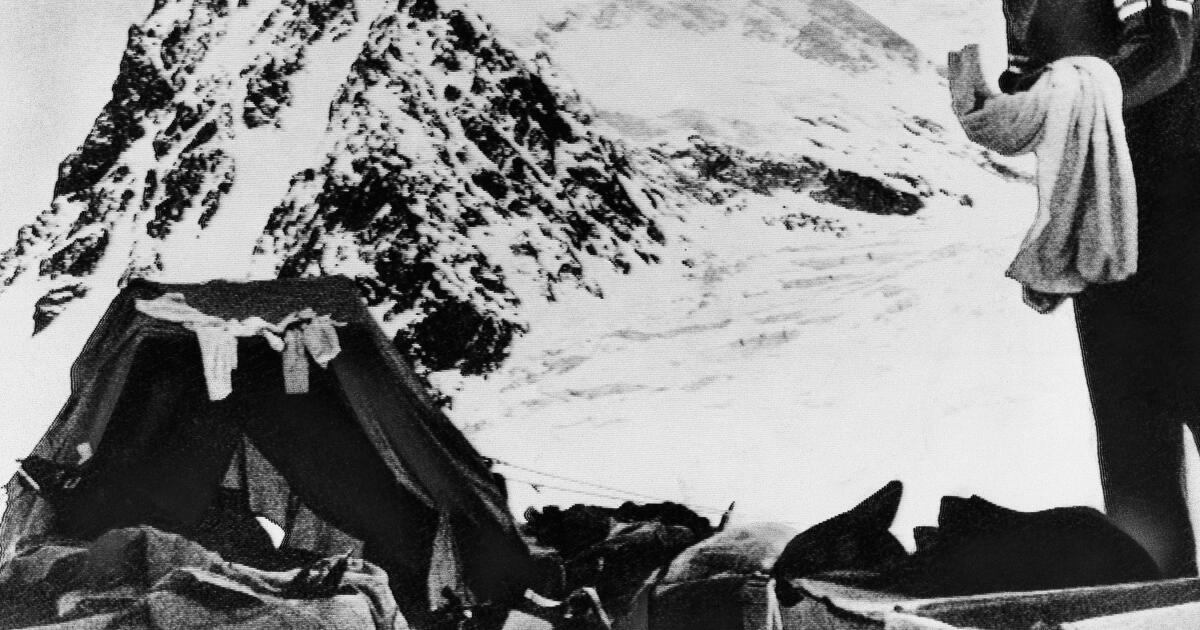
Jim Whittaker, first American climber to scale Mount Everest, has died

Newsletter: NATO holds amid fragile Iran ceasefire
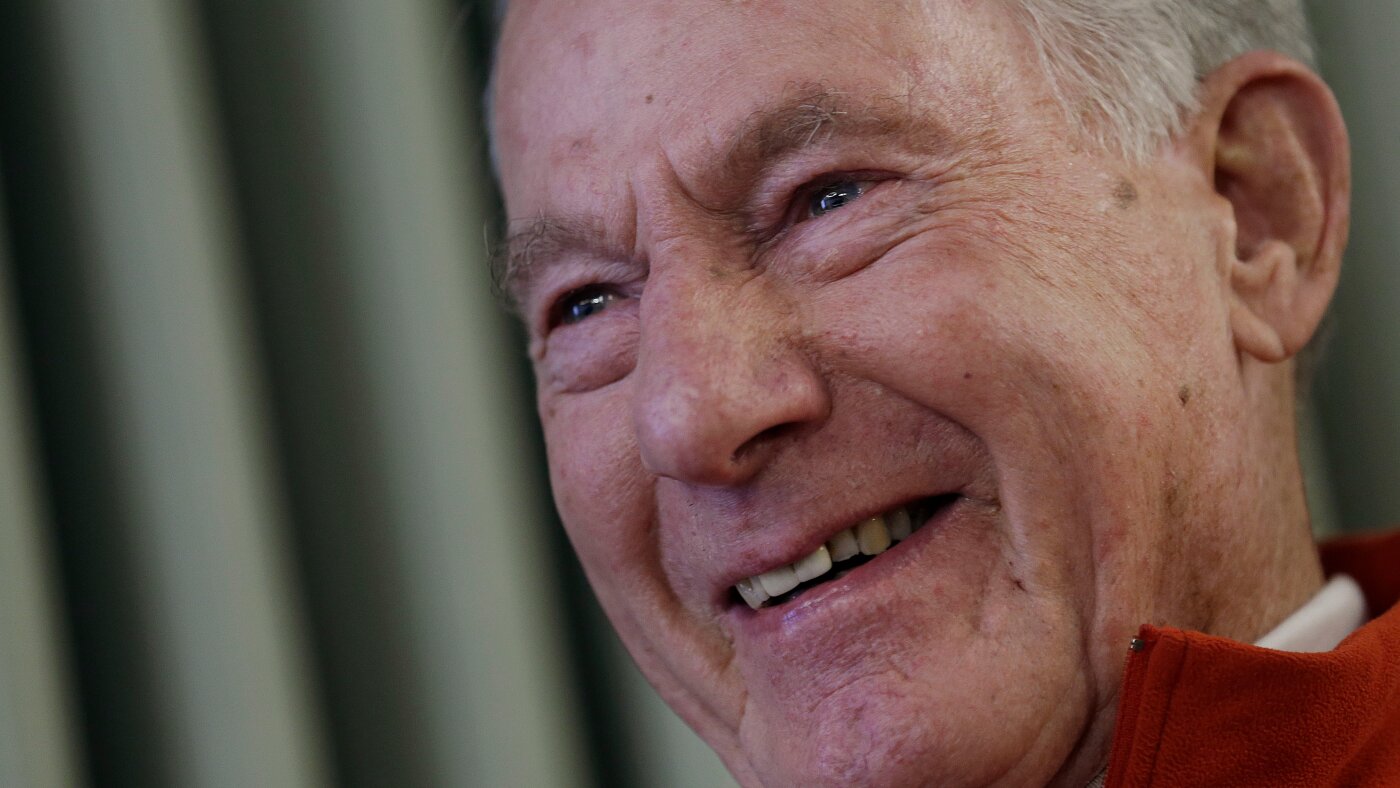
Jim Whittaker, the first American to summit Mount Everest, dies at 97

Video: Suspect in Gilgo Beach Murders Pleads Guilty

Florida High School Football Rankings: Top 25 teams – Oct. 21

How old is Bo Nix? What to know about Oregon quarterback ahead of 2024 NFL Draft

Cleary's 21 help Le Moyne down Central Connecticut State 69-64 in OT

99th annual Pony Swim held in Virginia

Indiana Members Credit Union announced as new anchor tenant at Bottleworks District
Newsletter: NATO holds amid fragile Iran ceasefire
Jim Whittaker, the first American to summit Mount Everest, dies at 97

Video: Military Families Bear the Burden of War, Again

Fox News Poll: Record number say taxes are too high; government spending seen as wasteful

‘Even the street cats ran’: Inside Israel’s deadliest attack on Beirut
-

 Atlanta, GA4 days ago
1 teenage girl killed, another injured in shooting at Piedmont Park, police say
-

 Culture1 week ago
Do You Know Where These Famous Authors Are Buried?
-

 Movie Reviews7 days ago
Vaazha 2 first half review: Hashir anchors a lively, chaos-filled teen tale
-

 Georgia2 days ago
Georgia House Special Runoff Election 2026 Live Results
-

 Pennsylvania2 days ago
Parents charged after toddler injured by wolf at Pennsylvania zoo
-

 Education1 week ago
Video: We Put Dyson’s $600 Vacuum to the Test
-
 Milwaukee, WI3 days ago
Potawatomi Casino Hotel evacuated after fire breaks out in rooftop HVAC system
-
 Entertainment1 week ago
Inside Ye’s first comeback show at SoFi Stadium