Sports
NFL All-Rookie Team: Jayden Daniels, Malik Nabers and more 2024 draft picks who shined


As I put finishing grades on prospects for the 2025 NFL Draft, I find myself wishing it were as strong of a class as the 2024 version.
Based on the rookie film, last year’s draft class certainly hasn’t disappointed in the NFL. Here is a look at The Athletic’s All-Rookie team:
Quarterback
Jayden Daniels, Washington Commanders (Round 1, No. 2 overall)
Because of the season Bo Nix had, this was a much closer race than anyone expected. From start to finish this season, though, Daniels was the best rookie quarterback.
He engineered a dramatic franchise turnaround, leading a Commanders team that won just four games a year ago to a 12-5 finish. Daniels passed for 3,568 yards and accounted for 31 total touchdowns, finishing No. 1 among rookies in completion percentage (69 percent), yards per attempt (7.4) and passing first downs (204).
.@JayD__5 made history while clinching a playoff berth for the Washington @Commanders on Sunday!
Daniels is the ONLY rookie in @NFL history to have 3+ passing TDs and 125+ rushing yards in a single game. 🤯 pic.twitter.com/TdLlSTkHrG
— NFL Football Operations (@NFLFootballOps) December 31, 2024
Daniels is a high-completion passer, but it’s what he brings with his legs that separates him. He set a rookie QB rushing record (891 yards) and finished 10th in the NFL with 28 carries of 10-plus yards. He also scrambled an NFL-high 75 times, so it will be interesting to see how that number fluctuates over the next few seasons.
A common thread between Daniels and Nix? Both were five-year starters in college, and that experience certainly played a part in their successes.
Second team: Bo Nix, Denver Broncos (Round 1, No. 12)
In most years, Nix runs away with Offensive Rookie of the Year. His finished the regular season with 3,775 passing yards, 29 passing touchdowns and 12 interceptions, adding 430 yards and four touchdowns on the ground. And, like Daniels, Nix played a critical part in leading his team to double-digit wins and the playoffs.
The two things I liked best about Nix as a prospect: He understood where to go with the football, and his scrambling gave defenders fits. The main concerns, however, were how much he relied on the quick game in college and how he struggled when his eyes sped up on him. All credit to Nix and Sean Payton for the QB’s development. He’s been proving a lot of people wrong, including me.
Honorable mentions: Caleb Williams (Bears), Drake Maye (Patriots), Michael Penix Jr. (Falcons), Spencer Rattler (Saints), Joe Milton III (Patriots)
GO DEEPER
The best moments of the NFL season, from Saquon’s hurdle to Commanders’ Hail Mary
Running back
Bucky Irving, Tampa Bay Buccaneers (Round 4, No. 125)
Just four running backs rushed for 1,100-plus yards while averaging more than 5.0 yards per carry this season: Saquon Barkley, Derrick Henry, Jahmyr Gibbs and … Irving. He played only 45.2 percent of Tampa’s offensive snaps and had single-digit carries in eight of 17 games, but Irving proved to be a valuable part of the Bucs’ run to an NFC South title — Tampa finished 6-1 in its final seven games and Irving averaged 119.1 total yards per game during that stretch.
The sixth back drafted in April, Irving finished No. 1 among all first-year running backs in rushing yards (1,122), rushing touchdowns (eight) and receiving (47 catches for 392 yards). Some soured on him during the draft process due to his average testing (4.55-second 40-yard dash and 29.5-inch vertical, at only 192 pounds), but his instinctive run qualities and pass-catching skills made it easy to appreciate Irving’s skill set.
Bucky Irving scores!
NFC South in their sights.
📺: #NOvsTB on FOX
📱: https://t.co/waVpO909ge pic.twitter.com/nBRgpPWSxS— NFL (@NFL) January 5, 2025
Second team: Tyrone Tracy, New York Giants (Round 5, No. 166)
In basketball terms, Tracy would be that high-energy sixth man who can swing games when he catches fire. The Purdue product was a threat to rip off an explosive play any time he touched the ball — he finished with six carries of 20-plus yards (one more than Bijan Robinson). Tracy (839 yards) was the only rookie back other than Irving to top 500 yards rushing.
Honorable mentions: Ray Davis (Bills), Isaac Guerendo (49ers), Braelon Allen (Jets), Trey Benson (Cardinals), Audric Estime (Broncos)
Wide receiver
Brian Thomas Jr., Jacksonville Jaguars (Round 1, No. 23); Malik Nabers, New York Giants (Round 1, No. 6)
LSU teammates a year ago, Thomas and Nabers took the NFL by storm — despite dealing with inconsistent quarterback play.
Thomas finished with a rookie-best 1,282 receiving yards, third most in the NFL behind only Ja’Marr Chase and Justin Jefferson. He had the fastest “flying 20” at the combine, so it was no surprise that he proved to be a big-play weapons almost immediately, producing a league-best five catches of 50-plus yards. He felt like a steal on draft night, and that is even more true now.
Nabers, meanwhile, finished third among all NFL receivers with 109 catches (behind only Chase and Amon-Ra St. Brown), even though he missed two games. His 1,204 receiving yards ranked seventh in the league, and he was one of the best at making defenders miss in space and moving the chains. Nabers is (already) knocking on the door of being considered a top-five NFL receiver.

GO DEEPER
Ranking NFL playoff coaches by who gives their team biggest edge on fourth downs
Second team: Marvin Harrison Jr., Arizona Cardinals (Round 1, No. 4); Xavier Worthy, Kansas City Chiefs (Round 1, No. 28)
Harrison’s production pales in comparison to expectations, but he still had a very respectable rookie campaign. He finished fourth among first-year receivers with 822 receiving yards, and his seven touchdowns tied with Nabers and Ladd McConkey for second most among rookies. On 108 targets, Harrison was tagged with just one drop.
Worthy wasn’t considered a first-rounder by most teams, due to his lack of size and the undisciplined areas of his game. Although those concerns popped up in almost every game Worthy played, the Chiefs leaned into his explosive talent to maximize his impact. Worthy finished with nine total touchdowns (six receiving, three rushing).
Honorable mentions: Rome Odunze (Bears), Keon Coleman (Bills), Jalen McMillan (Buccaneers), Xavier Legette (Panthers), Troy Franklin (Broncos)
Slot receiver
Ladd McConkey, Los Angeles Chargers (Round 2, No. 34)
In an exceptional wide receiver draft, the Chargers addressed their offensive line in the first round and trusted the depth of the class. And the strategy worked — Los Angeles traded up a few spots to secure McConkey, whom many around the league believed would be a first-rounder.
McConkey finished with the ninth-most receiving yards (1,149) among all wide receivers and showed off his shiftiness after the catch (14 forced missed tackles). Despite two fumbles, he was one of the most reliable rookies (74.8 percent reception rate when targeted). Most importantly, McConkey stayed healthy, missing just one game.
LADD. Chargers take a 17-0 lead.
📺: #LACvsNE on NFL Network
📱: Stream on #NFLPlus pic.twitter.com/7dO9Ch30WH— NFL (@NFL) December 28, 2024
Second team: Devaughn Vele, Denver Broncos (Round 7, No. 235)
I don’t think many predicted Vele to have the same number of receiving touchdowns as Deebo Samuel, Puka Nacua or George Pickens. But he found a home in Denver and took advantage of his playing time. With 70 percent of his snaps coming in the slot, Vele finished with 41 catches for 475 yards and three touchdowns.
Honorable mentions: Jalen Coker (Panthers), Ricky Pearsall (49ers), Malik Washington (Dolphins)
Tight end
Brock Bowers, Las Vegas Raiders (Round 1, No. 13)
The easiest decision on this All-Rookie team, Bowers had arguably the best debut season for a tight end in NFL history.
Despite the Raiders’ below-average quarterback play, Bowers led all NFL tight ends in catches (112), receiving yards (1,194) and first-down grabs (58) and finished second in catches of 20-plus yards (15). He broke Mike Ditka’s 63-year-old record for receiving yards by a rookie tight end, and his drops were rare (three on 139 targets). Bowers’ touchdown total (five) doesn’t match the rest of his production, but that is more a reflection of the team than the player.
TE Brock Bowers (@brockbowers17) has now passed Puka Nacua (105 in 2023) for the most receptions in a single season in #NFL history by a rookie.#RaiderNation | @Raiders pic.twitter.com/OUSaxE69Mi
— Raiders PR (@RAIDERS_PR) December 29, 2024
Second Team: AJ Barner, Seattle Seahawks (Round 4, No. 121)
There was a massive gap between Bowers and the next-best rookie tight end. Barner gets the nod because he was reliable catching the football and solid as a blocker. He finished with 30 catches for 245 yards and four touchdowns, joining Bowers as the only rookie tight ends with multiple TDs.
Honorable mentions: Ja’Tavion Sanders (Panthers), Theo Johnson (Giants), Erick All (Bengals), Cade Stover (Texans)
Offensive tackle
Joe Alt, Los Angeles Chargers (Round 1, No. 5); JC Latham, Tennessee Titans (Round 1, No. 7)
The Chargers passed on Nabers, but I don’t know many who believe they made the wrong choice. That is how good Alt has been.
He is incredibly consistent with his steps, hands and body movements to frame up rushers and win with leverage. And he is doing all this at a position he hadn’t played before this season. This is going to sound hyperbolic, but based on Alt’s performance and development, it wouldn’t be surprising if he ascends to be the league’s top right tackle at some point the next few seasons.
While Alt moved from the left side to the right, Latham made the reverse transition and played well in his first season at left tackle. It was far from perfect, and he had understandable struggles for a rookie, but Tennessee can feel comfortable it has its long-term left tackle.
Second Team: Taliese Fuaga, New Orleans Saints (Round 1, No. 14); Roger Rosengarten, Baltimore Ravens (Round 2, No. 62)
Unsurprisingly, Fuaga was the only rookie tackle close to Alt as a run blocker. And his improvements in pass pro at left tackle over the final month were encouraging (see his tapes vs. the Commanders and Buccaneers). Similarly, Rosengarten was outstanding as a pass blocker at right tackle over the final two months (10 pressures and one sack allowed in his final eight starts).
Honorable mentions: Olu Fashanu (Jets), Amarius Mims (Bengals), Brandon Coleman (Commanders), DJ Glaze (Raiders), Tyler Guyton (Cowboys), Matt Goncalves (Colts)
GO DEEPER
Who are top NFL Draft prospects in CFP semis? Which players have most to gain?
Guard
Dominick Puni, San Francisco 49ers (Round 3, No. 86); Jackson Powers-Johnson, Las Vegas Raiders (Round 2, No. 44)
There were 25 offensive linemen drafted before Puni, but he would be one of the first offensive linemen off the board if a redraft happened today. Not only did Puni play at a high level for a rookie, especially in the run game, he was reliable, starting all 17 games and leading his team in snaps played.
Powers-Johnson got a late start this season due to injury and went through his share of hiccups early. But he improved as the season progressed and his confidence increased, which allowed him to lean on his movement skills and physicality. His versatility was a strong selling point, and he showed that with eight starts at guard and six at center.
Second Team: Mason McCormick, Pittsburgh Steelers (Round 4, No. 119); Layden Robinson, New England Patriots (Round 4, No. 103)
McCormick had a few “welcome to the league” moments (see his tape vs. the Ravens), but there were more positive moments in his debut season, as he started the final 14 games. Robinson wasn’t nearly as consistent, but the positive flashes — especially after he moved to left guard — were encouraging.
Honorable mentions: Dalton Tucker (Colts), Isaiah Adams (Cardinals), Christian Mahogany (Lions), Jordan Morgan (Packers)
Center
Zach Frazier, Pittsburgh Steelers (Round 2, No. 51)
As good as Alt and Puni have been, there is a strong case to be made that Frazier was the top first-year offensive linemen. Although his length and athleticism are more solid than exceptional, he already looks like a veteran with his strength at contact and ability to outmaneuver defenders. I think people get tired of hearing about wrestling backgrounds for offensive linemen, but with Frazier, you can clearly see how his skills on the mat translate to the NFL.
Second Team: Graham Barton, Tampa Bay Buccaneers (Round 1, No. 26)
In most years, Barton would have been a shoo-in for the top rookie center. He seemed to have at least one penalty a game, an area of his game which needs to improve (flags were an issue for him in college, too). But Tampa has to be thrilled with his development.
Honorable mentions: Tanor Bortolini (Colts), Cooper Beebe (Cowboys), Beaux Limmer (Rams)
Edge rusher
Jared Verse, Los Angeles Rams (Round 1, No. 19); Chop Robinson, Miami Dolphins (Round 1, No. 21)
Trey Hendrickson, Myles Garrett and Jonathan Greenard are the only players who created more pressures this season than Verse (77). To put that number in perspective, only Nick Bosa had more pressures as a rookie over the last dozen years. When Von Miller won Defensive Rookie of the Year in 2011, he averaged 4.4 pressures per game; Verse averaged 4.5 this season.
Bro is DIFFERENT. 😮💨
📺: @NFLonFOX | #RamsHouse pic.twitter.com/VUQdP9PSA0
— Los Angeles Rams (@RamsNFL) November 3, 2024
Robinson’s impact was more gradual. After tallying 14 pressures over the first eight games, he accounted for 42 over the second half of the season to finish with 56 — three more than T.J. Watt.
Second Team: Laiatu Latu, Indianapolis Colts (Round 1, No. 15); Jonah Elliss, Denver Broncos (Round 3, No. 76)
As the first defensive player drafted, Latu had a bit of a disappointing season with just four sacks. But he led all rookies with three forced fumbles and showed enough promise off the bench that the Colts can be excited about a sophomore jump. Elliss, who finished third among rookies with five sacks, proved to be a quality subpackage rusher.
Honorable mentions: Chris Braswell (Buccaneers), Dallas Turner (Vikings), Marshawn Kneeland (Cowboys), Austin Booker (Bears), Javon Solomon (Bills), Jalyx Hunt (Eagles)
Defensive tackle
Braden Fiske, Los Angeles Rams (Round 2, No. 39); T’Vondre Sweat, Tennessee Titans (Round 2, No. 38)
Fiske finished as the rookie leader in sacks (8.5) and collected 51 pressures, three behind Quinnen Williams. He always had the twitchy urgency and quickness to make an impact in the NFL, but the continued development with his hands was awesome to see.
Selected one spot before Fiske, Sweat generally was viewed as a potential first-round pick based on size and ability, but questions about his weight and off-field consistency removed him from several boards. The Titans rolled the dice and, so far, that gamble has paid off. Sweat might never be a playmaker as a pass rusher, but he destroys gaps in the run game and has better range than his 360-pound size would suggest.
Second Team: Byron Murphy II, Seattle Seahawks (Round 1, No. 16); Jer’Zhan Newton, Washington Commanders (Round 2, No. 36)
Injuries robbed us of seeing Murphy at full-go, but the flashes were enough to explain why he was so coveted in the draft. The same could be said about Newton, who started slow but has been a welcome part of the Commanders’ defensive line rotation.
Honorable mentions: Elijah Chatman (Giants), Mike Hall Jr. (Browns), Kris Jenkins (Bengals), Evan Anderson (49ers), Leonard Taylor III (Jets), Jonah Laulu (Raiders), Maason Smith (Jaguars), DeWayne Carter (Bills)
GO DEEPER
NFL 2025 mock draft, picks 1-18: What should non-playoff teams do in Round 1?
Linebacker
First team: Edgerrin Cooper, Green Bay Packers (Round 2, No. 45); Payton Wilson, Pittsburgh Steelers (Round 3, No. 98)
Part of Cooper’s appeal as a prospect was his do-everything skill set, which was on full display this season. Despite missing a few games, he led all rookies with 13.0 tackles for loss (No. 2 among all NFL off-ball linebackers). After he returned from injury, Cooper played like one of the best defenders — not just rookie defenders — in the league.
Edgerrin Cooper has a sack tonight. Now he has an interception 🙌
📺: #GBvsSEA on NBC/Peacock
📱: Stream on #NFLPlus pic.twitter.com/Pr0cXreRKn— NFL (@NFL) December 16, 2024
Wilson had a terrific year, too, defending the run, dropping in coverage and blitzing the pocket. Most importantly, he stayed healthy for all 17 regular-season games and was one of the Steelers’ best coverage players on kicks and punts (300 special-teams snaps).
Second Team: Tyrice Knight, Seattle Seahawks (Round 4, No. 118); Omar Speights, Los Angeles Rams (undrafted)
An off-and-on starter, Knight led all rookie linebackers in tackles (88) — not too surprising, considering he had 140 tackles last season at UTEP. He plays like a rabid dog against the run, with the instincts and play personality that directly lead to production. Speights ranked top 20 in the NFL with 60 tackles over the final two months of the season. He also has the lowest missed-tackle rate (5.7 percent) among rookie linebackers.
Honorable mentions: Trevin Wallace (Panthers), Marist Liufau (Cowboys), Jaylon Carlies (Colts), Junior Colson (Chargers), Winston Reid (Browns), Darius Muasau (Giants)
Cornerback
Quinyon Mitchell, Philadelphia Eagles (Round 1, No. 22); Mike Sainristil, Washington Commanders (Round 2, No. 50)
Chase, CeeDee Lamb, Mike Evans, Terry McLaurin, Nabers — Mitchell faced some of the NFL’s best wide receivers and more than held his own. Despite not registering an interception (he had his chances), his snap-to-snap consistency made him the league’s most impressive first-year cornerback. Over the final 12 games, Mitchell allowed more than 35 receiving yards in a game just once. He also finished with 12 passes defended.
The second outside corner spot was much more competitive, but Sainristil gets the edge. He led all rookies with 14 passes defended and committed just two penalties, despite leading all first-year players in defensive snaps played (978). His competitiveness in coverage and against the run jumped off the screen — he finished with 93 tackles, second most among rookies.
GO DEEPER
Tyreek Hill trade proposals: What could the Dolphins get if the star WR demands to be dealt?
Second Team: Nate Wiggins, Baltimore Ravens (Round 1, No. 30); Kamari Lassiter, Houston Texans (Round 2, No. 42); Tarheeb Still, Los Angeles Chargers (Round 5, No. 137)
With his pick six in Week 18, Wiggins finished his rookie campaign with more touchdowns than touchdowns allowed. The only rookie corner to allow a lower reception rate than Wiggins was Lassiter (47.8 percent of targets resulting in a catch). And I couldn’t leave off Still, who finished second among rookies with four interceptions while posting 10 passes defended and committing just one penalty.
Honorable mentions: Terrion Arnold (Lions), Renardo Green (49ers), Josh Newton (Bengals), Jarvis Brownlee Jr. (Titans), Kool-Aid McKinstry (Saints), Max Melton (Cardinals), Kris Abrams-Draine (Broncos)
Nickel cornerback
Cooper DeJean, Philadelphia Eagles (Round 2, No. 40)
After missing most of the first five weeks, DeJean entered the Eagles’ starting lineup and played like one of the best nickels in the league. You could make a strong argument that he was the best run defender among all first-year players, and he didn’t allow a touchdown on 71 coverage targets. Add his impact on special teams, and DeJean has been a home run for Philadelphia — especially for a second-rounder.
Second Team: Andru Phillips, New York Giants (Round 3, No. 70); Tykee Smith, Tampa Bay Buccaneers (Round 3, No. 89)
Phillips was an outstanding run defender this season and flashed in coverage. One of the concerns with him as a prospect was that he produced zero interceptions in 38 career games at Kentucky, so his first career NFL interception in Week 17 great to see. Despite missing four games due to injury, Smith finished his rookie season as one of only five NFL players with at least three forced fumbles and two interceptions — he was the first rookie to post those numbers since 2018.
Honorable mentions: Beanie Bishop Jr. (Steelers), Jarrian Jones (Jaguars), Chau Smith-Wade (Panthers), Christian Roland-Wallace (Chiefs)
Safety
Calen Bullock, Houston Texans (Round 3, No. 78); Tyler Nubin, New York Giants (Round 2, No. 47)
In a lot of ways, Bullock lived up exactly to his scouting report — both the good and the volatile. With his range in coverage, he led all rookies in interceptions (five) and allowed just 42.3 percent receptions when targeted. However, his questionable play strength was an issue, especially as a run defender. Despite the hiccups, Bullock proved to be an integral part of DeMeco Ryans’ defense, playing almost 1,000 snaps.
Rookie Calen Bullock has his 3rd interception of the season!
📺: #HOUvsGB on CBS/Paramount+
📱: https://t.co/waVpO8ZBqG pic.twitter.com/deEHrMJmr3— NFL (@NFL) October 20, 2024
Nubin led all rookies in tackles (98), even though he missed four games. One of the reasons the Giants drafted him in the top 50 was his ball production in college (13 career interceptions), but he didn’t record an interception and registered just one pass breakup as a rookie — those numbers will need to improve next season.
Second Team: Evan Williams, Green Bay Packers (Round 4, No. 111); Kamren Kinchens, Los Angeles Rams (Round 3, No. 99)
If he hadn’t missed five games (and parts of others) due to injury, Williams likely would have made the first team. Regardless, he had a much better season than anyone anticipated, and the Packers can feel optimistic about their free safety situation moving forward. Kinchens allowed four touchdown passes this season, but he posted four interceptions and led all rookies in interception yards (123).
Honorable mentions: Malik Mustapha (49ers), Javon Bullard (Packers), Demani Richardson (Panthers), Jaylen McCollough (Rams), Cole Bishop (Bills), Jaden Hicks (Chiefs), Dadrion Taylor-Demerson (Cardinals), Dell Pettus (Patriots)
Kicker
Cam Little, Jacksonville Jaguars (Round 6, No. 212)
Second Team: Will Reichard, Minnesota Vikings (Round 6, No. 203), Joshua Karty, Los Angeles Rams (Round 6, No. 209)
GO DEEPER
Jared Goff solves the blitz, Joe Milton has his moment, more Week 18 thoughts: Quick Outs
Punter
Tory Taylor, Chicago Bears (Round 4, No. 122)
Second Team: Ryan Rehkow, Cincinnati Bengals (undrafted); Matthew Hayball, New Orleans Saints (undrafted)
(Top photos of Jayden Daniels and Malik Nabers: Kara Durrette, Kevin Sabitus / Getty Images)



Sports
Justin Verlander announces he will retire after this season: ‘I’ve realized that time has come’

NEWYou can now listen to Fox News articles!
One of the greatest pitchers in the history of baseball will be hanging up his cleats after this season.
Three-time Cy Young Award winner Justin Verlander announced on Wednesday that the 2026 season will be his last.
Amid an injury-riddled season with the Detroit Tigers, Verlander decided it’s time to go.
Detroit Tigers pitcher Justin Verlander watches from the dugout during a game against the Chicago White Sox at Comerica Park in Detroit June 21, 2026. (David Rodriguez-Munoz/USA Today Network via Imagn Images)
“This season has challenged me in ways I haven’t experienced before, both physically and mentally. I’ve always believed that as long as I could compete at the level I expect of myself, I’d keep playing. I never wanted to retire because of a milestone, a number, or a date on the calendar. I wanted the game to tell me when it was time. Over the last several months, I’ve realized that time has come,” Verlander said in a social media post.
“While I’m fully committed to giving my team everything I have for the rest of this season, I’ve decided this will be my last. It’s fitting that I get to finish where it all started – with the Detroit Tigers, the organization that drafted me and gave me my first opportunity.”
Verlander inked a one-year deal with the Tigers, with whom he spent his first 12½ seasons before being traded to the Houston Astros, in the offseason. In Houston, he returned to dominance, winning both of his World Series titles and two of his Cy Young Awards.
“Baseball has given me more than I could have imagined. It taught me discipline, resilience, and the value of continuing to adapt and evolve. I’ve been fortunate to play with and against incredible players, for outstanding organizations, and compete in-front of fans who deeply appreciate the game,” Verlander added in his announcement.
Justin Verlander of the Houston Astros celebrates after the Astros defeated the Philadelphia Phillies in Game 6 of the 2022 World Series at Minute Maid Park Nov. 5, 2022, in Houston, Texas. (Mary DeCicco/MLB Photos via Getty Images)
PHILLIES STAR SAYS ‘BS RULE’ IS KEEPING HIM FROM BEING NAMED ALL-STAR IN FRONT OF HOME CROWD
“To every teammate, coach, player, clubhouse attendant, and fan who has been part of this journey – thank you. It’s been a privilege to share the field with you. To my family, especially my wife Kate, thank you for standing beside me through every season, every rehab, and every high and low. I couldn’t have done this without you. It’s time for the next chapter. But first, I’m excited to finish this season the only way I know how – with everything I’ve got.”
Verlander is the active leader with 3,554 strikeouts, which is good for eighth all-time. He needs 21 to surpass Don Sutton and 87 to pass Tom Seaver.
The 43-year-old made his MLB debut in 2005 and won the American League Rookie of the Year Award the following season in what was just a small glimpse of what was to come.
Verlander was a Cy Young Award finalist on four other occasions, consistently near the top of the leaderboard in just about every pitching stat. MLB Commissioner Rob Manfred gave Verlander a legend’s exemption to this year’s Midsummer Classic, making him a 10-time All-Star.
One could argue that Verlander should have at least one more Cy Young Award on his mantle, but he is on the fast track to Cooperstown and very much in the conversation to join Mariano Rivera as the only player unanimously elected to the Hall of Fame.
Verlander’s best season came in 2022, when he pitched to a career-best 1.75 ERA along with a 0.829 WHIP. However, that came after he missed the entire 2021 season due to Tommy John surgery for an injury he suffered after pitching just one inning in the abbreviated 2020 season.
Houston Astros starting pitcher Justin Verlander throws against the Boston Red Sox during the first inning Aug. 22, 2023, in Houston. (AP Photo/Michael Wyke)
CLICK HERE TO DOWNLOAD THE FOX NEWS APP
He won his first Cy Young Award in 2011, when he was also awarded the MVP Award, and his second in 2019. Verlander’s 11 seasons between his first and final Cy Young Awards are the second-most behind Roger Clemens, who had 18 seasons between his first and seventh.
Verlander led the majors in innings and WHIP four times while recording the most strikeouts in three seasons.
Follow Fox News Digital’s sports coverage on X, and subscribe to the Fox News Sports Huddle newsletter.
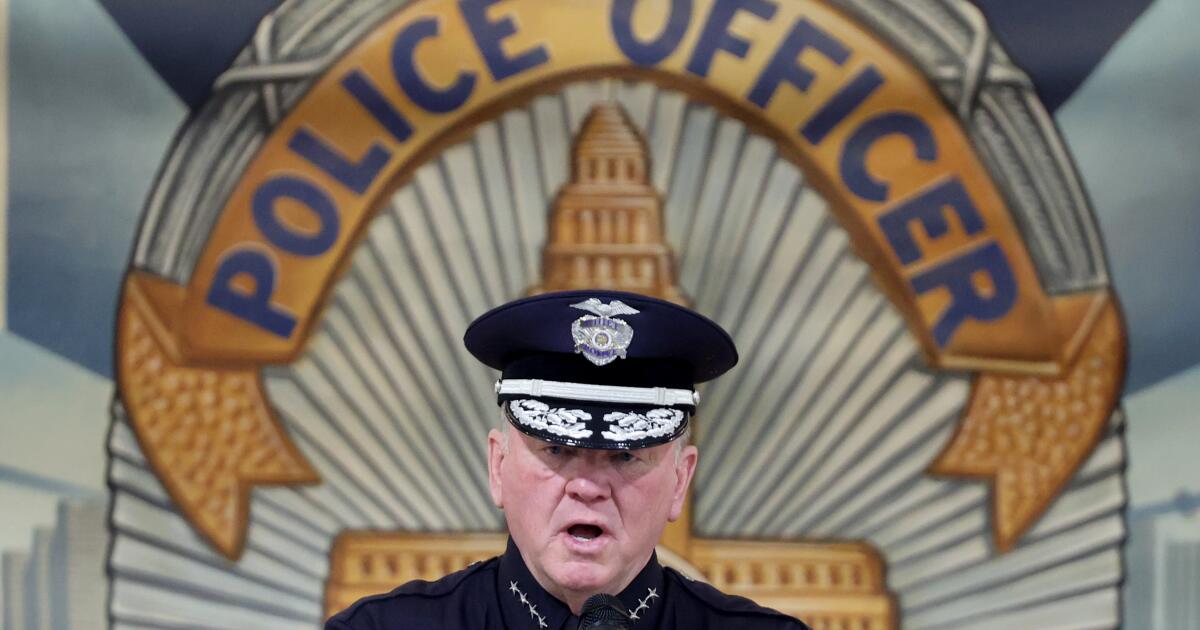
The LAPD is considering whether to shut down its police academy for part of 2028 in order to put hundreds of officers back to work on the streets in time for the Olympic and Paralympic Games, according to four department sources.
The sources, who requested anonymity because they were not authorized to publicly discuss internal matters, said the proposal was floated at a senior staff meeting last week. The idea has sparked debate, the sources said, with some officials worried that a pause would set back the department’s efforts to hire more police officers and replenish its dwindling ranks.
The LAPD declined to make any official available for an interview about the proposal. In response to an inquiry from The Times, the department released a short statement that said: “The Olympic Games are two years away. The LAPD will be prepared as always to keep the citizens and visitors of Los Angeles safe. We look forward to a memorable event.”
Much could still change between now and the start of the Olympics. The size of recruit classes are dictated by the department’s annual budget, which is approved by the City Council before each fiscal year.
Recently, the council signed off on a $15-billion city budget for 2026-27, preserving Mayor Karen Bass’ plan to hire 510 officers — only enough cops to replace those who are expected to leave over the next fiscal year.
It’s not uncommon during large events for the department to mobilize officers from specialized units and others who don’t normally work in the field. But the potential cancellation of more than half of the 13 academy classes that the LAPD typically graduates in a given year came as a surprise to some.
Under the proposal, the academy could cease operations for roughly seven months after the January 2028 class, which would let the department temporarily reassign more than 300 officers from its training division. These include instructors who would normally be spending their days teaching the basics of how to handle firearms, pull over speeding motorists, collect evidence at a crime scene and interview victims and suspects.
Sources said the proposed plan calls for increasing academy class sizes before and after the Olympics and Paralympics in order to offset resignations and retirements.
The plan has still been met with deep skepticism in some quarters, with officials pointing to the department’s well-documented recruitment struggles in recent years. Any interruptions in recruiting officers could set the department back, the skeptics argue.
L.A. City Councilmember Tim McOsker said he understood the need for the department to continue its recruitment efforts, but said that putting training officers back to the field felt like a necessary “sacrifice to be able to host the Olympics.”
Late last month, L.A. officials reached a tentative deal with Olympic organizers laying out the process for reimbursing the city for potentially hundreds of millions of dollars for public services, ranging from traffic control to trash pickup. But the question of how the city will pay for police protection remains largely unsettled.
The costs could theoretically be covered by the $1 billion in funding the federal government has allocated for the Games’ costs. However, some elected officials have expressed concern that the money might not materialize once the Games are over. Another funding option is a $270-million contingency fund maintained by LA28 that can be distributed as a surplus if the Games make money or be used to cover any losses in the event of a shortfall.
For months, LAPD Chief Jim McDonnell has warned that public safety will suffer if the city doesn’t hire more officers to not only safeguard Olympic venues, but also continue normal operations over the 66 days between the July 14 start of the Olympic Games and the end of the Paralympic Games. At a budget hearing last year, McDonnell called on the council to fund new hires — while arguing against creating any delays in recruiting and on-boarding more officers.
Some City Council members have pushed back, saying overspending at the LAPD could force city leaders to contemplate cuts to other city jobs, which they oppose.
The Olympics will also be staffed by thousands of officers from agencies from across the state. A bill currently under consideration in the California Legislature would pave the way for the hundreds of officers from other states to help police the 2028 Games. The proposed legislation is opposed by the Peace Officers Research Association of California, the state’s largest law enforcement labor organization, which has argued that bringing in officers who don’t meet statewide training standards could spell disaster.

NEWYou can now listen to Fox News articles!
Pro wrestling is often known for its storyline-driven entertainment coupled with hard-hitting and high-flying action in the ring that leads to a crescendo that makes fans feel some kind of emotion. The major companies each try to drive to that moment.
Sometimes, a unique venue adds to the excitement of a show, especially for smaller independent pro wrestling companies who are trying to engage an audience for a few hours at a time. On July 14, Fight Factory Wrestling is going back to the beach for The War on the Shore 3.
COMPLETE PRO WRESTLING COVERAGE ON FOX NEWS DIGITAL
Fight Factory Wrestling hosted The War on the Shore 2 in Point Pleasant Beach, New Jersey, last year. (Provided to Fox News Digital)
The event will take place near Martell’s Tiki Bar in Point Pleasant Beach, New Jersey, bringing professional wrestling to the beach. Joey Janela, Ben Bishop, Jack Vaughn, Richard Holliday, Steve Maclin, Jay Lethal, Sent 2 Slauter, Lady Frost, Allie Katch, Steph De Lander and others are among those billed to be in matches for the event.
Dave Sturchio, one of the minds behind Fight Factory Wrestling with Chris Payne, talked to Fox News Digital about getting started in the sport. He said him and Payne initially got started wrestling in 2012 but as time went on, the two went their own way. The two came back together in 2024 to do the “Fight Factory Podcast.” He said Payne had aspirations to do a wrestling show on the beach – akin to World Championship Wrestling’s Bash at the Beach.
Sturchio said he called Payne to follow through on doing a beach show despite some apprehension about getting involved into the creative side of the sport. Sturchio said when he first approached the venue about the event, there was a little hesitation, but when he came back with a plan, the venue agreed.
“As the buzz started to develop and build over prepping for the show, I said to Payne, ‘I don’t know if this is a one off. I think that we have something here,’” Sturchio said. “And Payne and I, we’ve been in the industry since 2012, we’re life-long fans, I’m already an entrepreneur at heart, so how can I take my entrepreneurial stuff for the last three-four years of being my own boss, how do I spin this into becoming a pro wrestling promoter?”
Sturchio said that teaming with Payne allowed for the stars to align and to give each other a shot at building something great. He said the response from the first War on the Shore in 2024 was “overwhelming.”
Fight Factory Wrestling’s Dave Sturchio on the microphone at The War on the Shore 2. (Provided to Fox News Digital)
“We were like, this is actually kind of crazy. People are actually jones-ing for some wrestling in the summer. Typically, when you go to a VFW or your gymnasiums, independent wrestling kind of takes off and they don’t run as much in the summer because it’s hot. So, I said, if anything, nobody is going to run against us and unfortunately for us, we were put on a Tuesday night and we were like, ‘Jesus Christ, there’s no way anybody is going to show up on a Tuesday.’
“Turns out, nobody is really doing anything on a Tuesday. It was very easy to book the wrestlers in that regard because nobody else had anything going on. … First year was great. I think the best testament that we got was we booked Matt Cardona to be one of our featured guests on the first one and that’s when he tore his pec. So, he was out of action for a little while but he promised us that he would still show up.”
Sturchio said Cardona was blown away and thought he and Payne had been running shows for a while.
“If you’re going to blow away Matt Cardona, I think we got something. It was off to the races, man,” he added.
Now, Sturchio and Payne are set to put on their third War on the Shore in New Jersey and the card couldn’t be more interesting.
“This year, we really stacked the deck,” he told Fox News Digital. “Some professional wrestling shows you go to on the independents, there are those lulls. Matches where you’re like, ‘Oh, they’re giving this guy a chance over here and they’re gonna give this guy a chance over there.’
“This year, I told Payne, look, based off of everybody that we’ve booked so far, for me, and some independent wrestlers don’t want to hear this, we’re trying to build a roster, build a core roster. Meaning, if we used you before and you’ve done good work, we’re gonna use you again. Instead of saying, hey, random guy over here, who I don’t know who you are, but let’s give you a shot. So we’re trying to build stories and there are a lot of stories that are culminating.”
Sturchio pointed to a number of matches that fans should be eager to see. One specifically is the reformation of The Heavenly Bodies tag team with Justin and Mark Corino.
Pro wrestling fans back Point Pleasant, New Jersey, for The War on the Shore 2. (Provided to Fox News Digital)
“Those guys are reuniting for the first time in seven years,” he said. “They’re friends of mine, I came up with them. They were my first tag team opponents and I’ve known these guys forever and they’re near and dear to my heart.”
CLICK HERE TO DOWNLOAD THE FOX NEWS APP
Lady Frost will be in action against De Lander and Katch. Bishop defends the Fight Factory Premier Championship against Holliday and Vaughn. Janela will take on Jay Lethal for the first time ever and the event will feature a rumble and a tiki totem on a pole, which will act as Fight Factory Wrestling’s “Money in the Bank” type of gimmick.
“The card is stacked. I’m very excited about all of it. There’s not one lull,” Sturchio said. “We’re just going to roll right through and I think it’s going to be one of those nights that we remember for a very, very long time.”
-

 San Francisco, CA8 minutes ago
What’s next for San Francisco Giants as MLB trade deadline approaches?
-
 Dallas, TX13 minutes ago
Dallas millionaire files lawsuit against groundwater district
-

 Miami, FL21 minutes ago
7 more women arrested at southwest Miami-Dade massage parlors, accused of prostitution in undercover sting
-

 Boston, MA23 minutes ago
‘They’re my buddies’: 96-year-old Back Bay woman befriends French soccer team
-

 Denver, CO28 minutes ago
Denver officers cited for separate incidents, 1 fired
-

 Seattle, WA35 minutes ago
Study finds dangerous chemicals in the breast milk of Seattle moms
-

 San Diego, CA38 minutes ago
Tom Krasovic: Justin Verlander’s announcement recalls Padres’ 2004 draft blunder
-
 Milwaukee, WI43 minutes ago
‘Peace on Every Block’ brings Milwaukee community together to fight gun violence

