California
Here are the 100 California residents giving the most in the race for the White House


When it comes to presidential fundraising, California is a juggernaut.
The Golden State is home to a large group of uber-wealthy donors with some of the deepest pockets in the nation — money that could help swing the presidential election next week between Vice President Kamala Harris and former President Donald Trump.
Harris would be expected to have a clear fundraising advantage: she’s a California native who served as the state’s junior senator and attorney general. Trump has frequently bashed California and its leaders on a range of issues and in the 2020 presidential campaign lost the state by nearly 20 percentage points.
In 2020, President Joe Biden’s campaign raised more than $145 million from Californians, the most from any state in the nation, campaign finance disclosures filed with the Federal Election Commission showed.
While California is overwhelmingly Democratic, it is a major source of Republican campaign dollars — Trump raised $333 million in the state for his 2016 campaign committee, according to the Center for Responsive Politics.
The Times analyzed federal election data to identify the biggest donors hoping to sway voters in this year’s race. The records reviewed include individual contributions from donors residing in California as of Sept. 30.
Not surprisingly, Harris supporters dominate the list of largest donors, taking up 89 of the top 100 spots. In fact, 48 of the top 50 givers from California all donated to pro-Harris fundraising committees.
Looking at her top 100 donors nationwide, Harris is getting a much larger share of support from big-time California contributors. Those state residents have collectively given more than $53 million — over half of the total $102 million received from her biggest donors.
It’s a completely different picture for those supporting Trump. Only nine of his top 100 donors were from California, giving over $8 million combined, or just 5% of the $161 million haul from his largest givers.
Here’s a closer look at some of the biggest donors in the state.
Megadonors come out strong for Harris
Haim Saban, Chairman/CEO of the Saban Capital Group: $1,852,599
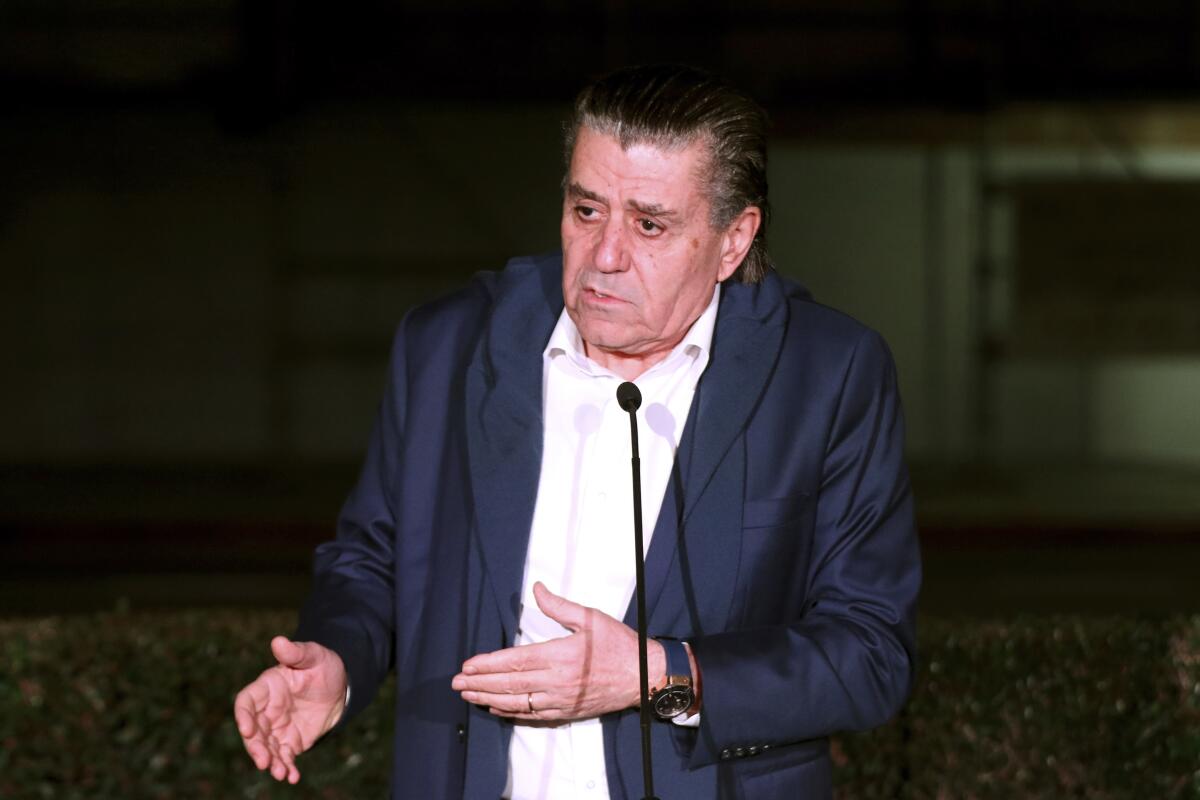
Haim Saban
(Willy Sanjuan / Willy Sanjuan/invision/ap)
The Israeli American billionaire has been an outspoken supporter of Israel’s right to defend itself against Hamas. In October, Saban said Harris was clearly the better choice for the US-Israel relationship and Israel’s safety and security.
“Kamala Harris has a stellar record throughout her career, strengthening this critical alliance,” he wrote in an opinion piece. “Unlike Trump, Harris has demonstrated a lifelong commitment to the American Jewish community and Israel. The choice for Jewish voters and all voters could not be more straightforward.”
The Hollywood media mogul has been a reliable ally for Democrats, hosting a Biden fundraiser at his sprawling Beverly Park estate in February. Tickets to the fundraiser cost up to $250,000 and actor Jane Fonda and comedian Greg Proops were reported to have attended.
Reid Hoffman, venture capitalist at Greylock: $1,682,600

Reid Hoffman
(Getty Images)
The LinkedIn co-founder has also donated $7 million to the Future Forward PAC, a Democratic super PAC. Hoffman drew criticism in July for calling for Harris to oust Federal Trade Commission Chairwoman Lina Khan, who has brought antitrust cases against Big Tech and introduced rules to protect workers.
In an interview with the Wall Street Journal, Hoffman explained his support for Harris and said he believes Trump’s plan for increased tariffs would hurt the economy.
“Tariffs and trade wars are terrible ideas for businesses, terrible for Silicon Valley,” Hoffman said. “I think stability and trying to actually have institutions and the rule of law are more important than a 2% cut in a tax rate.”
Steven Spielberg, filmmaker: $1,429,600
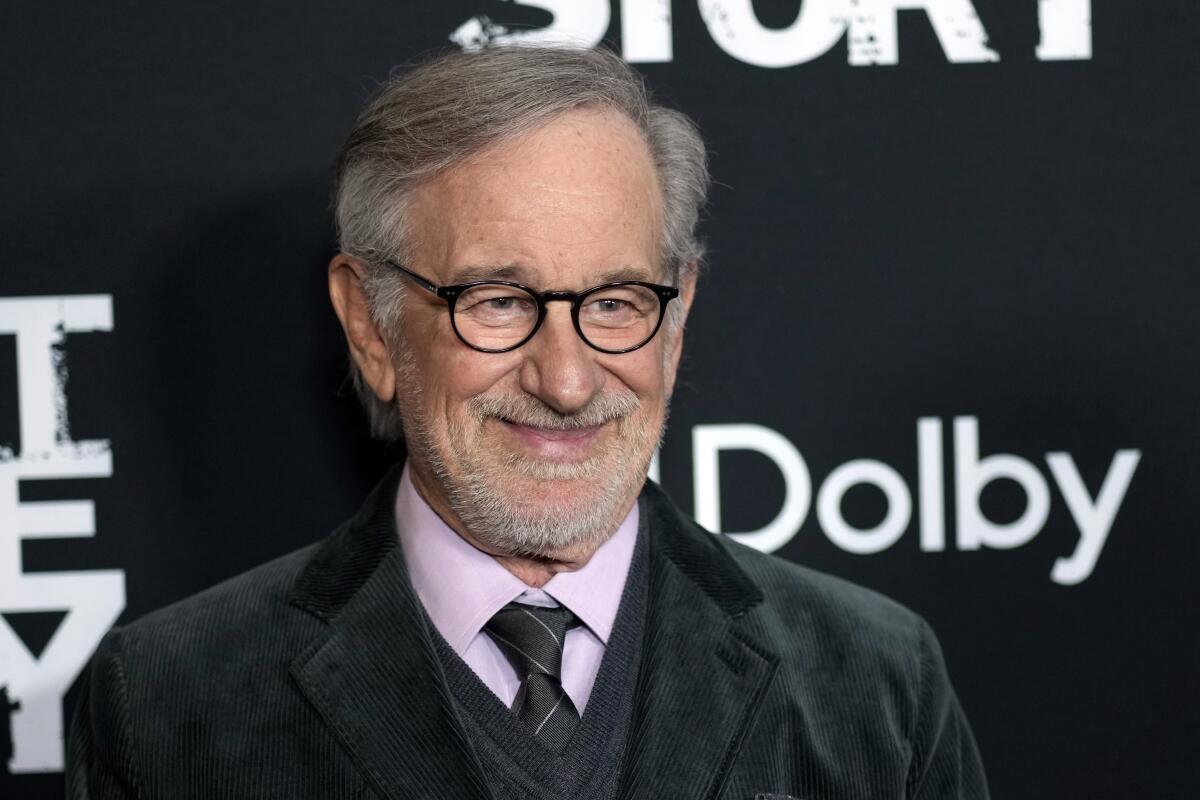
Steven Spielberg
(Charles Sykes / Invision / Associated Press)
The growing unease with Biden’s disastrous debate performance in June led some celebrities to call for him to drop out of the race. Once Harris took the Democratic mantle, Hollywood heavyweights began giving more to the vice president, including Spielberg who gave an additional $500,000 in late September, federal election data shows.
“We are all in for Kamala and have been since the moment she announced,” said Andy Spahn, a Los Angeles political consultant to Spielberg and other media moguls. “Tremendous excitement and energy here around Kamala’s candidacy. We are all in.”
Sean Parker, owner of Parker Media, LLC: $1,389,250

Sean Parker
(SOPA Images/LightRocket via Getty Images)
Parker is best known as the founder of Napster and first president of Facebook where he made his fortune. The Silicon Valley tech billionaire depicted in the film “The Social Network” is now a venture capital investor and has gotten more into traditional politics over the years.
In 2016, he hosted a fundraiser at his Los Angeles home that netted $1 million in donations for Hillary Clinton.
He used his tech influence to push for the creation of the Opportunity Zone program, an economic development tool that aimed to encourage investment in low-income communities through tax incentives. However, a Times report found it has instead generated billions of dollars’ worth of tax breaks for the wealthy often in pursuit of luxury high-rises, high-end hotels and swank office space.
Seth MacFarlane, founder of Fuzzy Door Productions: $1,023,000

Seth MacFarlane
(Dan Steinberg / Invision For The Television Academy)
The creator of “Family Guy” and “American Dad!” has been making big donations to Democrats in recent elections. In 2016, he gave more than $716,700 to two political action committees supporting Clinton’s presidential bid.
After MacFarlane contributed $2.5 million to Democrats in 2018, his company, Fuzzy Door Productions, was ranked second in Hollywood giving behind DreamWorks SKG, according to data from OpenSecrets.org, a nonprofit research group tracking money in U.S. politics.
Scooter Braun, founder of SB Projects: $519,600
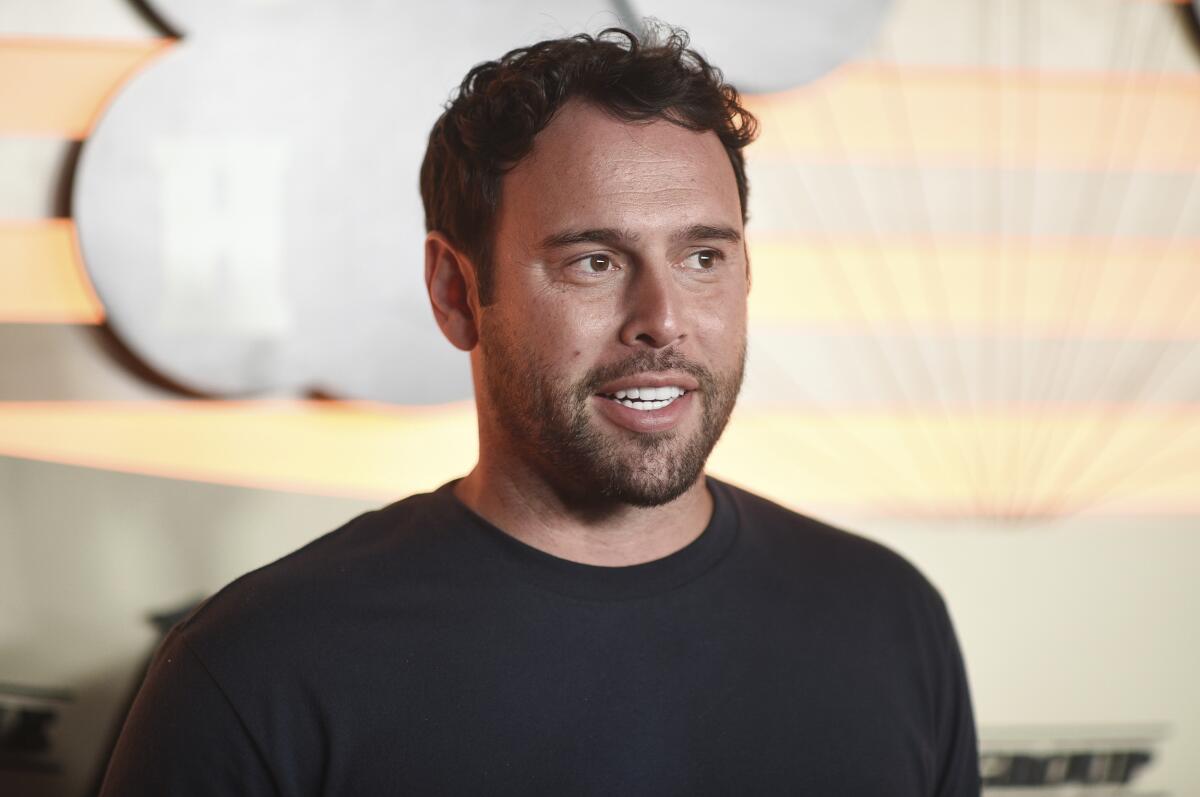
Scooter Braun
(Richard Shotwell / Richard Shotwell/invision/ap)
The former music manager has worked with pop stars including Justin Bieber, Ariana Grande and Taylor Swift. He also famously feuded with Swift over the rights to her master recordings.
After Swift endorsed Harris for president in September, Trump posted “I HATE TAYLOR SWIFT!” on his social media site Truth Social. Braun quickly made his own endorsement on Instagram: “Shake It Off Donald,” he wrote. “Kamala 2024.”
Trump’s biggest boosters
Barbara Grimm-Marshall, former co-owner of Grimmway Farms: $1,256,600

Barbara Grimm-Marshall
(Alex Horvath / The Californian)
The Bakersfield resident is the former co-owner of the world’s largest grower of carrots. In 2020, half of all baby carrots consumed in the U.S. were processed by Grimmway Farms, which was later sold. She is the founder and CEO of the Grimm Family Education Foundation, which aims to help students in underserved communities of Kern County.
Grimm-Marshall also donated $350,000 to back Trump in the 2020 election.
Douglas Leone, founder of Sequoia Capital: $1 million
Boasting a net worth of $8 billion, the venture capitalist supported Trump in the 2020 contest but renounced his support after the Jan. 6 Capitol attack, according to a statement issued shortly after: “After last week’s horrific events, President Trump lost many of his supporters, including me,” Leone said. “The actions of the President and other rally speakers were responsible for inciting the rioters.”
But this summer he changed his tune again, endorsing Trump in a post on X.com: “I have become increasingly concerned about the general direction of our country, the state of our broken immigration system, the ballooning deficit, and the foreign policy missteps, among other issues,” he wrote. “Therefore, I am supporting former President Trump in this coming election.”
Leone made the $1-million donation to America PAC, started by former California resident Elon Musk, who has been feverishly campaigning for Trump recently, even appearing with him at rallies in Butler, Pa. and at Madison Square Garden.
Ranked by Forbes as the richest person in the world, Musk has given almost $75 million to America PAC — the super PAC he created this summer. In the past three months, America PAC has spent more than $100 million to support Republican candidates, according to federal election data.
Carl Barney, founder of a for-profit college chain: $924,600
Barney, who operated a group of for-profit colleges for years, is a noted proponent of Ayn Rand’s philosphy of objectivism.
On his website, Barney said he supports Trump because he approaches the job of president “as a businessman, not a politician.”
“Based on his actions in his first term as President, I judge that Donald Trump’s assets far outweigh his liabilities,” he wrote. “I especially like that President Trump wants to work with Elon Musk to reduce spending, regulations, waste, and fraud in the federal government. As Mr. Musk predicts, it will lead to an era of great prosperity. I agree.”
Marc Andreessen, founder of Andreessen Horowitz: $844,600
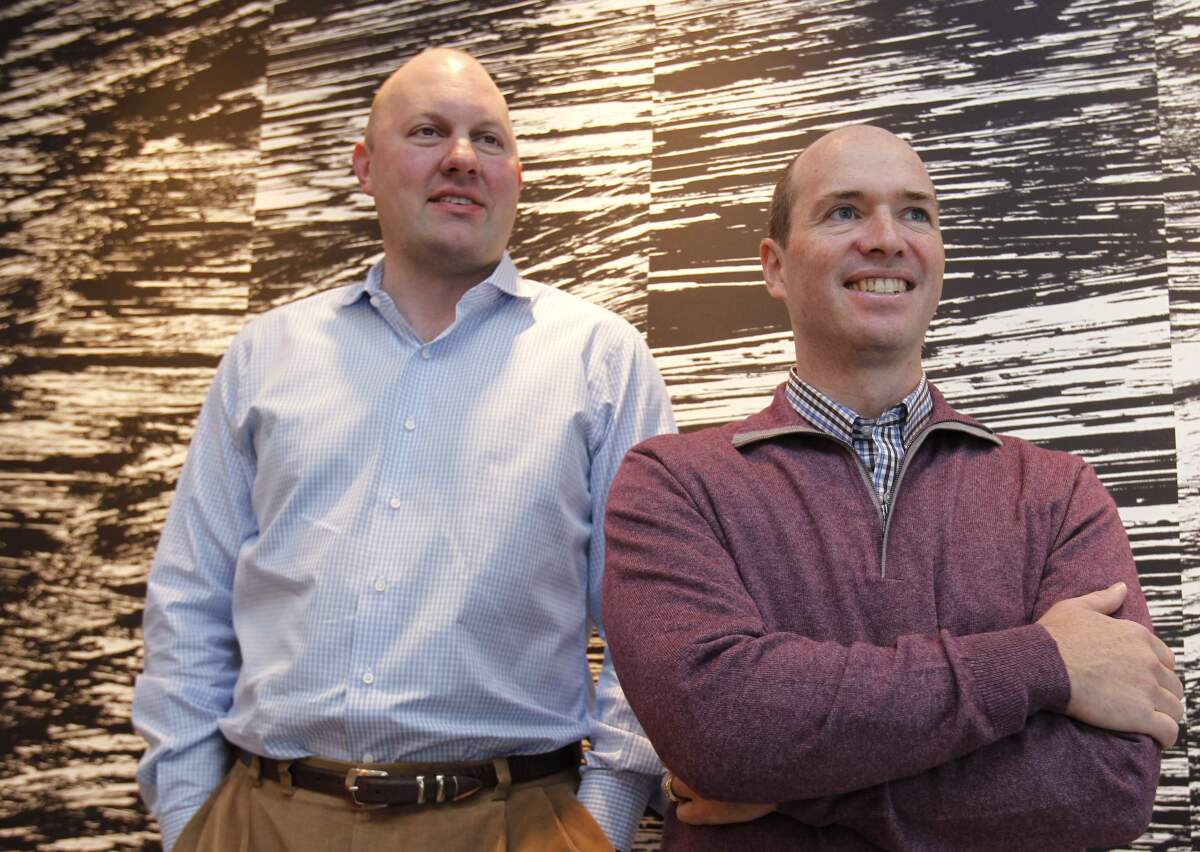
Marc Andreessen, left, stands next to his longtime business partner, Ben Horowitz.
(Paul Sakuma / Associated Press)
The tech venture capitalist hasn’t been shy about supporting Trump and Republican candidates in general. His venture firm has given $44 million to Fairshake, the leading crypto campaign fund supporting Republican candidates.
Formerly a vocal Democrat, Andreessen has shifted to the right in recent years because of a belief that Trump could help remove regulations that could stifle innovation in artificial intelligence and cryptocurrency. He has criticized investigations by the U.S. Securities and Exchange Commission into crypto startups and the hurdles crypto businesses face in getting financing from banks.
“This is a brutal assault to a nascent industry that has never happened before,” Andreessen said on “The Ben & Marc Show” podcast, acknowledging that his firm is one of the largest cryptocurrency investors in the world.
Geoffrey Palmer, owner of G.H. Palmer Associates, $819,600

Real estate developer Geoffrey Palmer
(Los Angeles Times)
A billionaire real estate developer and prominent donor to Republican causes, Palmer hosted a Trump fundraiser in 2019 at his Beverly Hills mansion, where tickets cost as much as $100,000 per couple, according to an invitation. Palmer also hosted a fundraiser in 2017 for former Vice President Mike Pence at the same mansion.
According to Forbes, Palmer is worth $2 billion. His G.H. Palmer Associates is one of the largest owners of apartments in California, according to commercial real estate firm CoStar. Palmer’s massive L.A. apartment complexes include the Orsini and the Lorenzo.
Deborah Magowan, Retired: $711,600
The wife of the late San Francisco Giants owner Peter Magowan, she donated more than $200,000 to Trump in the 2020 campaign, a Times analysis found. She also gave $100,000 to Republican candidates in the 2022 midterm elections.
Times staff writer Gabrielle LaMarr LeMee contributed to this report.

California
Mother, daughter found ‘alive and well’ after going missing on Southern California hiking trail

A mother and daughter who went missing after going for a hike on a difficult trail in San Bernardino County’s San Gorgonio Wilderness have been found “alive and well,” the sheriff’s department announced Friday.
The San Bernardino County Sheriff’s Department told KTLA they were uninjured and “walked out on their own.”
Krystal Meyers, 41, and her daughter Alexis Meyers Martinez, 21, were hiking on the Vivian Creek Trail Thursday but didn’t return, according to the San Bernardino County Sheriff’s Department.
They were last known to be at the 10,300-foot elevation mark above the High Creek switchbacks at 11 a.m., according to the San Gorgonio Search and Rescue team.
The Vivian Creek Trail is widely considered one of the more strenuous and hazardous routes in the San Gorgonio Wilderness.
The U.S. Forest Service says it’s the shortest and steepest route to the summit of Mount San Gorgonio and requires experienced mountaineering skills.
Officials did not provide any further details about the circumstances surrounding their disappearance.

BAKERSFIELD, Calif. (KBAK/KBFX) — The California Highway Patrol is urging drivers to stay focused on the road as they head out for Fourth of July celebrations.
The holiday weekend can be a dangerous time on our roads as millions of drivers are expected to travel.
CHP Officer Jorge Toro joined Eyewitness News Mornings to share how drivers can stay safe behind the wheel.
Officer Toro also highlighted the importance of sober driving over the holiday.
BE THE FIRST TO COMMENT
He says anyone hosting a party should make sure all of their guests get home safely, ensuring anyone who may be impaired doesn’t drive.

California is returning a stretch of rugged Mendocino County coast to the Indigenous nations whose ancestors once stewarded its shores.
State transportation officials recently approved the transfer of Blues Beach and the surrounding bluffs to Kai Poma, a nonprofit founded by representatives of the Sherwood Valley Band of Pomo Indians, Round Valley Indian Tribes and Coyote Valley Band of Pomo Indians.
The transfer of 136 acres just south of the community of Westport will mark the first time land managed by the California Department of Transportation has been returned to Indigenous tribes.
“This is beyond huge,” said J. Carlos Rivera, tribal chairman of the Sherwood Valley Band of Pomo Indians. “It’s enormous from our tribal perspective that we are basically obtaining the land that our people once lived on before colonization.”
California purchased the swath of rocky cliffs and windswept shoreline in the 1960s to expand the construction of Highway 1 and create a scenic viewpoint for highway travelers, according to a California Coastal Commission report.
More recently, public access has been largely unregulated, and summer weekends and holidays have drawn large groups who camp and party on the beach, at times driving through sensitive areas, damaging cultural sites and leaving behind trash, the report states.
Kai Poma plans to conduct cultural and archaeological resource studies and environmental surveys and then prepare a resource management plan for the property, according to planning documents. The nonprofit and the Coastal Commission have drafted a public access management plan that states the land will be open from sunrise to sunset.
Rivera described the entire property as a sacred site. The coastal waters are used by tribal people for seaweed and abalone gathering, and the shores host youth cultural camps, he said. “Protecting the land, it has a deeper meaning for us because we’re connected to the land,” he said.
The effort to acquire the land took years — and required a change in state law. Caltrans lacked the ability to transfer land to tribal governments until 2021, when Gov. Gavin Newsom signed a bill sponsored by state Sen. Mike McGuire (D-Healdsburg) that enabled the transfer, according to a news release issued at the time. The law also bars commercial activity on the property and requires public access be maintained.
“With 136 acres now officially transferred into tribal stewardship, one of the most spectacular stretches of the Mendocino Coast will be forever protected,” McGuire said in a statement.
“This agreement, the first of its kind in California, gives these three dynamic Native American tribes the rightful opportunity to reclaim sacred lands and cultural traditions on this special piece of earth. And it’s about damn time.”
The land transfer cleared its last regulatory hurdle June 26 with the approval by the California Transportation Commission, said Neil Thapar, an attorney who works as an advisor and legal consultant to Kai Poma. Caltrans staff will next record the deed transferring the title from the state of California to Kai Poma, which is expected to happen any day, he said.
-

 Colorado3 seconds ago
Where to watch San Francisco Giants vs Colorado Rockies: TV channel, start time, streaming for July 4
-

 Connecticut5 minutes ago
Several state parks, beaches close Friday due to capacity
-

 Delaware12 minutes ago
Beloved farm owner, 65, fatally crushed by one of his own camels in Delaware
-

 Florida15 minutes ago
Publix? Walmart? What Florida stores are open and closed on July 4
-

 Georgia20 minutes ago
Georgia baseball has nation’s No. 1 transfer class
-

 Hawaii27 minutes ago
Man accused of trying to run over police officers in Kalihi arrested
-

 Idaho30 minutes ago
Fire burning near Ammon foothills – East Idaho News
-
 Illinois35 minutes ago
Illinois Launches Holiday DUI Crackdown

