Connect with us

California

Fuel, energy prices raise the pressure as California officials take next steps on climate

Published

on

Fuel, energy prices raise the pressure as California officials take next steps on climate


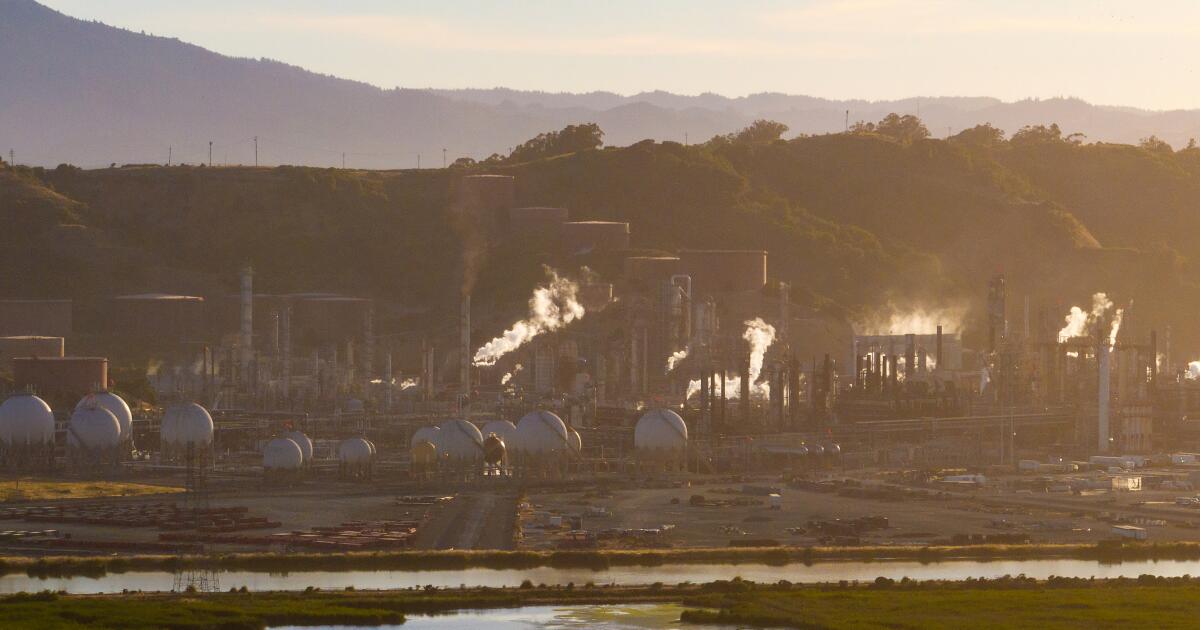
As California regulators prepare for a massive update of the state’s signature climate program, they face mounting pushback from lawmakers and oil industry groups who warn it could drive up already-high energy costs.

Lawmakers voted last year to reauthorize the cap-and-invest program — formerly known as cap-and-trade — through 2045. The program progressively lowers the amount of greenhouse gas emissions allowed in the state, and lets emitters buy and sell unused pollution credits, or allowances. It is key to California’s climate strategy and generates billions in revenue for the state each year.

Although the program was always designed to ratchet down on emitters, some legislators who supported the extension say the draft unveiled by the California Air Resources Board could hit consumers and the energy sector hard at the wrong time.

Among the proposed updates, the plan would tighten the cap on carbon dioxide emissions by 118 million tons by 2030. It would also adjust the state’s system of free allowances, which have historically been given to oil refineries and other industrial facilities in the hope of keeping them in California. It would shift more of those free allowances from natural gas utilities to electric utilities.

Advertisement

A wave of public comments from lawmakers, oil companies, environmental advocates and consumers flooded the state Air Resources Board in advance of this week’s deadline, and the agency will have until May to revise the plan and put it to a final vote.

Among the most notable critics are Democratic lawmakers who voted to extend the program last year. Some are concerned the plan would raise costs for refineries, driving more of them out of California and leaving the state more dependent on imported refined fuels. Others are worried the plan doesn’t do enough to address high electricity costs.

In a letter to the state Air Resources Board, a coalition of 15 Democratic Assembly members, including Majority Leader Cecilia Aguiar-Curry (D-Winters), warned that the plan moves too fast for emitters to keep up, which they said will destabilize California’s complex network of fuel, gas and energy resources and push more refiners to leave the state. Phillips 66 and Valero have already announced plans to shutter major refineries in Los Angeles and Benicia.

“This proposed regulatory update would further burden an already struggling energy market across multiple sectors and compound stress on the very infrastructure that has punished California consumers with the highest energy prices in the nation,” the lawmakers wrote.

Oil industry groups raised similar concerns. The Western States Petroleum Assn. which represents refiners, warned that their costs could rise $1.5 billion annually by 2035.

Advertisement

Chevron executive Andy Walz said the added costs could translate to roughly $1.70 more per gallon of gasoline by that year.

“Affordability is a top concern for California residents and Chevron, and these proposed amendments would only exacerbate the high cost of living in the state,” Walz said.

But how much regulations contribute to gasoline costs in California is disputed. Officials with the state Air Resources Board said the proposal largely maintains the status quo for refineries. It includes “flexibilities that support doing business in California and help ensure liquid fuel supply remains reliable, affordable, and resilient throughout the transition to carbon neutrality,” spokeswoman Lindsay Buckley said in an email.

The updated program would also deliver $180.7 billion in statewide benefits, including $123 billion in avoided health costs thanks to cleaner air, and up to $485 billion in global savings due to avoided climate damage, Buckley said.

“The cap-and-invest program is the most cost-effective way for California to achieve its statutorily mandated climate goals,” she said.

Advertisement

At the same time, some lawmakers and advocates say the proposal disproportionately burdens the electricity sector at a moment when utility bills are soaring.

Assemblywoman Jacqui Irwin (D-Thousand Oaks), who wrote legislation extending the program last year, led a separate letter from more than two dozen Democratic lawmakers urging the air officials to speed up free allowances for electric utility companies in order to “meaningfully address electricity affordability in the near-term.”

They were also concerned the plan would result in lower climate credits for consumers — twice-yearly rebates that appear directly on people’s electric bills.

Policy analysts agreed the current plan burdens electric utilities, which could translate into higher bills.

Still, the proposal is a “strong starting point” that can be fine-tuned to better balance emissions cuts with affordability, said Clayton Munnings, executive director of Clean and Prosperous California, an environmental economics nonprofit focused on the cap-and-invest program.

Advertisement

The California Air Resources Board “had a very strong first start, but I think there’s a clear pattern in stakeholder feedback,” he said. “The intent here was to lower utility bills, and we should make good on that promise.”

On the fuel side, Munnings said the program was designed with refineries in mind, and regulators still have plenty of tools to address their concerns if needed. What’s more, he said the carbon market largely shrugged at the proposed removal of 118 million credits, and the cost of releasing one ton of carbon pollution went down — indicating that even tighter reductions could be warranted.

Indeed, an analysis by the nonprofit Environmental Defense Fund and the modeling firm Greenline Insights found that the state Air Resources Board could remove as many as 180 million allowances from the market and still preserve household affordability benefits.

Ensuring the program delivers on its promised emission cuts is crucial, said the Environmental Defense Fund’s California state director Katelyn Roedner Sutter. The state is not on track to meet its targets, including a 40% reduction in greenhouse gas emissions by 2030 and at least 85% by 2045.

“Cap-and-invest is so important because it helps reduce emissions, it generates desperately needed revenue, and it is the most cost-effective approach to reducing greenhouse gas pollution that we have,” she said.

Advertisement

The debate is unfolding as global oil prices soar amid the U.S.-Israeli war on Iran, which has disrupted shipping and production in the Middle East. Crude prices briefly surged beyond $119 a barrel this week.

National gasoline prices averaged $3.60 a gallon Thursday, according to AAA, up from $2.94 one month ago. In California, gas averaged $5.37 a gallon, up from $4.55 a month ago.

But according to the California Energy Commission, only about 6% of the price of retail gasoline in the state is attributable to the cap-and-invest program, while nearly 37% comes from the cost of crude oil.

That’s precisely why the state should stay the course, Roedner Sutter said.

“The best thing California can do is lean on its cost-effective climate policy, which is cap-and-invest, and continue moving the state away from dependence on fossil fuels,” she said. “In the long run, that is what is going to protect Californians most — not being dependent on this volatile industry.”

Advertisement

The state Air Resources Board is expected to revise the proposal in the coming weeks before bringing it to a vote in May.


Source link

California

4.6 earthquake jolts Northern California awake, residents report shaking homes for miles

Published

on

4.6 earthquake jolts Northern California awake, residents report shaking homes for miles


4.6 earthquake jolts Northern California awake, residents report shaking homes for miles

Advertisement

READY… ACCORDING TO THE MONTEREY COUNTY OF EMERGENCY SERVICES THERE’S ONLY BEEN 429 EARTHQUAKES IN OUR AREA THAT ARE ABOVE A 4.0 MAGNITUDE. BUT OFFICIALS AND EXPERTS SAY IT IS ONLY A MATTER OF TIME UNTIL THE NEXT BIG ONE. NOW TO PREPARE YOU CAN SIGN UP WITH YOUR COUNTY’S EMERGENCY SERVICES ALERTS BY GOING ON THE COUNTY WEBSITE. YOU CAN ALSO DOWNLOAD THIS APP CALLED MYSHAKE. IF A QUAKE ABOVE 4.5 MAGNITUDE HITS CALIFORNIA, YOU CAN GET AN ALERT A FEW SECONDS YOU FEEL IT IN YOUR AREA. THAT DEPENDS ON HOW CLOSE YOUR ARE TO THE EPICENTER. IT WILL REMIND YOU WHAT TO DO AND ALLOWS YOU TO SHARE AND SEE WHAT DAMAGES HAVE BEEN REPORTED NEAR YOU. NOW DOWNLOADING SOME SORT OF ALERT SYSTEM IS IMPORTANT, ESPECIALLY FOR THOSE OF US LIVING NEAR THE COAST. I SPOKE WITH SANTA CRUZ COUNTY’S OFFICE OF EMERGENCY SERVICES, AND THEY HAD FOUR REMINDERS: FIRST ONE – PREP YOUR LIVING SPACE. TRY TO AVOID PLACING BOOKSHELVES AND BIG FURNITURE NEAR ENTRY WAYS THAT COULD FALL AND BLOCK DURING AN EARTHQUAKE. SECONDLY – LIKE FOR ANY NATURAL DISASTER: HAVE A PLAN. WHEN IT COMES TO AN EARTHQUAKE, UTILITIES LIKE YOUR WATER AND SEWER SYSTEM MAY NOT WORK. THIRD – MAKE SURE YOU HAVE A GO BAG PREPPED WITH YOUR FOOD, WATER, CASH… AND THE LAST ONE: PUT ALL YOUR ESSENTIAL IDENTITY AND HEALTH DOCUMENTS IN ONE PLACE SO YOU CAN JUST GRAB IT AND GO. THE BIGGEST EARTHQUAKE TO HIT OUR NECK OF THE WOODS WAS THE LOMA PRIETA QUAKE IN 1989. THAT CLOCKE

Advertisement

4.6 earthquake jolts Northern California awake, residents report shaking homes for miles

Updated: 9:36 AM CDT Apr 2, 2026

Editorial Standards

Advertisement

A magnitude 4.9 earthquake struck Northern California early Thursday, according to the U.S. Geological Survey, with many saying they felt their homes shake for a few seconds in a 100-mile stretch, including San Francisco. The quake hit at 1:41 a.m. PST east-southeast of Boulder Creek, the USGS said. It had a depth of 6.7 miles. Boulder Creek, which has about 5,000 people, is about 65 miles southeast of San Francisco.Some residents said they were first awakened by earthquake alerts on their phones, then felt their beds and windows shake. Some items were knocked off store shelves in Boulder Creek.The shaking was felt in other parts of the Central Coast, including Marina, where at least one resident said they felt slight shaking and were awakened by it.The National Tsunami Warning Center said there is no tsunami danger from the earthquake. No damage or injuries were immediately reported.

A magnitude 4.9 earthquake struck Northern California early Thursday, according to the U.S. Geological Survey, with many saying they felt their homes shake for a few seconds in a 100-mile stretch, including San Francisco.

Advertisement

The quake hit at 1:41 a.m. PST east-southeast of Boulder Creek, the USGS said. It had a depth of 6.7 miles. Boulder Creek, which has about 5,000 people, is about 65 miles southeast of San Francisco.

Some residents said they were first awakened by earthquake alerts on their phones, then felt their beds and windows shake. Some items were knocked off store shelves in Boulder Creek.

The shaking was felt in other parts of the Central Coast, including Marina, where at least one resident said they felt slight shaking and were awakened by it.

Advertisement

The National Tsunami Warning Center said there is no tsunami danger from the earthquake.

No damage or injuries were immediately reported.

Advertisement

`;
}

function refreshWeatherIframe(containerId) {
var iframeId = ‘weather-iframe-‘ + containerId;
var iframe = document.getElementById(iframeId);
if (iframe && iframe.src) {
var originalSrc = iframe.src;
iframe.src = originalSrc + (originalSrc.indexOf(‘?’) > -1 ? ‘&’ : ‘?’) + ‘t=” + Date.now();
}
}

function initializeWeatherBox(container) {
var containerId = container.getAttribute(“data-container-id’);
var isWeatherBoxV2 = containerId === ‘home-weather-v2’;

Advertisement

function switchWeatherTab(tabName, clickedElement) {
container.querySelectorAll(‘[data-tab-id]’).forEach(function(tab) {
tab.classList.remove(‘open’);
tab.setAttribute(‘aria-selected’, ‘false’);
});

clickedElement.classList.add(‘open’);
clickedElement.setAttribute(‘aria-selected’, ‘true’);

container.querySelectorAll(‘[data-content-id]’).forEach(function(content) {
content.style.display = ‘none’;
content.setAttribute(‘hidden’, ‘true’);
});

var targetContent = container.querySelector(‘[data-content-id=”‘ + tabName + ‘”]’);
if (targetContent) {
targetContent.style.display = ‘block’;
targetContent.removeAttribute(‘hidden’);
}
}

function loadWeatherData() {
// If weather data is already being loaded, wait for it
if (window.weatherDataPromise) {
window.weatherDataPromise.then(function(data) {
if (data && data.data) {
var weatherContainer = container.closest(‘.weather-box-container’);
if (weatherContainer) {
weatherContainer.style.display = ‘flex’;
updateCurrentWeather(data.data);
updateForecastTabs(data.data);
updateWeatherAlertsBar(data.data);
}
}
});
return;
}

Advertisement

var location = { zip: window.DEFAULT_ZIPCODE };

try {
var storedLocations = localStorage.getItem(‘hrst.zip.history’);
if (storedLocations) {
var locations = JSON.parse(storedLocations);
if (locations && locations.length > 0) {
location = locations[0];
}
}
} catch (e) {}

var apiUrl = (window.DEWY_HOSTNAME || ”) + ‘/api/v1/weather/full/’ + location.zip;

if (window.fetch) {
window.weatherDataPromise = fetch(apiUrl)
.then(function(response) { return response.json(); })
.then(function(data) {
if (data && data.data) {
var article = container.closest(‘.article–wrapper’);
var weatherContainer = container.closest(‘.weather-box-container’);
if (weatherContainer) {
weatherContainer.style.display = ‘flex’;
updateCurrentWeather(data.data);
updateForecastTabs(data.data);
updateWeatherAlertsBar(data.data);
}
return data;
}
})
.catch(function(error) {
console.error(‘Error loading weather:’, error);
// Reset to unknown background on error
updateWeatherBackground(‘unknown’);
});
}
}

function updateWeatherAlertsBar(weatherData) {
var weatherWatchHeader = container.querySelector(‘.weather-watch-header’);
if (!weatherWatchHeader) return;

Advertisement

var weatherWatchText = weatherWatchHeader.querySelector(‘.weather-watch-text’);
var weatherWatchLink = weatherWatchHeader.querySelector(‘.weather-watch-link’);

if (weatherData.alerts_count > 0) {
weatherWatchHeader.className=”weather-watch-header has-alerts”;
if (weatherWatchText) {
weatherWatchText.textContent = `Weather Alerts (${weatherData.alerts_count})`;
}
if (weatherWatchLink) {
if (!weatherWatchLink.getAttribute(‘data-initial-href’)) {
weatherWatchLink.setAttribute(‘data-initial-href’, weatherWatchLink.getAttribute(‘href’));
weatherWatchLink.setAttribute(‘data-initial-onclick’, weatherWatchLink.getAttribute(‘onclick’) || ”);
}
weatherWatchLink.setAttribute(‘href’, “https://www.kcci.com/alerts”);
weatherWatchLink.setAttribute(‘onclick’, “return handleWeatherLinkClick(event, ‘click_alerts’, ‘click’, ‘mobile-weather’, “https://www.kcci.com/alerts”);”);
}
} else {
weatherWatchHeader.className=”weather-watch-header”;
if (weatherWatchText) {
weatherWatchText.textContent = containerId === ‘home-weather-v2’ ? ‘Watch Latest Forecast’ : ‘Latest Forecast’;
}
if (weatherWatchLink) {
var initialHref = weatherWatchLink.getAttribute(‘data-initial-href’);
var initialOnclick = weatherWatchLink.getAttribute(‘data-initial-onclick’);
if (initialHref) {
weatherWatchLink.setAttribute(‘href’, initialHref);
}
if (initialOnclick) {
weatherWatchLink.setAttribute(‘onclick’, initialOnclick);
}
}
}
}

function updateCurrentWeather(weatherData) {
if (weatherData.current) {
var tempValue = weatherData.current.temp_f || ”;
var skyValue = weatherData.current.sky || ”;
var feelsLikeValue = weatherData.current.feels_like_f || weatherData.current.temp_f || ”;

var tempEl = container.querySelector(‘.weather-grid–current-temp-value’);
if (tempEl) {
tempEl.textContent = tempValue;
tempEl.setAttribute(‘aria-label’, tempValue + ‘ degrees Fahrenheit’);
}

var iconEl = container.querySelector(‘.weather-grid–current-icon’);
if (iconEl && weatherData.current.icon_name) {
iconEl.className=”weather-grid–current-icon weather-current-icon icon icon-weather-” + weatherData.current.icon_name;
}

Advertisement

var skyEl = container.querySelector(‘.weather-grid–sky’);
if (skyEl) {
skyEl.textContent = skyValue;
skyEl.setAttribute(‘aria-label’, ‘Current condition: ‘ + skyValue);
}

var feelsEl = container.querySelector(‘.weather-grid–feels’);
if (feelsEl) {
feelsEl.textContent = feelsLikeValue + ‘°F’;
feelsEl.setAttribute(‘aria-label’, feelsLikeValue + ‘ degrees Fahrenheit’);
}

var weatherContainer = container.querySelector(‘.weather-temp-container’);
if (weatherContainer) {
var summary = ‘Current temperature ‘ + tempValue + ‘ degrees Fahrenheit, ‘ +
skyValue + ‘, feels like ‘ + feelsLikeValue + ‘ degrees’;
weatherContainer.setAttribute(‘aria-label’, summary);
}

updateWeatherBackground(weatherData.current.icon_name);
}
}

function updateWeatherBackground(iconName) {
try {
var bgPath = weatherImages.backgrounds[iconName] || weatherImages.backgrounds.unknown;
container.style.backgroundImage=”url(” + bgPath + ‘)’;
} catch (e) {
console.log(‘Error updating weather background:’, e);
}
}

Advertisement

function updateForecastTabs(weatherData) {
var visibleItems = isWeatherBoxV2 ? 6 : 5;

if (weatherData.hourly) {
var hourlyContainer = container.querySelector(‘.weather-hourly-forecast’);
if (hourlyContainer) {
var html=””;
var maxHours = Math.min(visibleItems, weatherData.hourly.length);

for (var i = 0; i 0 ? currentIndex – 1 : tabs.length – 1;
tabs[prevIndex].focus();
break;
case ‘ArrowRight’:
e.preventDefault();
var nextIndex = currentIndex

`;
}

function refreshWeatherIframe(containerId) {
var iframeId = ‘weather-iframe-‘ + containerId;
var iframe = document.getElementById(iframeId);
if (iframe && iframe.src) {
var originalSrc = iframe.src;
iframe.src = originalSrc + (originalSrc.indexOf(‘?’) > -1 ? ‘&’ : ‘?’) + ‘t=” + Date.now();
}
}

Advertisement

function initializeWeatherBox(container) {
var containerId = container.getAttribute(“data-container-id’);
var isWeatherBoxV2 = containerId === ‘home-weather-v2’;

function switchWeatherTab(tabName, clickedElement) {
container.querySelectorAll(‘[data-tab-id]’).forEach(function(tab) {
tab.classList.remove(‘open’);
tab.setAttribute(‘aria-selected’, ‘false’);
});

clickedElement.classList.add(‘open’);
clickedElement.setAttribute(‘aria-selected’, ‘true’);

container.querySelectorAll(‘[data-content-id]’).forEach(function(content) {
content.style.display = ‘none’;
content.setAttribute(‘hidden’, ‘true’);
});

var targetContent = container.querySelector(‘[data-content-id=”‘ + tabName + ‘”]’);
if (targetContent) {
targetContent.style.display = ‘block’;
targetContent.removeAttribute(‘hidden’);
}
}

Advertisement

function loadWeatherData() {
// If weather data is already being loaded, wait for it
if (window.weatherDataPromise) {
window.weatherDataPromise.then(function(data) {
if (data && data.data) {
var weatherContainer = container.closest(‘.weather-box-container’);
if (weatherContainer) {
weatherContainer.style.display = ‘flex’;
updateCurrentWeather(data.data);
updateForecastTabs(data.data);
updateWeatherAlertsBar(data.data);
}
}
});
return;
}

var location = { zip: window.DEFAULT_ZIPCODE };

try {
var storedLocations = localStorage.getItem(‘hrst.zip.history’);
if (storedLocations) {
var locations = JSON.parse(storedLocations);
if (locations && locations.length > 0) {
location = locations[0];
}
}
} catch (e) {}

var apiUrl = (window.DEWY_HOSTNAME || ”) + ‘/api/v1/weather/full/’ + location.zip;

if (window.fetch) {
window.weatherDataPromise = fetch(apiUrl)
.then(function(response) { return response.json(); })
.then(function(data) {
if (data && data.data) {
var article = container.closest(‘.article–wrapper’);
var weatherContainer = container.closest(‘.weather-box-container’);
if (weatherContainer) {
weatherContainer.style.display = ‘flex’;
updateCurrentWeather(data.data);
updateForecastTabs(data.data);
updateWeatherAlertsBar(data.data);
}
return data;
}
})
.catch(function(error) {
console.error(‘Error loading weather:’, error);
// Reset to unknown background on error
updateWeatherBackground(‘unknown’);
});
}
}

Advertisement

function updateWeatherAlertsBar(weatherData) {
var weatherWatchHeader = container.querySelector(‘.weather-watch-header’);
if (!weatherWatchHeader) return;

var weatherWatchText = weatherWatchHeader.querySelector(‘.weather-watch-text’);
var weatherWatchLink = weatherWatchHeader.querySelector(‘.weather-watch-link’);

if (weatherData.alerts_count > 0) {
weatherWatchHeader.className=”weather-watch-header has-alerts”;
if (weatherWatchText) {
weatherWatchText.textContent = `Weather Alerts (${weatherData.alerts_count})`;
}
if (weatherWatchLink) {
if (!weatherWatchLink.getAttribute(‘data-initial-href’)) {
weatherWatchLink.setAttribute(‘data-initial-href’, weatherWatchLink.getAttribute(‘href’));
weatherWatchLink.setAttribute(‘data-initial-onclick’, weatherWatchLink.getAttribute(‘onclick’) || ”);
}
weatherWatchLink.setAttribute(‘href’, “https://www.kcci.com/alerts”);
weatherWatchLink.setAttribute(‘onclick’, “return handleWeatherLinkClick(event, ‘click_alerts’, ‘click’, ‘sidelist-weather’, “https://www.kcci.com/alerts”);”);
}
} else {
weatherWatchHeader.className=”weather-watch-header”;
if (weatherWatchText) {
weatherWatchText.textContent = containerId === ‘home-weather-v2’ ? ‘Watch Latest Forecast’ : ‘Latest Forecast’;
}
if (weatherWatchLink) {
var initialHref = weatherWatchLink.getAttribute(‘data-initial-href’);
var initialOnclick = weatherWatchLink.getAttribute(‘data-initial-onclick’);
if (initialHref) {
weatherWatchLink.setAttribute(‘href’, initialHref);
}
if (initialOnclick) {
weatherWatchLink.setAttribute(‘onclick’, initialOnclick);
}
}
}
}

function updateCurrentWeather(weatherData) {
if (weatherData.current) {
var tempValue = weatherData.current.temp_f || ”;
var skyValue = weatherData.current.sky || ”;
var feelsLikeValue = weatherData.current.feels_like_f || weatherData.current.temp_f || ”;

var tempEl = container.querySelector(‘.weather-grid–current-temp-value’);
if (tempEl) {
tempEl.textContent = tempValue;
tempEl.setAttribute(‘aria-label’, tempValue + ‘ degrees Fahrenheit’);
}

Advertisement

var iconEl = container.querySelector(‘.weather-grid–current-icon’);
if (iconEl && weatherData.current.icon_name) {
iconEl.className=”weather-grid–current-icon weather-current-icon icon icon-weather-” + weatherData.current.icon_name;
}

var skyEl = container.querySelector(‘.weather-grid–sky’);
if (skyEl) {
skyEl.textContent = skyValue;
skyEl.setAttribute(‘aria-label’, ‘Current condition: ‘ + skyValue);
}

var feelsEl = container.querySelector(‘.weather-grid–feels’);
if (feelsEl) {
feelsEl.textContent = feelsLikeValue + ‘°F’;
feelsEl.setAttribute(‘aria-label’, feelsLikeValue + ‘ degrees Fahrenheit’);
}

var weatherContainer = container.querySelector(‘.weather-temp-container’);
if (weatherContainer) {
var summary = ‘Current temperature ‘ + tempValue + ‘ degrees Fahrenheit, ‘ +
skyValue + ‘, feels like ‘ + feelsLikeValue + ‘ degrees’;
weatherContainer.setAttribute(‘aria-label’, summary);
}

updateWeatherBackground(weatherData.current.icon_name);
}
}

Advertisement

function updateWeatherBackground(iconName) {
try {
var bgPath = weatherImages.backgrounds[iconName] || weatherImages.backgrounds.unknown;
container.style.backgroundImage=”url(” + bgPath + ‘)’;
} catch (e) {
console.log(‘Error updating weather background:’, e);
}
}

function updateForecastTabs(weatherData) {
var visibleItems = isWeatherBoxV2 ? 6 : 5;

if (weatherData.hourly) {
var hourlyContainer = container.querySelector(‘.weather-hourly-forecast’);
if (hourlyContainer) {
var html=””;
var maxHours = Math.min(visibleItems, weatherData.hourly.length);

for (var i = 0; i 0 ? currentIndex – 1 : tabs.length – 1;
tabs[prevIndex].focus();
break;
case ‘ArrowRight’:
e.preventDefault();
var nextIndex = currentIndex

Loading more articles…

Advertisement


Source link

Continue Reading

California

April kicks off in the Sierra with chain controls on I-80

Published

on

April kicks off in the Sierra with chain controls on I-80


Just days after Northern California saw a stretch of record high temperatures, the high Sierra Nevada is once again getting snow.

Chain controls went up on Interstate 80 in the Sierra early Wednesday morning.

As of 7 a.m., controls are in effect westbound from the Donner Lake Interchange to Rainbow. On the eastbound side, chain controls are in effect from Kingvale to Truckee.

Advertisement

Highway 50 is not seeing any restrictions at this time.

Other major Sierra roads seeing chain controls Wednesday include Highways 4, 49 and 88.

Wednesday also marks the day California’s Department of Water Resources will conduct its fourth snow survey of the season. As of Monday, the statewide snowpack is at about 18% of average.

Advertisement


Source link

Advertisement
Continue Reading

California

Meet the moderators; Fresno State to host bipartisan California governor candidate forum

Published

on

Meet the moderators; Fresno State to host bipartisan California governor candidate forum


Preparations are underway for a major bipartisan gubernatorial candidate forum set for Wednesday at Fresno State, where several high-profile candidates for California governor will make their case to voters.

The event is expected to spotlight issues impacting not only the Central Valley but also communities across the state, with a strong focus on affordability, agriculture, and water policy.

Confirmed candidates scheduled to appear include:

  • Xavier Becerra, attorney and former U.S. Secretary of Health and Human Services
  • Chad Bianco, Riverside County sheriff
  • Steve Hilton, author and Fox News contributor
  • Matt Mahan, San Jose mayor
  • Katie Porter, former U.S. representative
  • Antonio Villaraigosa, former Los Angeles mayor

The forum will be moderated by Fresno County Supervisor Buddy Mendes and former State Assemblymember Kristin Olsen, who say their goal is to ensure Central Valley concerns remain front and center.

“There are so many issues related to affordability right now, energy costs, housing costs, regulatory costs, even food prices,” Olsen said. “These are real challenges affecting families, farmers, and farm workers in the Central Valley. We want to make sure candidates clearly explain how they’ll address them if elected.”

Advertisement

Moderators say they are prepared to press candidates for direct answers.

“That will be our challenge,” Olsen said. “We’ll clearly lay out expectations for candid responses, and if someone doesn’t answer the question, we’ll follow up.”

Mendes emphasized the importance of water policy, a critical issue for the region’s agricultural economy, noting that many statewide candidates may lack a full understanding of how California’s water systems operate.

“A lot of candidates don’t fully understand water movement in this state, how storage works, or the difference between surface water and groundwater,” Mendes said.

He added that keeping candidates focused may be one of the biggest challenges during the forum.

Advertisement

“We might have to stop them and remind them to answer the question instead of running out the clock,” Mendes said.

Mendes, who is a registered republican, and Olsen, who has since switched from republican to no party preference, have both moderated in the past, though this marks their first time moderating a gubernatorial forum.

They stressed that their approach will be firm but nonpartisan.

“This isn’t about being partisan, it’s about answering the questions,” Mendes said.

Organizers say hosting the forum in Fresno is intentional, aiming to elevate issues specific to the San Joaquin Valley — a region they say is often overlooked in statewide political discussions.

Advertisement

The forum is scheduled to run from noon to 1:30 p.m. and is sponsored by 30 agricultural associations statewide. It will be streamed live on the FOX26 YouTube page.


Source link

Continue Reading

Trending
