California
Former Newsom advisor received $50,000 payout after leaving state job amid federal probe

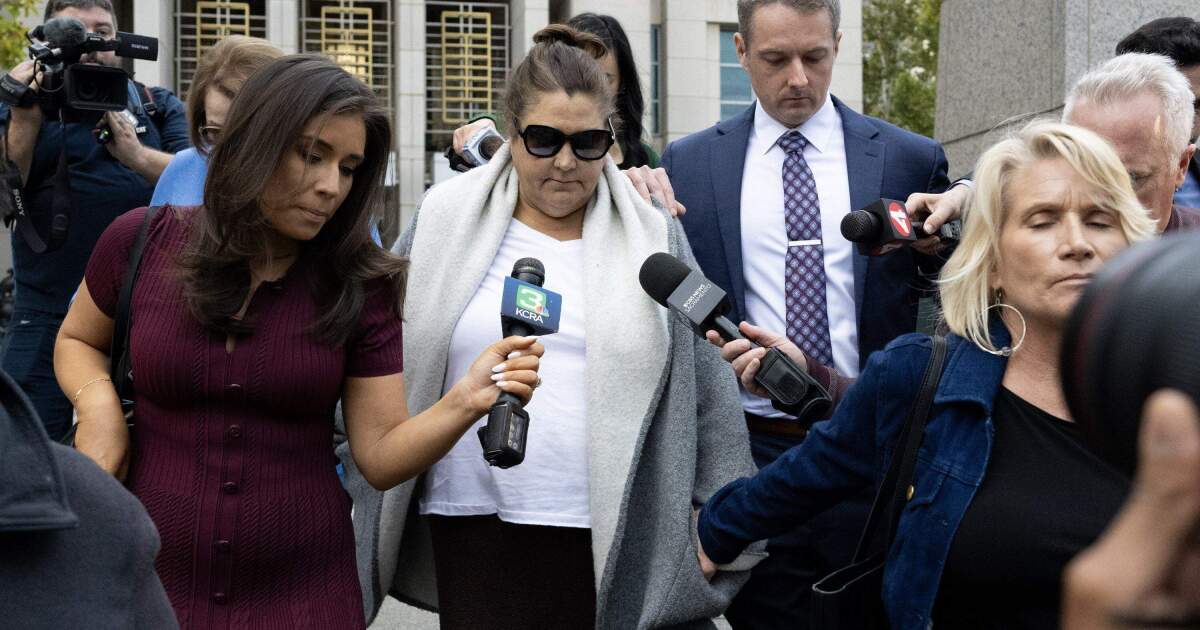
SACRAMENTO — Gov. Gavin Newsom’s former chief of staff, Dana Williamson, left state service with two things: a federal corruption investigation and more than $50,000 in pay for vacation time she accrued but never took.
State payroll records reviewed by The Times show Williamson used approximately $30,000 in unused vacation time to remain on California’s payroll through Jan. 31 — seven weeks after Newsom’s office indicated she had departed — before collecting an additional $22,000 lump-sum payout for the hours she had left.
Large cash-outs for departing state workers with hundreds of hours of time off on the books have been a recurring issue in California. The state’s unfunded liability for vacation and other leave owed to employees has ballooned in recent years to $5.6 billion, fueled by generous time-off provisions and a long-standing failure to enforce policies that cap most employees’ vacation balances at 640 hours.
Many state workers accumulate large balances of unused vacation after decades of being on the government payroll. The typical public employee retires with more than two decades in public service, according the California Public Employees’ Retirement System. Their unused time off is paid when they leave state employment at their final rate of pay.
Williamson, however, amassed 462 hours of unused leave in less than two years on the job. She earned $19,612 a month as the governor’s chief of staff.
John Moorlach, director at the conservative think tank the Center for Public Accountability at the California Policy Center, said that a job like Williamson had probably involved incredibly long workdays but that the pace in which employees accumulate days off is a major financial burden.
“A normal blue-collar worker would say, ‘Really? Really?“” said Moorlach, a former Republican state senator from Orange County. “You don’t find this perk in the private sector.”
Williamson notified Newsom in November 2024 that she was under federal investigation and was put on paid administrative leave through Dec. 16, the governor’s office said.
Federal charges against Williamson, which were filed in November 2025, allege she siphoned $225,000 out of a dormant state campaign account belonging to gubernatorial hopeful Xavier Becerra and illegally claimed $1 million in luxury handbags and travel as business expenses on her tax returns. She pleaded not guilty to the charges.
A status conference in Williamson’s case was moved to April 16 after she recently underwent a successful liver transplant and due to the large volume of discovery — more than 280,000 pages so far — according to court records filed last month.
Williamson’s attorney, McGregor Scott, did not respond to a request for comment.
State payroll records show Williamson earned $40,000 in regular pay in 2025, which the state controller’s office said included her December 2024 and January 2025 paychecks. The governor’s office said Williamson’s December 2024 paycheck included 11 days of paid administrative leave, and the remainder of both paychecks was covered by her unused leave.
With her final cash-out of $22,000 in remaining time off, she made a total of $62,000 last year — all tied to administrative leave and unused vacation time rather than time worked.
“That’s shocking, honestly,” said Assemblyman Josh Hoover (R-Folsom), adding that stockpiled vacation time overall is something the state Legislature should look into.
The state paid $453 million in unused leave benefits to state workers in 2025. That was an average of more than $20,000 to the 21,000 employees who received a lump-sum check. The amount paid to departing or retiring state workers has steadily increased each year. In 2024, the state paid $413 million for unused time off.
“Obviously, employees are an important part of our state and they accrue vacation time,” Hoover said. “But, if this is something being used to pad people’s salaries … we need to look into that and possibly reform that.”
Last year, 80 state employees took home at least $250,000 in unused time off, and 1,081 employees were paid more than $100,000. Those numbers have been increasing each year. For example, the state paid 16 state workers more than $250,000 for unused time off in 2010, and 309 employees were paid more than $100,000.
In 2024, the state paid out a record $1.2 million to a prison supervising dentist for unused time off. Last year, the top amount paid for unused leave was about $650,000 to an assistant fire chief with the California Department of Forestry and Fire Protection.
The state owed nearly $5.6 billion to state workers for unused vacation and other leave benefits in 2024, according to the most recent financial accounting report issued by the state controller’s office. Although that unfunded liability held steady when compared with 2023, it has risen sharply from pre-pandemic amounts.
In 2019, the state owed $3.9 billion for employees’ unused time off before COVID-19 curtailed travel and work-from-home policies resulted in fewer workers taking time off. State employees have argued that under-staffing at state agencies can make it difficult to take vacations.
Nick Schroeder, a policy analyst at the nonpartisan California Legislative Analyst’s Office, said the state has plans to reduce unfunded liabilities for pensions and retiree healthcare, but that isn’t the case with unused time off.
“There isn’t a plan to address it,” Schroeder said.
When an employee retires with a large leave balance, the department where that person worked last is on the hook for the amount.
“It can be a big effect on that individual department’s budget,” Schroeder said.
During budget deficits — including in the current fiscal year — the state has cut employee pay or deferred annual raises in exchange for additional days off, a strategy that helps balance budgets but also adds to workers’ growing vacation balances.
In Newsom’s January budget proposal, which estimated a $3-billion deficit, the governor recommended providing $91 million in ongoing funding to the California Department of Corrections and Rehabilitation to help the prison system pay departing employees for their unused time off. The department said that from 2020 to 2025, it paid about $130 million annually on average to employees leaving state service, according to a Legislative Analyst’s Office report.
When employees cash out banked leave, the state pays them not only for the hours they have accumulated, but also for the additional vacation and holidays they would have earned had they taken that time off.
That means a person with 640 hours of vacation would also be paid for all of the vacation and holidays they would have earned had they taken those 80 days off. Each hour of leave is paid based on an employee’s final salary — not what they were earning when the time was accrued.
Most private-sector employers cap vacation accrual between 40 and 400 hours and stop employees from earning additional time once they reach those limits. Some companies have moved in the opposite direction, adopting “unlimited paid time off” policies. Under those systems, employees do not accumulate vacation days that can be banked or cashed out, but critics say the policies can lead to workers taking less time off because there is no guaranteed number of days and employees may feel pressure not to appear absent.
Jon Coupal, president of the Howard Jarvis Taxpayers Assn., said there appears to be little appetite in the state Capitol to address California’s burgeoning vacation liability.
“This problem is systemic within California government and no one seems willing to take it on,” Coupal said. “At the same time, they are clamoring that there is a budget crisis. I suspect they will continue to kick the can down the road.”



Dad charged with incest after allegedly assaulting daughter
Makayla Rene Settles moved to California to chase her dreams. Two days later, her family says her biological father sexually assaulted her. She was 18. She died five months later. Now her family is fighting to make sure her accused attacker faces trial.
VENTURA COUNTY, Calif. – When Makayla Rene Settles turned 18, she left Raleigh, North Carolina, for a fresh start. She moved to Moorpark, California, to live with her biological father, Stephen Vincent Chavez, with plans to attend college and build a new life. Two days after she arrived, her family says she called terrified and asking for help.
“It was just the fear in her voice, her crying. I didn’t need details. I knew something was wrong, and I said, ‘I’m on the way,’” said Carolina Sandoval, Makayla’s mother.
Carolina says she rushed to Chavez’s home. When she saw her daughter, she was devastated.
“She’s barely walking,” Carolina said. “My brother picks her up and hugs her.”
Makayla was taken to a hospital, where a rape kit was performed. According to the family, the results came back positive for Stephen Vincent Chavez’s DNA. He was arrested that same night and charged with incest, taking advantage of a position of trust, and providing alcohol to a minor.
Her cousin, Crystal Sandoval, was in disbelief. She said, “I was screaming, I was crying. I just kept thinking, why would he do that to her? This is something she could not come back from.”
Crystal was right. Five months later, Makayla Rene Settles died by suicide.
“If I’m being honest, it feels like I handed my daughter to the devil,” said Carolina.
On the night Makayla was taken to the hospital, Sandoval says Chavez sent her a text message. It read, “I’m never drinking liquor again. I don’t want that blackout to happen again.”
Now, the family says they’ve been dealt another devastating blow. According to Crystal Sandoval, the Ventura County DA’s Office has told them the case may not go to trial because Makayla is no longer alive to testify.
“The DA was essentially saying, ‘We don’t know if we have a case because she’s no longer here,’ and when she told me that, I immediately said, ‘No, we’re not going to let that slide,’” said Crystal.
Determined to get justice, Crystal took to social media. Her videos went viral, drawing widespread outrage and prompting hundreds to promise to show up to Chavez’s next court hearing, scheduled for April 21 at the Ventura County Courthouse.
“It was like he took her sunshine away and just kind of broke her soul,” Crystal said.
The Ventura County District Attorney’s Office issued the following statement:
“We have seen the posts online and want to let the public know that our Sexual Assault Unit continues to prosecute the defendant for this extremely serious crime. This case has been filed since July 2025, when the evidence supported the filing of felony charges. As with any case, prosecutors filed charges based on the evidence. The court sets bail. Our office successfully moved to increase bail to $250K in July 2025 when the case was filed. The defendant requested that bail be reduced, but we successfully argued against that. The defendant has since posted $250K bail and is out of custody. With respect to the upcoming hearing, the April 21 date is an early disposition conference. This is a standard pretrial proceeding where the court and parties address the status of the case and set future dates as appropriate.”
Despite that statement, the family says they have already been told a trial is not guaranteed, and they are not backing down. Chavez has pleaded not guilty. His next court hearing is April 21 at 8:30 a.m. in Courtroom 14 at the Ventura County Courthouse.
California
California’s leading GOP candidate for governor reacts to Swalwell’s exit from race | CNN Politics

California’s leading GOP candidate for governor reacts to Swalwell’s exit from race
Republican Gov. candidate Steve Hilton joins CNN’s Dana Bash after one of his opponents, Rep. Eric Swalwell, exited the California governor’s race amid sexual misconduct allegations. “We desperately need change. And no Democrat can provide that,” Hilton says.

FRESNO, Calif. (FOX26) — A new effort to crack down on dangerous drivers in California is gaining attention as lawmakers push forward legislation aimed at repeat speeders.
Assembly member Esmeralda Soria has introduced a bill that would require certain drivers with multiple speeding offenses to install a device in their vehicles that automatically limits how fast they can go. The measure, known as the “Stop Super Speeders Act” (AB 2276), is designed to improve road safety and prevent deadly crashes.
The program could first roll out as a pilot in several counties, including Fresno, Kern, Los Angeles, San Bernardino, San Diego, Santa Clara, and Shasta. While the proposal was initially intended to be implemented statewide, consultants recommended starting with a smaller pilot program.
The legislation is driven in part by tragic cases like that of Paul Martinez, who was killed at just 21 years old after being struck by a speeding driver in Fresno. His father, Joe Martinez, says the loss is something he lives with every day.
“Being 21 years old and suddenly your entire life, dreams, goals—everything—is just wiped out by the distraction of one person who was speeding,” he said. According to reports, the driver who hit Paul was traveling 54 miles per hour in a 40 mph zone.
Traffic safety remains a serious concern in Fresno. Data from Smart Growth America ranks the city as the seventh worst in the nation for pedestrian deaths.
“I do not want to see another father who grieves every single day because he lost his child to someone driving recklessly,” Soria said.
Under AB 2276, judges would have the authority to require repeat offenders to install Intelligent Speed Assistance (ISA) devices in their vehicles. The technology functions similarly to cruise control but automatically adjusts a car’s speed based on posted limits using GPS data.
“Once the technology is installed, it knows the speed limit of the neighborhood or freeway and makes adjustments accordingly,” Soria explained. “This is for those folks who haven’t learned their lesson from simply getting a ticket.”
However, the proposal has drawn criticism from some groups. Opponents argue that the bill’s language is too broad and could create unintended safety risks. Critics say there are situations where drivers may need to accelerate quickly to avoid danger, and limiting speed could make those situations more hazardous.
Supporters counter that the bill is about accountability and protecting lives on the road.
“You would think this is a no-brainer bill,” said Martinez, “It holds repeat offenders accountable.”
The bill is still in the early stages of the legislative process. Its next step is review by the Assembly Appropriations Committee.

Contributor: The results are in, and same-sex marriage was a win for children and society

Trump administration promised ‘gold standard science.’ Scientists say they got fool’s gold

How Jerry West found catharsis by speaking openly before his death in ‘The Logo’

Mass drone warfare is Europe’s rising security threat
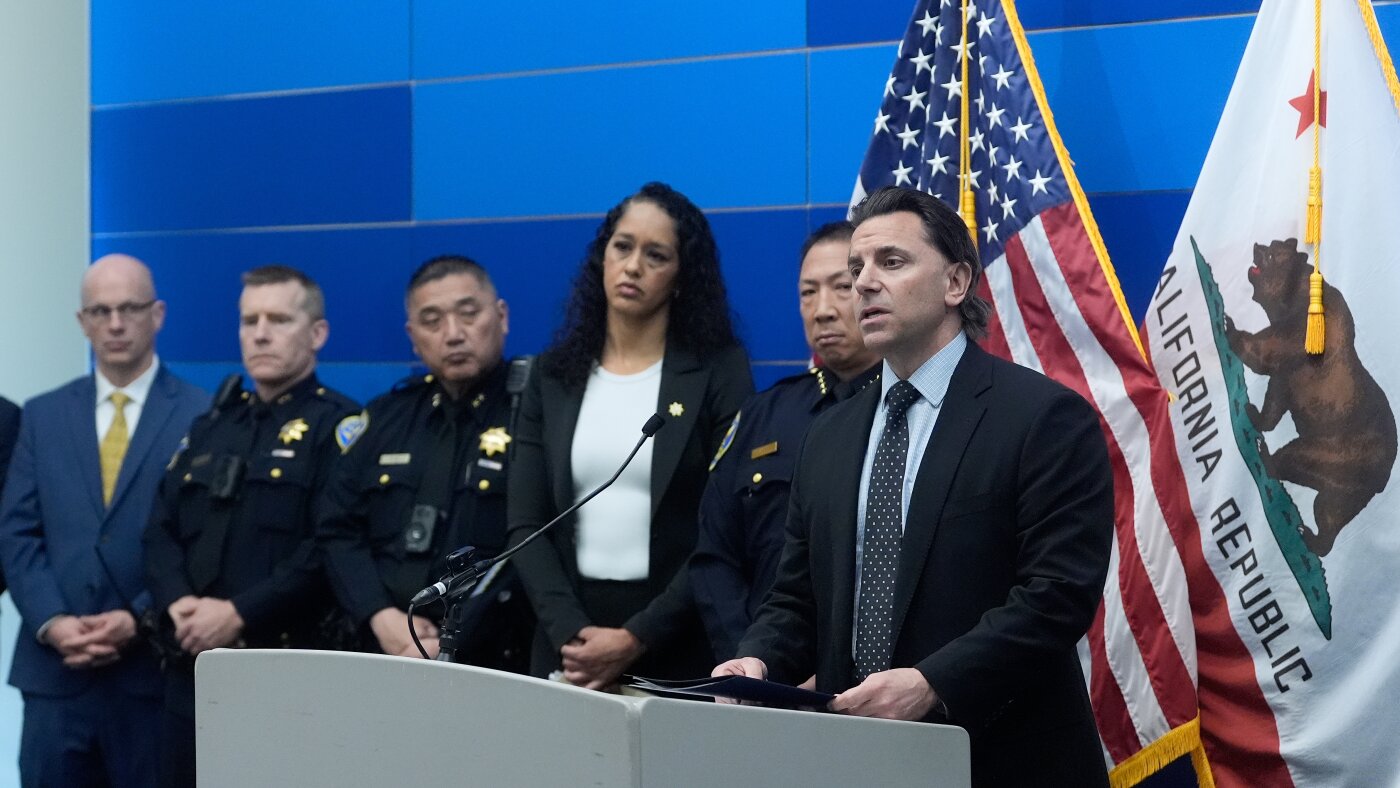
Man accused in Molotov cocktail attack of OpenAI CEO’s home charged with attempted murder

Florida High School Football Rankings: Top 25 teams – Oct. 21

How old is Bo Nix? What to know about Oregon quarterback ahead of 2024 NFL Draft

Cleary's 21 help Le Moyne down Central Connecticut State 69-64 in OT

99th annual Pony Swim held in Virginia

Indiana Members Credit Union announced as new anchor tenant at Bottleworks District
Mass drone warfare is Europe’s rising security threat
Man accused in Molotov cocktail attack of OpenAI CEO’s home charged with attempted murder

Embattled Rep Tony Gonzales announces plans to resign amid sexual misconduct allegations

UN experts slam attacks on Gaza shelters, forced displacement in West Bank

DOJ fires at least 4 prosecutors involved in FACE Act cases during Biden administration
-

 Atlanta, GA1 week ago
1 teenage girl killed, another injured in shooting at Piedmont Park, police say
-

 Georgia7 days ago
Georgia House Special Runoff Election 2026 Live Results
-

 Arkansas4 days ago
Arkansas TV meteorologist Melinda Mayo retires after nearly four decades on air
-

 Pennsylvania1 week ago
Parents charged after toddler injured by wolf at Pennsylvania zoo
-
 Milwaukee, WI1 week ago
Potawatomi Casino Hotel evacuated after fire breaks out in rooftop HVAC system
-

 Austin, TX6 days ago
ABC Kite Fest Returns to Austin for Annual Celebration – Austin Today
-

 World1 week ago
Zelenskyy warns US-Iran war could divert critical aid from Ukraine
-

 World1 week ago
Indonesia receives bodies of peacekeepers killed in southern Lebanon