California
Federal shutdown stalls legal battles between California, Trump administration

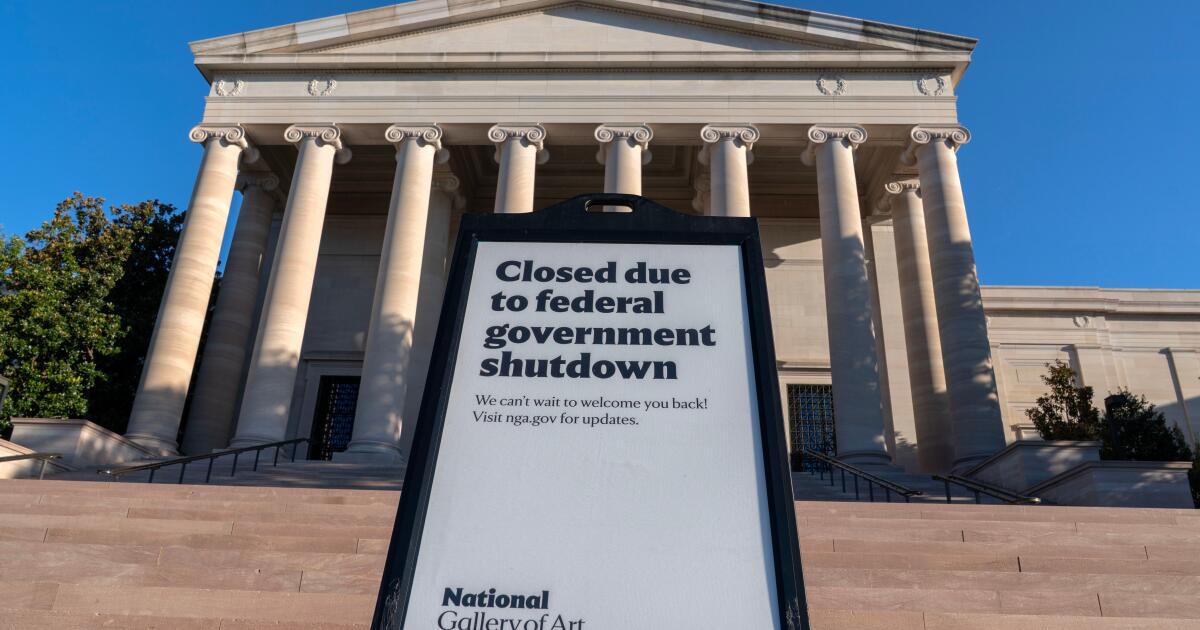
Days before the Trump administration was supposed to file its response to a California lawsuit challenging its targeting of gender-affirming care providers, attorneys for the U.S. Justice Department asked a federal judge to temporarily halt the proceedings.
Given the federal shutdown, they argued, they just didn’t have the lawyers to do the work.
“Department of Justice attorneys and employees of the federal defendants are prohibited from working, even on a voluntary basis, except in very limited circumstances, including ‘emergencies involving the safety of human life or the protection of property,’” they wrote in their filing Oct. 1, the first day of the shutdown.
The district judge presiding over the case, which California filed in federal court in Massachusetts along with a coalition of other Democrat-led states, agreed, and promptly granted the request.
It was just one example of the now weeks-old federal shutdown grinding to a halt important litigation between California and the Trump administration, in policy battles with major implications for people’s lives.
The same day, in the same Massachusetts court, Justice Department attorneys were granted a pause in a lawsuit in which California and other states are challenging mass firings at the U.S. Department of Education, after noting that department funding had been suspended and it didn’t know “when such funding will be restored by Congress.”
The same day in U.S. District Court in Central California, the Trump administration asked for a similar pause in a lawsuit that it had brought against California, challenging the state’s refusal to provide its voter registration rolls to the administration.
Justice Department attorneys wrote that they “greatly regret any disruption caused to the Court and the other litigants,” but needed to pause the proceedings until they were “permitted to resume their usual civil litigation functions.”
Since then, the court in Central California has advised the parties of alternative dispute resolution options and outside groups — including the NAACP — have filed motions to intervene in the case, but no major developments have occurred.
The pauses in litigation — only a portion of those that have occurred in courts across the country — were an example of sweeping, real-world, high-stakes effects of the federal government shutdown that average Americans may not consider when thinking about the shutdown’s impact on their lives.
Federal employees working in safety and other crucial roles — such as air traffic controllers — have remained on the job, even without pay, but many others have been forced to stay home. The Justice Department did not spell out which of its attorneys had been benched by the shutdown, but made clear that some who had been working on the cases in question were no longer doing so.
Federal litigation often takes years to resolve, and brief pauses in proceedings are not uncommon. However, extended disruptions — such as one that could occur if the shutdown drags on — would take a toll, forestalling legal answers in some of the most important policy battles in the country.
California Atty. Gen. Rob Bonta, whose office has sued the Trump administration more than 40 times since January, has not challenged every request for a pause by the Trump administration — especially in cases where the status quo favors the state.
However, it has challenged pauses in other cases, with some success.
For example, in that same Massachusetts federal courthouse Oct. 1, Justice Department attorneys asked a judge to temporarily halt proceedings in a case in which California and other states are suing to block the administration’s targeted defunding of Planned Parenthood and other abortion providers.
Their arguments were the same as in the other cases: Given the shutdown, they didn’t have the attorneys to do the necessary legal work.
In response, attorneys for California and the other states pushed back, noting that the shutdown had not stopped Department of Health and Human Services officials from moving forward with the measure to defund Planned Parenthood — so the states’ residents remained at imminent risk of losing necessary healthcare.
“The risks of irreparable harms are especially high because it is unclear how long the lapse in appropriations will continue, meaning relief may not be available for months at which point numerous health centers will likely be forced to close due to a lack of funds,” the states argued.
On Oct. 8, U.S. District Judge Indira Talwani denied the government’s request for a pause, finding that the states’ interest in proceeding with the case “outweighs” the administration’s interest in pausing it.
Talwani’s argument, in part, was that her order denying a pause would provide Justice Department officials the legal authority to continue litigating the case despite the shutdown.
Bonta said in a statement that “Trump owns this shutdown” and “the devastation it’s causing to hardworking everyday Americans,” adding that his office will not let Trump use it to cause even more harm by delaying relief in court cases.
“We’re not letting his Administration use this shutdown as an excuse to continue implementing his unlawful agenda unchecked. Until we get relief for Californians, we’re not backing down — and neither are the courts,” Bonta said. “We can’t wait for Trump to finally let our government reopen before these cases are heard.”
Trump and Republicans in Congress have blamed the shutdown on Democrats.


CHICO, Calif. — A shooting at a library in Northern California on Monday left two people dead and a suspect is in custody, according to police.
Police responded to a 911 call soon after 5 p.m. in which the sounds of gun shots and people screaming could be heard coming from inside the Chico branch of the Butte County Library, Billy Aldridge, the city’s chief of police, said during a news conference.
Once officers were inside the library, the suspect fled out of the back, he said. Additional law enforcement behind the library took the suspect into custody, according to Aldridge.
“The incident this evening was obviously very sad, traumatic for a lot of people. Very traumatic for our community,” he said.
The streets around the library were closed temporarily and a family reunification center was set up for the people who were inside the building.
A child was also taken to the hospital with a minor injury.
Aldridge said there is no serious threat to the public and law enforcement are investigating the shooting.
The police didn’t release the suspect’s name nor details on what prompted the shooting. Law enforcement said they believe the shooter acted alone.
Law enforcement are also not releasing the names of the people killed until next of kin have been notified.
The county urged the public to avoid the area and said all Butte County library branches will be closed Tuesday.
The county in a post on Facebook offered “deepest condolences to everyone affected, including the victims, their loved ones, library staff, and all those impacted by this heartbreaking incident.”
Copyright © 2026 by The Associated Press. All Rights Reserved.

CALIFORNIA CITY, Calif. (KERO) — A 12-year-old boy is dead and another child was hospitalized after two unleashed dogs attacked a group of children at Central Park in California City on Friday, June 18.
California City Mayor Edwin Hawkins said police responded to the scene after reports that four children had been mauled.
Fernando Torres Moreno, 12, jumped into a nearby lake to escape the charging dogs. Officers pulled Fernando from the water, and he was taken to the hospital, where he died the next day.
A second child suffered serious, though non-life-threatening, dog bite wounds and has since been released from the hospital. Two additional children were shaken but did not require medical treatment.
Authorities say the dogs, both mixed breed, were off-leash but in the presence of their owner when the attack unfolded.
The investigation remains active and ongoing. No arrests have been made.
This story was reported on-air by a journalist and has been converted to this platform with the assistance of AI. Our editorial team verifies all reporting on all platforms for fairness and accuracy.
Stay in Touch with Us Anytime, Anywhere:

California’s high school baseball season may be over, but that means football season is on the horizon.
In just a matter of weeks, California’s top programs will return to the field looking to make their mark in one of the nation’s most competitive high school football landscapes.
The 2025 season delivered plenty of memorable moments, from Santa Margarita’s CIF Open Division State Championship Bowl Game title and a No. 3 spot in USA TODAY Sports’ Super 25 football rankings to major offseason roster moves. Now, a new stage is set as teams look to earn their way to the top stages in high school football.
When do teams return to action for the 2026 season? Here are all the dates to know:
California high school football season start dates: CIF
First practice date: July 27, 2026
Date of first games: Aug. 21, 2026
High school football practices for teams competing within the CIF in “Week 0” games get underway on July 27, 2026, with the date of the first games set for Aug. 21. Teams who have a bye in their schedule will play on this timeline.
Teams that do not have a bye in their schedule, and therefore do not have a “Week 0” game, will kick off on Aug. 28 with their first practice date set for Aug. 3.
-

 Education6 minutes ago
The Itinerant Preacher Who Helped Secure the Separation of Church and State
-

 Technology13 minutes ago
Hoto’s 25-bit electric screwdriver is 40 percent off during Prime Day
-

 World16 minutes ago
Trump gets major win against China in African rare earth minerals race
-

 Politics21 minutes ago
Social media erupts over Mamdani’s silence after Brooklyn coffee shop bans Jewish congressman
-

 Health28 minutes ago
Want to age better? Researchers say 4-minute routine may help prevent dangerous falls
-

 Sports31 minutes ago
Wyndham Clark pens emotional message after winning second US Open in hostile territory
-
 Business43 minutes ago
The other anti-data center movement: California’s sky-high electricity prices
-
 Entertainment46 minutes ago
‘All My Children’ actor Paul Avery and wife Sheila killed in house fire

