California
Bird flu jumped from cows to people. Now advocates want more farmworkers tested


In summary
A strain of bird flu that imperiled California poultry and cattle has jumped to people. In humans, the symptoms are mild and the virus has not been transmitted among people.
In the heart of California’s dairy country, workers kitted in respirators, face shields and gloves are grappling with one of the largest bird flu outbreaks in history. California has reported 16 human cases of bird flu this month, and worker advocates say the state isn’t doing enough to protect dairy workers.
Only 39 people have been tested for H5N1, the strain of bird flu ravaging herds of cattle, according to the California Department of Public Health. California’s confirmed cases of sick workers account for almost all of the country’s cattle-to-human transmissions, according to the Centers for Disease Control and Prevention.
Human cases in California have been mild with no hospitalizations, officials say. Sick workers have reported flu-like symptoms in addition to pink eye. There have been no documented cases of human-to-human transmission, state health officials say, and the general public’s risk is low.
The current bird flu surveillance strategy places the majority of the responsibility on farmers to self-report disease among animals and employees, which is problematic, said Elizabeth Strater, a spokesperson for United Farm Workers.
“Workers are actively avoiding testing, I can assure you,” Strater said. “We have heard directly from farmworker communities and veterinarians that they can see that there are workers out there who are sick.”
Workers, who are often low-income, can’t afford the 10-day isolation period with no pay if they are positive, Strater said.
Millions of poultry have been slaughtered since the virus first took hold in California farms two years ago, and this year the highly transmissible virus jumped to cattle, posing a new threat to those who work with the animals.
Authorities have confirmed bird flu infections at 178 California dairies since it first emerged in August, according to the state Department of Food and Agriculture, and there is no sign of infections among cows slowing. The transmission from cows to humans is thought to occur through close and prolonged contact with sick animals.
“The most concerning data we have is how little data we have,” Strater said. “Hundreds of herds have tested positive, and the number of people tested is in the dozens — that’s a problem.”
Dr. Erica Pan, chief epidemiologist with the state health department, said close to 5,000 people have been screened for bird flu since February in the course of routine influenza monitoring.
The difference between testing for bird flu and COVID-19, which required widespread surveillance, Pan said, is that the eye needs to be swabbed, which must be done by a clinician.
“This is about looking for symptoms and then testing for them instead of testing people without symptoms,” Pan said.
California distributes PPE for bird flu
The state and local health departments are focusing on distributing protective gear and educating workers on how to use it, Pan said. More than 1 million pieces of PPE have been distributed to local health departments and farms, according to the state health department.
The state also deployed 5,000 doses of seasonal flu vaccine for farmworkers. Although that vaccine won’t protect against bird flu, it reduces the chances of a severe coinfection.
Last week KFF Health News reported farmers in other states have refused to cooperate with local health departments and disease investigators.
Tricia Stever Blattler, executive director of the Tulare County Farm Bureau, said she has not heard of any instances of local employers refusing to cooperate with authorities.
Tulare County, the nation’s largest milk producer, has been the epicenter of the outbreak among cattle and dairy workers, reporting the state’s first human cases in early October. Cases have since been reported in surrounding counties.
Early in October when temperatures soared above 100 degrees, it was difficult to get workers to don additional protective equipment, said Stever Blattler, but that concern has abated with cooling temperatures.
Dairies surprised by bird flu
The severity of the disease for cattle and its rapid spread among herds caught the industry off-guard, Stever Blattler said, and has had “a huge economic ripple.”
“Our dairies are really trying to fast-track their learning on the situation,” Stever Blattler said. “They’re trying to create an appropriate and safe workplace, and they’re also trying to increase the care and monitoring of the cattle itself.”
Carrie Monteiro, a spokesperson for Tulare public health, said farmers in the county have cooperated with efforts to mitigate the spread of the virus.
“They really are reporting and making sure we’re getting the care to their workers and the medication to help their employees recover from this illness,” Monteiro said.
The county has increased its testing capacity to include 15 community doctors, although they are still relying on people with symptoms coming forward. If someone tests positive, they and their household are monitored for 10 days and given antiviral flu medication, Monteiro said.
Still, Strater said she’d like to see the state do more to assure farmworkers, who often work grueling jobs for low pay, that they will be compensated if they get sick on the job. Doing so would encourage workers to come forward if they are sick. The federal government has committed financial assistance to farmers to help pay for lost milk, PPE and measures to prevent infection, but no such offerings have been made to workers.
According to the state Department of Industrial Relations, workers who get sick with bird flu qualify for workers compensation regardless of immigration status. Employers are required to give employees a workers’ compensation claim form, and they are also required to report cases to the local health department.
“I would like to see public health agencies working together with (industrial relations) and doing a push to reassure people to get tested,” Strater said. “If you test positive, all of your lost wages should be compensated by workers comp.”
Supported by the California Health Care Foundation (CHCF), which works to ensure that people have access to the care they need, when they need it, at a price they can afford. Visit www.chcf.org to learn more.
Source link



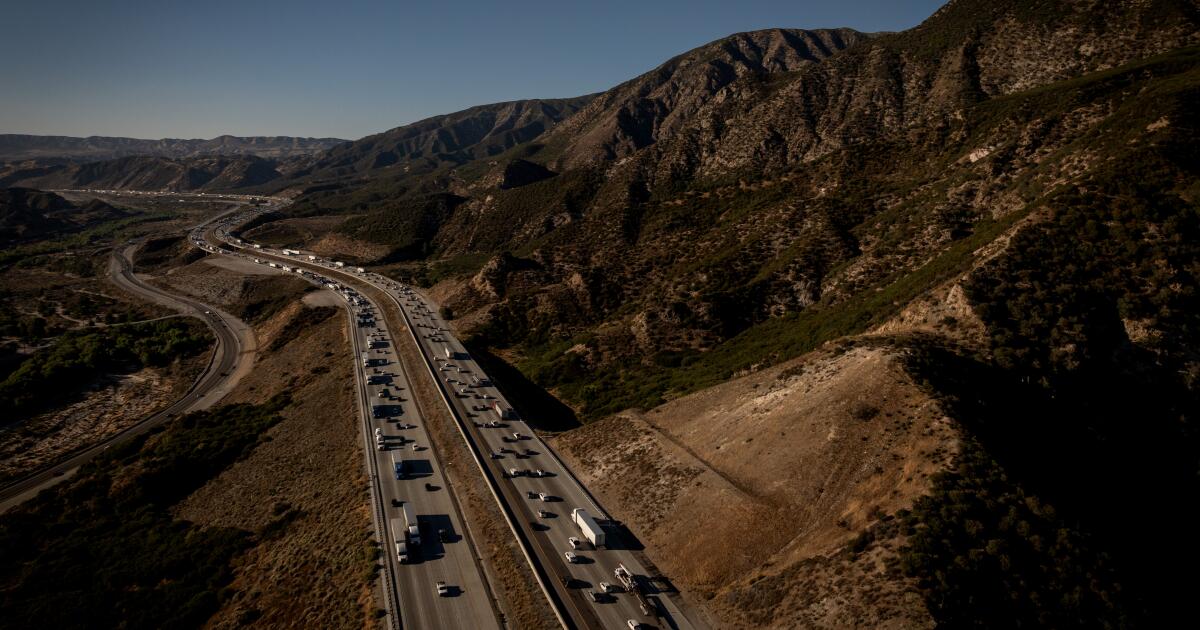
It lurks ominously beneath California’s many natural wonders, a reminder that nothing in this landscape is truly permanent.
It’s been described as “the mother of all earthquake faults,” the source of both our geological birth and, perhaps, our ultimate undoing.
But the most unnerving thing about the San Andreas fault these days may be its silence. It’s a mystery scientists are still trying to unlock.
The San Andreas is central to any discussion of California. It’s the massive 800-mile spine of the state, trundling up the Coachella Valley to the San Gabriel Mountains, and pushing along the edge of Silicon Valley to beyond the Golden Gate.
There is no simple answer for why California’s longest fault, responsible for some of America’s most powerful earthquakes, has produced so few in the last century.
But it is clear that the quiet period is only increasing strain on the San Andreas, as well as on the state’s second-longest fault, the San Jacinto.
A new study underscores the concern. Researchers estimated that key sections of the fault in Southern California are at their highest level of tectonic strain in the last 1,000 years.
The San Andreas, in other words, is locked, loaded and inevitable.
A red-hot San Andreas
Tectonic stress on these sections of the San Andreas and San Jacinto faults is high — shown in red — a product of no significant quakes on them for more than a century. At the Cajon Pass, sections of the faults are at their highest strain in 1,000 years, calculations suggest.
Average tectonic stress, in megapascals

Liliane Burkhard / University of Bern / University of Hawai’i at Manoa; Statewide California Earthquake Center Community Fault Model
Sean Greene LOS ANGELES TIMES
Ticking tectonics
There are generations of Californians who have never experienced the fury of the San Andreas.
The fault was responsible for a megaquake that ripped through the then-sparsely populated state in 1857 — an event that, if repeated today, would reap mass destruction.
In 1906, “a crack in the edge of the world,” as author Simon Winchester described it, flattened San Francisco.
Modern Californians have been forced to make do with Hollywood’s CGI versions of the fault, which cast it as one of our state’s darkest villains.
But sooner or later, scientists say, California’s earthquake faults will rupture in a way not seen in the modern era. While California has seen sizable temblors since the great San Francisco quake of 1906, the state’s faults are capable of producing intense shaking over a much larger area than seen during more modern events such as the Sylmar, Loma Prieta or Northridge quakes.
“We keep accumulating that earthquake energy, and it has to be released. And the only way it gets released is through large earthquakes,” said U.S. Geological Survey geologist Kate Scharer, one of the new study’s co-authors. “The small ones don’t really do it.”

A section of the California Aqueduct crisscrosses the San Andreas fault dozens of times.

-
Share via
The latest study, published last month in the Journal of Geophysical Research: Solid Earth, set out to create a model that calculated the seismic strain on three key segments of the San Andreas and San Jacinto faults where they intersect at the Cajon Pass in San Bernardino County.
The model is based on a number of factors: the estimated timing of earthquakes on the faults over a record of the last 1,000 years; satellite observations of how fast tectonic plates are moving; and estimates of how rigid Earth’s crust is, which determines how much stress can be accommodated and then released, Scharer said.
The computer model “found that tectonic stress has now reached higher levels than at any point in that entire record. From the model, we see that the conditions that historically preceded large joint ruptures crossing both fault systems are now approaching,” said Liliane Burkhard, the lead author of the study and a scientist at the University of Bern in Switzerland and the Hawaii Institute of Geophysics and Planetology at the University of Hawaii.
The last major temblor to strike urban Southern California, the magnitude 6.7 Northridge earthquake of 1994, resulted in severe damage and the deaths of about 60 people. But it was also mostly limited to a relatively small area of Los Angeles County.
By comparison, a hypothetical magnitude 7.8 earthquake on the southern San Andreas would simultaneously bring violent shaking to L.A., Orange, Riverside, San Bernardino, Ventura and Imperial counties and could result in 1,800 deaths, according to a U.S. Geological Survey estimate published in 2008.
The findings of the latest study don’t change the overall expectation of a big earthquake hitting Southern California. But they underscore the persistent risk — as well as the possible scale of the disaster.
There’s a 60% chance of a magnitude 6.7 or greater earthquake striking the Los Angeles region by 2045, according to USGS estimates published in 2015. There’s about a 1 in 5 chance of such a quake striking on the San Andreas fault within L.A. County and the Inland Empire.
Why the drought?
The decades-long relative earthquake drought “is an unusually long interseismic period, and stress has been accumulating continuously throughout,” Burkhard said.
The authors created a 28-second animation, showing how tectonic strain increased along the faults over the last 1,000 years. Big earthquakes then release that strain, before the cycle starts again.

This animation condenses 1,000 years of the Cajon Pass’s earthquake history into 28 seconds. Tectonic stress, shown in shades of orange and red, builds up along three fault segments. Following an earthquake, that stress is released. (Liliane Burkhard / University of Bern / University of Hawai’i at Manoa)
The study calculated that the San Andreas fault just northwest of the Cajon Pass and the San Jacinto fault just southeast of the pass are at their highest tectonic strain since the year 1100.


The pass, located roughly 50 miles northeast of downtown Los Angeles, marks the dividing line between the San Gabriel Mountains to the west and the San Bernardino Mountains to the east.
Specifically, the study’s authors calculated that the current tectonic stress was 2.8 megapascals on the San Andreas northwest of the pass, surpassing the previous highs of 2.7 just before big quakes in 1469 and 1691.
For the San Jacinto, the authors calculated a current seismic stress of 3.6 megapascals, surpassing the previous high of 2.9 before an earthquake in the year 1249.
The study noted that it has been an unusually long time since a megaquakes has hit Southern California. The San Andreas fault northwest of the Cajon Pass usually has big quakes every 100 to 150 years, Scharer said, though intervals of about 200 years are not unheard of.
On the San Andreas southeast of the pass, big quakes usually happen every 200 to 250 years. But the most recent quake on the San Andreas along the Salton Sea, close to the Mexican border, was about 300 years ago.
There are some limitations to the study’s model, scientists acknowledge. For instance, the model presumes that when large earthquakes hit, all the tectonic stress that had been accumulated in the fault gets released, “so you start at a ground state of zero and then you accumulate back up until you have that next big event,” Scharer said.
But whether all that stress actually gets released during a big quake is not definitively known.

The Mormon Rocks in Phelan, Calif.
Tectonic risks
Whenever it strikes, a supersized earthquake on the southern San Andreas would be like no earthquake seen in living memory in California.
The 1857 quake, estimated to be a magnitude 7.9, produced 63 times more shaking energy than the 1994 Northridge earthquake, and across a much larger swath of the state.
In 1994, “violent shaking,” or Level 9 on the Modified Mercalli Intensity Scale, causing great damage in substantial buildings, affected only part of the San Fernando Valley.

But a magnitude 7.8 San Andreas quake hypothesized by the USGS in its 2008 ShakeOut scenario would cause that kind of shaking across Southern California.
In 1994, emergency responders from across Southern California were able to focus the bulk of their efforts on especially hard-hit areas. That wouldn’t be possible in a regionwide disaster.


It might be tempting for Californians to tune out talk of the “Big One” after hearing about it for most of their lives. But generational catastrophes do strike — be they an earthquake in San Francisco in 1906, a hurricane in New Orleans in 2005 or tsunamis in the Indian Ocean in 2004 or Japan in 2011.
Tectonic rewards
Earthquakes are part of the bargain of living in California, a product of the same forces that allow people to ski and surf on the same day. The same tectonics that drive earthquakes act as the state’s landscape artists, said Julian Lozos, associate professor of geological sciences at Cal State Northridge.
“Because we are on the edge of the continent, we’re on a plate boundary, and have been a plate boundary for a couple hundred million years. There’s constantly been stuff crashing into North America, and getting stuck to it, and getting uplifted, and erupted through, and slid around,” Lozos said.
The Sierra Nevada, California’s mightiest mountain range, “are the guts of the volcanoes that used to be there when there was a subduction zone … and then when those volcanoes stopped erupting, the guts of them lifted up through the crust,” Lozos said.

Big Pines Highway rises out of a valley to ride a ridge created by the tectonic forces of the San Andreas fault, two miles southeast of the unincorporated Mojave Desert community of Valyermo, home to about 450 residents.
The same forces that produce earthquakes are also what led gold to form in the Sierra foothills, inciting the state’s famous rush.
Tectonic movement also created today’s Central Valley, a highly productive agricultural area that was once part of the ocean, then an inland sea, and then a freshwater lake, Lozos said.
“Everything about what we see here is stuff that formed because of that plate boundary then, and it’s getting moved around by the plate boundary now,” Lozos said. “And so if we didn’t have anything like that, we would be Nebraska.”
But the risks, like the rewards, are significant. The San Andreas runs right through cities in the Inland Empire. The Los Angeles Basin is also at risk.
If an earthquake on the San Andreas comes from the south and heads north, it would shuttle all that shaking energy “right into downtown,” Lozos said, causing shaking that could last two to three minutes.
“Geologically, L.A. is a bowl of Jell-O. It is a hard rock bowl full of really soft, squishy stuff that shakes very easily,” Lozos said.

It is business as usual at the Wrightwood Inn on a recent Tuesday night. According to a recent study, seismic pressure has been gradually building in the area for more than a century.
It’s not certain why it’s been so quiet between earthquakes, said Scharer. Another study, published in 2023, suggested the lack of sudden, major floodwaters funneling into Lake Cahuilla, the larger historical predecessor to the Salton Sea, may have something to do with it.
Scharer said the study’s results are a good reminder to prepare for the next big earthquake.
To be sure, the computer model’s results are not a prediction, and all models have their limitations and uncertainties. Still, its suggestion that the fault systems are “more loaded than at any point in the 1,000-year record,” Burkhard said, “is a finding worth taking seriously.”
“In the end, the most important message is a simple one: Let’s make sure we are prepared,” she said.

A new poll in the race for California Governor shows Democrat Xavier Becerra is leading Republican Steve Hilton by a wide margin — 61% to 36%.
Becerra leads Hilton across several demographics: age, gender, homeownership, income, racial/ethnic groups and across the state’s major regions.
The poll also found 85% of likely voters say that the gubernatorial candidates’ positions on the environment are important — 60% of Democrats call it “very important,” compared to 29% of Republicans.
The poll surveyed 1,578 California adults from June 29 through July 6 and was conducted by the Public Policy Institute of California. The poll was conducted in English and Spanish, and 1,003 of those who were polled were likely voters.
The same poll found that a large majority of Californians do not want new data centers built in their area. Only about a quarter of those surveyed are in favor of the construction of data centers.
The PPIC survey focused on Californians and the environment.
Another key finding was that Californians are most likely to name wildfires as the top environmental issue facing the state today, followed by climate change, government overregulation and water supply. Of those polled, about six in 10 think that the state and local governments are not doing enough to address wildfires.
The California General Election will be held on Nov. 3, 2026.
Copyright © 2026 KABC Television, LLC. All rights reserved.
Source link

LOS ANGELES – A routine internal monitoring sweep by the California Department of Motor Vehicles has flagged thousands of suspicious test results, prompting a massive recall of licensed drivers to testing centers.
The state agency has warned that anyone who fails to comply with the retesting directive will face immediate cancellation of their driving privileges.
What we know:
The California DMV sent letters to about 11,000 licensed drivers last month after identifying suspicious patterns in their written test results.
According to the agency, these irregularities were detected through routine internal monitoring and point to various methods used to circumvent the testing process.
PREVIOUS COVERAGE: 11,000 CA drivers told to retake written test or lose licenses
The DMV has stated that the issue is entirely “test-taker related” and not the result of an internal technical glitch or the involvement of artificial intelligence.
To address the suspected fraud, several cases have already been referred to county district attorneys for criminal prosecution.
What we don’t know:
The DMV has not revealed the specific cheating methods used by the test-takers, nor have they disclosed the exact locations or dates of the flagged tests.
It’s unclear exactly how many of the 11,000 affected drivers have already completed their retests or how many licenses have been canceled so far.
What they’re saying:
A DMV spokesperson emphasized the importance of exam security in an email to City News Service: “The California DMV has identified irregularities in certain driver knowledge test results that may indicate instances of cheating.”
The spokesperson further explained, “Some individuals may have attempted to circumvent the testing process using various cheating methods.”
Addressing the root cause, the spokesperson added, “Nonetheless, these irregularities are test-taker-related and not the result of an internal DMV technical issue, or the involvement of artificial intelligence. Ensuring the integrity of the knowledge testing process is essential to public safety and to confirm that drivers understand California’s rules of the road.”
Regarding the lack of specific details on how the cheating occurred, the department stated, “DMV is not sharing additional information at this time, so as not to reveal investigative methods and protect the integrity of the investigative process.”
Sen. Tony Strickland (R-Huntington Beach), vice chair of the Senate Transportation Committee, recently sent a letter to DMV administrators expressing concerns about the situation.
On Tuesday, Strickland released a statement saying the DMV’s own letter to drivers created “confusion and unnecessary anxiety” among new license holders.
“The DMV is a state agency that serves millions of Californians, and they deserve clear communication along with timely information when something like this happens,” Strickland said. “I have heard from Californians who believe this language suggests the DMV is accusing them of cheating or engaging in misconduct during the examination process. Whether that is the Department’s intent or not, the wording of the notice has created confusion and unnecessary anxiety. In my letter, I requested additional information about what happened and the steps the department is taking to address the issue.”
What’s next:
The DMV will continue to monitor test results internally while working alongside county district attorneys on the active criminal referrals.
Drivers who received the letters must schedule and pass their exams before their individual 30-day deadlines expire to avoid losing their driving privileges.
What you can do:
If you received a letter from the DMV regarding testing irregularities, you must visit a local DMV office as soon as possible to retake your knowledge test.
Be sure to complete and pass the exam within the mandated 30-day window to prevent your driver’s license from being canceled.
The Source: This report is based on official statements and email correspondence provided by the California Department of Motor Vehicles to City News Service.
-
Lifestyle1 second ago
L.A. Affairs: After losing our spouses, we found love again. But were we cheating on our children?
-
 Politics6 minutes ago
A new piece of Democrats’ midterm strategy: Being ‘practical’
-
 Science12 minutes ago
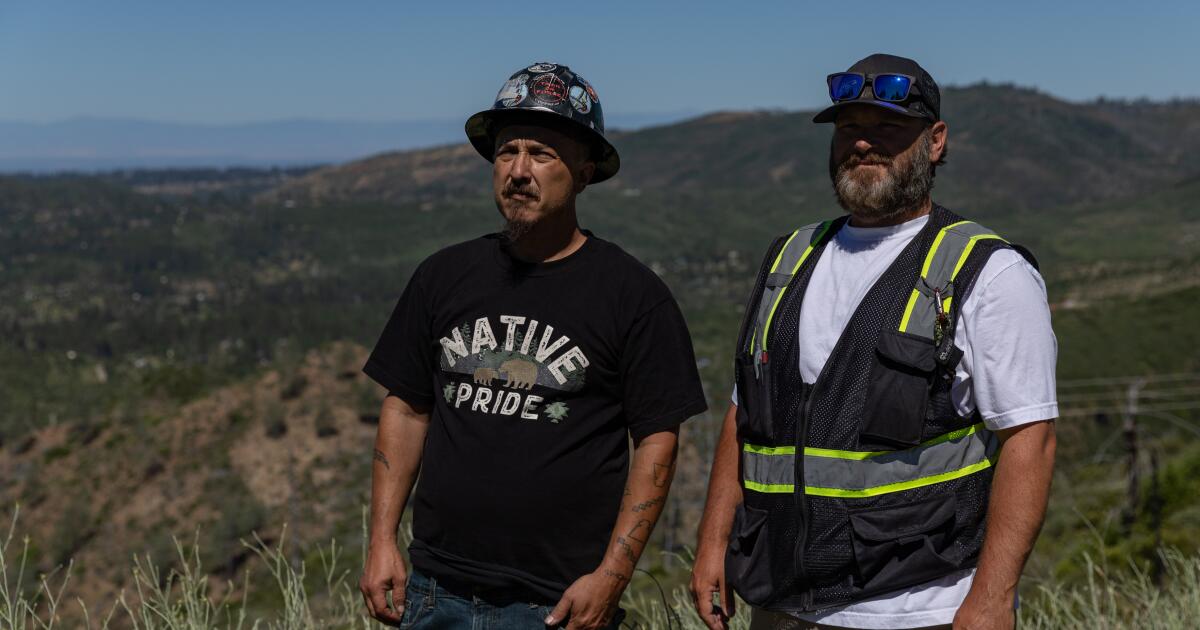
After wildfires destroyed 95% of this California tribe’s forests, members uncovered 1,200 ancestral sites
-
 Sports18 minutes ago
World Cup championship and third-place game: Start times and how to watch
-

 World30 minutes ago
Rule of Law in Hungary shows ‘radical change’ under Magyar, EU says
-

 News1 hour ago
Where Wildfire Smoke Is The Worst Right Now—And What To Do About It
-

 Los Angeles, Ca3 hours ago
LADWP begins long-term repairs after West Hollywood water main rupture
-

 Detroit, MI3 hours ago
Livestream: Mayor Sheffield, Detroit health chief to address wildfire smoke threat

