Connect with us

West

Bryan Kohberger's Amazon records are 'catastrophic' for defense, 'smoking gun' for prosecutors, experts say

Published

on

Bryan Kohberger's Amazon records are 'catastrophic' for defense, 'smoking gun' for prosecutors, experts say

Join Fox News for access to this content

You have reached your maximum number of articles. Log in or create an account FREE of charge to continue reading.

By entering your email and pushing continue, you are agreeing to Fox News’ Terms of Use and Privacy Policy, which includes our Notice of Financial Incentive.

Please enter a valid email address.

Having trouble? Click here.

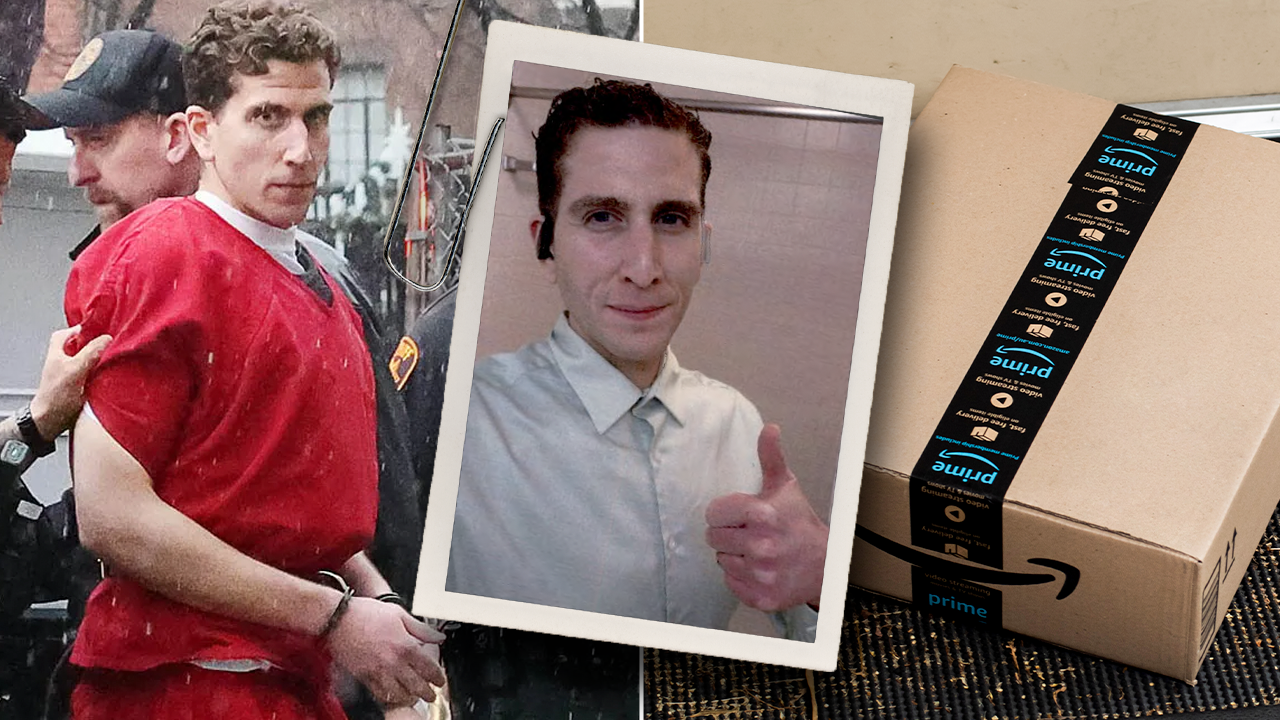
New court filings in the Idaho student murders case could severely handicap suspect Bryan Kohberger’s defense, according to legal experts – he allegedly purchased a Ka-Bar knife on Amazon months before the murders and then shopped for a replacement days after they took place.

Bryan Kohberger, a 30-year-old former criminology Ph.D. student, is accused of using a large, bladed weapon to kill four University of Idaho undergrads – Madison Mogen, 21, Kaylee Goncalves, 21, Xana Kernodle, 20 and Ethan Chapin, 20.

Advertisement

According to Latah County Coroner Cathy Mabbutt, all four victims died with multiple stab wounds. At least two of them were so intoxicated at the time of the attack that they were unable to resist at all, prosecutors wrote in court filings. 

Under Mogen’s body, police found a Ka-Bar knife sheath, stamped with a United States Marine Corps logo and allegedly containing Kohberger’s DNA on the snap.

PROSECUTORS CLAP BACK AT BRYAN KOHBERGER’S ‘BUSHY EYEBROWS’ DENIAL BY SHARING ALLEGED SELFIE FROM DAY OF MURDERS

Prosecutors allege Bryan Kohberger took this selfie photo at 10:31 a.m. on November 13, 2022 – about 6 hours after the murders of four University of Idaho students he is accused of committing. (Ada County Court)

Prosecutors revealed in court filings this week that he allegedly bought a Ka-Bar, a sheath and a sharpener on Amazon in March 2022, months before the murders. Then, in the weeks after the murders, his Amazon app “click activity” allegedly shows he was browsing for a replacement.

Advertisement

Experts say the shopping list will be difficult for the defense to explain away, especially based on the timing and the specific details about what Kohberger was allegedly looking at. 

That is a catastrophic fact for his defense.

— Edwina Elcox, Boise defense lawyer

“There’s always kind of this lore around that using a knife in a murder is particularly personal,” said Edwina Elcox, a Boise defense attorney who has been following the case. “And then the time frame of the search that links him, if this is correct, to this murder weapon shows a significant level, or at least I’m sure the prosecution would argue, shows a significant level of premeditation.”

She said that the slate of newly revealed evidence against Kohberger indicates prosecutors may have a stronger case than previously known.

Read the filing:

Advertisement

IDAHO COURT RELEASES SURVIVING ROOMMATES’ TEXT MESSAGES FROM NIGHT OF STUDENT MURDERS

Kohberger’s defense team has asked the court to keep his Amazon records out of the trial. 

“The information that is publicly available is that …the murder weapon, other than the sheath, has never been recovered,” Elcox told Fox News Digital. “And then he is searching for this very, very specific item. This is beyond a catastrophic fact to the defense…I do not know how you explain that away.”

Madison Mogen, top left, smiles on the shoulders of her best friend, Kaylee Goncalves, as they pose with Ethan Chapin, Xana Kernodle, and two other housemates in Goncalves’ final Instagram post, shared the day before the four students were stabbed to death. (@kayleegoncalves/Instagram)

For Joseph Giacalone, a retired NYPD sergeant and cold case investigator, the Amazon business records are yet another tool in the digital era that he believes will increasingly help law enforcement solve crimes going forward.

Advertisement

“Electronic evidence is gonna bring this case to a head for sure – it’s amazing,” he told Fox News Digital. “I said cellphone records, internet records and video surveillance are things that are gonna solve most cases going forward, but having this type of information is extremely damaging.”

WATCH: Father of slain Idaho student speaks out on new evidence in the case

Prosecutors made the revelation in response to Kohberger’s defense team trying to have evidence of his Amazon activity kept out of the trial, arguing in part that the retail giant’s algorithm “shapes user behavior” by serving up items it predicts shoppers want.

FOLLOW THE FOX TRUE CRIME TEAM ON X

A screenshot of Amazon.com shows a Ka-Bar knife for sale for under $100 on the shopping website. (Amazon)

Advertisement

“Applying the test for relevancy, first, Kohberger’s click activity which shows a purchase of a Ka-Bar knife and sheath before the homicides, makes it more probable (than it would be without the evidence) that the Ka-Bar sheath found at the crime scene was Bryan Kohberger’s,” Latah County Deputy Prosecutor Ashley Jennings wrote in a court filing made public Wednesday evening.

“Second, Kohberger’s click activity after the homicides makes it more probable (than it would be without the evidence) that Kohberger had a reason to search for a Ka-Bar knife and sheath after the homicides.”

GET REAL-TIME UPDATES DIRECTLY ON THE TRUE CRIME HUB

Bryan Kohberger arrives at Monroe County Courthouse in Pennsylvania in January 2023, prior to his extradition to Idaho to face murder charges. (The Image Direct for Fox News Digital)

Judge Steven Hippler this week denied Kohberger’s request to have an expert testify about the Amazon data at a hearing next month. He has not yet ruled on the motion to exclude the evidence.

Advertisement

FBI’S KOHBERGER DNA TACTICS DIDN’T VIOLATE LAW, BUT THEY RAISE ANOTHER PUBLIC SAFETY CONCERN

“This is the smoking gun evidence in the case,” said Neama Rahmani, a former federal prosecutor in Los Angeles who has been following the case. 

WATCH: Former prosecutor breaks down Bryan Kohberger’s Amazon history

The DNA connects Kohberger to the crime scene, and his Amazon history undermines a defense theory that it could have been planted, he said.

“This was a big mistake by Kohberger, who was otherwise very careful about covering his tracks,” he added.

Advertisement

The house at 1122 King Road in Moscow, Idaho, behind police tape on Nov. 15, 2022. Police say four University of Idaho students were stabbed to death inside on Nov. 13. (Derek Shook for Fox News Digital)

SIGN UP TO GET TRUE CRIME NEWSLETTER

Kohberger was pursuing a Ph.D. in criminology at Washington State University, just 10 miles down the road from the University of Idaho crime scene.

“I think he fancies himself…as remarkably intelligent, but as somebody who has studied this field, you know that law enforcement and their searches cast a wide, wide net,” Elcox told Fox News Digital. “Having this in a searchable history format is…OK, you just have to wonder, I don’t think you’re maybe as smart as you thought you were.”

University of Idaho students from left to right: Ethan Chapin, 20; Xana Kernodle, 20; Madison Mogen, 21; and Kaylee Goncalves, 21.  (Jazzmin Kernodle via AP/Instagram/ @kayleegoncalves)

Advertisement

Prosecutors have also alleged they traced his car, a white Hyundai Elantra, to and from the crime scene, that an eyewitness saw a masked man inside the home just after the murders, and that phone records also corroborate their alleged timeline of events. But Kohberger was not identified as a suspect until more than a month after the slaying with the help of investigative genetic genealogy.

While legal experts say the Amazon history is damming evidence, it also raises new questions for people who study the criminal mind, a topic Kohberger himself had studied at the graduate level. Was a suspect looking to replace a missing sheath, after leaving one behind at the crime scene, or a budding serial killer taking steps toward another kill?

State police forensics look for clues in Moscow, Idaho on Monday, Nov. 21, 2022. Four University of Idaho students were slain on Nov. 13 in this house. (Derek Shook for Fox News Digital)

“I don’t think this killing was a one off – I think…whoever did this, they were likely to kill again,” Dr. Kris Mohandie, a criminal psychologist, told Fox News Digital. “If it was him, why would he kill like that unless he enjoyed it? Further, he was interested in serial killers.”

And although whoever committed the crime is believed to have taken steps to conceal their tracks, he added killers always make a mistake that catches up to them.

Advertisement

“I’ll guarantee you that scene didn’t have one fingerprint of his on it, nor did it have anyone else’s,” said John Kelly, a criminal profiler who has been following the case. “Because whoever did it wiped it down so well.”

Bryan Kohberger’s former apartment at Washington State University, Sunday, May 21, 2023. (Derek Shook for Fox News Digital)

BRYAN KOHBERGER DOESN’T WANT AMAZON SHOPPING LIST REVEALED AT TRIAL

While search warrants show police recovered knives after Kohberger’s arrest, none have been publicly identified as a potential murder weapon. 

Kohberger’s trial is scheduled to begin Aug. 11 in Boise.

Advertisement

He could face the death penalty if convicted. A judge entered not-guilty pleas on his behalf at his arraignment in May 2023.


Read the full article from Here

Continue Reading
Click to comment

Leave a Reply

Your email address will not be published. Required fields are marked *

This site uses Akismet to reduce spam. Learn how your comment data is processed.

Wyoming

Statewide candidates split on Wyoming GOP’s plans to defy state law and make endorsements 

Published

on

Statewide candidates split on Wyoming GOP’s plans to defy state law and make endorsements 


by Maggie Mullen, WyoFile

After the Wyoming GOP voted to defy a state law prohibiting the party from backing one Republican over another before the primary election, statewide candidates are split on whether they would accept such an endorsement. 

Some told WyoFile they agree with the party’s decision and will seek out an endorsement, while others said they oppose a political party breaking election law. A few said they were taking a wait-and-see approach. 

“Jury’s still out on this one for me,” Wyoming State Auditor Kristi Racines said Wednesday. 

For years, the Wyoming Republican Party has argued that because it is a private organization, state laws that govern its organizational structure and prohibit it from endorsing or financially backing candidates in opposed primary election races are unconstitutional. 

Advertisement

At its convention in Douglas last weekend, the party took things into its own hands, voting to adopt bylaws establishing a process for vetting, endorsing and spending money to support candidates ahead of the primary. 

Park County’s Tim Lasseter hydrates during the Wyoming Republican State Convention on Saturday, April 25, 2026, in Douglas. (Dan Cepeda/WyoFile)

Supporters of the new bylaws point to a U.S. Supreme Court ruling from 1989, which struck down California’s ban on political party endorsements, ruling that the law violated the First Amendment’s guarantees of free speech and association. Opponents, meanwhile, raised concerns at the convention about the bylaws breaking the law, litigation costs and unintended consequences. 

The new bylaws are widely expected to spark lawsuits, while the Wyoming Republican Party has said it plans to file its own legal challenge against the state. 

In the meantime, the new bylaws lay out a process for evaluating candidates based on “commitment to the Wyoming Republican Party Platform, demonstrated loyalty to the Party’s principles, legal eligibility to hold office, and for incumbents, their voting record.” 

The state party will consider candidates running for Wyoming’s state-elected officials — including governor, secretary of state, superintendent of public instruction, treasurer and auditor — as well as congressional candidates. Otherwise, county parties “may vet all other races on their respective County Ballots,” according to the new bylaws. 

Advertisement

The state party, as well as each county party, “shall each create and oversee a Candidate Vetting Committee empowered to review and recommend approval or disapproval of candidates based on established criteria,” the bylaw states. “The Committee shall provide candidates an opportunity to respond to concerns prior to issuing a recommendation.”

Candidates 

Brent Bien, who is running for governor, told WyoFile the bylaw changes are “a long time coming,” pointing back to the 1989 ruling. 

“I think we just got to make sure we get those folks that truly believe on the Republican side of the equation, who truly believe in the platform and what Wyoming stands for,” Bien said. “And I just don’t think there’s been any enforcement mechanism to do that.” 

At the convention, Bien was a clear favorite among many attendees who wore his campaign buttons and t-shirts. Still, Bien said he wouldn’t be surprised if he didn’t get the party’s endorsement. 

“I didn’t get Trump’s endorsement,” Bien said. “And some of these legislators around the state, you know, they haven’t endorsed me.”

Advertisement

Bien’s take isn’t shared by all the gubernatorial candidates. 

“Contested primaries should be decided by voters,” Gillette Sen. Eric Barlow wrote in a statement. “The role of the state party is to unite Republicans around shared values and help grow the party, not decide elections before voters have had their say.”

“Under current law, the state party should not choose sides in Republican primaries, and I will not ask them to start now,” he wrote. “My job,” running for governor, “is to earn the trust of Wyoming voters directly.”

At the convention, supporters of the bylaws said the party had tried to get the Legislature to change state statute. Barlow directly pushed back on that argument. 

Sen. Eric Barlow, R-Gillette, at the Wyoming Legislature’s 2026 budget session in Cheyenne. (Mike Vanata/WyoFile)

“As a legislator for the past 14 years, this issue has never come before us,” Barlow said. “If it had, it would have ensured all Wyomingites could weigh in and decisions would have been made openly and transparently — not in the courts and not a few months before an election.” 

Secretary of State Chuck Gray, who is running for U.S. House, told WyoFile he supports the new bylaws. 

Advertisement

“I will participate in the Party’s vetting process and will seek their support because I’m the only candidate in this race with a proven record of standing up for conservative principles — even when it wasn’t popular with the media and the insiders,” he wrote in a statement. 

As secretary of state, Gray is Wyoming’s chief election officer and oversees statewide election administration. Asked if he wanted to comment in his official capacity on the Wyoming Republican Party’s decision to defy state law, Gray did not respond by publishing time. 

U.S. House candidate David Giralt took a more cautious approach when asked for his opinion on the new bylaws. 

“I trust Wyoming Republicans to make good decisions for our party, and I’ll let the process play out,” Giralt said. “I’m focused on getting in front of as many Wyoming voters as possible and making the case for why I’m the right person to represent this state in Congress.” 

Kevin Christensen, another U.S. House candidate, said he wanted to see how fair, transparent and consistent the process played out before weighing in. 

Advertisement

“The Wyoming people are the ones that make the determination in the primary, not the party,” he said. “That being said, if this is about supporting candidates and determining who is really a Republican and who’s just putting an ‘R’ next to their name, that seems like that would be consistent with being the Republican Party.”

Jillian Balow, yet another candidate for U.S. House and former superintendent of public instruction, said she “would be honored to accept an endorsement and money from the state party only if it is in accordance with Wyoming and federal law.”

“The contingency of our party at the convention knew the changes they made defied state law and they curtailed delegate discussion to pass new by-laws anyway,” Balow wrote in a statement. “Some delegates were appalled, some were gleeful, and many were silent, because they were silenced. This is not the way Wyoming does business.”

U.S. House candidate Reid Rasner also pushed back on the new bylaws. 

“As a pro-Trump conservative, I always expected the political establishment to try and stop our campaign,” he wrote in a statement. “But, after making over 200 stops across our communities, one thing is clear: people are tired of the political games.”

Advertisement
Rep. Tom Kelly, R-Sheridan, looks over a bill from the House floor. Kelly announced his intentions to run for Wyoming superintendent of public instruction this week. (Joseph Beaudet/The Sheridan Press)

Sheridan Republican Rep. Tom Kelly, who is running for superintendent, said while he opposes “the idea of parties having the power to disallow anyone from running under their banner,” he thinks “parties should be able to express publicly which people they would like to represent them.” 

Though he’s not actively seeking endorsements, Kelly said he would accept support from the state party. 

“Financial backing? Absolutely,” Kelly said. “Contrary to a popular false narrative, I have no wealthy D.C. donors bankrolling me.”

And if the party endorsed one of his opponents, Kelly said he would tell them, “Congrats. I should have done a better job presenting myself.”

WyoFile reached out to other statewide Republican candidates, including those running for governor, secretary of state, superintendent, U.S. House and U.S. Senate. They did not respond by publishing time.


This article was originally published by WyoFile and is republished here with permission. WyoFile is an independent nonprofit news organization focused on Wyoming people, places and policy.

Advertisement


Source link

Continue Reading

San Francisco, CA

Contributor: May we never grow inured to homelessness

Published

on

Contributor: May we never grow inured to homelessness


Most Saturday mornings, I stroll half a mile downhill from my tiny apartment in a bosky part of San Francisco to a farmers market. My usual reverie of anticipation (about carrots with their tops attached, about the price of berries) was interrupted recently by the sight of three bodies.

That is, I thought of them as bodies; it was not evident whether they were alive or dead. All lay splayed on the sidewalk, one a couple blocks from my home, the other two, blocks apart, closer to the market, itself located in a neighborhood where need is evident. (Food stamps are often the tender for buying produce.) The bodies belonged to shabbily but fully dressed men — except one man, who was missing a shoe. Maybe the men are sleeping, I thought, or unconscious from drink or drugs. Or maybe they are dead. Nobody walking by — including me — slowed down to pay attention to them, beyond a glance.

For decades, encountering such a scene, I used to stop, then wait to see a leg twitch, a chest rise. I rarely do even that anymore. In high school, I had read with shock that poor people in India, people with no home, slept on the sidewalk, while others just walked by. How awful of those others, I remember thinking. How could they live with themselves? The reproach has come home. We’ve gotten used to homelessness — the homelessness of others.

I guessed the three men on that recent Saturday had no homes, but from many years interviewing a formerly homeless man who is now a civic leader in San Francisco, I learned not to rush to conclusions. Del Seymour, today known locally as the mayor of the Tenderloin, taught me that a man lying with his eyes closed on a sidewalk may have a home, but perhaps was interrupted by temptation or a medical situation on his way there. I also learned from Del, to my initial shock, that some homeless people work full-time jobs. I’ve learned a lot about homelessness, mostly from him, but also from my daily Google alert for the word in the news.

Advertisement

Because those alerts are so rarely encouraging, one seeming spark of good news recently stood out. In Los Angeles County, according to newly released statistics about 2024, the number of deaths among the homeless population decreased from 2023. Yay! I thought. The myriad programs are working! Whether naloxone intervention or tiny houses or new shelters or other efforts (free job training like Del initiated in San Francisco?) are to praise, I felt a surge of hope. Then I read more closely.

Deaths among unhoused individuals in L.A. County had fallen in 2024 not to 100 or so, as I naively hoped, but to 2,208. A trend in the right direction, yes. A cause for celebration, no.

Far too many people know firsthand the emotional and physical grind of homelessness. Virtually all other Californians know it secondhand and have probably asked themselves the same question: What is a (presumably well-meaning) housed person to do in response to the sight of an unhoused person, not to mention many unhoused people? I know of a nurse in San Francisco who screeches her car to a stop when she spots a person in bodily distress and administers CPR if appropriate. I admire her action, but doubt I could replicate it.

Granted, my own main and stubborn response, to spend nearly a decade writing a book about the subject in the hope it will have a helpful impact, is not a route available or attractive to many. And shorter term efforts, such as volunteering at local nonprofits, certainly have more immediate results. One common impulse, in which I take part, if insufficiently and awkwardly, is to give someone food or money, or call 911 when someone clearly needs help.

Yet any pedestrian, especially any female pedestrian, will attest that the impulse to help someone on the sidewalk becomes more challenging if that someone is awake, and male. Will an offering lead to a spit, a scream, a chase? Should we avoid eye contact and walk on? Not necessarily.

Advertisement

What I’ve learned from Del is to offer something that may mean more than a dollar or a sandwich: Say hello.

Acknowledge the person whose face is several feet below your own. This individual is part of a family, “somebody’s son, somebody’s auntie,” Del’s litany goes, and remains a human being. Remind yourself of that. More importantly, remind them. Del adds: Don’t stop if the person seems “nuts,” his enjoyed foray into politically incorrect phrasing. Otherwise, slow down for a few seconds, maybe longer. At some point, over time, and the same route, you might recognize one another and actually have a conversation. Meanwhile, keep it basic, but say something.

I obey. Often, just “Hi.”

Almost always comes an incalculably generous reward: a smile and a greeting returned. Humbled, I move on, again resolved not to let our unhoused neighbors feel invisible, nor to forget that homelessness is, among other adjectives, abnormal.

Alison Owings is the author of “Mayor of the Tenderloin: Del Seymour’s Journey From Living on the Streets to Fighting Homelessness in San Francisco.”

Advertisement


Source link

Continue Reading

Denver, CO

Denver welcomes national Democrats for 2028 convention site visit, starting with a trip on the A-Line

Published

on

Denver welcomes national Democrats for 2028 convention site visit, starting with a trip on the A-Line


Denver will welcome representatives from the Democratic National Committee on Tuesday for a three-day show-and-tell highlighting the city as Mayor Mike Johnston tries to woo the party’s leaders into hosting their 2028 convention in the West.

If he’s successful, it will mean 50,000 people will pour into Denver for four days in August of that year.

“It’s kind of like four Super Bowls in a row,” Johnston said in an interview with Denver Post journalists in advance of the delegation’s site visit.

Throughout the visit, much of which could happen during a spring snowstorm, Denver city leaders will attempt to demonstrate the city’s logistical, financial and merriment potential.

Advertisement

Denver is the only one of five finalist cities that is located west of the Mississippi River. The other options are Atlanta, Boston, Philadelphia and Chicago. DNC leaders, including chair Ken Martin, have already visited Atlanta and Philadelphia.

The competition between the rival cities has already begun.

Atlanta’s mayor recently called out most of the other bidding cities, saying, “Boston is history. Philadelphia is played out. Denver is nostalgia. Atlanta is now,” according to the Atlanta Journal-Constitution.

Johnston responded to that, saying: “Of all the disses, I thought ours was actually the best.” It refers to the city’s much-lauded hosting of the 2008 Democratic National Convention, where then-Sen. Barack Obama accepted his party’s nomination on his way to becoming the nation’s first Black president.

Denver’s plan is to focus on what the city has to offer instead of attacking the others, Johnston added. He did take a few jabs throughout the conversation, though.

Advertisement

“(Denver) is cool in the summertime and it’s not 110 degrees in August, like it is in some other places that I won’t name,” he said.

Talking about some of the criteria the DNC will consider in the decision, he said: “It’s very much like, you either have a 20,000-person arena or you don’t. Atlanta does not.”

The visit plan

During the site visit, Johnston and other city leaders will try to infuse “little moments of joy” while also showing off the city’s infrastructure. That will include visits to some of the city’s best restaurants and bars, along with a tour of Rockmount Ranch Wear in Lower Downtown.

If Denver wins the bid, the city plans to host excursions for the delegates in two years. While they’re in the city, visitors are likely to have downtime to explore the region. For their entertainment, Denver will offer things like craft beer tours, history courses on neighborhoods like Five Points and a trip to the city’s mountain parks, Johnston said.

Different bars would be dedicated to delegates from each state — including miniature versions of Denver’s big blue bear in front of each, with a painted flag from their state.

Advertisement

This week’s site visit won’t all be about bid leaders’ ideas for fun, though.

Johnston’s team will also have to show that hosting the convention in Denver will make things easier on the event planners.


Source link

Advertisement
Continue Reading
Advertisement

Trending