Arizona
Second Year Arizona Cardinals Who Must Step Up in 2025


In the process of rebuilding the Arizona Cardinals from the husk left over at the end of the Steve Keim-era, general manager Monti Ossenfort has poured his energies into building a talented, young team through the draft.
The most critical component of that process could well be the twelve player class from 2024 that is now entering their second year in the NFL.
Much is made every offseason of the need for second year players to take a “leap” forward in their play and it is a fairly well-documented and accepted reality that the most noticeable difference in quality of play for many athletes occurs between their rookie and second years as they are still in their athletic prime but getting more used to the speed of the professional game.
From the mentioned 2024 draft class there are four players in particular who will need to put forth higher quality play this season for the Cardinals to have success as a team.
1. WR Marvin Harrison Jr.
The biggest name, and the one who entered his rookie year with the highest expectations, is undoubtedly Marvin Harrison Jr.
Harrison Jr. was immediately thrown to the wolves as a young player as the clear cut No. 1 receiver for the Cardinals and the inherent pressure of that designation clearly impacted him in some capacity and opposing defenses did not hold off at all.
As a superstar receiver from Ohio State he entered the league with a standing reputation and a star pedigree as the son of Colts legend Marvin Harrison.
It is important to note that Harrison Jr.’s rookie season was not bad, it just fell short of what were admittedly unfair expectations for a player’s first year as a pro.
Still, the point remains that he was drafted to be a star and the bedrock of the Cardinals passing game. If the team truly wants to improve that area of their offense, and they absolutely must to have sustained success in 2025 a lot of that runs through the anticipated improvement of Harrison Jr.
2. DE Darius Robinson

The second of the Cardinals first-round picks in 2024, Darius Robinson is starting this season in a different place than the other players on this list.
Last season was a rough one for Robinson. Dealing with an injury kept him off the field the majority of his rookie year, which compounded with the unexpected passing of his mother, led to low-impact output from the 27th overall pick.
Coaches have spoken about 2025 as a sort of extension of Robinson’s rookie year with the added benefit that he has seen an NFL field and already has a feel for what the game is like at this level. This has raised expectations that his emergence in a full-time roll this season should be without many of the normal rookie growing pains.
Hopefully, there is truth to this because the Cardinals defensive line needs a player like Robinson who can emerge as a potential long-term solution and anchor that group. The team put a lot of resources into that area in free agency by bringing in Dalvin Tomlinson and Calais Campbell, but as older vets they will not be around forever.
A successful season from Robinson does not necessarily require a gaudy stat line but he does need to establish himself this year as a keystone of the Cardinals defensive line.
3. CB Max Melton
The loss of Sean Murphy-Bunting for the season makes the improvement of Max Melton even more imperative for the overall success of the Cardinals secondary.
Melton got a lot of playing time as a rookie, coming in and out of the lineup but appearing in all 17 games. In those appearances he exhibited the gamut of what is expected out of rookie cornerbacks adjusting to the NFL but he finished with a very respectable 51 tackles and 5 passes defensed.
Now, Melton looks to be slotted in for a starting role on the outside opposite of rookie Will Johnson. That is a lot of pressure for two very young players at what is arguably the toughest position in football outside of quarterback.
Thankfully, slot corner Garrett Williams has emerged as one of the truly elite players in the league at that spot but success for Arizona’s defense will require high level play out of Melton who will hopefully be able to not only take a big step forward in his own development but help out the young Johnson on the other side.
4. Isaiah Adams
The Cardinals did not re-sign Will Hernandez this offseason (as of this writing) which does leave a question mark at starting right guard.
After Hernandez’s injury in 2024, then rookie Isaiah Adams found himself on the field quite a bit finishing the year with over 400 snaps. In those early appearances there were some evident issues with his play, most notably in pass protection that slowly did improve throughout the year.
Now, ahead of 2025 it seems like the starting right guard spot is Adams’ to lose as coaches have been praising his offseason training, noting his improved strength and dedication to improving on his weaknesses.
With the other four starting offensive line spots filled by veterans who been around the block, the biggest question for the position group is at right guard and it is imperative for the success of that unit that Adams, the supposed frontrunner for that spot, grows tremendously from year one to year two.

![[WatchLive]TV!!!] Lithuania vs Georgia 𝐋𝐈𝐕𝐄 Streams ON Tv Channel](https://i2.wp.com/cdn1.edgedatg.com/aws/v2/abc/ABCUpdates/blog/4233167/1f510177bdba686174bb0267c66389ca/528x299-Q90_1f510177bdba686174bb0267c66389ca.jpg?w=400&resize=400,240&ssl=1 "[WatchLive]TV!!!] Lithuania vs Georgia 𝐋𝐈𝐕𝐄 Streams ON Tv Channel")


Arizona
Suspect in custody after fleeing Arizona troopers and barricading inside a Phoenix neighborhood shed

PHOENIX — A suspect is in custody after fleeing from Arizona Department of Public Safety troopers overnight and hiding in a Phoenix neighborhood.
According to DPS, troopers attempted to stop a white BMW around 1:20 a.m. for speeding and displaying fictitious plates. The driver did not stop, and a pursuit was initiated.
Troopers later ended the pursuit due to safety concerns.
The vehicle was eventually found abandoned near 13th Avenue and McDowell Road. DPS says the suspect briefly drove again before getting out and running through nearby residential backyards.
Authorities say the suspect barricaded himself inside a shed in a backyard.
Phoenix police officers, including a K-9 unit and air support, responded to assist and set up a perimeter. The suspect was located and taken into custody after refusing commands to surrender.
Police say the suspect was treated for minor injuries and taken to a hospital.
No other injuries were reported.
Arizona
Jenae Berry’s strongest outing as a Wildcat secures Arizona softball’s series win over Baylor

It was another adventure for the No. 14 Arizona Wildcats, but sophomore pitcher Jenae Berry turned in her best outing as a Wildcat to secure the series win against Baylor. After taking Friday’s game in run-rule fashion, UA won Saturday’s game 11-7. The Wildcats go for the series sweep on Sunday.
“I’m so proud of her,” Arizona head coach Caitlin Lowe said of Berry. “I think she was perfectly herself today. Didn’t try to do too much. She hit really great spots, mixed speeds, and it was exactly what we needed. You know, she came in and the game settled down once she did come in, and she really just controlled it throughout.”
Berry entered the game in relief and went 5.1 innings with five strikeouts. Both the innings and the Ks were season highs for the righty, who transferred in from Indiana during the offseason.
“Regan [Shockey] was messing around with me after because I don’t normally strike many people out, but definitely fun,” Berry said.
Berry lowered her ERA from 7.58 to 6.68 after giving up two earned runs on three hits and no walks. She earned her second win of the season to improve her record to 2-0.
While the outing may have given Berry a boost, her teammates were grateful for the confidence she instilled in them.
“She gave some confidence to the team, for sure, that we really needed, and she allowed us to go offensively,” Shockey said. “And that’s the biggest thing I would say she contributed today. The energy.”
Shockey may not be someone who seems like she needs confidence. She rarely seems to struggle. However, she had a tough go of things for the first two games last week. She struck out three times in the first two games against ASU. Those three strikeouts gave her 12 for the season.
She has bounced back in the over the last four games, stretching back to the final game of the series against the Sun Devils. Against the Bears, she is 7 for 8 with an RBI, a stolen base, and three runs scored. She looks more like the Regan Shockey everyone knows.
“I think that’s softball,” Shockey said. “You know, people are gonna know you. It’s my third year here, and third year playing against ASU…Can’t be scared to fail, and this weekend, I’m not scared to fail at all. Not scared to strike out, because at the end of the day, no one really remembers the strikeouts more than they remember the hits and our team scoring all those runs.”
Arizona scored most of their runs during the first inning in this one. After starter Rylie Holder wiggled out of a bases-loaded situation in the top of the first, the Wildcats’ offense got to work.
The team sent 11 to the plate in the inning. It only ended because Sereniti Trice was called for leaving base early in her second time getting on base in the frame.
The Wildcats opened with three straight singles to load the bases and bring Sydney Stewart to the plate. There was nowhere to put Arizona’s biggest bat. Baylor starter Peyton Tanner walked her to force in the first run.
A sacrifice fly by Grace Jenkins put the Wildcats up 2-0, then another walk loaded the bases again. A third walk forced in the third run.
That brought up Tele Jennings, who was making her second straight start at designated player. Jennings transferred to Arizona from San Diego in the offseason. In her two seasons with the Toreros, she hit just .239 and had 24 extra-base hits.
She had struggled in her first couple of months as a Wildcat, too. She didn’t get her first hit until her sixth appearance in cardinal and navy. She came into the series hitting .231.
Lowe has been confident that Jennings would find her way, though. She has put her in as the starting DP three times in the past two weeks. This week, the junior broke through. She went 1 for 4 and reached on an error on Friday. Even the at-bats that didn’t result in hits were solid.
On Saturday, Jennings was 1 for 3. The one hit was a double that drove in three to put Arizona up 6-0 in the first. That chased Tanner.
Shockey’s groundout drove in the seventh run, then Trice scored Addison Duke with a single up the middle. If Arizona could keep Baylor under control, it might be on the way to another run rule. It was already 8-0 after the first inning.
Holder continued to have problems in the second inning, though. Her body language indicated she was a bit frustrated with borderline pitches not going her way.
Baylor’s Leah Cran led off the second with a solo shot to put the Bears on the board. A walk and an error by Trice put two on with no outs, then a double made it 8-2. Holder had runners on the corners and still no outs. Another homer and a double made it 8-5, which ended Holder’s day.
Berry entered the game with the bases clear after the 2-run homer. Her first strikeout of the night brought the inning to a close. She continued her run by sitting the side down in order in the third, and her offense responded.
Duke continued to show her power. She had two doubles on Friday. On Saturday, she added a 3-run home run to extend Arizona’s lead to 11-5.
Arizona didn’t score again, but Berry made the runs stand up. She gave up two singles and a groundout that got a runner on, over, and in during the fourth. In the fifth, she struck out the side but a solo home run was sandwiched in between.
“We can handle the ones thrown up there,” Lowe said. “Offensively, we’re gonna punch back. So I think that’s the biggest thing. Is she was able to keep it within reach?”
Lowe was also pleased that the Wildcats didn’t have to use Jalen Adams. Having another arm or two to use is something Arizona needs.
”It also provides us a different look,” Lowe said. “And she’s such a different look than both Rylie and Jalen are. So it’s just really great to have her as a bridge. It’s great to have her as an open, as a close. I didn’t think she was going to get extended that long, but she absolutely just dominated the end portion of that game.”
While the players are too young to remember the last time Arizona couldn’t close out a series against Baylor, they were happy to get the series win for those who were there nine years ago.
“When you wear this uniform, everything means everything to everyone,” Shockey said. “So we carry this A with pride, and we did it for those people in 2017. So I hope they felt this win just as much as we did.”
There’s still a goal left to attain this weekend.
“We need the sweep,” Shockey said. “There’s no other expectation…Our coaches have a very high standard for us, and that is the standard.”

TEMPE — Former Arizona State OT Max Iheanachor took part in the school’s Pro Day on Friday in anticipation for the NFL Draft – which is being held from April 23-25.
The three-year Sun Devil spoke with media after the day concluded – discussing what the next month will entail for him, his journey into becoming a standout NFL prospect, and much more.
To watch the full media availability, view below.
Iheanachor Reveals Upcoming NFL Visits
The general consensus over the last week or two has been that Iheanachor would be more of a second round pick compared to the previous first-round notion, although revelations on Friday may refute that belief.
The talented right tackle revealed that he is set to have top-30 visits with the Arizona Cardinals, Chicago Bears, Philadelphia Eagles, and Baltimore Ravens – among other franchises – in the month leading into the draft.
Those aren’t the only potential destinations for the rapidly rising prospect, as Iheanachor has previously been linked with the San Fransisco 49ers and Detroit Lions as well. There appears to be a common theme amongst interested parties – as all of the franchises either have an aging tackle that carries an uncertain future, or has an open vacancy at right tackle at this moment.
The New England Patriots have an interest in Iheanachor that is a poorly kept secret in their own right – this was on full display when head coach Mike Vrabel worked extensively with the former JUCO player, even after group drills were finished. The Patriots own the number 31 pick in the first round.
Iheanachor’s Journey Nothing Short of Incredible
Iheanachor didn’t begin playing football until 2021, when he began his career playing at the junior college level. He eventually committed to play for Arizona State ahead of Kenny Dillingham’s first season in 2023. There were certainly questions surrounding his viability in making a transition from a lower level into the power four, but that was short-lived.
The raw prospect grew considerably as the season went on, eventually seeing real playing time later in the season. He returned in 2024 as a definitive starter and was obviously one of the most improved players on the entire roster on a year-to-year basis. He then returned in 2025 and was the best player/prospect on the entire offensive line, with figures such as taking part in 484 pass protection snaps without ceding a sack confirming the elite nature of his season.
![[WatchLive]TV!!!] Lithuania vs Georgia 𝐋𝐈𝐕𝐄 Streams ON Tv Channel](https://i2.wp.com/cdn1.edgedatg.com/aws/v2/abc/ABCUpdates/blog/4233167/1f510177bdba686174bb0267c66389ca/528x299-Q90_1f510177bdba686174bb0267c66389ca.jpg?w=80&resize=80,80&ssl=1 "[WatchLive]TV!!!] Lithuania vs Georgia 𝐋𝐈𝐕𝐄 Streams ON Tv Channel")
Georgia2 minutes ago
[WatchLive]TV!!!] Lithuania vs Georgia 𝐋𝐈𝐕𝐄 Streams ON Tv Channel

Hawaii8 minutes ago
Free mobile clinic treating storm-related injuries to relocate

Idaho14 minutes ago
Fire damages sheds, power lines near W. Idaho Ave in Ontario
Illinois20 minutes ago
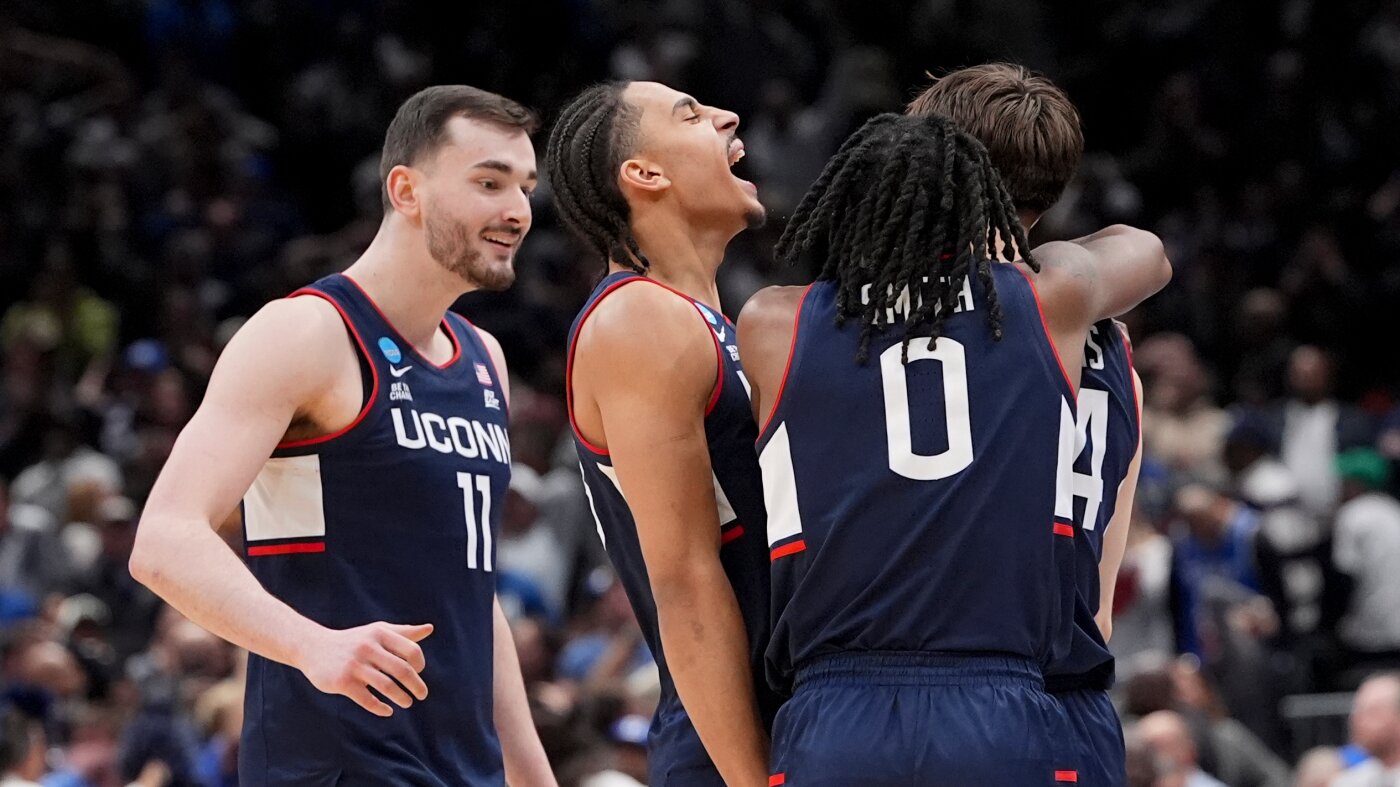
The Final Four is set with UConn stunning Duke to join Illinois, Arizona and Michigan

Indiana26 minutes ago
Game times announced for Saturday’s Final Four in Indianapolis

Florida1 year ago
Florida High School Football Rankings: Top 25 teams – Oct. 21

Oregon2 years ago
How old is Bo Nix? What to know about Oregon quarterback ahead of 2024 NFL Draft

Connecticut2 years ago
Cleary's 21 help Le Moyne down Central Connecticut State 69-64 in OT

Virginia2 years ago
99th annual Pony Swim held in Virginia

Indiana2 years ago
Indiana Members Credit Union announced as new anchor tenant at Bottleworks District

Politics6 hours ago
Scathing report claims nation’s oldest labor union ‘betrayed’ MAGA members through ‘shocking’ spending

World7 hours ago
Republican US lawmaker demands Congress vote on any Iran troop deployment

News7 hours ago
So you went to a No Kings protest. Now what?

Politics18 hours ago
JD Vance says he was ‘obsessed’ with UFOs, believes aliens are actually ‘demons’
World19 hours ago
The EU's recipe for trade deals : easy on beef, tough on wine
-

 Sports1 week ago
IOC addresses execution of 19-year-old Iranian wrestler Saleh Mohammadi
-

 New Mexico1 week ago
Clovis shooting leaves one dead, four injured
-

 Miami, FL3 days ago
Jannik Sinner’s Girlfriend Laila Hasanovic Stuns in Ab-Revealing Post Amid Miami Open
-

 Tennessee6 days ago
Tennessee Police Investigating Alleged Assault Involving ‘Reacher’ Star Alan Ritchson
-

 Minneapolis, MN3 days ago
Boy who shielded classmate during school shooting receives Medal of Honor
-

 Politics1 week ago
Schumer gambit fails as DHS shutdown hits 36 days and airport lines grow
-

 Technology1 week ago
YouTube job scam text: How to spot it fast
-

 Science1 week ago
Record Heat Meets a Major Snow Drought Across the West