Arizona
Second Year Arizona Cardinals Who Must Step Up in 2025


In the process of rebuilding the Arizona Cardinals from the husk left over at the end of the Steve Keim-era, general manager Monti Ossenfort has poured his energies into building a talented, young team through the draft.
The most critical component of that process could well be the twelve player class from 2024 that is now entering their second year in the NFL.
Much is made every offseason of the need for second year players to take a “leap” forward in their play and it is a fairly well-documented and accepted reality that the most noticeable difference in quality of play for many athletes occurs between their rookie and second years as they are still in their athletic prime but getting more used to the speed of the professional game.
From the mentioned 2024 draft class there are four players in particular who will need to put forth higher quality play this season for the Cardinals to have success as a team.
1. WR Marvin Harrison Jr.
The biggest name, and the one who entered his rookie year with the highest expectations, is undoubtedly Marvin Harrison Jr.
Harrison Jr. was immediately thrown to the wolves as a young player as the clear cut No. 1 receiver for the Cardinals and the inherent pressure of that designation clearly impacted him in some capacity and opposing defenses did not hold off at all.
As a superstar receiver from Ohio State he entered the league with a standing reputation and a star pedigree as the son of Colts legend Marvin Harrison.
It is important to note that Harrison Jr.’s rookie season was not bad, it just fell short of what were admittedly unfair expectations for a player’s first year as a pro.
Still, the point remains that he was drafted to be a star and the bedrock of the Cardinals passing game. If the team truly wants to improve that area of their offense, and they absolutely must to have sustained success in 2025 a lot of that runs through the anticipated improvement of Harrison Jr.
2. DE Darius Robinson

The second of the Cardinals first-round picks in 2024, Darius Robinson is starting this season in a different place than the other players on this list.
Last season was a rough one for Robinson. Dealing with an injury kept him off the field the majority of his rookie year, which compounded with the unexpected passing of his mother, led to low-impact output from the 27th overall pick.
Coaches have spoken about 2025 as a sort of extension of Robinson’s rookie year with the added benefit that he has seen an NFL field and already has a feel for what the game is like at this level. This has raised expectations that his emergence in a full-time roll this season should be without many of the normal rookie growing pains.
Hopefully, there is truth to this because the Cardinals defensive line needs a player like Robinson who can emerge as a potential long-term solution and anchor that group. The team put a lot of resources into that area in free agency by bringing in Dalvin Tomlinson and Calais Campbell, but as older vets they will not be around forever.
A successful season from Robinson does not necessarily require a gaudy stat line but he does need to establish himself this year as a keystone of the Cardinals defensive line.
3. CB Max Melton
The loss of Sean Murphy-Bunting for the season makes the improvement of Max Melton even more imperative for the overall success of the Cardinals secondary.
Melton got a lot of playing time as a rookie, coming in and out of the lineup but appearing in all 17 games. In those appearances he exhibited the gamut of what is expected out of rookie cornerbacks adjusting to the NFL but he finished with a very respectable 51 tackles and 5 passes defensed.
Now, Melton looks to be slotted in for a starting role on the outside opposite of rookie Will Johnson. That is a lot of pressure for two very young players at what is arguably the toughest position in football outside of quarterback.
Thankfully, slot corner Garrett Williams has emerged as one of the truly elite players in the league at that spot but success for Arizona’s defense will require high level play out of Melton who will hopefully be able to not only take a big step forward in his own development but help out the young Johnson on the other side.
4. Isaiah Adams
The Cardinals did not re-sign Will Hernandez this offseason (as of this writing) which does leave a question mark at starting right guard.
After Hernandez’s injury in 2024, then rookie Isaiah Adams found himself on the field quite a bit finishing the year with over 400 snaps. In those early appearances there were some evident issues with his play, most notably in pass protection that slowly did improve throughout the year.
Now, ahead of 2025 it seems like the starting right guard spot is Adams’ to lose as coaches have been praising his offseason training, noting his improved strength and dedication to improving on his weaknesses.
With the other four starting offensive line spots filled by veterans who been around the block, the biggest question for the position group is at right guard and it is imperative for the success of that unit that Adams, the supposed frontrunner for that spot, grows tremendously from year one to year two.


A NASA mission to rescue its Swift Observatory from the brink has relied on Arizona, with Flagstaff’s Katalyst Aerospace supplying the spacecraft due to reach orbit and boost the telescope’s orbit.
Arizona plays a central role in a daring NASA mission: It will soon attempt to stave off the death of one of its space telescopes in danger of falling back to Earth.
The Swift Observatory has been scanning the cosmos for more than two decades while orbiting Earth. But in recent years, NASA has noticed that the crucial satellite has been unexpectedly getting lower and lower – putting it in danger of burning up in Earth’s atmosphere.
Now, the U.S. space agency is on the cusp of mounting a rescue mission later in June – the likes of which has never before been attempted – that stunningly came together in less than a year.
The daring venture has recently reached the final stages, with the spacecraft that will fly in orbit – manufactured by an Arizona aerospace company – being mated with the rocket and the aircraft that will deploy it to orbit. If all goes to plan, the mission will soon send the spacecraft on a trajectory to intercept NASA’s telescope and reverse its decaying orbit by boosting it to a higher altitude, extending the observatory’s life.
Here’s what to know about the mission, and Arizona’s integral role in ensuring everything came together to save the observatory in time.
What is the Swift Observatory?
Launched in 2004, NASA’s Swift Observatory has spent more than two decades orbiting Earth while studying a variety of cosmic phenomena. The satellite’s primary objective, though, is to observe gamma-ray bursts – events triggered by the catastrophic deaths of massive stars and considered to be the most powerful types of explosions in the universe.
The satellite is equipped with three multiwavelength telescopes that are able to collect data in visible, ultraviolet, X-ray and gamma-ray light.
Swift space telescope falls faster to Earth than expected
NASA to mount rescue mission for vital space telescope named Swift
NASA and commercial partners will launch a spacecraft in June to boost Swift Observatory’s orbit, staving off its destruction and extending its life.
The Swift Observatory is in a region of space known as low-Earth orbit nearer to the atmosphere, which is also where the International Space Station resides.
All spacecraft in that region can expect to fall to lower altitudes if they don’t have propulsion systems to counteract atmospheric drag and maintain their orbits. But the Swift Observatory has fallen faster than NASA has anticipated because of increased solar storms since fall 2024.
NASA plans mission to rescue Swift
NASA could allow the Swift Observatory to fall back to Earth, where it would harmlessly burn up as it careened into the atmosphere.
Instead, the space agency is planning a mission to rescue the telescope and extend its mission for several more years.
A successful mission would mark the first time that a commercial robotic spacecraft captured a government satellite that – unlike other spacecraft like the Hubble Space Telescope – was never meant to be serviced in space. The unprecedented venture, NASA leaders say, would also test a new capability that could be used on other missions while negating the need to spend even more money to replace the observatory.
To accomplish the risky feat, NASA will need a spacecraft designed to capture and raise the orbit of the Swift Observatory, and a rocket to launch it into space, according to the agency. In the meantime, mission teams on the ground are keeping Swift at least 185 miles above Earth, where the boost mission has the best chance of success, NASA said.
Arizona aerospace company races to develop rescue spacecraft
The spacecraft that will attempt to rescue the Swift Observatory was developed by Katalyst Space, an aerospace company based in Flagstaff, Arizona, which was awarded the $30 million contract in September 2025.
With less than a year to help NASA mount a rescue mission, Katalyst developed the LINK robotic servicing spacecraft intended to latch onto a space telescope that was never meant to be captured.
Because Swift has no docking ports or grappling fixtures to grab onto, Katalyst built LINK with a custom robotic capture mechanism that will attach to a feature on the satellite’s main structure. The process is meant to mitigate the chance of any sensitive instruments being damaged, Katalyst said in a press release.
Why such a quick turnaround? Because Swift is falling – and falling fast.
According to Katalyst, the satellite has a 50% chance of making an uncontrolled reentry by mid-2026 without intervention, with those odds increasing to 90% by the end of 2026.
Northrop Grumman to launch LINK spacecraft
LINK will hitch a ride to space with a rocket manufactured by Northrop Grumman, a Virginia-based aerospace and defense company. At about 55 feet tall, Northrop Grumman’s Pegasus XL is classified as a small-lift rocket regarded as the world’s first privately developed orbital launch vehicle.
In mid-June, LINK was securely encapsulated in a payload fairing inside the Pegasus XL rocket at NASA’s Wallops Flight Facility in Virginia, according to Katalyst.
The Pegasus XL was also attached around the same time to the belly of Northrop Grumman’s Stargazer aircraft tasked with deploying the rocket, NASA said in a press release. The Stargazer aircraft then took off June 18 from Wallops bound for the Marshall Islands, where the mission is due to commence.
When, where is launch?
The Pegasus XL rocket is due to launch later in June from the Kwajalein Atoll in the Marshall Islands, located in the South Pacific Ocean between Hawaii and the Philippines, according to NASA.
Rather than get the rocket off the ground vertically on a launch pad, Northrop Grumman deploys an air-launch strategy to send the Pegasus to space. The approach will require the company’s Stargazer L-1011 aircraft to take off and climb to approximately 40,000 feet over the ocean, where Pegasus will be released.
After several seconds in free-fall, the Pegasus XL will then ignite the first of its three-stage rocket motors, delivering LINK into orbit in about 10 minutes, according to Northrop Grumman.
Eric Lagatta is the Space Connect reporter for the USA TODAY Network. Reach him at elagatta@usatodayco.com

PHOENIX (AZFamily) — Arizona is launching a statewide task force aimed at cracking down on cargo theft.
CargoNet estimates $725 million was lost in cargo thefts nationwide in 2025. Arizona is among the states where cargo theft happens most often.
Cargo thefts rise in Arizona
State Sen. Kevin Payne was the sponsor of Senate Bill 1452, which created the Cargo Theft Task Force and was signed into law by Gov. Katie Hobbs on Monday.
“There’s a lot of cargo theft going on,” Payne said.
The bill creates a statewide cargo theft task force made up of six investigators, legal staff, and any law enforcement designated by the Attorney General’s office. The task force will investigate cargo theft and track new criminal trends.
“I don’t think that people thought it was as serious as it actually is,” Payne said.
Scott Cornell, chief risk officer for SPG Cargo and Logistics and chair of the Transported Asset Protection Association, said he has investigated cargo theft for three decades and that cases have become harder to solve lately
“These large, sophisticated international crime rings have taken over cargo theft in the United States, and they pull the strings from a dozen or two dozen different countries,” Cornell said.
Cornell said addressing cargo theft directly through a specialized task force at the state level could have more impact.
“I think when you address it directly, like Arizona is with a cargo theft task force, you’re bound to have much more impact than a state that doesn’t have that specialization,” he said.
In Arizona, expensive shoes, watches and electronics are among the items stolen from semitrucks and trains in the last couple of years.
“We pay for it,” Cornell said. “The cost is absolutely going to be passed on to the consumer. There’s no question about it.”
Payne said the goal of the task force is to reduce cargo theft in Arizona.
“I sure would like to eliminate a lot of it,” Payne said. “You know, cut it down a lot. Make it to where it’s not profitable for them to do this so they’ll stop.”
The Arizona Attorney General’s Office is in charge of establishing the task force. In a statement, the AG’s office says Attorney General Kris Mayes looks forward to continuing the ongoing work to combat retail theft and cargo theft through this task force, and it will coordinate efforts with law enforcement statewide.
The task force’s first report is due to the governor, Senate president and House speaker by July 1, 2027.
See a spelling or grammatical error in our story? Please click here to report it.
Do you have a photo or video of a breaking news story? Send it to us here with a brief description.
Copyright 2026 KTVK/KPHO. All rights reserved.
Arizona
Arizona man convicted for role in bringing cocaine to Cincinnati, other US locations for over 5 years

CINCINNATI — An Arizona man has been found guilty of supplying dozens of kilograms of cocaine to multiple U.S. locations, including Cincinnati, bi-weekly for more than five years.
Tucson resident Cesar Cervantes, 52, was convicted of participating in drug trafficking and money laundering conspiracies in a jury trial after the government seized more than 160 kilograms of cocaine, three kilograms of fentanyl and $1.4 million in cash from him.
According to court documents, Cervantes would use a network to deliver drugs that originated in Mexico to multiple locations across the country, including designated couriers in Cincinnati, between at least July 2018 and August 2023. Officials said he would supply between 25 and 50 kilograms biweekly to his coconspirators.
Cervantes would then use money launderers to funnel money back to Mexico. In one instance, court documents said he had coconspirators deliver around $300,000 to two separate money launderers — one based in China and another in Colombia.
The jury found Cervantes guilty on all counts for his role in the conspiracies following a trial before U.S. District Judge Matthew W. McFarland in the Southern District of Ohio. He faces at least 10 years and up to life in prison.
-

 Politics21 seconds ago
Comer probes alleged Biden collusion with gun control activists in Glock lawsuit
-

 Sports8 minutes ago
2026 World Cup Third-Place Standings: Who’s In, Who’s On The Bubble
-

 Technology15 minutes ago
FCC phone ID plan could end burner phones
-
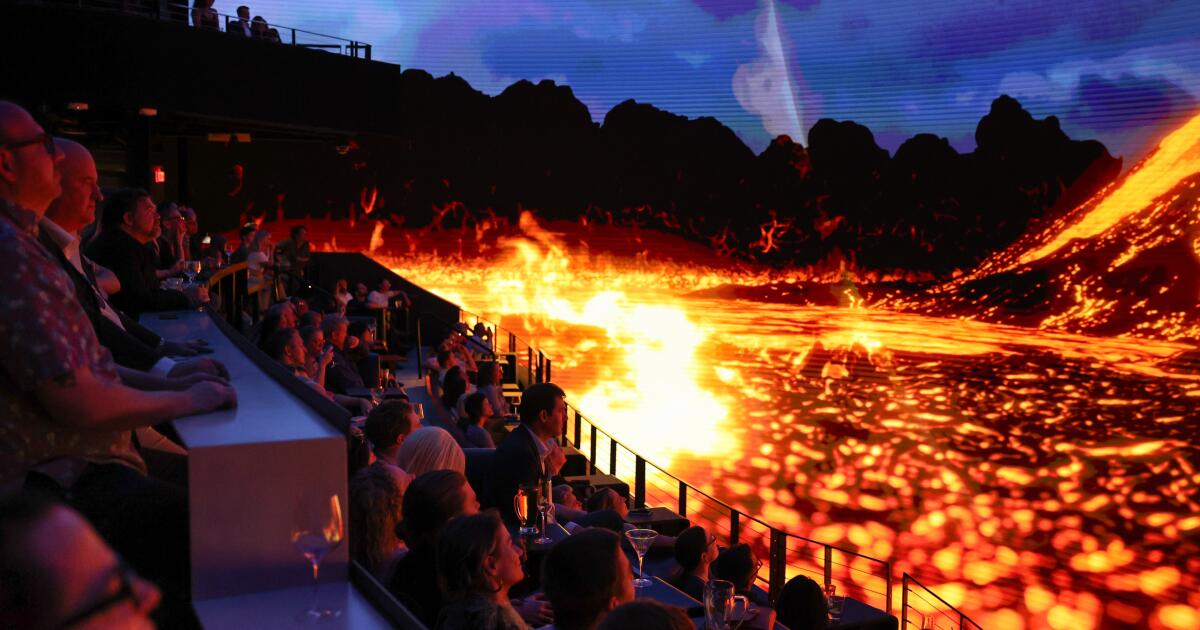 Business18 minutes ago
Sony Pictures invests $100 million in virtual reality venue Cosm
-
 Entertainment23 minutes ago
Culture Clash knows the end is near. It wants to go out with a bang
-
 Politics33 minutes ago
Vice President JD Vance’s visit gives ‘The View’ a ratings boost
-
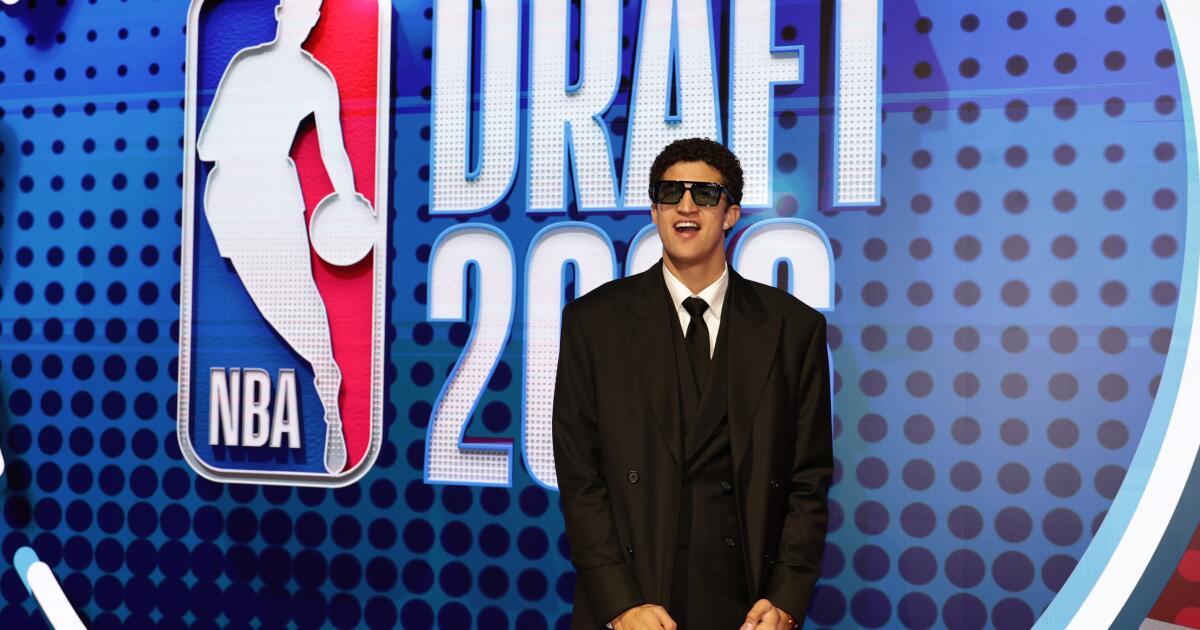 Sports45 minutes ago
‘Super blessed’: Karim López makes NBA history as first Mexican-born first-round draft pick
-

 World53 minutes ago
Will the UK rejoin the European Union? MEPs debate Brexit on The Ring

