Arizona
Right to Life says AZ Supreme Court should block abortion rights initiative from the ballot


An anti-abortion group is hoping the Arizona Supreme Court will step in and block voters in November from deciding whether to amend the state constitution to include a right to abortion.
Arizona Right to Life failed to convince a trial court judge that the campaign for the Arizona Abortion Access Act misled voters who signed their petition to make it on the ballot. After their lawsuit was dismissed on Aug. 6, the group immediately appealed the decision to the high court, asking the justices to overturn the trial judge’s decision and block the measure from being put to voters.
In both the initial lawsuit and the appeal, attorneys for Arizona Right to Life claim that the 200-word summary shown to Arizonans who signed petition sheets to help the act qualify for the ballot was so unlawfully misleading that it puts all of the signatures into question.
The Arizona Secretary of State’s Office confirmed Monday that the Abortion Access Act had collected enough voter signatures to make it on the ballot. The campaign behind the act, Arizona for Abortion Access, gathered a total of more than 820,000 signatures, and approximately 578,000 were confirmed to be valid, significantly more than the nearly 384,000 it needed to qualify.
GET THE MORNING HEADLINES DELIVERED TO YOUR INBOX
If voters favor the Abortion Access Act, it would guarantee a woman’s right to an abortion up to the point of fetal viability, around 24 weeks of pregnancy. Exceptions to that limit would be allowed if a health care provider determined it was necessary to preserve a patient’s life, physical or mental health.
Jennifer Wright, an attorney for Arizona Right to Life, wrote in the appeal that the summary shown to those who signed the petition was misleading because it contained the phrase “health care provider” while the full text of the act refers to the “treating health care provider” when describing who has the authority to determine that an abortion is necessary beyond fetal viability.
Wright is a former assistant Arizona attorney general who is representing Republican U.S. Senate hopeful Kari Lake in a defamation suit filed against her by Republican Maricopa County Recorder Stephen Richer. She also recently began representing Lake in her suit to overturn the results of the 2022 gubernatorial race that she lost to Democratic Gov. Katie Hobbs.
Attorneys for the anti-abortion organization claimed that omitting the word “treating” in the summary misled those who signed the Abortion Access petition into thinking that someone other than an abortion provider would decide whether an abortion past the point of fetal viability was warranted. But trial court Judge Melissa Iyer Julian disagreed.
“Reasonable people understand that medical diagnoses and treatment plans are typically determined by the medical provider who is actively treating a patient whose health is at issue,” Julian wrote. “For pregnant patients, this could include the patient’s primary care, obstetrical, or other medical providers, including one who provides abortions.”
Wright went on to argue that the exception for the mental or physical health of the mother would essentially give a green flag to any abortion, up until birth — an inflammatory and inaccurate claim frequently advanced by abortion foes.
Wright argued that the summary should include a description of how the Abortion Access Act would impact existing abortion legislation, but Julian disagreed on that point, as well.
“Concern about the impact this initiative may have on existing abortion regulations is not a ground to compel the initiative’s removal from the ballot. ‘The proper place to argue about the potential impact of an initiative is in the political arena, in speeches, newspaper articles, advertisements and other forums,’” Julian wrote, referencing previous rulings.
At present, Arizona is under a 15-week gestational ban that will likely be nullified if the act is passed.
The proposed constitutional amendment also includes a provision stating that “no law, regulation, policy or practice shall be enacted or enforced” that restricts, denies or interferes with the right to receive an abortion either before or after fetal viability.
Arizona Right to Life claims that this provision, which says that any restrictions put on the procedure should “not infringe on that person’s autonomous decision-making,” essentially bans all regulations on the procedure, including that it be performed by a licensed medical professional.
“For example, if a woman wants an unlicensed abortion provider to perform an abortion, even someone without medical training, her desire for autonomous decision-making would appear to trump any state interest,” Wright wrote.
The group also alleged that it would allow abortions to be performed for egregious reasons.
“At a minimum, this means the State can do nothing to stop the abortion, even if it is being done for the worst eugenic or racist reasons, is being done in a horrific manner that is particularly painful to the prenatal human or is being done at any time up to birth,” Wright wrote.
Arizona Right to Life was one of several organizations behind the “Decline to Sign” campaign that unsuccessfully sought to persuade voters not to support the Abortion Access Act’s effort to qualify for the November election.
Dawn Penich, a spokeswoman for the abortion rights initiative’s campaign, told the Arizona Mirror that no one was available Tuesday to comment on the appeal to the Supreme Court.
But Penich previously criticized Arizona Right to Life for continuing to pursue arguments already rejected by the trial court.
“This appeal shows yet again that they are willing to do and say anything — no matter how desperate or dishonest — to deprive Arizonans of their right to direct democracy,” she said in an emailed statement after the anti-abortion group said it would appeal the trial court ruling. “We’re hopeful the Arizona Supreme Court will grant us a fair and unbiased review and allow Arizona voters to have their say at the ballot box. Arizona for Abortion Access remains committed to giving Arizona voters the chance to restore and protect our right to access abortion free from government overreach, once and for all.”
Arizona Supreme Court Justice Bill Montgomery, who once accused Planned Parenthood of committing genocide, said he wouldn’t recuse himself from a previous case to decide whether “unborn human being” could be used to describe the abortion rights initiative in an election information pamphlet sent to every voter in the state.
Arizona for Abortion Access has argued that, because of his opposition to Planned Parenthood and history of using anti-abortion language, he cannot be impartial in rulings regarding the abortion rights measure.
Montgomery adamantly disagreed, saying that his strong feelings regarding abortion don’t make him biased.



Unlike other major pro sports in the United States, Major League Baseball’s annual draft is hardly must-see television. With 20 rounds of picks—it used to be 50—and very few of them household names, only true baseball diehards closely pay attention beyond the first handful of selections.
For college baseball fans, though, the MLB Draft can bring about some stress and uncertainty since both incoming freshmen and existing veterans are eligible to be selected. The best college juniors and seniors are sure to get drafted and sign, while top recruits may be lured into starting their pro careers early via a hefty signing bonus.
Last year the UA saw nine members of the 2025 squad, which reached the College World Series, get drafted and sign. One of its prep signees also took the money rather than come to Tucson.
The 2026 draft, which begins Saturday and finishes Sunday, won’t be nearly as impactful to Arizona’s roster. Only one current Wildcat with eligibility remaining is assured of being drafted: junior right-handed pitcher Owen Kramkowski.
Kramkowski, who struggled in the spring after a breakout 2025 season, is ranked as the 205th-best draft prospect by Baseball America and No. 245 by MLB.com. That would put him in the range of the 6th or 7th round to get selected, though he could go earlier. All indications are Kramkowski will sign.
Beyond that, it’s anyone’s guess. No other current or future Wildcats are among BA’s Top 500.
Among Arizona’s outgoing seniors, the top candidate to get drafted is left-handed pitcher Patrick Morris, who is currently playing the MLB Draft League. Infielders Tyler Bickers and Maddox Mihalakis could also get picked late or sign as an undrafted free agent.
Draft-eligible juniors other than Kramkowski include lefty Maclain Roberts, catcher Beau Sylvester and outfielders Andrew Cain and Easton Breyfogle. A couple of Arizona’s 2027 newcomers, such as junior college righty Collin Cobb, prep infielder Ayden Deome and catcher Francisco Rivero, are also at risk of getting picked.
Arizona has had 293 players drafted in its history and has had at least two taken every year since 2011.
The first four rounds of the 2026 MLB Draft are Saturday, with NBC airing the first 10 picks starting at 10 a.m. PT before the broadcast switches to MLB Network and later MLB.com. Rounds 5-20 are Sunday on MLB.com starting at 8:30 a.m. PT.
Arizona
Arizona AG continues to investigate Glendale apartment complex after Friday deadline to fix A/C


MESA – Mary Salcedo is the executive director of Arizona Roller Derby, but everyone on the team knows her as MaryMorphosis, or Morph for short.
A derby name is as good as a legal name once you join a league. Arizona Roller Derby – the second-oldest flat track roller derby league in the world – has plenty of unique monikers on its two home and travel teams.
During a doubleheader homestand, players introduce themselves.
“What’s your name?”
“Mecca,” said Sara Mecca-Whitlock, an interior architect in Phoenix.
“Brooklyn Dodge-her,” said Kristi Baptiste, a grandma and senior project manager from Ventura, California.
The rules surrounding derby names are loose. Some players have nicknames bestowed upon them when they join.
“Since I was wearing a Brooklyn shirt, they started calling me Brooklyn, and we added the Dodge-her later,” Baptiste said. “The funny thing is, I am not an L.A. Dodger fan. I don’t even watch baseball.”
It’s clear Roller Derby isn’t like other organized sports. There is no professional threshold to work toward as a goal. Players show up year after year, paying to participate, paying to travel and returning to the community they find along the way.
Across the country, including in Phoenix, teams find a way to organize players and facilities to play the sport.
Selecting derby names is part of the process.
-

MAXimum HOverdrive of the Bad News Beaters poses for a photo as she skates at the Broadway Recreation Center in Mesa on Saturday, June 27, 2026. (Photo by Samad Khan/Cronkite News) -
Goldy Knocks, left, and Hella Naughty of the Bad News Beaters pose after their match at the Broadway Recreation Center in Mesa on Saturday, June 27, 2026. (Photo by Samad Khan/Cronkite News) -
Bad News Beaters skater Dr. Doctor flashes a hand sign while posing for a photo at the Broadway Recreation Center in Mesa on Saturday, June 27, 2026. (Photo by Samad Khan/Cronkite News)
“Sure, man,” said Rachel Sherman, a 13-year veteran of Arizona Roller Derby and an electrician training in an apprentice program. “My dad, with the perfect dad joke, was like, ‘Well, I guess if you’re going to change your name, you should probably change your number to four. So I am four sure, man.”
Elaina Bryan, a 25-year-old receptionist in Phoenix and lifelong derby player, said her nickname is Squeezer.
“There was a particular one of my mom’s friends, who I would give a really good squeeze, big hug to,” Bryan said. “So my name actually used to be a little squeezer, but now that I’m an adult, it’s just squeezer.”
The names used outside of derby are not relevant on the track. Official rosters are submitted only with the players’ derby names.
“You think about the parts of you that you want to foster that can handle the intensity, the eyes on you, the attention, the strength, the perseverance and determination,” Sure, man said. “You give that a name and it becomes this kind of alter ego that then you’re allowing it to blossom and grow in this space.”
Roller Derby’s history
Roller derby was officially born on Aug.13, 1935, when promoter Leo Seltzer debuted the first Transcontinental Roller Derby event at the Chicago Coliseum. Initially created as endurance marathons during the Great Depression, the event evolved into the full-contact sport we know today.
After peaking in popularity on television in the 1950s and 60s, the sport largely faded out, but in 2001, a modern revival took place in Austin, Texas, which popularized the grassroots, flat-track format that is played globally today.
“We (will) hit our 25th season in 2028, which is pretty significant,” MaryMorphosis said, “We’re hoping to go out huge.”
Arizona Roller Derby is older than the Women’s Flat Track Derby Association, which was founded in 2004 as the United Leagues Coalition and formally changed its name to the WFTDA in 2005. WFTDA is the international governing body of the sport. Today, it has over 400 member leagues on six continents.
Arizona Roller Derby doesn’t compete on a bank track. They can play on any flat surface if they have a way to lay down track boundaries.
A bank track is a raised and curved surface, like a NASCAR track. It’s the kind of roller derby played in the 2009 movie with Elliot Page, “Whip it.”
After the COVID-19 pandemic, Arizona Roller Derby lost the warehouse space it rented full-time and the participation numbers dwindled. Now the group rents temporary spaces across the East Valley to accommodate practices and competitions, like Saturday’s doubleheader.
“I would hope that we would have our own space again, “ MaryMorphosis said. “We need to double our membership to do that.”
On a Saturday afternoon in June, players began arriving at the Broadway Recreation Center in Mesa. The same people that would be competing on track in a few hours used thin rope and white electrical tape to lay down the track borders on top of the gymnasium hardwood.
The rules
The Saturday doubleheader featured two Arizona Roller Derby home teams, and two travel teams from California.
Bad News Beaters are the first home team. They go against the West Coast Derby Knockouts.
Derby games last one hour. Two 30-minute halves are broken up by a 15-minute intermission. The intensity on the track lasts for two-minute jams before lines switch off and new players sub in for the next jam.
Mecca, a jammer on Bad News Beaters, points out that “there’s four blockers from each team that get on the track and one jammer from each team.”
A jammer’s helmet cover, a large polyester cap with stars on both sides, indicates they are the one person on the track who can score points for their team.
One blocker is known as the pivot. They wear a similar, bright-colored cap, but theirs has a line running through the center. At any point, a jammer can remove their star and pass it to the pivot. For the remainder of the jam, the pivot acts as the Jammer to score points.
“I’m a pushy jammer, and I like being strong,” MaryMorphosis said, “and I like breaking people apart.”
The jammers line up behind a jam line while the eight blockers stand anywhere in the box in front of the jam line but behind the pivot line.
Waiting in the box is Californian blocker Brooklyn Dodge-her, and her daughter, Rocky Bye Baby. They are there to throw their bodies into the Bad News Beaters jammer to stop them from scoring points.
Brooklyn Dodge-her was recruited to derby 12 years ago. She volunteers as a coach for the West Coast Derby youth travel team on top of training and competing herself.
“Mondays for the kids, Tuesday for myself. Wednesday I get a break,” Brooklyn said. “Thursday for myself. Friday for the kids. Saturday if we don’t have a game, I get free. And Sunday in the morning it’s the kids and in the evening it’s the adults.”
At 51, she is competing in her last season of roller derby.
“I became a grandmother,” Brooklyn said. “I have to start spending some time with a grandbaby. I’ll probably get bored and be like, ‘Y’all want me back?’”
The officials blow the whistle to signal the start of a jam and the jammers push off their line straight into the bodies in front of them.
“If I get through the pack first I get what’s called lead jammer,” Mecca said. “On the second time through, they get one point for every blocker from the opposite team that they pass legally with their hips. That can go for two minutes.”
The lead jammer can call off the jam at any point, especially if it prevents the other jammer from scoring any points for the opposing team.
“Does it matter if the jammer is behind me? Do I have two or more blockers in the box? Then don’t call it,” MaryMorphosis said, “because it might be worth losing the points just to have your teammates out.”
A player in the penalty box at the end of a jam will remain in the box during the start of the next jam.
The ways to receive penalties include hitting someone in the head, hitting someone in the back, or getting back on the track in front of somebody that was in front of you when you left. All penalties must be served for 30 seconds.
A game requires a whopping seven skating referees and even more non-skating officials. Those positions are entirely filled by volunteers.
Robert Cushman began 17 years ago in Nebraska when his wife started competing in roller derby. Years after their divorce, he continues to enjoy participating in the sport while living in Tucson.
“Most of us don’t get paid anything,” Cushman said. “Usually Phoenix will give us like a gas stipend.”
Even as an official he uses a derby name. He goes by Manosaur, a reference to the animated series “Venture Bros.”
“I usually go once a week to the scrimmage down in Tucson, and then I usually come up here for whatever games they have,” Cushman said.
During jams, Manosaur skates around the inside of the track, monitoring the action to keep the play fair.
“Watch the pack,” Mecca said. “Don’t worry too much about the jammer when they’re by themselves. But once we enter the pack again, then it gets crazy.”
Mecca is a mom of five who started playing roller derby in North Carolina. She said she retired for six years as she finished up her military career and went back to school. Eventually she began coaching the ASU derby team. Two years ago, she began playing again.
The West Coast Derby Knockouts dominated, 223-53.
“They were taking the pivot line constantly instead of the jam line,” MaryMorphosis said after the game. “They were just really big. And both our blockers and our jammers were thrown off.”
Game two
Morph sits in the stands after the early afternoon loss and watches the second match of the day. The home team, Skate Riot Project, took on Orange County Roller Derby.
She became executive director in January and takes on the administrative responsibilities on top of competing and working full time.
“I love building and growing community,” MaryMorphosis said. “It was an opportunity to do that and step into just a significant leadership role.”
She began playing derby in 2022 when she still lived in upstate New York.
“I broke my leg three months in,” MaryMorphosis said, “like shattered it. Recovery was rough.”
After two surgeries and a cross-country move to start a new job as a project manager at Arizona State’s School of Biological and Health Systems Engineering, MaryMorphosis had her first uninterrupted derby season in 2025.
“I don’t know what kept me coming back,” she said. “I guess it was the community.”
Meanwhile, Elaina Bryan, or Squeezer, is another recent Arizona transplant and a blocker on Skate Riot Project.
“My mom started playing back in 2008, actually, and we went to practices with her,” Squeezer said. “Eventually, they had enough kids’ interest that they started a kids team.”
She was 9 when she started playing in Bakersfield, California. She played on her college team and then moved to Arizona in October. Now she plays on a travel team as well as the home team.
“I was just kind of trying to see where I fit in and started to find people at that same level to start connecting with,” Squeezer said, “and just kind of started building up my social circle.”
Teams are comprised of players of all ages, but everyone is connected to the community that exists in Derby. It’s more everlasting than the final scores.
“I went to a yard sale,” Brooklyn Dodge-her said. “We didn’t even get across the street and they were like, ‘You want to play roller derby? It was a West Coast yard sale.”
MaryMorphosis did not hearing back from one roller league before she stumbled on the practice of another team.
“I was literally in the mall because my old league had taken over an Old Navy, and they were skating in the mall,” MaryMorphosis said. “I was buying yarn at Michael’s, and I was like, ‘OK, that’s the sign.’”
When Skate Riot Project lost to Orange County Roller Derby 125-100, the teams shook hands and huddled together. Orange County picked its MVP Jammer, blocker and MVP overall from SRP, and SRP picked its players from Orange County. They hugged each other as they presented the awards.
“We’re playing the game against another team, and it’s really intense and like we’re very serious and focused with our team,” Squeezer said. “But afterwards, we all hang out and we goof around.”
With the games over, the players begin clearing out the temporary space. The track gets peeled off the gymnasium floor and the tape is put into trash bags.
The four teams get in their cars and head to the after-party together.
“If the only thing we do for the next five years is become the place for people to be themselves, that’s a win,” MaryMorphosis said.
This <a target=”_blank” href=”https://cronkitenews.azpbs.org/2026/07/10/roller-derby-still-has-home-in-arizona/”>article</a> first appeared on <a target=”_blank” href=”https://cronkitenews.azpbs.org”>Cronkite News</a> and is republished here under a <a target=”_blank” href=”https://creativecommons.org/licenses/by-nd/4.0/”>Creative Commons Attribution-NoDerivatives 4.0 International License</a>.<img src=”https://i0.wp.com/cronkitenews.azpbs.org/wp-content/uploads/2026/02/favicon1.png?resize=85%2C85&ssl=1″ style=”width:1em;height:1em;margin-left:10px;”>
<img id=”republication-tracker-tool-source” src=”https://cronkitenews.azpbs.org/?republication-pixel=true&post=105044″ style=”width:1px;height:1px;”><script> PARSELY = { autotrack: false, onload: function() { PARSELY.beacon.trackPageView({ url: “https://cronkitenews.azpbs.org/2026/07/10/roller-derby-still-has-home-in-arizona/”, urlref: window.location.href }); } } </script> <script id=”parsely-cfg” src=”//cdn.parsely.com/keys/cronkitenews.azpbs.org/p.js”></script>
-
 Politics7 minutes ago
Assassinations unleashed under Trump haunt Iran war endgame
-
 Sports15 minutes ago
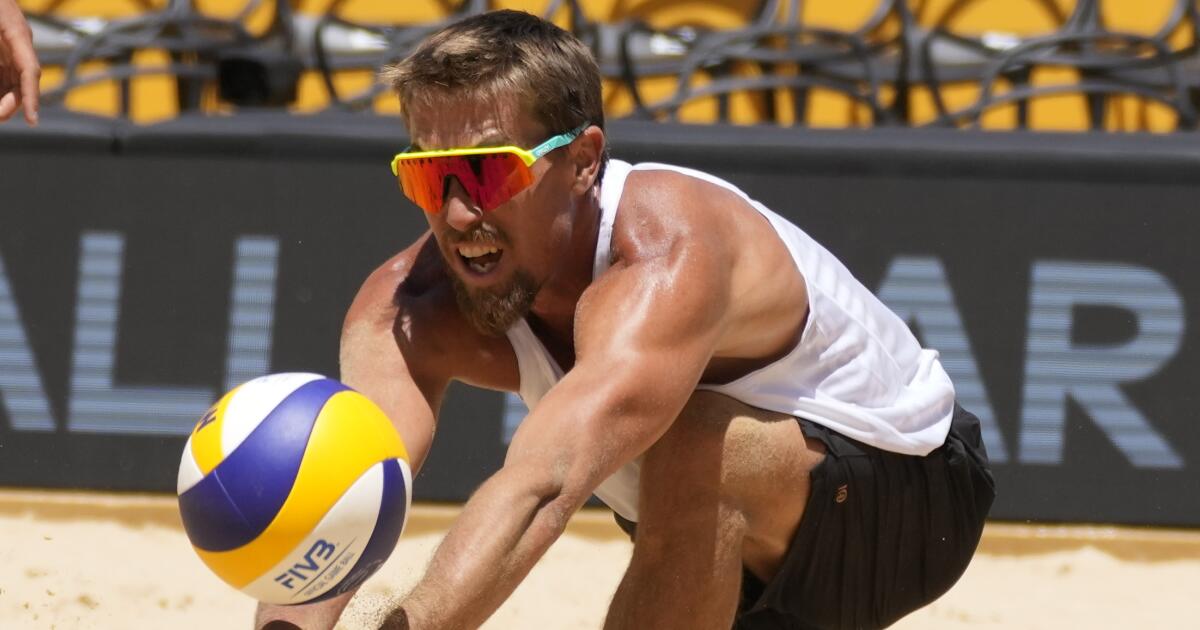
Q&A: Partner, chance to play in Long Beach reignited AVP star Taylor Crabb’s Olympic fire
-

 World25 minutes ago
Moldova president nominates pro-European businessman Tofan for PM
-

 News52 minutes ago
US congressman says he was detained by armed Israeli settlers in occupied West Bank
-

 Los Angeles, Ca2 hours ago
New details emerge in fatal stabbing of boy in El Monte
-

 Detroit, MI3 hours ago
1 dead, 1 injured after two-vehicle crash at Collingwood and Belleterre in Detroit
-

 San Francisco, CA3 hours ago
4 arrested, 3 cited after brawl following Giants vs. Rockies game at Oracle Park
-

 Dallas, TX3 hours ago
Mark Cuban takes legal action against Dallas Mavericks ownership over potential new arena deal

