It wasn’t as easy as Arizona fans may have liked, but the top-seeded Wildcats made it past the Big 12 Tournament quarterfinals with an 81-59 win over No. 8 UCF Thursday afternoon in Kansas City.
Arizona
Big 12 Tournament: What Tommy Lloyd, Arizona players said after win over UCF


Playing far away from the friendly confines of Las Vegas’ T-Mobile Arena, Arizona coach Tommy Lloyd and the UA fan base is still getting used to Kansas City’s T-Mobile Center. Well, that is the few Arizona fans who made the trip.
“I think our fans all waited to buy tickets,” Lloyd said after the game. “They all assume that we’re going to San Diego, and they’re making a lot of assumptions now, and they’ve saved all their money. I just didn’t feel like we had a great presence in the arena today. So you know what? Then it needs to become all about us.”
If Lloyd sounded cranky about Arizona’s fan support, he was pumped up to be in a conference tournament where every game presents a challenge.
“There’s no easy games,” Lloyd said. “The other team always has a lot of talent and is well coached, and we understand that. We understand that. We respect that. And we enjoy the competition and love the opportunities.”
Our recap of the game can be found here. Below is what Lloyd, Motiejus Krivas and Brayden Burries said after the game.
Lloyd on Arizona getting the win: “Well, thank goodness we got off to a good start, because there were stretches of that game I didn’t think we played very well. But the objective in these tournaments is to get to the next one, and that’s mission accomplished today. And obviously we know tomorrow’s going to be a tough battle with an Iowa State team playing in their backyard, but we look forward to it.”
On what it was like coaching on a glass court: “Well, I didn’t play. I coached, so I was on fine footing. You can ask these guys. I mean, they would be able to give you a better answer about that. But for me, I mean, listen, we’ll play on asphalt. We’ll play on asphalt with double rims. I mean, we’re fine with that. And if the other team has to deal with it, then we’ll deal with it as well. But I’ll let the powers that be make those higher up decisions.”
On preparing for Iowa State: “Well, we played them a week ago or so, or ten days ago. We’ll obviously look back at that and see what worked and what didn’t work and see what kind of adjustments we can make. But we have a lot of respect for Iowa State and their program, and I have a lot of respect for T.J. and the job that he’s doing, and I have a lot of respect for their players. Like I said, we’re looking forward to the challenge. We’re looking forward to the opportunity.”
On whether human nature factored into Arizona letting off the brakes: “I mean, I don’t know. Maybe. You know, I really challenged our guys. Sometimes in these tournaments, you know, you get in them and I’ve been fortunate enough to coach in enough NCAA tournaments and conference tournaments that these early-round games, it can be kind of a sterile environment, you know, unless you’re playing in your backyard and you have your entire fan base there. I think our fans all waited to buy tickets, They all assume that we’re going to San Diego, and they’re making a lot of assumptions now, and they’ve saved all their money. I just didn’t feel like we had a great presence in the arena today. So you know what? Then it needs to become all about us. We need to internalize and kind of band together and become a stronger unit, and we need to create energy for each other and draw energy off each other in those situations. So I think it’s a great lesson learned from our guys. Now, listen, I’m going to give them credit for getting the lead and getting off to that great start. That was good. But yeah. It just felt like we had a little bit of a letdown, and I’m sure UCF’s urgency they played with had a little bit to do with that.”
On getting off to a quick start: “I mean, it wasn’t part of the messaging. A lot of times I tell the guys, let’s get a feel for the game and kind of hang in there and try to figure out what works and see if we can build with some runs later in the half or early in the second half. But, hey, we came out. And they had played the night before, and maybe it took them a little bit to kind of get the lactic acid a little bit, and our guys were able to take advantage of that and build an early lead. I’m never going to shy away from building an early lead, because to me obviously it gives you a buffer to absorb some of these late-game runs. And it doesn’t always feel good when teams are chipping away at your lead, but it’s nice to have that lead and be able to have that margin for error, you know, down the stretch.“
On Arizona’s fan turnout in Kansas City: “I mean, listen, you guys are asking a lot of questions here. I want to talk about the ballgame. 100 percent. Would I want this in Vegas? Yeah. 100 percent I will. But you know what? I didn’t ask to be in the Big 12. We got put in the Big 12. I didn’t have any input on it, but I love being in the Big 12. So if they tell me we’re going to play in Kansas City, we’re loading up the plane and going to Kansas City. We’re not going to sit there and overthink it. You guys can do all that stuff or have another coach give you opinions on what he would want. I just want to get on the floor and try to kick ass and play 40 minutes. That’s it.”
On the difference between playing in the Pac-12 Tournament compared to the Big 12 Tournament: “Well, you’ve got to understand the Pac-12 tournament was in Las Vegas, so it was McKale North. So we were Iowa State, we were Kansas. So it obviously feels really different for us now. But listen, it’s what we signed up for, so there’s no complaints. I mean, I’m not going to be bitter towards Iowa State fans or Kansas fans for coming to support their team. It’s not an easy haul to get from Tucson to Kansas City. So we have an amazing fan base. It looks like the tournament’s going to be here for a while, so I think we better figure out how to win in Kansas City. That’s where my mind’s at.
On the difficulty of the Big 12 Tournament: “Well, I mean, it’s a monster. It’s a monster. We’ve been in it two years. Every game’s tough. With UCF coming out today, what are they, the eight, nine seed? Eight seed. And they’re a really good team that’s going to be in the NCAA tournament. There’s no easy games. The other team always has a lot of talent and is well coached, and we understand that. We understand that. We respect that. And we enjoy the competition and love the opportunities.”
Krivas on what it was like playing on the Big 12 Tournament court: “It’s a little bit different, but no big differences. I think it’s good for the fans on the arena and the TV, so all thumbs up.”
Burries on the court and arena conditions: “Yeah. I think you’ve just got to get used to it real quick. Just the first five minutes when you’re warming up, just get used to it. But other than that, it’s pretty good. And then like the only thing I didn’t like was if you’re shooting a free throw and you’re on the other side, the LED lights get in your eyes a little bit. But ain’t no big deal, really.”



An
Maricopa County, Ariz., asked the court to affirm its determination that the location was a 30-auditorium mixed used movie theater worth nearly $29 million in full cash value and $12.5 million in limited value.
However, AMC’s expert appraiser didn’t err when he limited the property’s valuation to the 17 auditoriums the theater currently uses to show films, the court determined in an unsigned opinion posted Tuesday. …

The Week 7 matchup between K-State and Arizona State will feature two of the youngest coaches in all of college football: Kenny Dillingham and Collin Klein. They are tied for the youngest in the Power 4 conferences, and only Kirby Moore of Washington State (35) and Zach Kittley (34) are younger Division I coaches.
While Dillingham didn’t play football at Arizona State, like Klein, he is at his alma mater. An injury in his high senior year forced him to stop playing and get into coaching. He became the offensive coordinator at Chaparral High School at 21 years old, and was hired just two years later by Mike Norvell as an offensive analyst at Arizona State. He went back to Tempe in 2023, after spending the previous season as the offensive coordinator at Oregon.
Both of these guys are looking to lead their alma maters to a Big 12 Championship, and this is one of those games that could be pivotal in that pursuit.
K-State Early Opponent Preview Series: Nicholls| Washington State| Tulane| Cincinnati| Houston| Kansas
Offense
Quarterback Sam Leavitt wasn’t able to live up to the hype after leading the Sun Devils to the Big 12 Championship in 2024, and he announced he was transferring to LSU during the off-season. Dillingham and his staff were quick to fill the vacany, as they picked up former Kentucky quarterback Cutter Boley in the transfer portal.
Boley was the highest-rated quarterback to ever commit to Kentucky, as he was a consensus 4-star recruit. He had an up-and-down freshman year in 2025, as he threw for 2,160 yards, 15 touchdowns and 12 interceptions. In a loss to Tennessee, he showed off the talent by throwing for 330 yards and five touchdowns.
The offense lost two great playmakers in Kaleek Brown and Jordan Tyson. Brown was one of the best running backs in the Big 12, as he rushed for 1,141 yards and 4 touchdowns. Tyson had to deal with injuries, but he still had 61 catches for 788 yards and eight touchdowns and ended up going No. 9 to the New Orleans Saints in the 2026 NFL Draft.
One guy who could make a strong impact in the Arizona State offense is Boston College transfer Reed Harris. He had 39 catches for 673 yards and five touchdowns. He is a matchup nightmare, as he towers over defensive backs with his 6-foot-5 frame. He plays a style similar to Tyson, and he stands three inches taller and 17 pounds heavier.
Defense
There are a lot of changes on the defense at Arizona State, but defensive lineman C.J. Fites is a player who is capable of being an anchor on a defense. He took a major leap last season, finishing the year with 27 tackles and 6.5 sacks. He was named a preseason All-Big 12 defensive tackle and is a guy who figures to hear his name in the 2027 NFL Draft. Fite’s presence will force offenses to throw double-teams at him, and should open up opportunities for others to get after the quarterback.
The two leading tacklers last year were linebackers Jordan Crook and Keyshaun Elliott, who had 101 and 98 tackles, respectively. With both of these players gone, Martell Hughes is a guy who the Sun Devils will need to step up.
While there were losses in the off-season, the Sun Devils’ secondary has a chance to be one of the better units in the country. They bring back two very talented safeties in Adrian Wilson and Jessiah McGrew. The cornerback duo of Rodney Bimage Jr. and Montana Warren was good, but the arrival of LSU transfer Ashton Stamps.
He made major news last year after he hit the transfer portal after playing in only one game against Louisiana Tech. While it was a weird year, he is the type of talent that could give the Sun Devils the best secondary in the Big 12.
Schedule
In today’s college football, many teams are becoming hesitant to take big challenges during the non-conference season. However, that isn’t the case with the Sun Devils, as they go to College Station to take on Texas A&M in Week 2. After that game, the schedule lightens up. Including the matchup against K-State, four of Arizona State’s next five games will be at home.
The challenging part of the Sun Devils’ conference schedule is that some of their toughest matchups are on the road. They have road trips at Texas Tech, BYU, and Arizona, who are looked at as contenders in the Big 12.
Outlook
Dillingham has been outstanding early in his tenure in Tempe. After going 3-9 in his first year in 2023, he helped lead the Sun Devils to an 11-2 record and an appearance in the College Football Playoff during the 2024 season. Last year, they finished the year 8-5, despite losing quarterback Sam Leavitt early in the year.
The Big 12 is wide-open, and the Sun Devils once again to have the pieces to compete for a spot in the conference championship.
Game Info
Date: Saturday, October, 24
Time: TBD
TV: TBD
Location: Mountain America Stadium
Series history: Arizona State leads the all-time series, 6-1. The Sun Devils have dominated this series, and won the most recent game 24-14 in 2024. The only time the Wildcats have knocked off Arizona State was in the 2002 Holiday Bowl.
Add us as a preferred source on Google
Follow

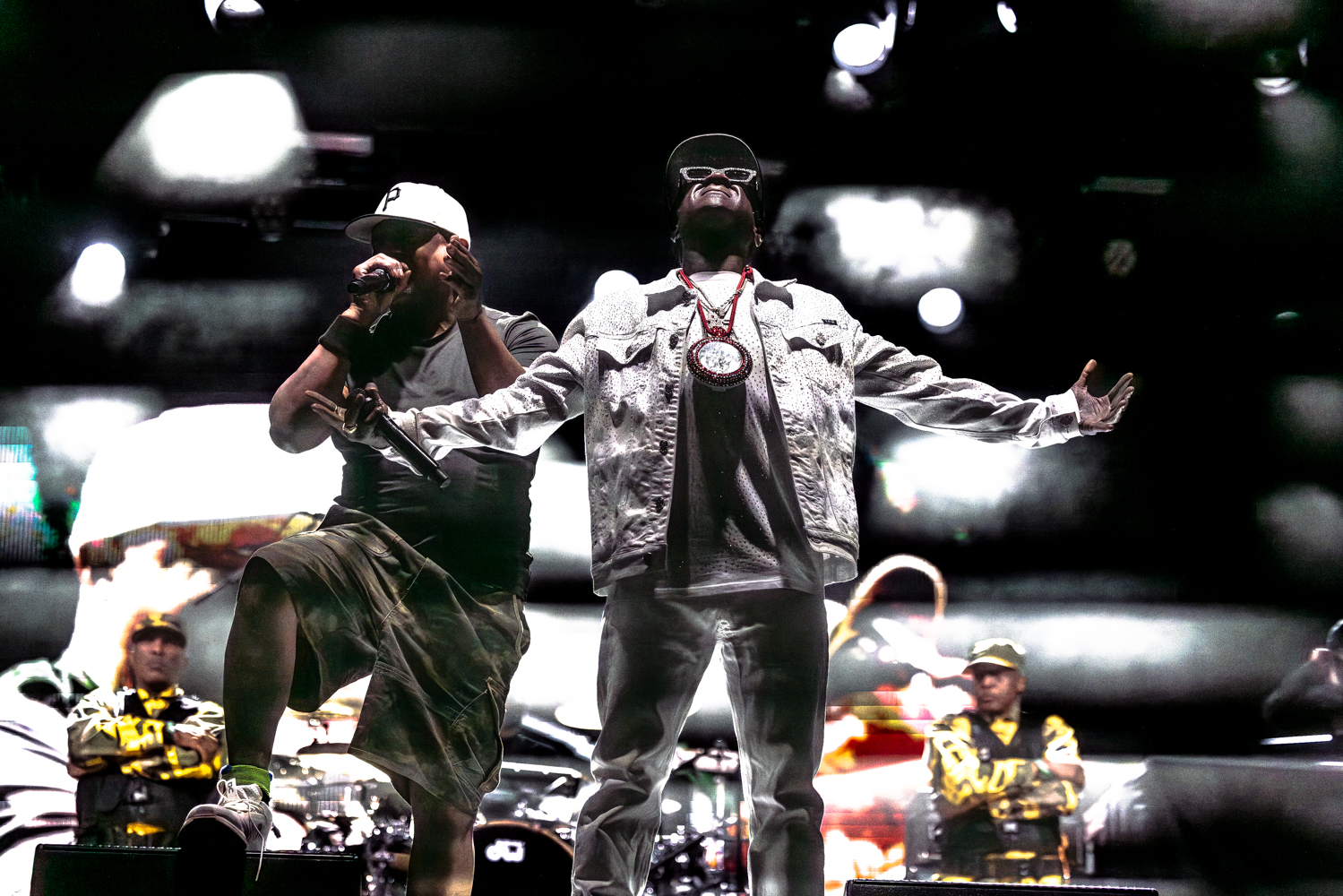
Chuck D, left, and Flavor Flav of Public Enemy.
Sanjay Suchak
Two Arizona Public Enemy concerts in one year? As Chuck D. might say, bring the noise.
After a searing set in February at Tempe’s Innings Festival, the legendary hip-hop group will return to metro Phoenix on Saturday, Oct. 24, to perform as part of the Arizona State Fair’s concert series.
The concert starts at 7 p.m. inside the Arizona Veterans Memorial Coliseum with no opening act.
Public Enemy joins a growing lineup of artists set to perform at the 2026 Arizona State Fair, which runs weekends from Oct. 1 to Nov. 1.
Previously announced Coliseum Concert Series performers include alt-rockers Gin Blossoms on Friday, Oct. 2, R&B/pop star Becky G on Friday, Oct. 9 and punk favorites The Offspring on Friday Oct. 16.
Few hip-hop acts are as iconic as Public Enemy. Fronted by Chuck D. and Flavor Flav, the group has performed since the early ‘80s and has spent decades mixing politically charged lyrics with fierce bests on classic tracks like “Fight the Power,” “Bring the Noise” and “Welcome to the Terrordome.”
Public Enemy’s upcoming concert marks the first time the iconic hip-hop act has performed at the Arizona State Fair and their latest in a series of Valley gigs. It also continues a decades-long history of Valley performances.
Over the years, Public Enemy has played venues large and small across metro Phoenix, from arenas and stadium shows to concert halls Tempe’s Marquee Theatre. The group also famously staged an impromptu performance at the long-running local hip-hop event The Blunt Club back in 2006.
When do Arizona State Fair concert tickets go on sale?
Tickets for Gin Blossoms and Russell Dickerson are already available through azstatefair.com/concerts.
Tickets for Public Enemy at the fair go on sale at 10 a.m. on Friday through azstatefair.com/concerts. A presale for subscribers to the Fair Fandom newsletter begins at 10 a.m. on Thursday.
Reserved-seat upgrades are available for all four concerts. Each concert ticket also includes admission to the Arizona State Fair.
-
 News27 minutes ago
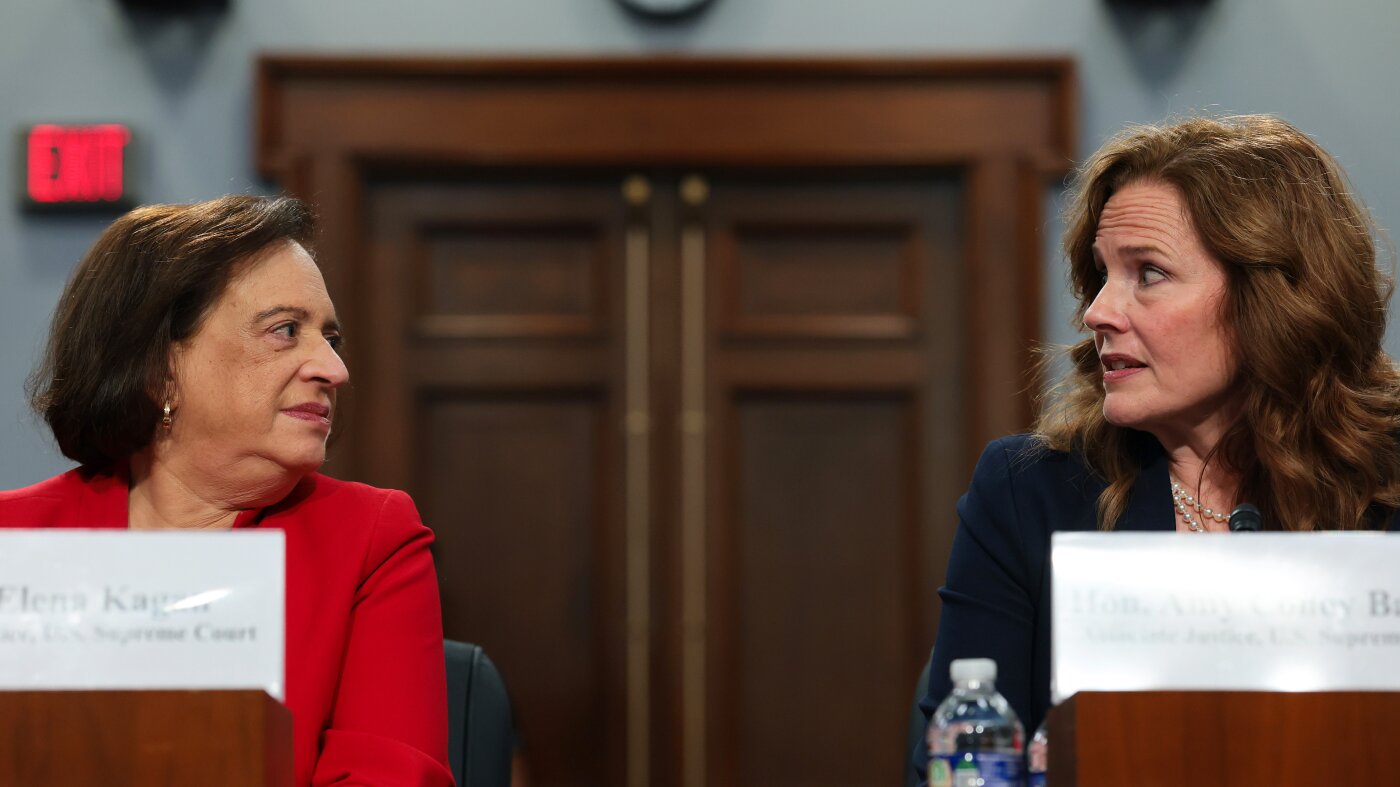
Supreme Court Justices give chilling accounts of threats to their safety
-

 Los Angeles, Ca2 hours ago
Stabbing at Chino Hills liquor store ends in attempted murder arrest
-

 Detroit, MI2 hours ago
A small group of citizens rally for mental health coverage in Detroit
-

 San Francisco, CA3 hours ago
1 dead, 2 missing after boat capsizes near Alcatraz in San Francisco Bay
-

 Dallas, TX3 hours ago
Death penalty off the table for man accused of beheading Dallas motel manager, prosecutors say
-

 Boston, MA3 hours ago
Chickadee, the popular Mediterranean restaurant in Seaport, is shutting down – The Boston Globe
-

 Denver, CO3 hours ago
Denver Nuggets 7-Year NBA Veteran Gets Honest On Peyton Watson
-

 Seattle, WA3 hours ago
Top 25 Seattle Seahawks Going into 2026 NFL Season: #17 Grey Zabel

