Arizona
Arizona Lawmakers Approve Complementary Bitcoin, Crypto Bills – Decrypt


SB1373: Digital Assets Strategic Reserve Fund
Funding priorities
Daily Debrief Newsletter
Start every day with the top news stories right now, plus original features, a podcast, videos and more.



Arizona
UConn downs Duke with last-second 3-pointer to join Illinois, Arizona and Michigan in Final Four

All that talent at Arizona and Michigan. All that momentum and good vibes at UConn. And somebody has to be play the part of the unheralded “little guy.” At the Final Four next weekend, that role belongs, improbably, to Illinois.
In a sign of the times, the Illinii — a Big Ten team with more wins in the conference over the last seven seasons than any other program — will pass for something resembling Cinderella when college basketball’s biggest party kicks off in Indianapolis on Saturday.
The first challenge for coach Brad Underwood’s team will be stopping a hard-charging UConn juggernaut. After being down by as many as 19 on Sunday, Braylon Mullins retrieved a loose ball near midcourt in the waning seconds against Duke and suddenly, improbably, UConn had a chance to win.
As the frantic final seconds unfolded, Huskies coach Dan Hurley figured a timeout would do little good.
“It just felt like the window where you’ve just got to let March Madness take over,” Hurley said. “March magic.”
The Huskies have enjoyed plenty of that through the years, and this may have been their most astonishing win yet. Mullins sank a desperation 3-pointer with 0.4 seconds left to give UConn a 73-72 victory over top-seeded Duke, earning the Huskies a spot in the Final Four.
The Blue Devils (35-3) led by three before UConn’s Silas Demary Jr. made one of two free throws with 10 seconds left. With Duke playing keep-away to prevent the Huskies from fouling, Cayden Boozer’s pass near midcourt was deflected by Demary, and after UConn came up with the ball, Mullins swished a 3 from 35 feet away.
The last two times the Huskies reached this point, they won the championship.
“It’s a UConn culture, a UConn heart,” Hurley said. “We believe we’re supposed to win this time of year.”
All these teams do.
Arizona, led by Brayden Burries, and Michigan, with Yaxel Lendeborg, have up to nine NBA prospects between them.
The Wildcats opened as slight favorites — at plus-165 to win the championship, according to BetMGM Sportsbook. That was a shade ahead of the Wolverines, who are plus-180 after their 95-62 romp over Tennessee on Sunday.
But, in one of a few strange twists on the odds chart, the Wildcats are 1 1/2-point underdogs to Michigan in Saturday night’s second semifinal.
Illinois is a 2 1/2-point favorite over UConn and, in reality, it’s the Huskies, at plus-550, who are the biggest long shot in Indy.
Even so, the fact that Illinois — the flagship university in the nation’s sixth most populous state and a school with an enrollment of nearly 60,000 — feels most like this year’s out-of-nowhere underdog speaks more about the current state of college hoops than the Illini themselves.
They are a No. 3 seed — the highest number at the Final Four in two years. (UConn is a 2. Last season, all four No. 1s made it.)
This year’s meeting of 1 vs. 1 — Michigan vs. Arizona — is a heavyweight matchup of power teams from power conferences.
It’s a far cry from a mere three years ago, when mid-majors Florida Atlantic (coached by Dusty May, who now leads the Wolverines) and San Diego State crashed college basketball’s biggest party.
Since then, NIL and the transfer portal have redefined the contours of player movement, another spasm of realignment has made the big conferences bigger (Arizona, now in the Big 12, was in the Pac-12 in 2023), and the high-achieving underdogs that used to make March Madness what it is have gone into a slump.
Double-digit seeds won a total of five games in this tournament (not counting the play-in round). Two years ago, they won 11 and sent one team (N.C. State) to the Final Four.
Not surprisingly, Underwood — the coach who landed on the Illinois radar a decade ago by coaching double-digit seed Stephen F. Austin to a pair of upset wins in the tournament — views his program’s trip to the Final Four more as destiny than a once-in-a-lifetime story.
It is, however, the first trip for Illinois since 2005, when it lost to North Carolina in the title game.
“I don’t want to sound arrogant,” said Underwood, whose teams have won 96 Big Ten games since 2019-20, two more than Purdue. “I’ve never doubted us getting to a Final Four would happen. I have thought we have had other teams capable. But I also know how doggone hard it is to do it.”
The Big Ten knows all about this. Both Illinois and Michigan have a chance to deliver a title for the conference for the first time since Michigan State won it all in 2000.
The Illini, led by the so-called “Balkan Bloc” — a cohort of players with roots in Eastern Europe — have a potential NBA lottery pick of their own in guard Keaton Wagler.
Even so, the best-known name on the Illini roster might be Andrej Stojakovic, whose father, Peja, was a three-time NBA All-Star. Illinois is the third school in three years for the younger Stojakovic, who spent one season at Stanford and another at Cal before joining Underwood’s crew.
The task for Illinois: Figuring out who to key on across a roster that has five players who average double figures, led by Tarris Reed Jr.
The Wildcats-Wolverines game is a high-powered matchup of programs that have shown there’s more than one way to amass talent in the era of the unlimited transfer portal and big-money name, image and likeness deals.
Four of the five starters for Tommy Lloyd’s Wildcats began their careers in Tucson; the fifth, Big 12 player of the year Jaden Bradley, moved over from Alabama and has been with the Wildcats for three years.
Meanwhile, the top four players in minutes played at Michigan — Lendeborg, Morez Johnson Jr., Aday Mara and Elliot Cadeau — all arrived from the transfer portal.
In a twist that makes perfect sense these days, both coaches parlayed roots in the mid-majors to a spot on the sport’s biggest stage. Lloyd spent decades as a top assistant for Mark Few at Gonzaga before heading to Arizona to rebuild the program after the ouster of Sean Miller in 2021.
May led FAU to the Final Four before heading to the Michigan program that had thrived, then collapsed, under former Fab Five star Juwan Howard.
Arizona
Suspect in custody after fleeing Arizona troopers and barricading inside a Phoenix neighborhood shed

PHOENIX — A suspect is in custody after fleeing from Arizona Department of Public Safety troopers overnight and hiding in a Phoenix neighborhood.
According to DPS, troopers attempted to stop a white BMW around 1:20 a.m. for speeding and displaying fictitious plates. The driver did not stop, and a pursuit was initiated.
Troopers later ended the pursuit due to safety concerns.
The vehicle was eventually found abandoned near 13th Avenue and McDowell Road. DPS says the suspect briefly drove again before getting out and running through nearby residential backyards.
Authorities say the suspect barricaded himself inside a shed in a backyard.
Phoenix police officers, including a K-9 unit and air support, responded to assist and set up a perimeter. The suspect was located and taken into custody after refusing commands to surrender.
Police say the suspect was treated for minor injuries and taken to a hospital.
No other injuries were reported.
Arizona
Jenae Berry’s strongest outing as a Wildcat secures Arizona softball’s series win over Baylor

It was another adventure for the No. 14 Arizona Wildcats, but sophomore pitcher Jenae Berry turned in her best outing as a Wildcat to secure the series win against Baylor. After taking Friday’s game in run-rule fashion, UA won Saturday’s game 11-7. The Wildcats go for the series sweep on Sunday.
“I’m so proud of her,” Arizona head coach Caitlin Lowe said of Berry. “I think she was perfectly herself today. Didn’t try to do too much. She hit really great spots, mixed speeds, and it was exactly what we needed. You know, she came in and the game settled down once she did come in, and she really just controlled it throughout.”
Berry entered the game in relief and went 5.1 innings with five strikeouts. Both the innings and the Ks were season highs for the righty, who transferred in from Indiana during the offseason.
“Regan [Shockey] was messing around with me after because I don’t normally strike many people out, but definitely fun,” Berry said.
Berry lowered her ERA from 7.58 to 6.68 after giving up two earned runs on three hits and no walks. She earned her second win of the season to improve her record to 2-0.
While the outing may have given Berry a boost, her teammates were grateful for the confidence she instilled in them.
“She gave some confidence to the team, for sure, that we really needed, and she allowed us to go offensively,” Shockey said. “And that’s the biggest thing I would say she contributed today. The energy.”
Shockey may not be someone who seems like she needs confidence. She rarely seems to struggle. However, she had a tough go of things for the first two games last week. She struck out three times in the first two games against ASU. Those three strikeouts gave her 12 for the season.
She has bounced back in the over the last four games, stretching back to the final game of the series against the Sun Devils. Against the Bears, she is 7 for 8 with an RBI, a stolen base, and three runs scored. She looks more like the Regan Shockey everyone knows.
“I think that’s softball,” Shockey said. “You know, people are gonna know you. It’s my third year here, and third year playing against ASU…Can’t be scared to fail, and this weekend, I’m not scared to fail at all. Not scared to strike out, because at the end of the day, no one really remembers the strikeouts more than they remember the hits and our team scoring all those runs.”
Arizona scored most of their runs during the first inning in this one. After starter Rylie Holder wiggled out of a bases-loaded situation in the top of the first, the Wildcats’ offense got to work.
The team sent 11 to the plate in the inning. It only ended because Sereniti Trice was called for leaving base early in her second time getting on base in the frame.
The Wildcats opened with three straight singles to load the bases and bring Sydney Stewart to the plate. There was nowhere to put Arizona’s biggest bat. Baylor starter Peyton Tanner walked her to force in the first run.
A sacrifice fly by Grace Jenkins put the Wildcats up 2-0, then another walk loaded the bases again. A third walk forced in the third run.
That brought up Tele Jennings, who was making her second straight start at designated player. Jennings transferred to Arizona from San Diego in the offseason. In her two seasons with the Toreros, she hit just .239 and had 24 extra-base hits.
She had struggled in her first couple of months as a Wildcat, too. She didn’t get her first hit until her sixth appearance in cardinal and navy. She came into the series hitting .231.
Lowe has been confident that Jennings would find her way, though. She has put her in as the starting DP three times in the past two weeks. This week, the junior broke through. She went 1 for 4 and reached on an error on Friday. Even the at-bats that didn’t result in hits were solid.
On Saturday, Jennings was 1 for 3. The one hit was a double that drove in three to put Arizona up 6-0 in the first. That chased Tanner.
Shockey’s groundout drove in the seventh run, then Trice scored Addison Duke with a single up the middle. If Arizona could keep Baylor under control, it might be on the way to another run rule. It was already 8-0 after the first inning.
Holder continued to have problems in the second inning, though. Her body language indicated she was a bit frustrated with borderline pitches not going her way.
Baylor’s Leah Cran led off the second with a solo shot to put the Bears on the board. A walk and an error by Trice put two on with no outs, then a double made it 8-2. Holder had runners on the corners and still no outs. Another homer and a double made it 8-5, which ended Holder’s day.
Berry entered the game with the bases clear after the 2-run homer. Her first strikeout of the night brought the inning to a close. She continued her run by sitting the side down in order in the third, and her offense responded.
Duke continued to show her power. She had two doubles on Friday. On Saturday, she added a 3-run home run to extend Arizona’s lead to 11-5.
Arizona didn’t score again, but Berry made the runs stand up. She gave up two singles and a groundout that got a runner on, over, and in during the fourth. In the fifth, she struck out the side but a solo home run was sandwiched in between.
“We can handle the ones thrown up there,” Lowe said. “Offensively, we’re gonna punch back. So I think that’s the biggest thing. Is she was able to keep it within reach?”
Lowe was also pleased that the Wildcats didn’t have to use Jalen Adams. Having another arm or two to use is something Arizona needs.
”It also provides us a different look,” Lowe said. “And she’s such a different look than both Rylie and Jalen are. So it’s just really great to have her as a bridge. It’s great to have her as an open, as a close. I didn’t think she was going to get extended that long, but she absolutely just dominated the end portion of that game.”
While the players are too young to remember the last time Arizona couldn’t close out a series against Baylor, they were happy to get the series win for those who were there nine years ago.
“When you wear this uniform, everything means everything to everyone,” Shockey said. “So we carry this A with pride, and we did it for those people in 2017. So I hope they felt this win just as much as we did.”
There’s still a goal left to attain this weekend.
“We need the sweep,” Shockey said. “There’s no other expectation…Our coaches have a very high standard for us, and that is the standard.”

Sports56 seconds ago
UConn’s Braylon Mullins hits game-winning 3-pointer to shock Duke, advance to men’s Final Four

Technology7 minutes ago
Are robots coming to a McDonald’s near you?
Business13 minutes ago
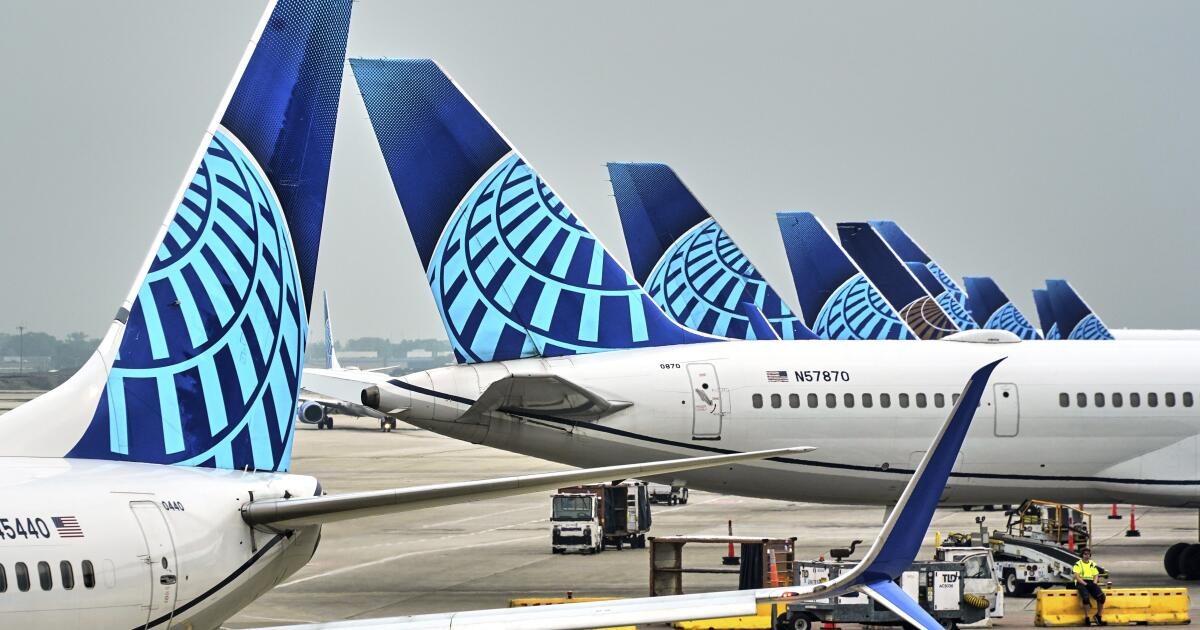
As oil prices rise, airfares are surging and some airlines might not survive

Entertainment19 minutes ago
‘Fences’ and ‘Dog Man: The Musical’: Center Theatre Group pulls out all the stops in new season

Lifestyle25 minutes ago
L.A. Times Concierge: I live in O.C. My kids live in Santa Clarita. Looking for nice spots to meet halfway.

Florida1 year ago
Florida High School Football Rankings: Top 25 teams – Oct. 21

Oregon2 years ago
How old is Bo Nix? What to know about Oregon quarterback ahead of 2024 NFL Draft

Connecticut2 years ago
Cleary's 21 help Le Moyne down Central Connecticut State 69-64 in OT

Virginia2 years ago
99th annual Pony Swim held in Virginia

Indiana2 years ago
Indiana Members Credit Union announced as new anchor tenant at Bottleworks District

World55 minutes ago
Newsletter: G7 ministers to hold talks on war’s economic fallout

News1 hour ago
ICE officers could remain at airports after TSA workers are paid

Politics12 hours ago
Scathing report claims nation’s oldest labor union ‘betrayed’ MAGA members through ‘shocking’ spending

World13 hours ago
Republican US lawmaker demands Congress vote on any Iran troop deployment

News14 hours ago
So you went to a No Kings protest. Now what?
-

 Sports1 week ago
IOC addresses execution of 19-year-old Iranian wrestler Saleh Mohammadi
-

 New Mexico1 week ago
Clovis shooting leaves one dead, four injured
-

 Miami, FL4 days ago
Jannik Sinner’s Girlfriend Laila Hasanovic Stuns in Ab-Revealing Post Amid Miami Open
-

 Tennessee6 days ago
Tennessee Police Investigating Alleged Assault Involving ‘Reacher’ Star Alan Ritchson
-

 Minneapolis, MN4 days ago
Boy who shielded classmate during school shooting receives Medal of Honor
-

 Politics1 week ago
Schumer gambit fails as DHS shutdown hits 36 days and airport lines grow
-

 Science1 week ago
Record Heat Meets a Major Snow Drought Across the West
-

 Technology1 week ago
YouTube job scam text: How to spot it fast