Arizona
Arizona Diamondbacks DFA Player Acquired From A’s


The Arizona Diamondbacks have designated Jace Peterson for assignment, according to MLB’s transactions page. Peterson had played in 14 of the D-Backs 20 games prior to the news, but he’d received just 26 plate appearances. In that span he went 1-for-22 (.045) with three walks, two runs scored, and a sacrifice fly that resulted in an RBI.
Peterson was acquired from the Oakland A’s at the Trade Deadline last season in exchange for right-hander Chad Patrick.
With the A’s, Patrick played in both Double-A Midland and Triple-A Las Vegas, and pitched to an ERA that combined to be over eight between the two stops.
The A’s traded him to the Milwaukee Brewers during the offseason in exchange for their new leadoff hitter, Abraham Toro, who led off Friday night’s game in Cleveland with a home run. It would be the only run that Oakalnd would score until Brent Rooker added a solo homer in the top of the ninth.
Peterson was originally brought in to the A’s to be a stable veteran presence, but his offensive production just wasn’t there for the rebuilding club. He ended up hitting .221 with a .313 OBP in Oakland, and those numbers would dip once he joined Arizona.
Even though he is no longer with the team, Peterson is still one of the highest paid players on the A’s payroll this season. As part of the trade, the A’s agreed to pay $3 million of Peterson’s $5 million salary this season. The $3 million figure is what Baseball-Reference has listed, while FanGraphs says it’s just $2 million.
The A’s payroll leaders are Ross Stripling ($12.5 million, $3.25 M of which is paid by the Giants), Alex Wood ($8.5 M), Aledmys Díaz ($7.25 M), J.D. Davis ($2.5 M base), Paul Blackburn ($3.45 M), Seth Brown ($2.6 M), and Scott Alexander ($2.25 M). Peterson is either at the end of this group, or right in the middle.
The move for Arizona made roster space for Jordan Montgomery to make his first start with his new club, which ended up being a 17-1 rout of the Giants in San Francisco. Montgomery (6 IP, 4 hits, ER, 0 BB, 3 K) out dueled S.F.’s Boras four pitcher, Blake Snell (4.2 IP, 9 hits, 5 ER, BB, 3 K).



That was the lingering element inside a quiet visitors’ clubhouse after the San Francisco Giants dropped a 6-3 decision to the Arizona Diamondbacks on Wednesday afternoon, completing a three-game sweep at Chase Field.


Republic photographer Rob Schumacher was a master with the camera
The longtime award-winning Arizona Republic photographer captured not just events with his camera, but the feelings of the big moments.
Rob Schumacher shared the triumphs and tribulations of the world with The Arizona Republic’s readers through his photography for 35 years.
Schumacher, 62, who died Sunday, May 17, covered Olympic Games, Super Bowls, Masters golf tournaments, riots and natural disasters, as well as intimate portraits of everyday people in Arizona.
He won dozens of awards for his work, including having his image, “Foul Ball,” named Photo of the Year by the Arizona Associated Press Managing Editors in 2003 and being named Arizona Photojournalist of the Year by the Arizona Press Club in 2020.
“For him, it was more than just a job,” said Cheryl Evans, a former photographer at The Republic who worked with him for years. “It was his passion. I mean, he lived and breathed photojournalism.”
Here’s a look at his legacy through some of his most jaw-dropping images.

ARIZONA — The Arizona Cardinals have just finished their first set of voluntary offseason team activities, and there’s plenty to talk about.
We posted our sights and sounds video already (which you can check out here), though that didn’t quite cover everything we saw in Tempe.
Five biggest takeaways from being at the team’s facility for offseason team activities:
1. Notable Absences
All of Jacoby Brissett, Josh Sweat, Baron Browning, L.J. Collier, and Trey Benson were not present for the voluntary portion of offseason team activities.
Brissett continues to hope for a new contract while Sweat apparently is a healthy absence according to Arizona Sports. Collier had a personal day while Browning’s absence is unknown.
According to @Gambo987 just now on @BurnsAndGambo, Josh Sweat is not hurt despite being absent from OTAs.
L.J. Collier, meanwhile, had a personal day yesterday.
— Tyler Drake (@Tdrake4sports) May 19, 2026
Starling Thomas and James Conner were spotted working off to the side while Tip Reiman (more on him later) and Walter Nolen III were also spotted on the sidelines. Garrett Williams posted on social media him getting recovery work in, too.
Benson suffered a season-ending injury last season, so he could be rehabbing elsewhere. Players who do not show in Tempe won’t be fined, though anybody who misses mandatory minicamp (June 8-10) will.
2. Jeremiyah Love Returning Kicks?
One of the biggest storylines was the emergence of No. 3 overall pick Jeremiyah Love returning some kicks during the open portion of practice this week. Max Melton was also an interesting name back there as well.
This caused a firestorm of overreactions on Love and the Cardinals’ potential usage of him. Many saw this as Love having to work his way through special teams while others think this will add more unnecessary hits if he is indeed on return duties.
“You’re experimenting with everyone in terms of a lot of different spots,” Cardinals head coach Mike LaFleur told 98.7’s Burns and Gambo. “… Jeremiyah is a running back. We know that. But you never know.”
I wouldn’t read too much into this — at least right now. WR Devin Duvernay was signed this offseason as a primary return man.
3. Rookies Take (Expected) Back Seat
Neither Love or third-round rookie quarterback Carson Beck had dibs on the first taste of action with the starting unit while media were allowed to view practice.
That’s fine, and more importantly, very expected.
Even with Brissett out, it was the veteran Gardner Minshew repping with the first team offense. Tyler Allgeier was the main back for the Cardinals’ top offensive players.
Rookies, at this point in the offseason, are placed behind veterans purposefully. Even if this is the case in training camp, fans shouldn’t freak out if Allgeier is still over Love in the “pecking order” Arizona has.
This is simply the Cardinals working in their inexperienced players at a reasonable rate.
4. Sean Murphy-Bunting’s Position Change
Murphy-Bunting suffered a season-ending injury before even stepping into 2025 and was largely thought to be a cut candidate entering the offseason in a crowded cornerbacks room.
However, the Cardinals have apparently changed his position.
Murphy-Bunting, typically a boundary cornerback, was spotted working out with the safety group. Cornerback Will Johnson confirmed Murphy-Bunting was set to be a nickel corner, which serves Arizona as Williams is not expected to be ready for the start of the season due to injury.
When you’re trimming a roster down to 53, versatility matters.
5. Injury Updates
The Cardinals lost their top run-blocker in tight end Tip Reiman early last season with a right leg injury and is expected to be ready for training camp, according to LaFleur.
“Not going to dive too far into that, but [we] do expect him to be healthy, ready to roll when we get going in training camp. Another guy that I had a lot of respect for coming out of Illinois,” LaFleur told reporters.
“… Tip is all of the right stuff in terms of how he approaches it, and stuff like that. It’s unfortunate, obviously what happened a year ago, but [I believe he is a] big piece of where I think we can go.”
LaFleur was then asked about Benson, which drew a, “Kind of that same type of thing,” response from the Cardinals coach.
The Cardinals again will hit the practice field on May 21 where voluntary OTA’s continue.
Add us as a preferred source on GoogleFollow
-
 Politics5 minutes ago
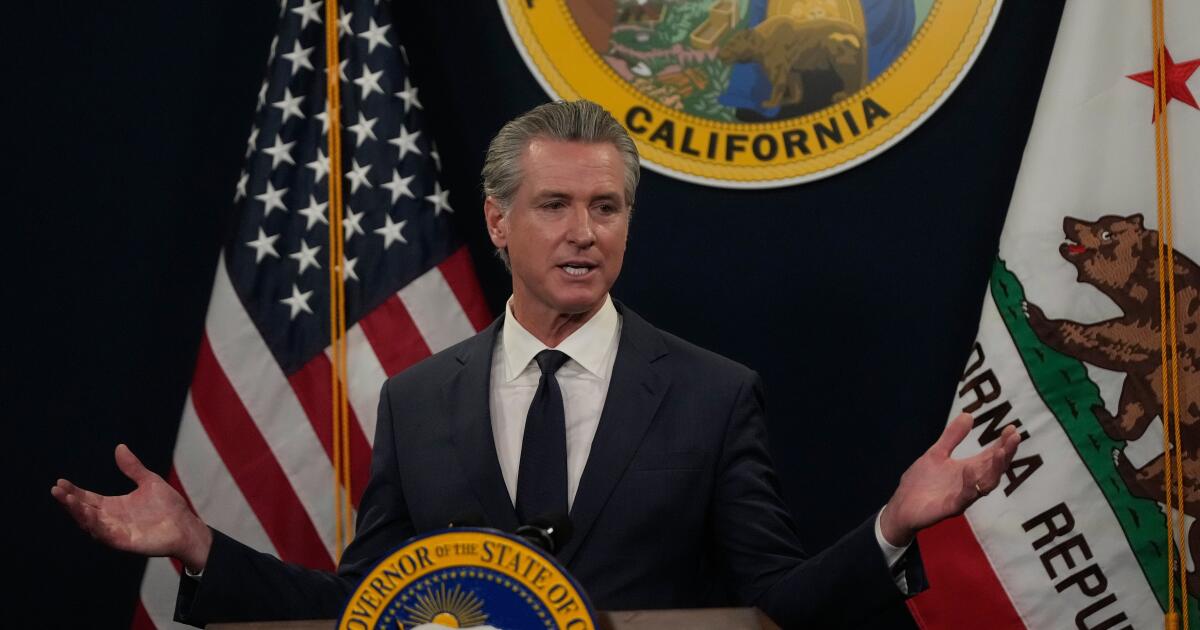
Immigrant rights advocates rally for more state healthcare funding, criticize Newsom
-
 Sports17 minutes ago
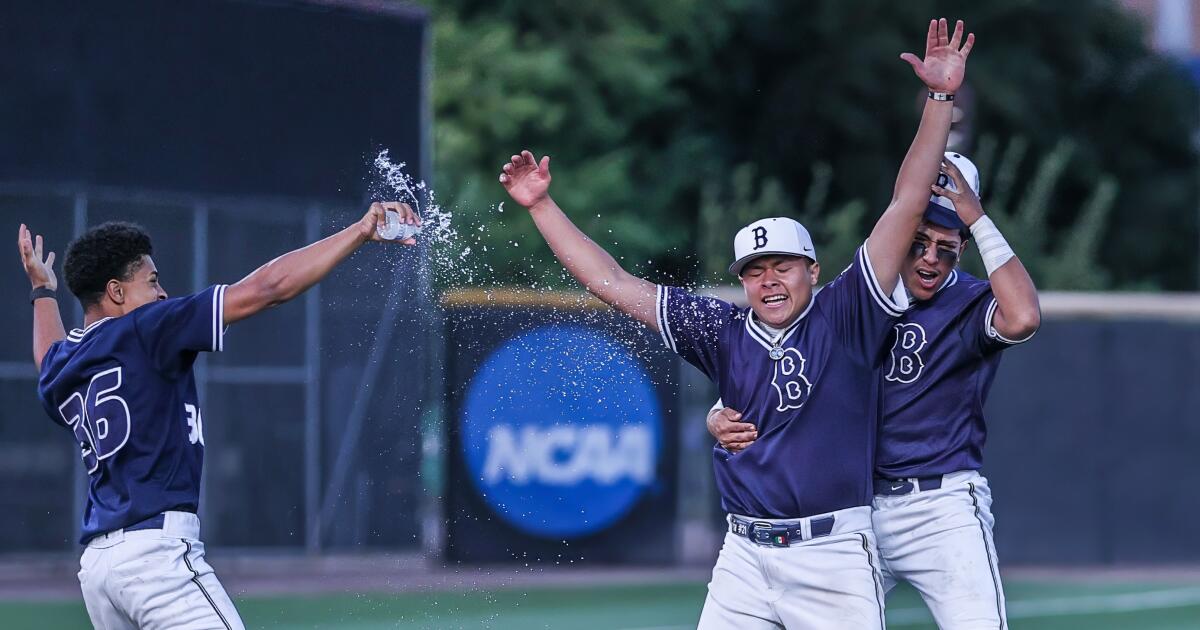
Sophomore Carlos Acuna grinds out complete game to send Birmingham to Dodger Stadium
-

 World29 minutes ago
Bolivia’s president reshuffles cabinet amid anti-government protests
-

 News59 minutes ago
Colorado Democratic Party censures Gov. Jared Polis after he commutes Tina Peters’ sentence
-

 Los Angeles, Ca3 hours ago
Southern California jeweler accused of stealing $1.5 million from customers through Rolex watch scam
-

 Detroit, MI3 hours ago
Air France flight bound for Detroit diverted to Canada over passenger from Congo, officials say
-

 San Francisco, CA3 hours ago
Caltrans considering 140 mph bus that would take passengers from San Francisco to Los Angeles
-

 Dallas, TX3 hours ago
Dallas police seek two people of interest seen leaving Deep Ellum shooting that injured five

