Alaska
Natural Selection Ski Crowns Inaugural Winners At ‘Dream’ Alaska Venue


Craig Murray of New Zealand skis a line at the inaugural Natural Selection Tour Ski competition in … More
Since Natural Selection Tour (NST) launched as a snowboard-only competition series in 2021, skiers have watched with envy as their single-board counterparts compete on the world’s premier big-mountain terrain, from Jackson, Wyoming, to British Columbia to Alaska.
In 2025, finally, it was skiers’ turn to get a firsthand taste of what NST is all about.
Starting this year, NST has expanded not only to skiing but also to surfing and mountain biking, aiming to crown the world’s best male and female athletes in all four disciplines.
“When I first saw the NST snowboard events, I thought that it was so cool, and I was jealous that we didn’t have something like that in freeskiing,” said French freeskier Manon Loschi, who took the win for the women in the inaugural NST Ski.
New Zealand’s Craig Murray earned the title of first-ever men’s champion.
At the heart of NST is the idea that athletes aren’t competing against one another so much as they’re competing against themselves, challenged by Mother Nature in some of the most awe-inspiring, inhospitable terrain on the planet.
That was certainly the case at Alaska’s Priority 1, a legendary big-mountain venue that has figured prominently in snowsports, including in NST founder Travis Rice’s The Fourth Phase (2016).
NST Ski 2025 was broadcast as live on Red Bull TV on April 17, showing off the venue’s massive spines and steep pitch, with riders’ lines spanning nearly 1,700 vertical feet.
“This is the ultimate venue,” said NST Ski event director Mike Douglas. “It forces riders to bring their full knowledge of skiing—freestyle, freeride, and the ability to adapt under pressure.”
Alaska’s Priority 1 is a legendary big-mountain venue
Loschi, who had never been to Alaska or skied this terrain previously, didn’t mince words when asked to describe the experience of seeing the face for the first time.
“It’s definitely a crazy place,” the 23-year-old said. “It’s the most extreme terrain for skiing and snowboarding. Everything is big, steep and scary.”
Though Murray has skied Alaska, he had never dropped in on Priority 1.
“It was a wild feeling seeing it for the first time,” the 26-year-old said. “The experience was completed by flying into the extensive camp on a ski plane and landing on the glacier, then walking through the small city of tents and snow structures.”
After nearly a week of camping out on the glacier waiting for optimal weather conditions, 12 of the world’s best skiers (ranging from slopestyle Olympians to big-mountain freeriders, and everything in between) competed bracket-style in a contest that many said felt more like filming a segment.
The judges of the inaugural NST Ski competition—Sean Pettit, Dion Newport and Kristi Leskinen—evaluated riders using NST’s signature CREDO rubric (creativity, risk, execution, difficulty and overall flow), scoring runs in real time.
In the men’s final, Murray was up against close friend Sam Kuch. Murray’s run saw him link stylish 360s and flips, perfectly blending freeride and freestyle.
But Kuch put up a proper rebuttal, getting massive amplitude over a gap that spanned more than 100 feet.
“Dropping into the final with one of my best friends was beyond comprehension and the cherry on top,” Murray said.
The men’s field was rounded out by Markus Eder, Kai Jones, Kye Petersen, Colby Stevenson, Parker White and Max Palm (SWE).
Meanwhile, first-timer Loschi earned the women’s title despite her lack of experience in Alaska—and she did it against one of the most established veterans in women’s freeski, Michelle Parker.
France’s Manon Loschi skis a line in the inaugural Natural Selection Tour Ski in Alaska
Maggie Voisin and Hedvig Wessel completed the women’s field.
“This is why Natural Selection matters,” said Parker, who also serves on the NST Ski athlete advisory committee. “It allows us to bring out the best in each other—watching Manon and the other skiers step up and progress skiing in real time like that was a moment I’ll never forget. Can’t wait to see how skiing evolves from here.”
The skiers felt like they were part of something special. “I was with so many people I look up to,” Loschi said. “It was crazy to be part of this; it was a dream.”
Murray said that NST adding a ski competition was an “amazing opportunity” for the athletes and “great for the sport.”
Indeed, it’s an exciting time for freeride. The Freeride World Tour just announced that next season, it will have a U.S. event for the first time since 2017. And this summer, the International Olympic Committee will issue a decision on whether or not freeride will make its debut at the 2030 Winter Olympics in the French Alps, after being recognized by the International Ski and Snowboard Federation as an official discipline in 2024.
These days, there are as many career paths open to freeride athletes as there are runs on a big-mountain face.
But athletes agree that there’s something special about NST, with its fusion of freestyle and freeride and its head-to-head format designed to root out the world’s best men and women in their respective disciplines.
“This is the kind of event that freeskiing was missing right now,” Loschi said. “The NST aligns so well with my vision of the sport and the creativity in the mountains.”
“Natural Selection organizes some of the best events that the outdoor sports industry has seen,” Murray said. “To be involved is a huge privilege.”

Alaska
Lavrov Challenges Rubio: Kremlin Says Trump-Putin Reached Deal as Moscow Questions Washington’s Neutrality

The Kremlin has pushed back against US claims that no agreement was reached between US President Donald Trump and Russian leader Vladimir Putin during the August 2025 Anchorage summit in Alaska.
Russian Foreign Minister Sergey Lavrov said Washington presented proposals to settle the war in Ukraine during the talks and that Moscow accepted them.
JOIN US ON TELEGRAM
Follow our coverage of the war on the @Kyivpost_official.
Lavrov was responding to US Secretary of State Marco Rubio, who has publicly rejected Russian claims that Washington and Moscow reached an agreement on Ukraine during the Alaska summit, saying no deal was ever finalized.
As reported by DRM News, Rubio said the summit produced only a proposal, not a binding agreement.
He added that the US remains ready to play a constructive role in bringing the parties together and helping end the war, but stressed that while proposals were discussed in Alaska, “there was no agreement.”
Lavrov struck back by calling the response “not very elegant.”
“When my colleague says that in Alaska there were only proposals and no agreement, I wonder what we mean by agreement,” Lavrov said.
“If one side, in this case the US, put proposals on the table, and the other side expressed agreement, then saying there was no agreement is somehow not very elegant,” he added.
According to Lavrov, White House Special Envoy Steve Witkoff visited Moscow days before the summit and delivered the same US settlement plan.
Other Topics of Interest
SBU Says Drones Hit Russian Military Ships in New 40-Day Crimea Campaign
The operation aims to degrade Russia’s use of Crimea as a military and logistics hub by targeting ships and air defenses.
“Already in Anchorage, when the two presidents sat down for talks, Putin began listing the American proposals point by point. After each point, in the presence of Trump and Rubio, he asked Witkoff whether he had correctly described the ideas brought to Moscow. Witkoff answered affirmatively to each question,” Lavrov said.
He called for clarification from Washington, adding that recent US statements about playing a constructive role in ending the war sounded like an attempt to position itself as a mediator.
Previous claims
In early June, Lavrov claimed Russia had accepted what he described as US proposals presented at the Alaska summit.
Lavrov alleged that Washington initially acted as a mediator but later stepped back from the process after failing to pressure Ukraine to accept the proposed terms.
This week, he also suggested that the Alaska summit may have been used to “buy time” for Ukraine to rearm itself, further arguing that Russia no longer views the West as a credible broker amid sanctions pressure.
Russian presidential aide Yuri Ushakov also said Moscow remained committed to implementing the understandings reached in Alaska, while accusing Washington of “apparently [failing] to complete its part of the process.”
Kremlin spokesman Dmitry Peskov argued that Washington cannot be considered fully neutral in the war because of its military support for Ukraine.
“If we’re talking about absolute neutrality, then, of course, the term is probably inapplicable, because the United States supplies the majority of weapons to Ukraine and provides other forms of assistance,” Peskov said.
At the same time, he said Moscow highly values Washington’s willingness to help resolve the war, as well as its influence over European allies and Kyiv.
Peskov also dismissed remarks by French President Emmanuel Macron, who recently said at the G7 Summit that Washington had abandoned neutrality and was now openly backing Ukraine’s territorial integrity, continued aid, and sanctions against Russia.
“Regarding President Macron’s statements, it is difficult to judge. I don’t think President Macron can in any way claim to be Washington’s lawyer or press secretary,” Peskov added.

HONOLULU (KHON2) — Free Wi-Fi is available on more Alaska and Hawaiian Airlines planes.
The company said that 150 aircraft are now equipped with Starlink.
“For years, T-Mobile has played a key role in keeping our guests connected, and we’re proud to now offer Starlink, the fastest Wi-Fi in the sky, to Atmos members for free, made possible through our work with T-Mobile,” said Shane Jones, Senior Vice President of Fleet, Products and Guest Experience. “We’ve seen an overwhelmingly positive response from our guests, and we couldn’t have done it without T-Mobile as we continue to raise the bar for the experience across Alaska Airlines and Hawaiian Airlines.”
Passengers must now be Atmos Rewards members to take advantage of the free service. The company said a new onboarding portal started in June, with the experience to become standard by mid-July.
Existing Atmos Rewards members will connect automatically, and new guests can sign up in just a few steps.
“Our relationship with Alaska Airlines has helped redefine what travelers can expect from inflight connectivity, and today’s milestone is another important step forward, said Mike Belcher, Head of Partnerships and Business Development at T-Mobile. “Bringing complimentary inflight Wi-Fi to more travelers across both Alaska Airlines and Hawaiian Airlines makes it easier to stay connected throughout their journey. The new, streamlined experience for accessing Wi-Fi reflects our shared commitment to delivering a better, more seamless travel experience.”
The airline expects to finish installing Starlink across its remaining mainline fleet by 2027.

-

 Lifestyle4 minutes ago
Swatch Seeks Damages From Samsung Over Trademark Infringement, Ft Reports
-
 Politics11 minutes ago
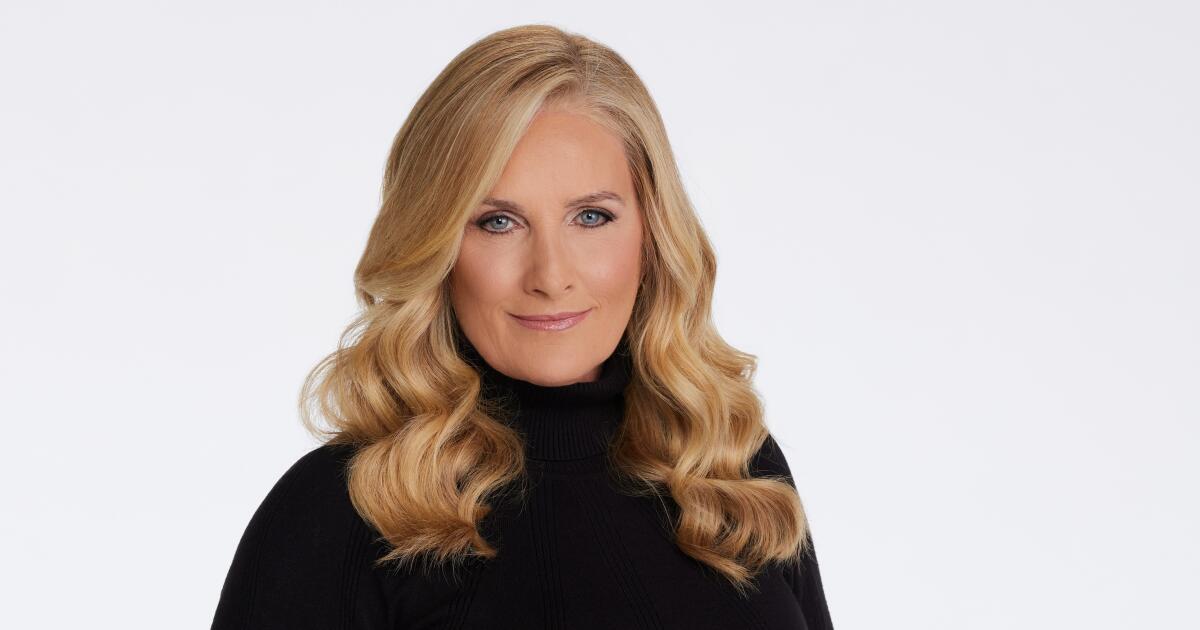
MS NOW anchor Alex Witt to exit as network reduces live weekend programming
-
 Sports19 minutes ago
Parents of ex-NFL player Doug Martin allege excessive force by Oakland police in wrongful death suit
-

 World29 minutes ago
Burkina Faso cuts diplomatic ties with former colonial ruler France
-
 News56 minutes ago
A day after Alito’s testy response to Sotomayor’s dissent, court says it was a ‘misunderstanding’
-

 Los Angeles, Ca2 hours ago
Watch Project Angel Food's 'Lead with Love' telethon on KTLA
-

 Detroit, MI3 hours ago
Metro Detroit weather forecast, June 26, 2026 — 4 p.m. Update
-

 San Francisco, CA3 hours ago
Newlyweds celebrate Pride-themed weddings inside SF City Hall as parade preparations underway

