Alaska
Globe Fire now grouped into complex of fires


It was another active day for both the Globe Fire and firefighters working to protect property from fires in the area.
The Globe Fire (#253) is now part of the Grapefruit Complex, named after a nearby rock climbing spot. It has significantly burned the area around these limestone rocks and spread east on Saturday toward the White Mountains National Recreation Area, which has a fire closure that includes the Wickersham Dome Trail.
On Friday, the Iver and Slate fires merged into the Iver Fire (#249), now estimated at 14,649 acres and burning 10 miles east of Minto Lake. It threatens a Native allotment and is quickly spreading through spruce trees toward the Elliott Highway, where the Globe Fire is already present. The Trans-Alaska Pipeline lies between the two fires, with the Iver Fire about 7 miles southwest of the Globe Fire’s crossing at mile 39.
The complex also includes:
- The Eagle Fire (#306) is estimated at 40 acres and was backing, creeping and smoldering in a mixture of spruce and hardwoods. It wasn’t immediately threatening any known sites of value. This lightning-caused fire has been burning since late Friday night.
- The Wilber Fire (#308) was fire was reported at about 2 p.m. Saturday. It is about 4 miles west of mile 51.
- The Tatlina Fire (#292) was reported by a passing motorist east of mile 51 Elliott Highway.
- The Noordor Fire (#192) is estimated at 7,195 acres. This lightning-caused fire has been burning on BLM-managed land since June 20.
- The Fossil Fire (#115) is not exhibiting any fire activity or smoke, but will still be grouped into the complex. It is located in the White Mountain National Recreation Area.
Firefighters, including smokejumpers, two hotshot crews, and the BLM Type 2 CATG crew from Yukon Flats, are working to clear brush and set up sprinkler systems on structures threatened by the Globe Fire. There are 94 personnel assigned to the fire, with the Silver City (New Mexico) Hotshot Crew arriving Sunday. The Eagle Lake Wildland Fire Module from California arrived at the fire Saturday night and is tasked with structure assessments along the Elliott Highway from mile 39 to Livengood 32 miles north.
The fire was estimated at 9,342 acres Saturday. Heavy smoke prevented ground or aerial surveys and made flying aircraft for suppression efforts hazardous.
Smoke continues to hamper aerial support for firefighters working on the ground who are tasked with set up protection measures on more than 40 structures, Native allotments and Globe Creek Camp. A few days ago, the fire crossed the road north of Globe Creek Camp and south of a subdivision of homes, leaving structures intact.
A GO Evacuation Order is still in place for people within mileposts 39-48.
The section of the Elliott Highway near the Globe Fire reopened late Thursday night. Expect significant delays between mileposts 25-50 if fire activity increases as it did Thursday afternoon. Please exercise caution and patience, turn on your headlights to help ensure the safety of firefighters and flaggers working in the area. Alaska State Troopers, Alaska Department of Transportation & Public Facilities contracted workers and a pilot car are helping keep the flow of traffic open.
Check https://511.alaska.gov/ for road updates.
Warmer and drier conditions are predicted to continue through the weekend. There is a chance of isolated thunderstorms and possibly some rain in the afternoons. Winds could be gusty and erratic around the thunderstorms.
Read the more information about the Globe Fire at https://akfireinfo.com/tag/globe-fire/.
For more information, call the Alaska Interagency Wildland Fire Information Office at (907)356-5511.
-BLM-
Bureau of Land Management, Alaska Fire Service, P.O. Box 35005 1541 Gaffney Road, Fort Wainwright, Ak 99703
Need public domain imagery to complement news coverage of the BLM Alaska Fire Service in Alaska?
Visit our Flickr channel!
Learn more at www.blm.gov/AlaskaFireService, and on Facebook and Twitter.
The Bureau of Land Management Alaska Fire Service (AFS) located at Fort Wainwright, Alaska, provides wildland fire suppression services for over 240 million acres of Department of the Interior and Native Corporation Lands in Alaska. In addition, AFS has other statewide responsibilities that include: interpretation of fire management policy; oversight of the BLM Alaska Aviation program; fuels management projects; and operating and maintaining advanced communication and computer systems such as the Alaska Lightning Detection System. AFS also maintains a National Incident Support Cache with a $18.1 million inventory. The Alaska Fire Service provides wildland fire suppression services for America’s “Last Frontier” on an interagency basis with the State of Alaska Department of Natural Resources, USDA Forest Service, National Park Service, Bureau of Indian Affairs, U.S. Fish and Wildlife Service, and the U.S. Military in Alaska.
Categories: Active Wildland Fire, AK Fire Info, BLM Alaska Fire Service



Alaska
Utah banned another book from all public schools, bringing the list to 28. Here’s what it’s about.

“Looking for Alaska,” by John Green, was added to Utah’s growing list of prohibited titles.
(Bethany Baker | The Salt Lake Tribune) People read together in the Capitol Rotunda as part of a read-in to protest Utah book bans, hosted by Let Utah Read, in Salt Lake City on Friday, Feb. 13, 2026.

The Freeride World Tour Finals officially kicked off in the most high-stakes arena on the planet: the steep, spine-chilling faces of Haines, Alaska. After an eight-year hiatus from this specific venue, the Tour returned to find a massive 740-meter vertical drop draped in 20 cm of fresh powder. For the riders who made the cut, this wasn’t just another competition; it was a heavy test of survival and style in the world’s most technical big mountain terrain.
A Historic Return to the Alaskan Spines
The YETI Alaska Haines Pro proved why this location is the “dream stop” for freeriders. The face was a technical maze of vertical flutes and massive cliff bands that demanded absolute focus from every athlete. Competing on a sustained pitch of 45 degrees, there was zero room for error. The legendary Alaskan terrain lived up to its reputation, as the technical descent took its toll on many, with only half of the ski women and half of the ski men making it to the finish corral without a crash.
Ski Men: A Career Milestone for Rafford
The Ski Men’s field delivered one of the closest finishes in history, with only 1.67 points separating the entire podium. In the end, it was American Toby Rafford who left the crowd speechless, securing his first-ever FWT victory.
- He showcased incredible speed and precision, navigating a rock field that resembled a World Cup slalom course at Mach 10.
- His score of 90.67 propelled him into first place in the overall rankings, earning him the Golden Bib heading into the season finale.
- Ugo Troubat (FRA) took second place with impeccable “Air & Style” and a huge 360 of his own, while Ross Tester (USA) rounded out the podium, pioneering a new line on the rider’s right side and stomping two giant 360s.
Ski Women: Blanjean’s Masterful Control
The Ski Women faced an all-or-nothing day on the face, but Sybille Blanjean (SUI) proved that control is king.
- Blanjean delivered a masterful performance, lacing her turns avoiding the heavy slough piles that claimed several other competitors.
- Her run featured a solid big air, earning her 75.67 points and her first victory of the season.
- This win moves her into the top spot just in time for the finals at her home mountain.
- Rookies Lou Barin (FRA) and Zoé Delzoppo (FRA) followed in second and third, the next generation of French rippers.
Snowboard Men: De Le Rue’s Masterclass
Sign Up for the TGR Gravity Check Newsletter Now
Reinvent your morning scroll with the TGR Gravity Check Newsletter — your source for exclusive stories, breaking news, and first looks at the content you actually care about. Everything action sports and outdoor culture, all in one place. Welcome to Gravity Check.
100% Free.No Spam.Unsubscribe any time.
In the Snowboard Men’s category, the legend of Victor de Le Rue (FRA) continued to grow. A four-time world champion, de Le Rue used his bag of tricks and experience to dismantle the Alaskan face.
- He opened his run with a massive frontside 540 right off the initial cornice, a trick rarely seen in FWT competition.
- His ability to manage heavy slough was a masterclass in big mountain control, linking technical freeride sections with freestyle flair.
- This dominant performance earned him 91.67 points, securing the victory and reinforcing his position at the top of the overall rankings.
Snowboard Women: Mia Jones Dominates the Deep
Women’s Snowboard saw rookie Mia Jones, part of the Teton Gravity Research family, dominate steep lines.
- In her first-ever trip to the Alaskan spines, Jones looked like a seasoned veteran, earning a massive 91.00 points.
- She demonstrated excellent sluff management and precise control through the steep terrain, maintaining impressive speed from top to bottom.
- Jones’ win on home turf provides a boost to her confidence as she carries the Golden Bib into the title races.
The Road to Verbier: Who Will Claim the Crown?
As the snow settles in Haines, the focus shifts to the final showdown: the Bec des Rosses in Verbier, Switzerland. With the points from Alaska shaking up the leaderboard, the title races are wider open than ever. Toby Rafford and Sybille Blanjean are carrying the momentum (and the Golden Bibs) into the Alps, but with the steep, technical face of the Bec waiting, anything can happen.
Haines reminded us why Alaska is the ultimate proving ground, but Verbier will decide who enters the history books. Stay tuned to TGR as we follow the crew to Switzerland to see who survives the final drop of the 2026 season.

Marlee Knight
Content & Event Coordinator
Marlee Knight is a Content & Event Coordinator at Teton Gravity Research, helping support film premieres, events, and the stories that bring the action sports community together. When she’s not working, she’s usually outside — snowboarding, backpacking, or out with a camera.
Alaska
I Took My First Alaskan Cruise—Here Are 7 Packing Mistakes You Should Avoid, and What to Bring Instead From $8
:max_bytes(150000):strip_icc()/tal-amazon-roundup-alaska-cruise-mistakes-tout-c343d1a380554b0b8dd100b4aad7711c.jpg?ssl=1 "I Took My First Alaskan Cruise—Here Are 7 Packing Mistakes You Should Avoid, and What to Bring Instead From")

Ex-Belgian diplomat ordered to stand trial over murder of Congo’s Lumumba
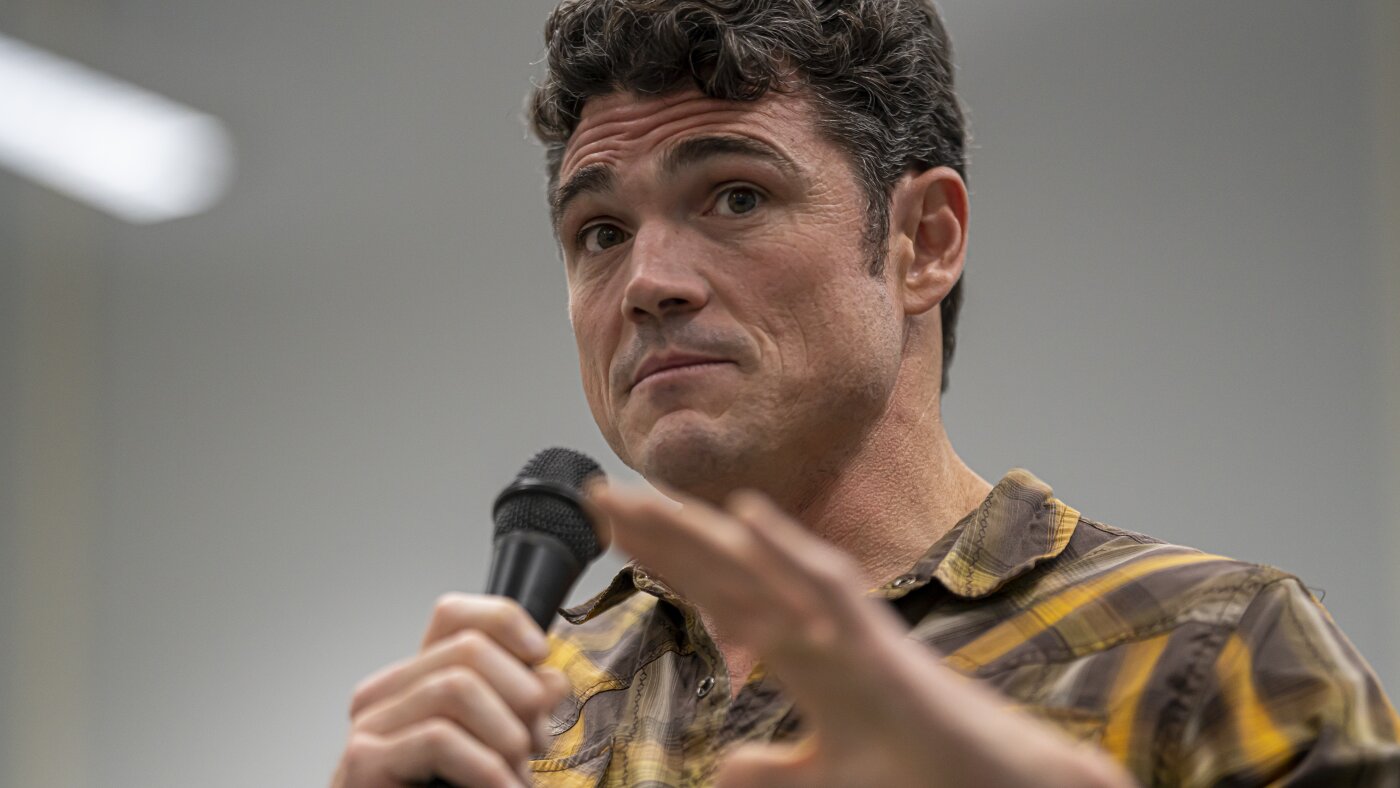
Joe Kent, a top counterterrorism official, resigns citing Iran war

Judge Zahid Quraishi Ejects New Jersey Federal Prosecutor From Court, Orders Testimony on Office Leadership Structure

2 accused in fatal Detroit stabbing of man with broken bottle charged

San Francisco Giants Roster Decision Could Force A’s into Action

Florida High School Football Rankings: Top 25 teams – Oct. 21

How old is Bo Nix? What to know about Oregon quarterback ahead of 2024 NFL Draft

Cleary's 21 help Le Moyne down Central Connecticut State 69-64 in OT

99th annual Pony Swim held in Virginia

Indiana Members Credit Union announced as new anchor tenant at Bottleworks District
Ex-Belgian diplomat ordered to stand trial over murder of Congo’s Lumumba
Joe Kent, a top counterterrorism official, resigns citing Iran war

Minnesota bill would ban warrants allowing police to collect data from devices near a crime scene

Kallas says ‘no appetite’ to shift mandate of EU Hormuz naval mission

Trump predicts US will have ‘honour of taking Cuba’ amid power blackout
-

 Oklahoma1 week ago
OSSAA unveils Class 6A-2A basketball state tournament brackets, schedule
-

 Oklahoma3 days ago
Family rallies around Oklahoma father after head-on crash
-

 Michigan1 week ago
Operation BBQ Relief helping with Southwest Michigan tornado recovery
-

 Nebraska4 days ago
Wildfire forces immediate evacuation order for Farnam residents
-

 Southeast1 week ago
‘90 Day Fiancé’ alum’s boyfriend on trial for attempted murder over wild ‘Boca Bash’ accusations
-

 Health1 week ago
Ancient herb known as ‘nature’s Valium’ touted for improving sleep and anxiety
-

 Connecticut1 week ago
Exclusive | Ex-CBS anchor Josh Elliott back on Connecticut dating scene after ugly Liz Cho split
-

 Technology1 week ago
Sony appears to be testing dynamic pricing on PlayStation games