Alaska
Fishing Report: ‘wefishak’ offers family and trophy fish challenges


ANCHORAGE, Alaska (KTUU) – Sometimes, when we finally hook on and reel in, we can’t help but take a fish frame.
And after that fish is released back into the river or put in the freezer, those photos can be turned in and recognized by the Alaska Department of Fish and Game’s ‘wefishak’ challenges.
“[The challenges] are really in effect to celebrate angler accomplishments,” Ryan Ragan, ADF&G Communications Coordinator for Sport Fishing said.
Five Salmon Family Challenge
Fishing is more fun with others, and the Five Salmon Family Challenge promotes family or group participation, proper salmon identification and ethical angling practices. The goal is to reel in the five species of Pacific Salmon found in Alaska waters – Chinook, Chum, Coho, Pink and Sockeye – with members of a family, family groups, or any other group of angling partners.
Fish must be legally caught within Alaskan waters that are open to the public and in compliance with current Alaska Fish and Game regulations.
When you haul in a salmon, simply take a photo displaying it so the species can be easily be identified, then submit it by email to ryan.ragan@alaska.gov. Those who complete the challenge will receive a certificate from ADF&G and an 11×7 poster by Alaskan artist Shelly Marshall of the five salmon species.
Trophy Fish Program
The Trophy Fish Program is the longest-running challenge offered by ADF&G, with data documenting recordholders over decades. There are more than a dozen species to showcase, giving special recognition to anglers that meet minimum weight for trophy certificates and length standards for catch-and-release, also offering a youth division.
Stocked Waters Challenge
There are three challenges within the Stocked Waters Challenge. “Five from Five” challenges anglers to catch five different species (Chinook, Coho, Rainbow trout, Arctic char and Arctic grayling’ from five different stocked waters; one type of species per body of water. To accomplish the “10 Lakes Challenge,” anglers must fish at any 10 stocked lakes within Alaska. However, catching a fish however is not required. This challenge is more about exploring fishing opportunities that you may not have previously experienced. For the “Two Over 20″ challenge, anglers aim to catch two fish of any species, over 20 inches in length.
Details regarding ‘wefishak’ and each challenge can be found here.
Copyright 2024 KTUU. All rights reserved.



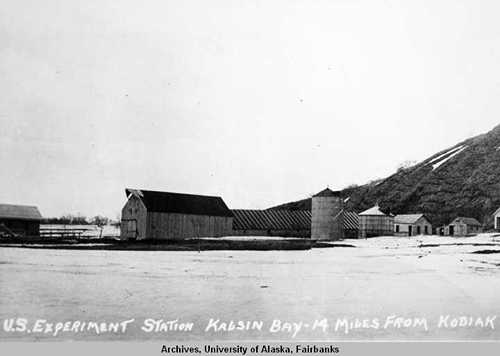 On this day in 1898, the United States Department of Agriculture would open an experimental station on Kodiak Island to experiment with cattle breeding.
The station, authorized by the 1887 Hatch Act, would open in Kalsin Bay, 14 miles to the south of present-day Kodiak
The station’s initial mission was to assess the adaptability of Galloway cattle to the island’s conditions. Different hay grains were also experimented with.
Later, Sitka Black-tailed Deer and Roosevelt Elk would be introduced to the station, deer in 1900 and elk in 1928. While initially the elk were to be released on Kodiak Island, it was determined that the possibility of competition with the cattle for winter food meant that they would instead be introduced to Afognak Island to the north.
The Kalsin Bay Station was one of several that would be established throughout Alaska.

MANLEY HOT SPRINGS — It’s so quiet in these spruce hills and tamarack swamps that 27 hours and 50 miles passed between when Forest Wagner and I said goodbye to one human being at Old Minto and hello to the next near Baker.
Space is in ample supply here on these pressed-in snow trails between towns and villages of Interior Alaska.
Forest and I are out here riding these ephemeral ribbons of blue-white moving westward, with a goal of reaching Nome.
Last Saturday, when it warmed to minus 12 degrees Fahrenheit, I lurched my loaded fat bike out of my home in Fairbanks. Saying goodbye to my wife and dogs, I rumbled eastward on a boot-packed trail that after a mile led to a plowed bike path. I then rolled through the familiar University of Alaska Fairbanks campus and onward 8 miles to Forest’s cabin.
He handed me a mug of coffee and an egg sandwich. Then we started pedaling our fat bikes down Chena Pump Road until we reached the Tanana River.

We found a trail groomed for a multi-sport winter race, turned right, and headed downstream on our home river, there half a mile wide. It was a day when the weather finally nodded toward spring. Fair-a-dise showed up with bluebird skies as the day warmed to 8 degrees Fahrenheit.
After a month of pillowy snows and crazy cold temperatures and re-telling people our new takeoff days to semi-suppressed eye rolls, we were finally unstuck from the glue of town.
If an object wasn’t hanging off our bikes, we didn’t need it. No more fiddling with the load or obsessing on the 7-day weather forecast. Just big ol’ tires humming on dry snow.
Now, five days and 145 miles later, Forest and I are digesting French toast and bacon our friend Steve O’Brien cooked for us as we wait on the dryer in the Manley washeteria. When we get a few dollar bills we will take showers.

It’s a good life here on the trail, just-add-water living at its finest. Eat everything in front of you, apply some sunblock and keep mashing on the pedals.
Steve O’Brien is one of the many people helping us move westward. In one of the most clutch moments, my wife Kristen and our friend Jen Wenrick appeared wearing headlamps on the packed snow ramp off the Tanana River in Nenana. They handed us burgers and fries from the Monderosa.
After a surprise tough day due to soft trail that had us working real hard, those burgers and Cokes were like oxygen.
There have been many other acts of kindness from Jenna and David Jonas, Steve Ketzler, Forest’s dad Joe Wagner and others. Tonic for the body and soul.

We will meet more excellent people, including some old friends, as we ratchet toward Nome.
When my satellite tracker is on, you can see our arrow creeping across the landscape here: https://share.garmin.com/NedRozell.

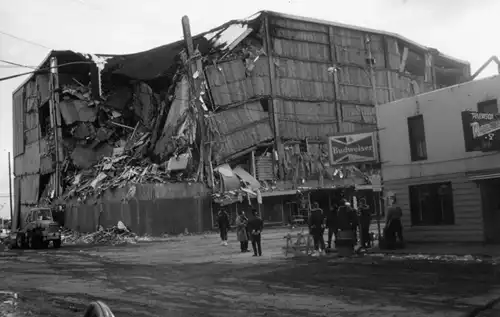
It was on this day in 1964 that a massive 9.2 earthquake in Southcentral Alaska.
The massive quake at 5:36 pm on March 27th caused much devastation throughout the region and generated a huge tsunami that inundated many communities in the region.
The quake was the largest in the history of the United States and initially killed 15 people while the resulting tsunami killed an additional 100 people in the new state and another 13 in California as well as five in Oregon.
The megathrust earthquake endured for four minutes and thirty-eight seconds and ruptured over 600 miles of fault and moved up to 60 feet in places.
The deadly quake occurred 15 and a half miles deep 40 miles west of Valdez and generated a ocean floor shift that created a wave 220 feet high.
As many as 20 other smaller tsunamis were generated by submarine landslides.

‘Wait Wait’ for March 28, 2026: Live in Savannah with D.W. Moffett

Suno leans into customization with v5.5

Body found in search for missing American Airlines flight attendant in Colombia: mayor

Jeffries declines to break with indicted Democrat after ethics panel’s guilty verdict

Most Americans are doing one nightly activity that’s wrecking their sleep, expert says

Florida High School Football Rankings: Top 25 teams – Oct. 21

How old is Bo Nix? What to know about Oregon quarterback ahead of 2024 NFL Draft

Cleary's 21 help Le Moyne down Central Connecticut State 69-64 in OT

99th annual Pony Swim held in Virginia

Indiana Members Credit Union announced as new anchor tenant at Bottleworks District
Jeffries declines to break with indicted Democrat after ethics panel’s guilty verdict

Hundreds of thousands march through London in stand against the far right

2 students killed, 7 other people injured in Tennessee bus crash during school field trip

Dem senators dodge crucial question on illegal alien accused of killing Chicago college student

EU Parliament unblocks key political hurdle in digital euro talks
-

 Detroit, MI1 week ago
Drummer Brian Pastoria, longtime Detroit music advocate, dies at 68
-

 Movie Reviews1 week ago
‘Youth’ Twitter review: Ken Karunaas impresses audiences; Suraj Venjaramoodu adds charm; music wins praise | – The Times of India
-

 Sports1 week ago
IOC addresses execution of 19-year-old Iranian wrestler Saleh Mohammadi
-

 New Mexico6 days ago
Clovis shooting leaves one dead, four injured
-
 Business1 week ago
Disney’s new CEO says his focus is on storytelling and creativity
-

 Tennessee5 days ago
Tennessee Police Investigating Alleged Assault Involving ‘Reacher’ Star Alan Ritchson
-

 Technology6 days ago
YouTube job scam text: How to spot it fast
-

 Texas1 week ago
How to buy Houston vs. Texas A&M 2026 March Madness tickets