Alaska
Alaskans get ready for Memorial Day weekend plans


ANCHORAGE, Alaska (KTUU) – Come rain or shine, Memorial Day weekend must go on in the Last Frontier.
Among the many plans put into action for the extra long weekend, one thing no one in Alaska planned for is to let a little rain slow them down. Despite some cloudy weather in the weekend’s forecast, lots of people made plans to take full advantage of everything the state has to offer.
Folks like Charles Fualaau from Seattle don’t just tolerate the rain — they thrive in it.
“I’m born and raised in Washington so we love the rain where I’m from … a vest keeps me just fine,” Fualaau said. “We didn’t think there was going to be a lot to do in Alaska, but there are — surprisingly — there are quite a few things, at least sightseeing, and it’s free, right? So, it’s lovely.”
Fualaau came up from the Lower 48 with his wife and six children just for one day Friday, flying in early in the morning and flying out late at night. He said though their time was limited, they made sure to soak up every second they were here, even going so far as to let the children weigh in on scenic destinations.
From Beluga Point to Bird Creek Campground, Alaska has no shortage of scenic destinations. Whether it’s whale-watching, sightseeing, or even just packing up the car and hitting the open road, for many, Memorial Day weekend is often the first chance of the year to soak in the great outdoors.
Corbin and Ruby Fraizer and their 17-month-old daughter Ivy are spending the weekend at Thumb Cove. For the longtime Alaska couple, making it a point to get outside for adventures isn’t just important for their own wellbeing, it’s an Alaskan right of passage they now enjoy passing down to their daughter.
The Fraizers said with Anchorage winters being particularly long, Memorial Day weekend is often their first chance to do so.
“We’ve been pretty cooped up over this winter and this is the first chance that most of us can get out and get wild,” Corbin said.
“Yeah, everybody’s been cheering us on at the grocery store, seeing us unload the vehicle and stuff,” Ruby added. “We’ve had a couple people be like [thumps up].”
Scott Comeaux, along with his wife and daughter, have made a yearly tradition of spending time together at Bird Creek Campground every Memorial Day weekend.
“It’s our family time,” Comeaux said. “When you’re at home, you get distracted by all the electronics and the TV, but you come out here and none of that stuff is here. It’s just nature and us, and it helps us to kind of grow as a family.”
No matter how residents and visitors choose to spend the holiday weekend, the underlining theme from those all throughout Southcentral Alaska is to spend it with family, and as anyone in Anchorage will say, there’s no better place to do so than in the great state of Alaska.
Copyright 2024 KTUU. All rights reserved.



ANCHORAGE, Alaska (KTUU) – Three men completed a world’s first above Palmer’s night sky, wingsuiting through Alaska’s aurora borealis while catching it all on video.
Jeff Provenzano and Jon Devore jumped together in darkness, along with photographer Mike Brewer.
According to Red Bull, with the help of Red Bull Airforce, a one-shot moment was captured amidst -40°F temperature, pitch-black landscape and a disappearing Northern Lights — all while the photographer was moving as 100MPH.
“It was pretty much the coldest temperature that I ever jumped in,” Provenzano said.
Alaska skydiver returns to sky after crash
Devore’s first jump was in Juneau as a teenager.
“My very first jump was in Juneau and that’s when the addiction set in and I realized I wanted to do that with my life,” Devore said.
He spent three decades skydiving until 2021, when a crash changed everything.
“I had a really bad crash, completely severed my spine in half, open book pelvic fracture, the list goes on,” Devore said. “Was told I’d never walk again, definitely never skydive again.”
Devore said he chose to prove doctors wrong.
“It was a better state of mind for me to be in a, I’m going to prove them wrong instead of accept what I’m being told,” he said.
Teammate completes 50-state mission
Provenzano had his own mission: skydive in all 50 states. Alaska was the last one, and he said he wasn’t going without Devore.
“He couldn’t go to Alaska without Alaska John,” Devore said.
Devore said he didn’t know if he would jump or provide ground support.
“Whether I went there as just ground support and encouraged him jumping or if a miracle happened and I was able to jump with him, who knew back then?” Devore said. “But as miracles go, it happened.”
The two men jumped together above Palmer with photographer Mike Brewer.
“That jump, I actually had a moment where I could truly take a second to look at what was going on and appreciate it,” Provenzano said. “And it was definitely a wow moment.”
For Provenzano, Alaska completed his 50-state goal.
“Alaska was truly the last frontier for me,” Provenzano said. “I just, I was actually really sad. I felt very depressed when I was flying out of there.”
Devore said the experience reinforced the importance of support.
“Surrounding yourself with the right group of people is very important,” Devore said. “People that believe in you and encouraging you to push through barriers that you’re being told aren’t breakable. Even if you don’t achieve the summit, sometimes just getting halfway to it is more than you’re being told you could do.”
See a spelling or grammar error? Report it to web@ktuu.com
Copyright 2026 KTUU. All rights reserved.

In 1867, Russia’s decision to sell Alaska to America turned out to be a historic mistake that was to go unnoticed for years to come. The sum paid by the US was only $7,200,000. Although, in the light of the circumstances at the time, it appeared logical, retrospectively, the act looks extremely shortsighted. Russia found itself economically constrained, geographically far away from the region and fearful of its falling into the hands of the British without any compensation. In reality, however, the region had proved immensely valuable both strategically and naturally.
Why Russia agreed to the Alaska purchase
The choice of selling Alaska was based on economic and political reasons. By the middle of the 19th century, the Russian Empire experienced financial difficulties as a result of the expensive Crimean War. It had become increasingly hard for the country to manage such remote and thinly populated areas as Alaska.According to EBSCO, “the Russian-American Company was in decline, and the colony failed to yield any profit”. In addition to this, the lucrative fur trade had declined, making the territory much less economically valuable for the empire.At the same time, Russia was afraid that Britain might capture Alaska in case another war broke out between the two countries. Selling the colony to the friendly United States appeared as a logical step. As the Office of the Historian states, William H. Seward, U.S. Secretary of State, “it was a chance to expand its influence in North America and hinder further growth of Britain”.For Russia, the transaction was a chance to minimise the losses. However, it greatly undervalued the potential of Alaska.
The hidden wealth Russia gave away
Another thing that Russia did not expect was the amount of riches that Alaska possessed. Within several decades after the acquisition, the state saw discoveries of enormous deposits of gold, oil, and other minerals.“Alaska has produced more than 40 million ounces of gold,” according to the US Geological Survey. Furthermore, Alaska is home to some of the world’s most significant undeveloped mineral deposits, according to the U.S. Geological Survey (USGS). But even more importantly, the state’s oil deposits turned out to be extremely valuable. The Prudhoe Bay oil field was discovered in 1968 and became one of North America’s biggest.In retrospect, the amount paid by the Americans, $7.2 million, or two cents per acre, was rather laughable. According to Howard I. Kushner, the deal “robbed Russia of an enormously rich territory, the true value of which would only be recognised in the twentieth century.”
Strategic and geopolitical consequences
In addition to resources, there is the question of strategy and how important Alaska is to the United States from a strategic standpoint. This is a very good place when it comes to defence strategy. It borders on the Arctic Ocean and also happens to be close to Russia.During the period of the Cold War, the Alaskan region became a frontier area for the United States, becoming home to military facilities and warning systems.According to Col. Michael J. Forsyth, U.S. Army, the closeness of Russia and Alaska, only about ninety kilometres apart across the Bering Strait, meant that this region became highly significant to the United States’ defence plans.From today’s point of view, the strategic location of Alaska makes the state very important to the policies of the U.S. related to the Arctic, energy security, and even environmental policies.Thinking back, what seems clear to us now is that the Russians sold Alaska due to immediate needs rather than future considerations. In order to solve the problem, they lost a valuable resource for Russia.Conclusively, the Alaska Purchase should not have been done as it has had a significant impact that will remain throughout history.

The center of American politics is not in Alaska. Yet while the Last Frontier is far from pundits’ minds, it may now represent our political future as Bristol Bay fisherman and retired educator Bill Hill emerged as the independent challenger to Rep. Nick Begich III.
Bill Hill has described himself as both “pro-choice” and “pro-gun,” a unique blend that perfectly fits Alaska’s unique politics. Alaskans now have a chance to consider what independent representation can look like when it’s grounded in local experience rather than party loyalty. And for the rest of the country, Hill’s candidacy is worth watching. It suggests that the next phase of American politics may not come from the party leadership, but from candidates who defy easy labels and appeal to voters exhausted by ideological rigidity.
A commercial fisherman and educator, named Alaska’s 2023 Superintendent of the Year, Hill is the kind of candidate with deep roots, allowing him to understand the complexities and nuances of the state’s voters. While independents usually face an uphill battle getting elected, Alaska employs ranked choice voting — a system that can help independent candidates who aren’t relying on party affiliation to carry them in a general election.
The blossoming independent movement that Hill represents is driven by widespread dissatisfaction with both Republicans and Democrats. In February, for instance, Gallup noted that a new high of 45% of respondents self-identified as independents.
Until recently, “independent” was a nebulous term. This explains why political scientists and party operatives have long treated them as “leaners.” But this is no longer the case. Gallup’s poll highlights the fact that independents are beginning to see themselves as independents, not just swing voters.
Recent polling conducted by Independent Center Voice reports that 76% of voters would vote for a “strong, well-funded independent candidate.” For decades, Americans have yearned for more independent voices, but haven’t had strong candidates to stand behind.
In Alaska, that’s no longer the case.
Hill’s official campaign website notes three primary concerns: lowering costs, fighting corruption in Washington, D.C., and protecting Alaska’s way of life. These are exactly in line with what the majority of independent voters are concerned with. Polling conducted by the Independent Center in October found that jobs, the economy and affordability ranked as the top concerns that respondents wanted their local government representatives to focus on.
Hill’s candidacy for Alaska’s House seat represents the new heights a viable and targeted independent effort can achieve. While an independent, nonpartisan message won’t work everywhere, in certain districts and states, it’s the pitch-perfect message that can rejuvenate an electorate exhausted by gridlock and partisan politics.
This year marks a new era for independents. Rather than labeling themselves as independents just for the sake of protesting the dysfunction of both Republicans and Democrats, the title now stands for pragmatism and common-sense. What’s more, 2026 is the election cycle when independents can throw their support behind viable and legitimate candidates with a path to victory.
Hill’s candidacy is the first in a new wave of independent candidates seeking office, drawn to service but turned off by partisanship. This is good for our country. Congressional leaders are elected to serve their districts, not party bosses that expect voters to fall in line.
Polling notes that while Americans are optimistic about their personal lives, they’re pessimistic about the state of politics. But this can change if more people like Hill answer the call to service. Imagine the change in our political psyche if the majority of Americans could point to their member of Congress in Washington, D.C., and boldly proclaim, “That person represents me and my family.”
In the end, the question is simple. For Alaskans, it’s whether they want representation shaped by local experience rather than party loyalty. For the rest of the country, it’s whether this model — pragmatic, independent and rooted in place — can be replicated elsewhere.
Either way, what’s happening in Alaska deserves close attention.
Adam Brandon is the senior adviser to the Independent Center, a nonprofit organization of political independents.
• • •
The Anchorage Daily News welcomes a broad range of viewpoints. To submit a piece for consideration, email commentary(at)adn.com. Send submissions shorter than 200 words to letters@adn.com or click here to submit via any web browser. Read our full guidelines for letters and commentaries here.

Flood Watch issued across Hawaii as kona low system brings risk of heavy rain and flood
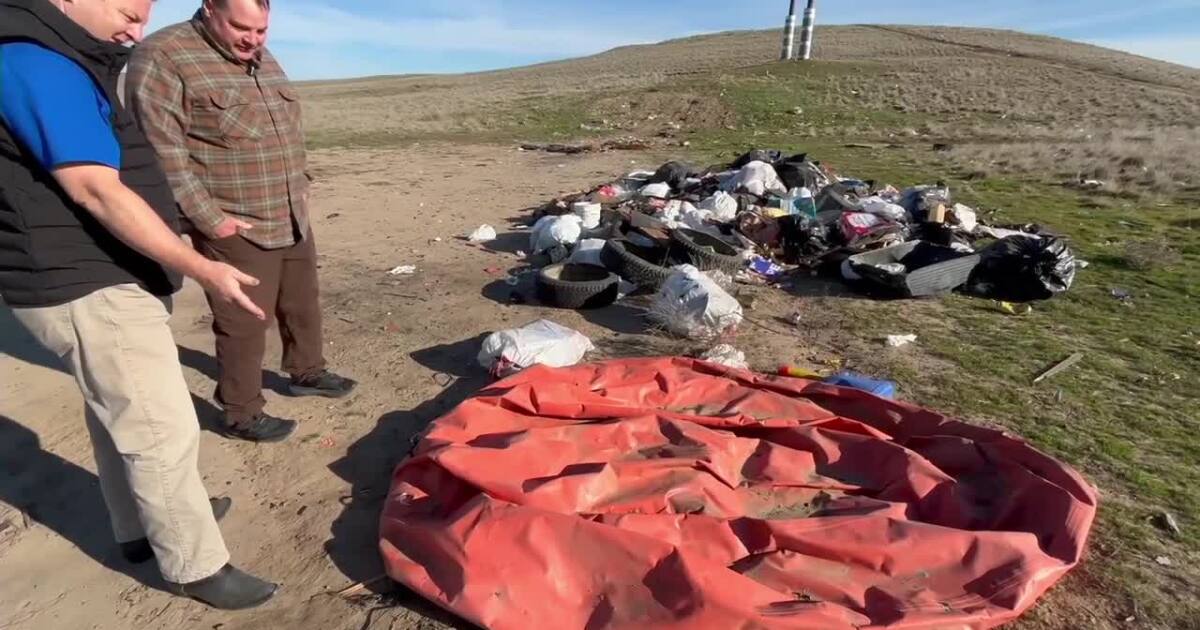
Volunteer organizes massive cleanup effort to remove huge piles of garbage from the Idaho high desert

Kinston woman arrested in months-long fraud investigation in Illinois

Galveston Town Marshal placed on administrative leave

Inside Iowa Politics: Candidate Jim Carlin doesn’t want American troops on the ground in Iran

Florida High School Football Rankings: Top 25 teams – Oct. 21

How old is Bo Nix? What to know about Oregon quarterback ahead of 2024 NFL Draft

Cleary's 21 help Le Moyne down Central Connecticut State 69-64 in OT

99th annual Pony Swim held in Virginia

Indiana Members Credit Union announced as new anchor tenant at Bottleworks District

Ilhan Omar calls Trump an ‘unhinged lunatic,’ urges booting him out of office
Between Budapest and Brussels: Péter Magyar’s political tightrope

Michigan muscles its way to program’s 2nd NCAA basketball title, beating UConn

Map: Minor Earthquake Strikes Near San Diego

Trump claims he’d win as the president of Venezuela — just needs to ‘quickly’ learn Spanish
-

 Atlanta, GA2 days ago
1 teenage girl killed, another injured in shooting at Piedmont Park, police say
-

 South-Carolina1 week ago
South Carolina vs TCU predictions for Elite Eight game in March Madness
-

 Movie Reviews5 days ago
Vaazha 2 first half review: Hashir anchors a lively, chaos-filled teen tale
-

 Vermont1 week ago
Skier dies after fall at Sugarbush Resort
-

 Politics1 week ago
Trump’s Ballroom Design Has Barely Been Scrutinized
-

 Politics1 week ago
JD Vance says he was ‘obsessed’ with UFOs, believes aliens are actually ‘demons’
-

 Politics1 week ago
Jeffries declines to break with indicted Democrat after ethics panel’s guilty verdict
-
 Entertainment5 days ago
Inside Ye’s first comeback show at SoFi Stadium