Technology
Smart home hacking fears: What’s real and what’s hype


NEWYou can now listen to Fox News articles!
News of more than 120,000 Korean home cameras being hacked recently can shake your confidence in connected devices. Stories like that make you picture cybercriminals breaking into homes with high-tech gadgets and spying on families through smart cams. That reaction is natural. But most of these headlines leave out important context that can help you breathe a little easier.
First, smart home hacking is rare. Most incidents stem from weak passwords or from someone you already know, rather than from a stranger with advanced tools. Today’s smart home brands push out updates to block intrusion attempts, including patches for new AI-related vulnerabilities that often make headlines.
Let’s break down what actually puts a smart home at risk and what you can do to stay safe.
Sign up for my FREE CyberGuy Report
Get my best tech tips, urgent security alerts and exclusive deals delivered straight to your inbox. Plus, you’ll get instant access to my Ultimate Scam Survival Guide — free when you join my CYBERGUY.COM newsletter
SMART HOME DEVICE MAKER EXPOSES 2.7 BILLION RECORDS IN HUGE DATA BREACH
Smart home hacking headlines can look scary, but most threats come from weak passwords rather than targeted attacks. (Kurt “CyberGuy” Knutsson)
Why criminals are not circling your house with hacking gear
Many people imagine cybercriminals driving around neighborhoods with scanners that look for vulnerable devices. In reality, Wi-Fi ranges and technical limits make that nearly impossible. Even high-profile hacks of casinos and large companies do not translate to criminals trying to breach residential smart locks for petty theft.
Burglars still choose low-tech methods. They look for unlocked doors or easy entry points. They avoid complicated hacking tools because the payoff is too small to justify the work.
So how do smart homes get hacked? Here are the real attack paths and how they work.
Common ways smart homes get attacked
Smart homes face a handful of digital threats, but most come from broad automated attacks rather than someone targeting your house.
1) Automated online attacks
Bots constantly scan the internet for weak passwords and outdated logins. These brute force attacks throw billions of guesses at connected accounts. When one works, the device becomes part of a botnet used for future attacks. That doesn’t mean someone is targeting your home on purpose. Bots search for anything they can breach. A strong password stops them.
2) Phishing attempts
Some phishing emails impersonate smart home brands. Clicking a fake link or sharing login details can open the door for criminals to reach your network. Even a general phishing attack can expose your Wi-Fi info and lead to broader access.
3) Data breaches from IoT companies
Hackers often go after company servers, not individual homes. These breaches may expose account details or stored camera footage kept in the cloud. Criminals may sell that data to others who might try to use it. It rarely leads to direct smart home hacking, but it still puts your accounts at risk.
4) Attacks on device communications
Early IoT devices had vulnerabilities that allowed criminals to intercept the data they sent and received. (IoT stands for Internet of Things and includes everyday connected gadgets like smart plugs, smart thermostats or Wi-Fi cameras.) Modern products now use stronger encryption, making these attacks extremely rare in the real world.
5) Bluetooth malware
Bluetooth issues still pop up from time to time, but most modern smart home devices use stronger security than older models. When a new flaw is discovered, companies usually release fast patches, which is why it’s important to keep your apps and gadgets updated. Today, these Bluetooth risks rarely lead to real smart home problems.
ADT HACKED: IS YOUR HOME SECURITY SYSTEM REALLY SECURE?
Who actually tries to hack smart homes
When hacking happens, it usually involves someone with some level of access already. In many cases, no technical hack occurs at all.
Simple steps like stronger Wi-Fi security and regular updates go a long way toward protecting connected devices. ( Al Drago/Bloomberg via Getty Images)
A relation or acquaintance
Exes, former roommates or relatives often know login info. They may try to spy or cause trouble. Update all passwords if you suspect this.
Untrustworthy employees
There have been cases where employees at security companies snooped through camera feeds. This isn’t remote hacking. It’s a misuse of internal access.
Data thieves
They steal account lists and login details to sell. Others may buy those lists and try to log in using exposed credentials.
Blackmail scammers
Some send fake messages claiming they hacked your cameras and threaten you. Most of these scams rely on lies because they have no access at all.
Foreign governments
Some banned foreign manufacturers pose surveillance risks. The FCC maintains a list of companies that cannot sell security tech in the U.S. Always check that list before buying unfamiliar brands.
Smart home devices that can raise concerns
Some everyday gadgets create small but real entry points for trouble, especially when their settings or security features get overlooked.
Smart fridges
They often arrive with default passwords that owners forget to change. Older models may use outdated IoT protocols with weaker protections. Many do not get frequent security updates.
Wi-Fi baby monitors
Wi-Fi offers convenience but also adds risk. Weak routers and poor passwords can allow strangers to access a feed. Closed network monitors avoid Wi-Fi risks but still face basic signal interception attempts.
Smart bulbs
During setup, some bulbs broadcast an open temporary network. If a criminal joins at the exact right moment, they could reach the rest of your devices. These cases are rare but possible in theory.
Smart speakers
Voice ordering can be exploited by curious kids or guests. Set a purchase PIN so no one can order items with simple voice commands.
Steps to stay safe in your smart home
Strong habits and a few simple tools can block the most common threats that target connected homes.
1) Use strong passwords
Choose long, complex passwords for your Wi-Fi router and smart home apps. A password manager makes this simple. Consider using a password manager, which securely stores and generates complex passwords, reducing the risk of password reuse.
Next, see if your email has been exposed in past breaches. Our No. 1 password manager (see Cyberguy.com) pick includes a built-in breach scanner that checks whether your email address or passwords have appeared in known leaks. If you discover a match, immediately change any reused passwords and secure those accounts with new, unique credentials.
Check out the best expert-reviewed password managers of 2025 at Cyberguy.com
2) Turn on two-factor authentication
Brands like Ring and Blink already use it. Add two-factor authentication (2FA) to every account that supports it.
3) Use a reputable data removal service
Removing your personal details from data broker sites helps prevent criminals from using leaked or scraped information to access your accounts or identify your home.
While no service can guarantee the complete removal of your data from the internet, a data removal service is really a smart choice. They aren’t cheap, and neither is your privacy. These services do all the work for you by actively monitoring and systematically erasing your personal information from hundreds of websites. It’s what gives me peace of mind and has proven to be the most effective way to erase your personal data from the internet. By limiting the information available, you reduce the risk of scammers cross-referencing data from breaches with information they might find on the dark web, making it harder for them to target you.
Check out my top picks for data removal services and get a free scan to find out if your personal information is already out on the web by visiting Cyberguy.com
Get a free scan to find out if your personal information is already out on the web: Cyberguy.com
4) Add strong antivirus software on phones and computers
Strong antivirus protection blocks malware that could expose login details or give criminals a path into the devices that manage your smart home. The best way to safeguard yourself from malicious links that install malware, potentially accessing your private information, is to have strong antivirus software installed on all your devices. This protection can also alert you to phishing emails and ransomware scams, keeping your personal information and digital assets safe.
Get my picks for the best 2025 antivirus protection winners for your Windows, Mac, Android & iOS devices at Cyberguy.com
Choosing brands with clear privacy practices and local storage options helps keep your home and data in your control. (CyberGuy.com)
5) Choose brands with strong encryption
Pick smart home products from companies that explain how they protect your data and use modern encryption to lock down your footage and account details. Look for brands that publish clear security policies, offer regular updates and show how they keep your information private.
6) Store sensitive footage locally
Pick security cameras that let you save video directly to an SD card or a home hub, rather than uploading it to the cloud. This keeps your recordings under your control (and helps protect them if a company server is breached). Many cameras from trusted lines support local storage, so you do not have to rely on a company server.
7) Keep devices updated
Install firmware updates quickly. Enable automatic updates when possible. Replace older gadgets that no longer receive patches.
8) Secure your Wi-Fi
Your router is the front door to your smart home, so lock it down with a few simple tweaks. Use WPA3 encryption if your router supports it, rename the default network, and install firmware updates to patch security holes. For a full step-by-step guide on tightening your home network, check out our instructions in “How to set up a home network like a pro.”
Kurt’s key takeaways
Smart homes feel intimidating when scary headlines surface. But when you look at real-world data, you see far fewer risks than the stories suggest. Most attacks rely on weak passwords, poor router settings or old devices. With the right habits, your smart home can stay both convenient and secure.
What smart home risk concerns you most, and what part of your setup makes you nervous? Let us know by writing to us at Cyberguy.com
CLICK HERE TO DOWNLOAD THE FOX NEWS APP
Sign up for my FREE CyberGuy Report Get my best tech tips, urgent security alerts and exclusive deals delivered straight to your inbox. Plus, you’ll get instant access to my Ultimate Scam Survival Guide — free when you join my CYBERGUY.COM newsletter
Copyright 2025 CyberGuy.com. All rights reserved.



Slay the Spire II launched in early access last week, and it’s already an excellent sequel to one of the best roguelikes of all time. In many ways, it’s very similar to its predecessor. Like Hades II and Hollow Knight: Silksong, Slay the Spire II mostly iterates on an already superb foundation. But it does add online co-op with up to four players. While multiplayer changes the familiar rhythms of Slay the Spire just a bit, it’s still a great way to tackle the arduous climb up the spire.
A round of Slay the Spire II plays essentially the same as the original: In each run, you navigate three different acts across a winding map, slowly making a build by crafting your deck and picking up various perk-giving relics, and fighting enemies, elites, and bosses along the way. Slay the Spire II retains the deliberate, turn-based style of play, meaning that when it’s your turn, you have as much time as you want to decide what to do. Since you can see exactly what your enemies are planning for their next turn, there’s a lot of strategy in deciding how much damage to do and how much defense you might need to set up. Multiplayer adds a slight twist: When it’s your turn, everyone can play simultaneously. That opens up all sorts of new opportunities for planning, but it also requires communication to make sure everyone is using their cards effectively.
My multiplayer partner was my wife, the biggest Slay the Spire fan I know, and on our second run we got a thrilling victory. I played the new Necrobinder character, a necromancer, while she played as the returning Silent, which can make decks built around flurries of shivs. Over the course of the run, we accidentally settled into a strategy where I focused on applying the Vulnerable status to as many enemies as possible before my wife would rain down shivs upon our foes.
Slay the Spire II doesn’t encourage teamwork only in battles. At a campfire rest stop, you can choose to mend a friend’s health to help them out. (Some of the new enemies are tough, so I’m glad this is an option.) You each get a vote on which path to take next on the map. Everyone can draw on the map, too — as I learned many times after seeing the doodles my wife made when I would spend too long in the shop.
Since we had to communicate so much, our winning run took about an hour and a half, slower than how fast I could blast through runs in the first game. When we finally defeated the Act 3 boss, though, it was even more satisfying than most of my solo wins because we did it together. My one complaint is that co-op requires you to each play online on your own copy of the game, and that, because there’s no couch co-op, we each had to play on separate devices even though we were sitting on the couch right next to each other.
Those are annoying tradeoffs, but multiplayer is such a fun addition to Slay the Spire that I don’t mind. I can’t wait to try another multiplayer run and see what challenges — and doodles — are in store for me.

NEWYou can now listen to Fox News articles!
Most people never think about Android security updates until a headline like this appears. Suddenly, your phone, the device you use for messages, banking, photos and work, becomes part of a global cybersecurity story.
That is exactly what happened this week. Google released its latest Android security updates, and they fix a massive 129 vulnerabilities. Even more concerning, one of them is already being exploited by attackers.
The flaw targets a component connected to Qualcomm graphics hardware, and researchers say it has already been used in limited targeted attacks. If you use an Android phone, this is the kind of update you want installed as soon as possible.
Sign up for my FREE CyberGuy Report
Get my best tech tips, urgent security alerts, and exclusive deals delivered straight to your inbox. Plus, you’ll get instant access to my Ultimate Scam Survival Guide – free when you join my CYBERGUY.COM newsletter
GOOGLE DISMANTLES 9M-DEVICE ANDROID HIJACK NETWORK
Google’s March Android security update fixes 129 vulnerabilities, including a zero-day flaw already exploited in targeted attacks. (Firdous Nazir/NurPhoto via Getty Images)
Android security flaw already targeted by attackers
One vulnerability in particular has security researchers paying close attention. The flaw is tracked as CVE-2026-21385. Google says there are signs it is already being used in targeted attacks. That makes it a zero-day vulnerability.
In simple terms, attackers discovered the flaw before many devices received a fix. According to Qualcomm, the problem is tied to the graphics processing component inside many of its chipsets. Specifically, the issue involves something called an integer overflow. That technical term means a calculation error can cause memory corruption inside the system. Once that happens, attackers may gain a foothold on the device.
Qualcomm says the flaw impacts 235 different chipsets, which means a large number of Android phones could be affected. Google’s Threat Analysis Group discovered the issue and reported it through coordinated disclosure practices. Qualcomm then worked with device makers to release patches.
Why the Android security vulnerability is dangerous
Several of the patched vulnerabilities allow attackers to execute code remotely or gain elevated privileges on a device. One issue inside the Android System component is especially concerning. Google says it could allow remote code execution without any user interaction.
That means an attacker may exploit the flaw without the victim tapping a link or installing an app. In cybersecurity terms, that type of vulnerability ranks among the most dangerous.
The March Android bulletin addresses ten critical flaws across the System, Framework and Kernel components. These parts sit at the core of Android, so any weakness there can ripple across millions of devices.
ANDROID MALWARE HIDDEN IN FAKE ANTIVIRUS APP
Android users are urged to install the latest security patch as manufacturers roll out updates across devices. (Barrington Coombs/PA Images via Getty Images)
Why some Android phones get security updates faster
Google released two patch levels for this update:
- 2026-03-01 security patch level
- 2026-03-05 security patch level
The second update includes everything in the first, plus fixes for additional hardware components and third-party software. Google Pixel devices typically receive updates immediately. However, many Android users must wait longer.
Phone manufacturers such as Samsung, Motorola and OnePlus often test the patches before releasing them for specific models. Carriers may also delay updates while they verify compatibility. As a result, some users receive security patches quickly while others wait weeks.
How to protect your Android phone from security threats
Security vulnerabilities are a reality in modern software. The good news is that there are several simple steps that can greatly reduce your risk.
1) Install Android updates quickly
Check for updates regularly and install them as soon as they appear. On most devices, go to Settings, tap Security and privacy or Software update, then select Check for updates and install the latest version if one is available. Security updates often fix vulnerabilities that attackers may already be trying to exploit.
2) Avoid apps from unknown sources
Only download apps from trusted stores like Google Play. Third-party app stores pose a higher risk of malware.
3) Keep Google Play Protect enabled
Google Play Protect, which is built-in malware protection for Android devices, scans apps for malicious behavior and warns you if something suspicious appears. It also automatically removes known malware. However, it is important to note that Google Play Protect may not be enough. Historically, it isn’t 100% foolproof at removing all known malware from Android devices. Therefore, we recommend strong antivirus software because it adds another layer of protection by using deeper threat detection, real-time monitoring and broader malware databases that can catch suspicious apps or files that Google Play Protect may overlook. Get my picks for the best 2026 antivirus protection winners for your Windows, Mac, Android & iOS devices at Cyberguy.com
4) Use strong device security
Set a strong passcode on your phone and turn on fingerprint or face unlock if your device supports it. This helps keep strangers out of your phone if it is lost or stolen.
5) Be cautious with suspicious links
Many attacks still start with phishing messages. Avoid tapping unknown links in texts, emails, or social media messages.
YOUR PHONE SHARES DATA AT NIGHT: HERE’S HOW TO STOP IT
A critical Android zero-day tied to Qualcomm chipsets could allow attackers to gain a foothold on affected devices. (Donato Fasano/Getty Images)
The bigger picture behind Android security updates
This Android update also highlights how modern mobile security works behind the scenes. Google’s Threat Analysis Group frequently discovers vulnerabilities that may already be used in real-world attacks. Those findings trigger coordinated responses involving chip manufacturers, phone makers and security researchers. In this case, Qualcomm received the report in December and provided fixes to device makers in early 2026.
By the time the public bulletin arrived, patches were already moving through the Android ecosystem. The process may look slow from the outside. In reality, it involves dozens of companies working together to prevent widespread exploitation.
Kurt’s key takeaways
Security updates rarely feel exciting. Yet they play a critical role in protecting billions of smartphones around the world. This latest Android update proves that point clearly. A zero-day flaw tied to Qualcomm graphics hardware was already being targeted before many users even knew it existed. Installing updates quickly remains one of the simplest ways to protect your device and your personal data. Most of the time, the update only takes a few minutes. Those few minutes can block attacks that might otherwise compromise your phone. So the next time your Android device prompts you to install a security patch, the better question may be this:
When your phone asks for a security update, do you install it immediately or tap remind me later? Let us know by writing to us at Cyberguy.com
Sign up for my FREE CyberGuy Report
Get my best tech tips, urgent security alerts, and exclusive deals delivered straight to your inbox. Plus, you’ll get instant access to my Ultimate Scam Survival Guide – free when you join my CYBERGUY.COM newsletter
Copyright 2026 CyberGuy.com. All rights reserved.

The rumored “HomePod with a screen” we’ve heard so much about was reportedly lined up for launch in 2025, and then this spring, and now, according to the latest updates, it’s on the shelf until this fall. Leaker Kosutami posted as much on X last week, and today, Bloomberg reporter Mark Gurman followed up with similar information, saying its robot arm-equipped cousin is now planned for launch in 2027.
That was supposed to be ready by now, but it is now predicted to arrive later this year, along with the iPhone 18 Pro plus 2027 updates for iOS, macOS, and all the rest. He describes a silver aluminum-cased device with a 7-inch screen and USB-C power port running a version of tvOS 27, while new versions of the HomePod speaker and Apple TV 4K box are also waiting in the wings for that Siri update, and a smart home sensor is in the works, too.

Paid Family Leave Act strains Minnesota businesses, Chamber says
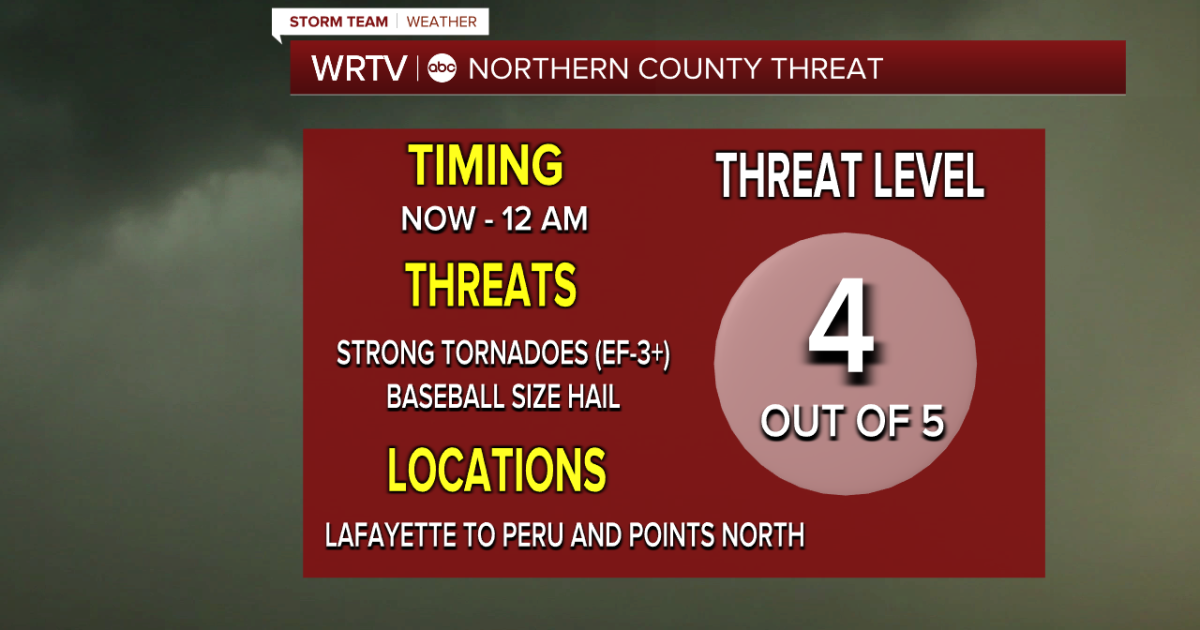
ALERT DAY: Tornado threat north this evening; severe threat sinks south overnight

Steelers Add Year to Cam Heyward’s Contract, Creating Cap Space

EARLY RESULTS: Special election underway for Ga. House District 130 seat

Lime updates subscription service for frequent riders in DC – WTOP News

Florida High School Football Rankings: Top 25 teams – Oct. 21

Cleary's 21 help Le Moyne down Central Connecticut State 69-64 in OT

How old is Bo Nix? What to know about Oregon quarterback ahead of 2024 NFL Draft

99th annual Pony Swim held in Virginia

Indiana Members Credit Union announced as new anchor tenant at Bottleworks District

Map: 2.3-Magnitude Earthquake Reported North of New York City

Trump stirs GOP primary drama with visit to Massie’s Kentucky home turf

Israeli air strike targets building in south Lebanon

Ed Martin, outspoken Justice Department lawyer, is formally accused of ethical violations | CNN Politics

Trump reveals top issues GOP should focus on to secure midterms victory: ‘I’ve never been more confident’
-

 Wisconsin1 week ago
Setting sail on iceboats across a frozen lake in Wisconsin
-

 Massachusetts1 week ago
Massachusetts man awaits word from family in Iran after attacks
-

 Maryland1 week ago
AM showers Sunday in Maryland
-

 Pennsylvania5 days ago
Pa. man found guilty of raping teen girl who he took to Mexico
-

 Florida1 week ago
Florida man rescued after being stuck in shoulder-deep mud for days
-

 Detroit, MI5 days ago
U.S. Postal Service could run out of money within a year
-

 Miami, FL6 days ago
City of Miami celebrates reopening of Flagler Street as part of beautification project
-

 Sports6 days ago
Keith Olbermann under fire for calling Lou Holtz a ‘scumbag’ after legendary coach’s death