Technology
Amazon Prime settlement could put money back in your pocket


NEWYou can now listen to Fox News articles!
Amazon has agreed to pay $2.5 billion to settle allegations brought by the Federal Trade Commission over how it enrolled customers in Prime and how difficult it made cancellation.
The FTC alleged Amazon enrolled millions of consumers without clear consent and failed to provide a simple way to cancel.
“The evidence showed that Amazon used sophisticated subscription traps designed to manipulate consumers into enrolling in Prime, and then made it exceedingly hard for consumers to end their subscription,” Federal Trade Commission Chairman Andrew N. Ferguson said.
Rather than proceed to trial, Amazon chose to settle the case. The company did not admit liability and says it has already made changes to Prime enrollment and cancellation flows. Still, the agreement stands as the second-largest monetary judgment ever secured by the Federal Trade Commission.
ALEXA.COM BRINGS ALEXA+ TO YOUR BROWSER
Eligible U.S. Amazon Prime members can now file claims for refunds tied to the FTC’s $2.5 billion settlement. (iStock)
Sign up for my FREE CyberGuy Report
Get my best tech tips, urgent security alerts and exclusive deals delivered straight to your inbox. Plus, you’ll get instant access to my Ultimate Scam Survival Guide — free when you join my CYBERGUY.COM newsletter.
How the $2.5 billion settlement breaks down
The court-ordered settlement is divided into two parts. First, Amazon must pay a $1 billion civil penalty to the federal government. As a result, this marks the largest civil penalty ever tied to a violation of an FTC rule. Second, $1.5 billion is set aside for consumer refunds. Eligible Prime subscribers may receive compensation for Prime membership fees paid during the covered period, capped at $51 per person. Because this is an FTC action, only U.S.-based Prime subscribers qualify. Therefore, customers outside the United States are not eligible.
Who qualifies for an Amazon Prime refund
You may qualify for compensation if either of the following applies.
- First, you signed up for Amazon Prime in the United States between June 23, 2019, and June 23, 2025.
- Alternatively, you attempted to cancel Prime through the online cancellation process during that same period but were unable to complete it. This includes entering the cancellation flow and not finishing or accepting a Save Offer.
To confirm when you joined Prime, log in to your Amazon account. Then go to Memberships and Subscriptions and select Payment history under Prime.
How Amazon is issuing refunds
Under the settlement, refunds are distributed in two groups based on eligibility.
Automatic Payment Group
Some consumers qualified for automatic payments.
- You were eligible if you signed up for Prime between June 23, 2019, and June 23, 2025, enrolled through a challenged enrollment flow and used no more than three Prime benefits in any 12-month period.
- Automatic payments were issued within 90 days of the court order, with most eligible customers receiving funds by late December 2025. These payments covered Prime membership fees paid up to $51. No claim was required.
However, if you believe you qualified for an automatic payment but did not receive one, you may still be eligible to file a claim.
Claims Process Payment Group
At this point, the claims process is the primary path for refunds. The claims window opened January 5, 2026. Eligible consumers are being notified by email or postcard through early February. You may qualify to file a claim if you unintentionally enrolled in Prime through a challenged enrollment method or tried but failed to cancel your membership online between June 23, 2019, and June 23, 2025, and used fewer than 10 Prime benefits during any 12-month period. In addition, you must not have already received an automatic payment. To file a claim, you will need to confirm one of two conditions by checking a box on the claim form. Claims are reviewed for eligibility. Approved claims receive compensation for Prime fees paid, capped at $51 per person.
The FTC says Amazon used confusing Prime signup and cancellation flows that led millions of users into unwanted subscriptions. (iStock)
Where to file a Prime settlement claim
If you are eligible to file a claim, official instructions will be provided by email or mail. You can also access the court-approved settlement site directly at: subscriptionmembershipsettlement.com.
Links to the settlement site are also available on Amazon’s website, the Prime membership page and within the Amazon app.
THE WEEK’S BEST AMAZON HOME DEALS: SAVE 40% OR MORE ON PILLOWS, BLENDERS, VACUUMS AND MORE
Even if you do not qualify for a refund, this settlement is a strong reminder to review your subscriptions and confirm you are paying only for services you actively use. Here’s how to cancel a subscription using your iPhone and Android.
“Payments are being handled by the settlement administrator. Customers can find information and submit claims at the administrator’s website subscriptionmembershipsettlement.com,” an Amazon spokesperson told CyberGuy.
How to add or manage your Amazon Prime account
If you already have an Amazon account, adding or managing Prime takes only a few minutes. First, log in to Amazon and open the Accounts and Lists menu. From there, select Prime to view your membership details. Next, follow the prompts to add Prime or manage an existing subscription. Amazon displays pricing, billing dates and available benefits before you confirm. For that reason, review each screen carefully so you know exactly what you are agreeing to. For more on “How to get a cheap Amazon Prime membership,” click here.
Take my quiz: How safe is your online security?
Think your devices and data are truly protected? Take this quick quiz to see where your digital habits stand. From passwords to Wi-Fi settings, you’ll get a personalized breakdown of what you’re doing right and what needs improvement. Take my Quiz here: Cyberguy.com.
Kurt’s key takeaways
Overall, this settlement sends a clear message about subscription transparency. While a $51 refund may feel modest, the broader impact matters. Regulators are forcing companies to simplify signups and make cancellations easier. If you ever felt trapped in a subscription you did not intend to start, this case shows enforcement is finally catching up to deceptive design tactics.
The claim form shows where to find your Claim ID and PIN, which are required to file for an Amazon Prime settlement refund. (iStock)
Have you ever tried to cancel a subscription and felt blocked or misled along the way? Let us know by writing to us at Cyberguy.com.
CLICK HERE TO DOWNLOAD THE FOX NEWS APP
Sign up for my FREE CyberGuy Report
Get my best tech tips, urgent security alerts and exclusive deals delivered straight to your inbox. Plus, you’ll get instant access to my Ultimate Scam Survival Guide – free when you join my CYBERGUY.COM newsletter.
Copyright 2026 CyberGuy.com. All rights reserved.



AI has touched every part of the music industry, from sample sourcing and demo recording, to serving up digital liner notes and building playlists. There are technical and legal challenges, fierce ethical debates, and fears that the slop will simply crush working musicians through sheer volume. Is it art or just an output? What exactly is “really active“? Whether it’s a new model or a new lawsuit, we’re covering it all to make sure you don’t miss any major developments.
So follow along as we dig into the latest in AI “music.”
- Suno leans into customization with v5.5
- The music industry has embraced a “don’t ask, don’t tell” policy about AI.
- North Carolina man pleads guilty to AI music streaming fraud.
- Apple Music adds optional labels for AI songs and visuals
- Qobuz is automatically detecting and labeling AI music now, too.
- This Chainsmokers-approved AI music producer is joining Google
- Google’s AI music maker is coming to the Gemini app
- Deezer opens its AI music detection tool to other platforms
- ElevenLabs made an AI album to plug its music generator
- Bandcamp becomes the first major music platform to ban AI content
- Universal Music signs a new AI deal with Nvidia
- Musicians are getting really tired of this AI clone ‘bullshit’
- Get ready for an AI country music explosion
- 97 percent of people struggle to identify AI music, but it’s not as bad as it seems
- Warner Music Group partners with Suno to offer AI likenesses of its artists
- The music industry is all in on AI
- No, typing an AI prompt is not ‘really active’ music creation
- Suno valued at $2.45 billion in latest funding round as lawsuits loom.
- The human behind AI music artist Xania Monet, revealed.
- Suno’s upgraded AI music generator is technically impressive, but still soulless
- What happens when an AI-generated artist gets a record deal? A copyright mess
- Record labels claim AI generator Suno illegally ripped their songs from YouTube
- Can the music industry make AI the next Napster?
- AI music company Suno acquired a browser-based audio editing tool called WavTool.
- The music industry is building the tech to hunt down AI songs
- Sabotaging AI music with sick beats.
- YouTube’s new AI tool generates free background music for videos
- Splice CEO Kakul Srivastava on where to draw hard lines around AI in music
- Making human music in an AI world
- AI music startups say copyright violation is just rock and roll
- The music industry’s AI fight
- Listen to the AI songs music labels say violate their copyright.
- Warner Music Group’s CEO says we might see AI prompt-generated music really soon.
- AI-generated music isn’t just a copyright hazard.
- How AI is solving one of music’s most expensive problems

NEWYou can now listen to Fox News articles!
Walk into a McDonald’s, and you expect a familiar routine. You order, wait and grab your food. At one location in Shanghai, that routine briefly looked very different.
McDonald’s deployed robots from Chinese robotics firm Keenon Robotics in one of its fast-food restaurants as part of a short-term test tied to a store opening. The robots greeted customers, added a bit of entertainment and helped with simple service tasks.
Sign up for my FREE CyberGuy ReportGet my best tech tips, urgent security alerts and exclusive deals delivered straight to your inbox. Plus, you’ll get instant access to my Ultimate Scam Survival Guide — free when you join my CYBERGUY.COM newsletter
DRONE FOOD DELIVERY LAUNCHES IN NEW JERSEY
Humanoid and service robots from Keenon Robotics line up outside a McDonald’s in Shanghai, highlighting the mix of experimental machines used in the short-term test. (Keenon Robotics)
What actually happened at this McDonald’s in Shanghai
This test happened at just one location. It was not a rollout. It was a short pilot tied to a store opening. Inside the restaurant, humanoid robots greeted customers and added a fun, interactive element. You can see them wearing McDonald’s uniforms and making simple gestures for diners. At the same time, other robots handled basic tasks like delivering food and clearing trays. It was a mix of different machines working together, not a fully integrated system.
Human workers still did the real work behind the counter. They handled cooking, orders and anything that required judgment.
In the end, this looked more like a live demo than a real shift in operations. The robots were there to attract attention, not replace staff.
Why McDonald’s is experimenting with robots
Even though this was a small test, it reflects a much bigger trend. Restaurants in many regions are dealing with hiring challenges. At the same time, fewer workers are interested in repetitive, lower-paid roles. That creates an opportunity for automation. Robots can handle simple, repetitive tasks with consistency. They do not get tired, and they can operate for long hours. For fast-food chains, that level of reliability is appealing. At this stage, the technology is not advanced enough to replace human workers. But it can support them in limited ways.
Are robot workers the future of fast food?
Not yet. This test was more about exploring possibilities than changing operations. The robots acted more like a demonstration of what could come next rather than a working solution ready for scale. Right now, the most realistic future is a hybrid model. Humans continue to handle cooking, customer issues and complex tasks. Robots assist with basic service and customer-facing roles. That balance could evolve over time as the technology improves.
Why robot tests matter for the future of fast food
Even short-term experiments can signal where things are headed. Robots can speed up service, reduce long-term labor costs and create a unique experience that attracts customers. For families and younger diners, interacting with a robot can turn a routine visit into something memorable. That novelty factor alone makes these tests valuable for companies looking to stand out.
ROBOT FIREFIGHTERS ENTER BURNING BUILDINGS FIRST
A humanoid robot greets a customer at the counter, showing how the machines were used to create an interactive, front-of-house experience. (Keenon Robotics)
Why fast food automation is still in the early stages
Today’s robots are limited. They struggle with complex tasks and unpredictable situations that require human judgment. Cooking, handling special requests and managing busy environments still depend on people. That is why this test remained small and temporary. It shows potential, but it also highlights how far the technology still has to go.
What this means to you
You are not about to walk into a fully automated McDonald’s. But you may start seeing more technology in everyday places. That could mean faster service and fewer delays. It could also mean less direct interaction with human staff. Jobs in fast food are unlikely to disappear overnight. Instead, they may shift toward roles that focus on customer support, problem-solving and managing technology. At the same time, these early tests raise questions about how far automation will go and how quickly it could change the workforce.
Take my quiz: How safe is your online security?
Think your devices and data are truly protected? Take this quick quiz to see where your digital habits stand. From passwords to Wi-Fi settings, you’ll get a personalized breakdown of what you’re doing right and what needs improvement. Take my Quiz here: Cyberguy.com
A humanoid robot dressed as a chef stands on display, underscoring how the test leaned more toward demonstration and entertainment than real kitchen operations. (Keenon Robotics)
Kurt’s key takeaways
This was not a rollout. It was a glimpse. McDonald’s used humanoid robots in one location for a short period to test reactions and explore possibilities. The machines added novelty, but they did not replace workers. Still, the direction is clear. Automation is moving into everyday spaces, one small test at a time.
CLICK HERE TO DOWNLOAD THE FOX NEWS APP
If robots can already greet you and deliver your food, how long before they take on the rest of the job? Let us know by writing to us at Cyberguy.com
Sign up for my FREE CyberGuy Report Get my best tech tips, urgent security alerts and exclusive deals delivered straight to your inbox. Plus, you’ll get instant access to my Ultimate Scam Survival Guide — free when you join my CYBERGUY.COM newsletter
Copyright 2026 CyberGuy.com. All rights reserved.

It’s rare for a movie to get technology right. And it’s even rarer for that movie to be a thriller or horror, where realism takes a backseat to scares and tension. But Red Rooms mostly gets it. Nothing takes me out of a film quicker than a tech MacGuffin that might as well be literal magic. Yes, the phrase “dark web” will always sound a bit silly, but at no point during its 118 minutes does the tech become a distraction.
It’s not the tech that makes Red Rooms great, though. It’s just something that could have easily tanked an otherwise excellent movie. What carries the film is the expert tension building by director Pascal Plante. The perfect slow-burn pacing. And the incredible performances by Juliette Gariépy as Kelly-Anne and Laurie Babin as Clementine.
The film centers mostly on Kelly-Anne, a model / hacker / professional gambler who attends the trial of serial killer Ludovic Chevalier. She befriends Clementine, a fan of Chevalier who insists that he is being framed.
Clementine neurotically and loudly defends Chevalier, calling into TV shows and shouting at reporters outside the courtroom. She makes a spectacle of herself. But Kelly-Anne remains more mysterious, her motives unclear. Even at the end of the film, there is ambiguity about what she was trying to accomplish and why.
The ambiguity is part of what makes Red Rooms so enthralling. The movie feels unpredictable. None of the characters seem trustworthy or relatable. The world they inhabit is familiar, yet uncanny.
The movie lingers in that discomfort for long periods of time, making you squirm. Giving you the opportunity to play through all the possible scenarios that could play out in your head. Is Chevalier really the killer? Is Kelly-Anne the killer? Was one of the victim’s mothers an accomplice? Is the prosecutor keeping a secret?
The movie inches along, drawing out a tale of kidnapping, live-streamed torture, and snuff films before erupting into a climax that unexpectedly mines online poker and Bitcoin for legitimate drama. It’s ultimately less about the murders themselves than it is about obsession, internet bubbles, and the media. It almost feels like a grimier companion piece to David Fincher’s Gone Girl.

‘What’s going on?’: US judge calls aspects of new Pentagon press policy ‘weird’

How a Database Manager Lives on $118,000 in Inwood

Detroit Lions ‘Ready’ for All-Pro Moving to Left Tackle

This Week: Bike Ambassador, Lake Merritt Loop, Cayuga Street – Streetsblog San Francisco

How FC Dallas Can Unlock Santiago Moreno Alongside Musa, Valiente, and Farrington

Florida High School Football Rankings: Top 25 teams – Oct. 21

How old is Bo Nix? What to know about Oregon quarterback ahead of 2024 NFL Draft

Cleary's 21 help Le Moyne down Central Connecticut State 69-64 in OT

99th annual Pony Swim held in Virginia

Indiana Members Credit Union announced as new anchor tenant at Bottleworks District
‘What’s going on?’: US judge calls aspects of new Pentagon press policy ‘weird’

Video: Iran to Allow More Oil Ships Through Strait of Hormuz, Trump Says

Dem senator warns deportation could let Virginia woman’s illegal immigrant killer ‘escape accountability’

Newsletter: G7 ministers to hold talks on war’s economic fallout
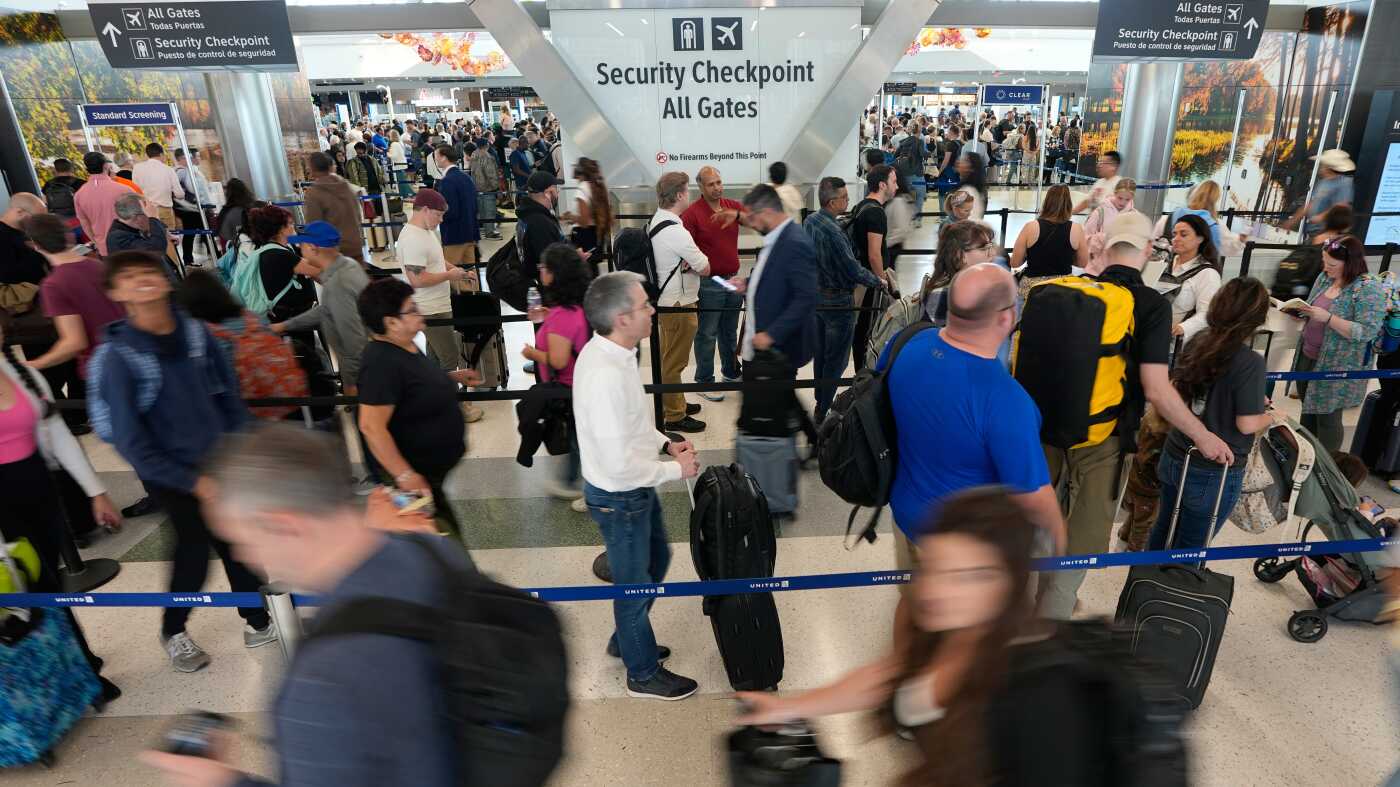
ICE officers could remain at airports after TSA workers are paid
-

 Sports1 week ago
IOC addresses execution of 19-year-old Iranian wrestler Saleh Mohammadi
-

 Miami, FL4 days ago
Jannik Sinner’s Girlfriend Laila Hasanovic Stuns in Ab-Revealing Post Amid Miami Open
-

 New Mexico1 week ago
Clovis shooting leaves one dead, four injured
-

 Politics1 week ago
Schumer gambit fails as DHS shutdown hits 36 days and airport lines grow
-

 Tennessee7 days ago
Tennessee Police Investigating Alleged Assault Involving ‘Reacher’ Star Alan Ritchson
-

 Minneapolis, MN4 days ago
Boy who shielded classmate during school shooting receives Medal of Honor
-

 Science1 week ago
Record Heat Meets a Major Snow Drought Across the West
-

 South-Carolina1 day ago
South Carolina vs TCU predictions for Elite Eight game in March Madness