Sports
Patriots' Robert Kraft, second gentleman Doug Emhoff meet to talk antisemitism, other bias: report


New England Patriots owner Robert Kraft reportedly met with second gentleman Doug Emhoff and civil rights leader Clarence Jones to discuss antisemitism and ways to deter bias toward the Jewish and Black communities.
The group met in Massachusetts and also “emphasized the urgent need to address antisemitic language and harassment,” Bloomberg reported, citing a White House statement. Emhoff reportedly toured the Foundation to Combat Antisemitism and learned about how it monitors online hate speech.
New England Patriots owner Robert Kraft attends the 13th Annual NFL Honors at Resorts World Theatre on February 08, 2024 in Las Vegas, Nevada. (Jeff Kravitz/FilmMagic)
Kraft’s foundation has been at the forefront of the fight against antisemitism — amplified further by the Oct. 7 Hamas terror attacks in Israel. The organization also had an ad during the Super Bowl.
“Antisemitism is a growing threat against Jews on social media and in communities across the country,” Kraft says on the organization’s website. “I have committed tremendous resources toward this effort and am vowing to do more. I encourage others to join in these efforts.
“My hope is our campaign will continue to enhance the national conversation about the need to speak out against hatred of all types, and particularly to stand up to Jewish hate.”
Emhoff, the husband of Vice President Kamala Harris, told officials at the World Economic Forum in January about the painful experiences American Jews have dealt with in the wake of the terror attacks.
Second gentleman Douglas Emhoff attends an event to call attention to the “sexual and gender-based violence that Hamas perpetrated on October 7th and since then against Israeli women,” in Rayburn Building on Wednesday, February 14, 2024. (Tom Williams/CQ-Roll Call, Inc via Getty Images)
PATRIOTS’ ROBERT KRAFT EXPRESSES DISBELIEF OVER SUPPORT FOR HAMAS
He mentioned the “aloneness” that Jewish people in America have woken up to following Hamas’ attack. After noting that nothing is as sorrowful as what the victims of the brutal attack have endured, Emhoff said how difficult it has been for his community to see people take stances against Jews and Israel.
“Again, we’re not in Israel… so we can’t even imagine what that is like, but American Jews — I think the feeling is one of aloneness and being hated and being unmoored,” he said.
Since the Oct. 7 killings by Hamas, emboldened pro-Palestinian supporters have flooded public spaces, Ivy League campuses, and taken to social media to denounce Israel’s treatment of Palestinians and its military campaign in Gaza.
New England Patriots owner Robert Kraft speaks to the press at Gillette Stadium in Foxborough, Massachusetts, on January 11, 2024. (JOSEPH PREZIOSO/AFP via Getty Images)
Some of these demonstrations and proclamations have devolved into antisemitism and threats of violence against the Jewish people, shocking prominent Jews throughout the country.
Fox News’ Gabriel Hays contributed to this report.
Follow Fox News Digital’s sports coverage on X and subscribe to the Fox News Sports Huddle newsletter.



NEWYou can now listen to Fox News articles!
USA Rugby, the nation’s governing body for the sport of rugby, announced Friday it will be introducing a new “open” gender division to accommodate trans athletes.
The new rule comes more than a year after President Donald Trump’s “Keeping Men Out of Women’s Sports” executive order and nearly seven months after the U.S. Olympic & Paralympic Committee’s (USOPC) new requirement for all governing bodies to comply with it.
“USA Rugby will now have three competition categories; Men’s Division, Women’s Division and Open Division. The Open Division will permit any athlete, regardless of gender assigned at birth and gender identity, to compete in USA Rugby-sanctioned events, whether full contact or non-contact,” the organization said in a statement.
Cassidy Bargell of the United States passes the ball during a women’s rugby World Cup 2025 match against Samoa at LNER Community Stadium in Monks Cross, York, Sept. 6, 2025. (Michael Driver/MI News/NurPhoto)
The organization’s policy also seemingly allows any hopeful competitors to simply select their gender when registering, with potential vetting by officials.
“Division status will be determined during the membership application and registration process, when an athlete selects the ‘gender’ option in Rugby Xplorer. When applying for membership or registering as ‘Female’ or registering for an event in the Women’s Division, an athlete represents and warrants to USA Rugby that they are Female.”
“This representation creates a rebuttable presumption that the individual’s sex identified at birth was female,” the organization’s member policy states.
Gabriella Cantorna, Ilona Maher and Emily Henrich of the U.S. before a women’s rugby World Cup 2025 match against Samoa at York Community Stadium Sept. 6, 2025, in York, England. (Molly Darlington/World Rugby/World Rugby via Getty Images)
“The determination of whether an individual is Female may be established through records from authoritative sources. Only USA Rugby shall have the right to contest the individual’s Women’s Division status or challenge the presumption of an athlete registered as ‘Female.’”
In July, the USOPC updated its athlete safety policy to indicate compliance with Trump’s “Keeping Men Out of Women’s Sports” executive order.
However, Trump has also pushed for mandatory genetic testing of athletes to protect the women’s category at the upcoming 2028 Los Angeles Olympics amid concerns over forged birth certificates allowing biological males to gain access to women’s sports.
CLICK HERE TO DOWNLOAD THE FOX NEWS APP
The USA Rugby goal line flag before a match between the United States and Scotland at Audi Field July 12, 2024, in Washington, D.C. (Scott Taetsch/Getty Images for Scottish Rugby)
USOPC Chief Medical Officer Jonathan Finnoff said at the USOPC media summit in October the SRY gene tests being used by World Athletics and World Boxing are “not common” in the U.S. but suggested the USOPC is exploring options to employ sex testing options for its own teams and that he expects other world governing bodies to “follow suit.”
“It’s not necessarily very common to get this specific test in the United States, and, so, our goal in that was helping to identify labs and options for the athletes to be able to get that testing. And (it was) based on that experience and knowing that some other international federations likely will be following suit,” Finnoff said.
Related Article


Forfeits by high school boys’ soccer teams in the City Section and Southern Section playoffs continued Friday as both sections try to deal with violations of CIF Bylaw 600, which prohibits players from participating in outside leagues during their sports season.
Calabasas pulled out of the Southern Section Division 3 championship because of an ineligible player. Chavez became the sixth City Section school eliminated from the playoffs for using an ineligible player and was replaced by Chatsworth for the City Division I final.
There’s also an allegation about another Southern Section team that could result in another forfeit in the final.
Some high schools thought they had found a solution by not allowing players to play until after their club seasons ended in early December. Cathedral had several players miss its first three games because of several big club tournaments in November and early December.
“You communicate to students and parents,” Cathedral coach Arturo Lopez said. “Unfortunately, there’s more and more academies now.”
Ron Nocetti, the executive director of the CIF, said, “I think we have to have conversations with our sections.”
CIF membership repeatedly has rejected the proposal of getting rid of Bylaw 600. Schools don’t want to have their coaches battling it out weekly with club coaches, which also would place additional pressure on athletes dealing with school work and then having to do double workouts.
The balancing act for students already is tough enough, with the amount of club teams growing in a lot of sports because it’s a lucrative business. The CIF briefly suspended the rule during the pandemic in 2020 but quickly reinstated it.
The problem is club soccer programs are holding competitions in the middle of the high school season, and players, knowing the rule that you can’t play high school and club at the same time, apparently have decided to try to do both with the hope of not getting caught.
This year, they are getting caught. Emails alleging violations started arriving to City Section commissioner Vicky Lagos before the semifinals. If a player is found to have played club, the high school team has to forfeit, and if it happens during the playoffs, the team is eliminated.
Usually the pressure is on schools to make sure rules are not violated, but for Bylaw 600, schools can do everything right and still be punished for a player violating the rule on their own.
Several leagues are expected to present proposals to get rid of Bylaw 600. Nocetti said membership might be open to adopting changes.
“Maybe this is a tipping point for schools saying maybe it’s time to make a big change with the rule,” he said.
Sports
Anthony Richardson free to seek trade after injury setbacks amid Colts’ shift to Daniel Jones

NEWYou can now listen to Fox News articles!
Anthony Richardson Sr.’s future in Indianapolis faces more uncertainty than ever.
The Indianapolis Colts granted Anthony Richardson, the team that used the fourth overall pick in the 2023 NFL Draft on the quarterback, permission to explore a trade. His agent, Deiric Jackson, confirmed the latest development in the 23-year-old’s tumultuous career to ESPN on Thursday.
Veteran quarterback Daniel Jones beat out Richardson in a preseason competition for the starting job. Jones made the most of another opportunity as an NFL starter, helping the Colts win eight of their first 10 games of the 2025 regular season.
Indianapolis Colts quarterback Anthony Richardson heads off the field after an NFL football game against the Denver Broncos on Sunday, Dec. 15, 2024 in Denver, Colorado. (AP Photo/David Zalubowski)
However, his season was ultimately derailed by an Achilles injury. The setback came two years after he tore an ACL with the New York Giants. The Colts appear ready to move forward with Jones, clouding Richardson’s future in Indianapolis.
Jones is set to become a free agent in March, meaning the Colts must either use the franchise tag or sign him to a new deal. Richardson has started just 15 games in three seasons with the Colts, his tenure largely shaped by injuries.
A shoulder surgery limited Richardson to four games during his rookie campaign, while a series of setbacks cost him four games in 2024.
Indianapolis Colts quarterback Anthony Richardson (5) looks for an open receiver during the game against the Houston Texans at NRG Stadium. (Troy Taormina/Imagn Images)
Richardson suffered what was described as a “freak pregame incident” during warmups last season, landing him on injured reserve after attempting just two passes in two games in 2025. He has thrown 11 touchdowns against 13 interceptions in his NFL career.
Colts general manager Chris Ballard said Tuesday that the vision problems stemming from Richardson’s orbital fracture last October are “trending in the right direction.” He added that Richardson has been “cleared to play.”
Indianapolis Colts quarterback Anthony Richardson (5) celebrates his touchdown against the New York Jets during the fourth quarter at MetLife Stadium in East Rutherford, New Jersey. (Brad Penner/Imagn Images)
Riley Leonard, a sixth-round pick in the 2025 NFL Draft, is expected to return to the Colts next season.
When asked about Richardson’s standing with the Colts moving ahead, Ballard replied, “I still believe in Anthony.”
Follow Fox News Digital’s sports coverage on X, and subscribe to the Fox News Sports Huddle newsletter.
Related Article

Two-alarm fire damages hotel in Estes Park, 1 person taken to a Colorado hospital

Man shot, critically injured by police in Hartford; mayor says there will be a ‘full review’

Delaware history in News Journal March 1-7: Fire rescue, power rate jump

Golf roundup: Austin Smotherman plays ‘boring, simple’ to expand lead in Florida

Ga. lawmakers propose changes to state’s early voting process

Florida High School Football Rankings: Top 25 teams – Oct. 21

Cleary's 21 help Le Moyne down Central Connecticut State 69-64 in OT

How old is Bo Nix? What to know about Oregon quarterback ahead of 2024 NFL Draft

99th annual Pony Swim held in Virginia

Indiana Members Credit Union announced as new anchor tenant at Bottleworks District

ICE blasts Washington mayor over directive restricting immigration enforcement

Did the EU bypass Hungary’s veto on Ukraine’s €90 billion loan?
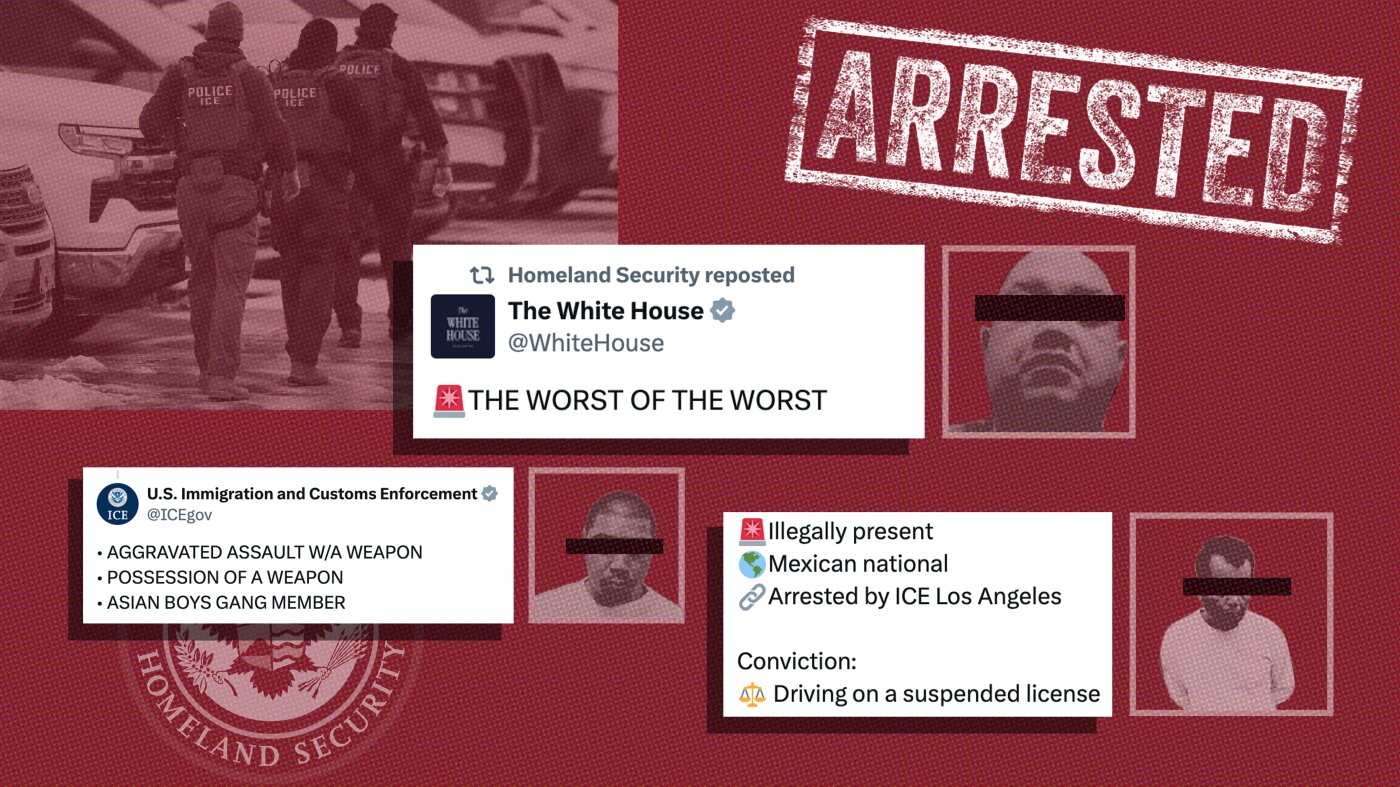
How the federal government is painting immigrants as criminals on social media

Where Iran’s ballistic missiles can reach — and how close they are to the US

Has India’s influence in Afghanistan grown under the Taliban?
-

 World2 days ago
Exclusive: DeepSeek withholds latest AI model from US chipmakers including Nvidia, sources say
-

 Massachusetts3 days ago
Mother and daughter injured in Taunton house explosion
-

 Montana1 week ago
2026 MHSA Montana Wrestling State Championship Brackets And Results – FloWrestling
-

 Louisiana5 days ago
Wildfire near Gum Swamp Road in Livingston Parish now under control; more than 200 acres burned
-

 Denver, CO2 days ago
10 acres charred, 5 injured in Thornton grass fire, evacuation orders lifted
-

 Technology7 days ago
YouTube TV billing scam emails are hitting inboxes
-

 Technology7 days ago
Stellantis is in a crisis of its own making
-

 Politics7 days ago
OpenAI didn’t contact police despite employees flagging mass shooter’s concerning chatbot interactions: REPORT