Sports
NFL investigating phone calls but prankgate looks to be partially league's own doing


NEWYou can now listen to Fox News articles!
The NFL began supplying select draft prospects with single-purpose phones, but that has become a problem for the players, teams, and, yes, the league itself, because the numbers are being leaked with unacceptable frequency now.
You know about the leak of Shedeur Sanders’ phone number. That one was quite public and ultimately easy to solve.
Sanders Phone Provided By NFL
It was all over social media and Atlanta Falcons defensive coordinator Jeff Ulbrich had Sanders’ number, supplied to him via email from the NFL, and that somehow got into the hands of his 21-year-old son Jax, who then facilitated a viral prank call to Sanders.
Oct 7, 2023; Tempe, Arizona, USA; Colorado Buffaloes quarterback Shedeur Sanders (2) against the Arizona State Sun Devils at Mountain America Stadium. (Mark J. Rebilas-USA TODAY Sports)
What you may not know is that the phone Sanders got the call on was not his own. It was provided by the NFL only days prior to the draft.
Even Sanders said in one of his released videos of the incident that the phone “ain’t in my name.”
Added Sanders: “I just got this phone yesterday.”
That’s true because the NFL provided the phone so that teams could be certain of immediately reaching Sanders and other prospects and not have lines of communication crossed while prospects might have otherwise been on their personal phones – perhaps communicating with friends and family or simply in a dead cell zone.
NFL Provides Phones To Help TV
And here’s the kicker: The NFL began supplying these single-purpose phones to make sure its draft telecasts were not awkwardly interrupted or turned uncomfortable with phone calls that didn’t reach the players, a former league official told OutKick on Thursday.
So, basically, the league provided phones for select prospects to make sure the calls got through at the exact moment teams needed them and the exact moment television partners wanted them to get the calls on air to keep their broadcasts humming.
WHO IS JORDON HUDSON? GIRLFRIEND STIRRING CONTROVERSY, BUILDING WEALTH WITH LEGENDARY COACH BILL BELICHICK
Oct 19, 2024; Tucson, Arizona, USA; Colorado Buffalos quarterback Shedeur Sanders prior to the game against the Arizona Wildcats at Arizona Stadium. (Mark J. Rebilas-Imagn Images)
The NFL provided the phones and then provided an estimated 2,000 NFL and club employees with the numbers via email, multiple sources confirmed.
If this doesn’t seem like an inefficient way of making sure an NFL draft broadcast delivers the iconic prospect-answering-the-call-from-the-team moment, then consider these facts:
Sanders was one of a double-digit number of prospects – some who have not been publicly identified – who got prank calls on their league-issued phones, one league source estimated Thursday.
NFL Needs To Investigate Its Own Role
The NFL has been mum about this subject other than to say it is investigating.
That’s ironic because one supposes the investigation by the NFL would have to begin with none other than the NFL itself.
Did the league send out the numbers to an unnecessarily wide group of people? That’s possible because not only did general managers, their staff and coaches get the numbers, but secondary staffers and some media did as well, a source said.
So public relations people, non-football executives, even some equipment managers and training staff may have gotten the delivered list of numbers.
The league may have to pare the list of people who get the numbers to its single-purpose phones in the future because, well, it’s got a problem that it doesn’t like.
And one reason the NFL doesn’t like this problem is because it’s gone public.
In this draft alone, we know the list of players who received prank phone calls prior to being selected includes: Sanders, Giants edge rusher Abdul Carter, Browns defensive tackle Mason Graham, Colts tight end Tyler Warren, Commanders offensive lineman Josh Conerly, Bills offensive lineman Chase Lundt and Eagles quarterback Kyle McCord.
FORMER NFL STAR STEVE SMITH SR FACES LAWSUIT OVER ALLEGED AFFAIR UNDER UNUSUAL STATE LAW: REPORT
NFL Commissioner points out New York Giants fans to edge rusher Abdul Carter after the Giants select Carter with the third pick during the first round of the 2025 NFL Draft on Thursday, April 24, 2025, at Lambeau Field in Green Bay, Wisconsin. The draft runs through April 26. (Tork Mason/USA TODAY NETWORK-Wisconsin)
Source: Double-Digit Prospects Affected
There are others, according to a source.
“I got a few prank calls earlier in the day from 609 numbers and 215 numbers, so I’m like, alright, when I got that 215 phone call, I was thinking it was another prank call,” McCord told Philadelphia area reporters. “But picking up the phone and having [general manager] Howie [Roseman] on the other side, it was pretty cool.”
McCord actually got multiple prank calls before the draft even began. There were so many that when the legitimate call came from the Eagles, he expected it to be another prank.
“I didn’t really think it was going to be legit, to be honest, because I got a bunch of 215 calls obviously leading up to the draft,” McCord said. “And, you know, obviously, sitting there anxious to see what area code pops up and it was 215.
“So, I’m thinking, you know, I don’t know who it was going to be. And then I picked up the phone. I said, ‘Hello,’ and then to hear Howie’s voice on the other side, alright, not what I expected, but I was super pumped that it happened.”
Prank phone calls are as old as, well, phone calls themselves.
And they’re not new to the NFL, either.
Pranks Not New But More Problematic
In 2013, two 20-year-olds somehow got then-Bills general manager Buddy Nix and then-Buccaneers GM Mark Dominik on a conference call. And, amazingly, during the call, the two GMs proceeded to discuss free agency plans for six full minutes.
Oct 9, 2016; Pittsburgh, PA, USA; New York Jets quarterback Ryan Fitzpatrick (14) warms up prior to a game against the Pittsburgh Steelers at Heinz Field. (Mark Konezny-USA TODAY Sports)
Yes, funny, but not for the player that was primarily discussed: Quarterback Ryan Fitzpatrick.
But the 2025 NFL draft seems to be the boiling point for the league on prank calls.
Expect some changes in how it handles the distribution of the numbers, the former league employee speculated, even if its own investigation finds nothing wrong with its actions.
Follow Fox News Digital’s sports coverage on X, and subscribe to the Fox News Sports Huddle newsletter.



NEWYou can now listen to Fox News articles!
Russell Wilson and Sean Payton spent just one NFL season together, but tension lingered after a rocky year.
And it appears the tension that built up from that tumultuous stretch continues to linger.
Wilson’s interview on the “Bussin’ With the Boys” podcast, recorded before last month’s Super Bowl between Seattle and New England, recently resurfaced.
In the interview, Wilson doubled down on his October comment labeling Payton “classless,” saying he felt slighted by his former coach’s remarks.
Head coach Sean Payton of the Denver Broncos talks to quarterback Russell Wilson on the sideline during an NFL preseason football game against the Arizona Cardinals at State Farm Stadium Aug. 11, 2023, in Glendale, Ariz. (Ryan Kang/Getty Images)
“[When] you’ve been on the same side or this and that, and I got the same amount of rings as you got, meaning Sean, right?” said Wilson, who won a Super Bowl with the Seattle Seahawks as Payton did coaching for the New Orleans Saints.
“I got a lot of respect for him as a play-caller, this and that, but to take a shot, I don’t like. I don’t think it’s necessary, you know, I mean, especially when I’m not even on your own team anymore. So, for me, there’s a point in time where you have to, I’ve realized, I’ve stayed quiet for so long. There’s a there’s a time and place where I’m not.
“I know who I am as a competitor, as a warrior, as a champion, too, and, you know, I’ve beaten Sean, too. You know, like we’ve been on the same place and the same thing. And so, it’s not a matter of disrespect. Just don’t disrespect me.”
Sean Payton and Russell Wilson of the Denver Broncos during an a game against the Minnesota Vikings at Empower Field at Mile High Nov. 19, 2023, in Denver, Colo. (Ryan Kang/Getty Images)
After a rocky one-year stint with the Pittsburgh Steelers in 2024, Wilson joined the New York Giants last offseason. However, he was relegated to a backup role after just three games.
Rookie Jaxson Dart quickly showed promise once he had the chance to start, but his season was briefly derailed by injury. Jameis Winston — not Wilson — stepped in for Dart in a handful of games. Dart threw three touchdowns in a Week 7 matchup with the Broncos, nearly pulling off an upset in what was eventually a close loss.
After the game, Payton said Dart provided a “spark” to the Giants’ offense.
“I was talking to [Giants owner] John Mara not too long ago, and I said, ‘We were hoping that that change would have happened long after our game,’” Payton said.
The New York Giants’ Russell Wilson attempts to escape a sack by Dallas Cowboys defensive end James Houston (53) in the first half of a game Sept. 14, 2025, in Arlington, Texas. (AP Photo/Julio Cortez)
Payton also said the Broncos would have faced less of a challenge had Wilson been under center.
“Classless … but not surprised,” Wilson responded in a social media post. “Didn’t realize you’re still bounty hunting 15+ years later though the media.”
Despite last season’s struggles and chatter about his football future, Wilson does not appear ready to call it quits in 2026.
“I wanna play a few more years for sure,” he said. “I think, for me, I’ve always had the vision of getting to 40, at least. I think the game is different. Quarterbacks, we get hit. It’s not, you know, we get hit hard, but … there’s certain rules. I mean, back in the day when I started, bro, it was you just get [clobbered].
“I mean, so I feel like the game allows you to, you know, live a little longer, I guess. I feel healthy. I feel great. But I think, more than anything else is, do you love the game? Do you love studying? Do you love the passion for it all? Do you love the process? Do you love the practice? Do you love — everybody loves the winning part of it, but it’s process. There’s a journey that you got to be obsessed with. And that part I’m obsessed with.”
Follow Fox News Digital’s sports coverage on X, and subscribe to the Fox News Sports Huddle newsletter.
Related Article

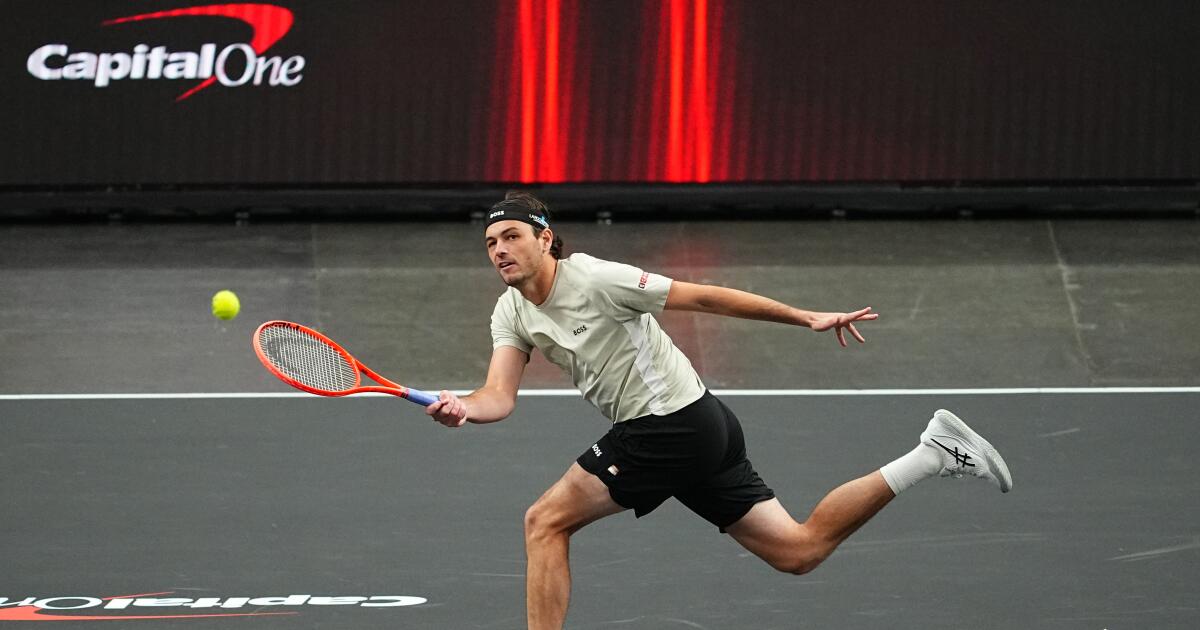
The early rounds of the BNP Paribas Open began Wednesday, with top seeds slated to start play Friday during the 12-day ATP and WTPA Master 1000 tournament.
A busy stretch of the tennis season reaches another gear at Indian Wells Tennis Garden, the second largest outdoor tennis stadium in the world.
While many consider it the “fifth Grand Slam” because of its elite player field, amenities and equal prize money for men and women, professionals acknowledge the tournament is part of a stressful stretch on the tennis calendar.
Indian Wells is followed by the Miami Open, another two-week Master 1000 tournament. The tour stops are known as the “Sunshine Double.”
Some players made the short trip from Indian Wells to Las Vegas this past weekend to participate in the MGM Grand Slam, an exhibition designed to help players ramp up for back-to-back tournaments.
American Reilly Opelka, a 6-foot–11 pro, said managing fatigue after a series of tournaments before hitting Indian Wells has altered his practice and play in exhibition matches, including a loss to 19-year-old Brazilian Joao Fonseca in Las Vegas.
“Normally in any kind of competition, you get excited and play with a pressure point … but you don’t feel this when you are practicing,” Opelka said.
“I was trying to feel like this a few days ago while practicing with … [Tommy Paul,] but instead we got tired and hungry. … That usually doesn’t happen. We just decided to stop and go to eat somewhere.”
Paul said despite the decision to cut practice short, he feels fresh for the upcoming events.
“I started the year pretty well and for Americans, we are excited for the Sunshine Double,” Paul said.
Casper Rudd lost to Opelka during the first round of the Las Vegas exhibition. The Norwegian also lost a week ago during the first round of the Acapulco Open, falling to Chinese qualifier Yibing Wu in straight sets.
Rudd said he felt “extremely tired” after the Australian Open in January.
Rancho Palo Verdes resident Taylor Fritz, ranked No. 7 in the world, said the best way to prepare yourself for grueling tour schedule is “putting [in] the time, work and repetition.”
“… Be there, be focused on the quality that you are doing,” said Fritz, a 28-year-old who won the Indian Wells title in 2022.
While some players are guarding against burnout, others struggled to even reach California. Some players who live in Dubai, including Russians Daniil Medvedev and Andrey Rublev, have to contend with closed airspace triggered by the U.S. and Israel bombing Iran.
The ATP announced Wednesday that, “the vast majority of players who were in Dubai have successfully departed today on selected flights.”
Sports
Law firm fighting for women’s sports in SCOTUS battle comments on ruling possibly impacting SJSU trans lawsuit

NEWYou can now listen to Fox News articles!
A law firm leading the charge in the ongoing Supreme Court case over trans athletes in women’s sports has responded after a federal judge suggested the case’s ruling could impact a separate case involving a similar issue.
Colorado District Judge Kato Crews deferred ruling in motions to dismiss former San Jose State volleyball co-captain Brooke Slusser’s lawsuit against the California State University (CSU) system until after a ruling in the B.P.J. v. West Virginia Supreme Court case, which is expected to come in June.
Slusser filed the lawsuit against representatives of her school and the Mountain West Conference in fall 2024 after she allegedly was made to share bedrooms and changing spaces with trans teammate Blaire Fleming for a whole season without being informed that Fleming is a biological male.
Meanwhile, the B.P.J. case went to the Supreme Court after a trans teen sued West Virginia to block the state’s law that prevents males from competing in girls’ high school sports.
The Alliance Defending Freedom (ADF) is the primary law firm defending West Virginia in that case at the Supreme Court, and has now responded to news that Slusser’s lawsuit could be affected by the SCOTUS ruling.
“We hope the ruling from the Supreme Court will affirm that Title IX was designed to guarantee equal opportunity for women, not to let male athletes displace women and girl in competition. It is crucial that sports be separated by sex for not only the equal opportunity of women but for safety and privacy. Title IX should protect women’s right to compete in their own sports. Allowing men to compete in the female category reverses 50 years of advancement for women,” ADF Vice President of Litigation Strategies Jonathan Scruggs said.
Slusser’s attorney, Bill Bock of the Independent Council on Women’s Sports, expects a Supreme Court ruling in favor of the legal defense representing West Virginia, thus helping his case.
(Left) Brooke Slusser (10) of the San Jose State Spartans serves the ball during the first set against the Air Force Falcons at Falcon Court at East Gym in Colorado Springs, Colorado, on Oct. 19, 2024. (Right) Blaire Fleming #3 of the San Jose State Spartans looks on during the third set against the Air Force Falcons at Falcon Court at East Gym on October 19, 2024 in Colorado Springs, Colorado. ( Andrew Wevers/Getty Images; Andrew Wevers/Getty Images)
“We’re looking forward to the case going forward,” Bock told Fox News Digital.
“I believe that the court is going to find that Title IX operates on the basis of biological sex, without regard to an assumed or professed gender, and so just like the congress and the members of congress that passed Title IX in 1972, allowed this specifically provided for in the regulations that there had to be separate men’s and women’s teams based on biological sex, I think the court is going to see that is the original meaning of the statute and apply it in that way, and I think it’s going to be a big win in women’s sports.”
The Supreme Court’s conservative majority appeared prepared to rule in favor of West Virginia after oral arguments on Jan. 13.
Slusser spoke on the steps of the Supreme Court on Jan. 13 while oral arguments took place inside, sharing her experience with a divided crowd of opposing protesters.
With Fleming on its roster, SJSU reached the 2024 conference final by virtue of a forfeit by Boise State in the semifinal round. SJSU lost in the final to Colorado State.
Slusser went on to develop an eating disorder due to the anxiety and trauma from the scandal and dropped out of her classes the following semester. The eating disorder became so severe, that Slusser said she lost her menstrual cycle for nine months. Her decision to drop her classes resulted in the loss of her scholarship, and her parents said they had to foot the bill out of pocket for an unfinished final semester of college.
President Donald Trump’s Department of Education determined in January that SJSU violated Title IX in its handling of the situation involving Fleming, and has given the university an ultimatum to agree to a series of resolutions or face a referral to the Department of Justice.
Among the department’s findings, it determined that a female athlete discovered that the trans student allegedly conspired to have a member of an opposing team spike her in the face during a match. ED claims that “SJSU did not investigate the conspiracy, but later subjected the female athlete to a Title IX complaint for ‘misgendering’ the male athlete in online videos and interviews.”
CLICK HERE TO DOWNLOAD THE FOX NEWS APP
SJSU trans player Blaire Fleming and teammate Brooke Slusser went to a magic show and had Thanksgiving together in Las Vegas despite an ongoing lawsuit over Fleming being transgender. (Thien-An Truong/San Jose State Athletics)
SJSU Athletic Director Jeff Konya told Fox News Digital in a July interview that he was satisfied with how the university handled the situation involving Fleming.
“I think everybody acted in the best possible way they could, given the circumstances,” Konya said.
Follow Fox News Digital’s sports coverage on X, and subscribe to the Fox News Sports Huddle newsletter.
Related Article
Oregon Lottery Pick 4 results for March 5

Pennsylvania man arrested for allegedly feeding pet parakeet marijuana and beer
RI Lottery Numbers Midday, Numbers Evening winning numbers for March 5, 2026

South Carolina Lottery Pick 3, Pick 4 results for March 5, 2026
SD Lottery Millionaire for Life winning numbers for March 5, 2026

Florida High School Football Rankings: Top 25 teams – Oct. 21

Cleary's 21 help Le Moyne down Central Connecticut State 69-64 in OT

How old is Bo Nix? What to know about Oregon quarterback ahead of 2024 NFL Draft

99th annual Pony Swim held in Virginia

Indiana Members Credit Union announced as new anchor tenant at Bottleworks District

DOJ continues Biden autopen probe despite former president unlikely to face charges
Fact check: Did French border guards mock influencers returning from Dubai amid Iran war?

Iran’s fight for survival / The widening war / Trump’s nebulous goals : Sources & Methods

Map: 4.9-Magnitude Earthquake Shakes Louisiana

Paxton vows he’s ‘staying in this race’ even if Trump backs Cornyn in Texas GOP clash
-

 World1 week ago
Exclusive: DeepSeek withholds latest AI model from US chipmakers including Nvidia, sources say
-

 Wisconsin4 days ago
Setting sail on iceboats across a frozen lake in Wisconsin
-

 Massachusetts1 week ago
Mother and daughter injured in Taunton house explosion
-

 Massachusetts3 days ago
Massachusetts man awaits word from family in Iran after attacks
-

 Maryland5 days ago
AM showers Sunday in Maryland
-

 Florida5 days ago
Florida man rescued after being stuck in shoulder-deep mud for days
-

 Denver, CO1 week ago
10 acres charred, 5 injured in Thornton grass fire, evacuation orders lifted
-

 Oregon7 days ago
2026 OSAA Oregon Wrestling State Championship Results And Brackets – FloWrestling