Sports
NCAA signs lucrative TV deal for championships, but women’s college hoops stays in bundle


The NCAA on Thursday said it had reached an eight-year agreement with ESPN worth $115 million annually to televise 40 college sports championships each year, including the marquee Division I women’s basketball tournament that many people within college sports had hoped would be primed for even bigger returns given a wave of recent popularity.
The $920 million deal ended several years of speculation and debate about how the NCAA could capitalize on an influx of fans in women’s sports, including basketball. Powerful teams like South Carolina and UConn and star players like Caitlin Clark, Angel Reese and Sabrina Ionescu have created higher expectations for a sport that has earned much less money than men’s college basketball and college football, counterparts that have received far higher investments from universities and media companies for nearly a century.
The NCAA’s current contract with ESPN, which was extended in 2011 and runs through the end of this season, brings in $34 million per year and includes 29 championships. A report in 2021, commissioned because of complaints about glaring differences between the men’s and women’s basketball tournaments, suggested that the women’s tournament could earn at least $81 million in the first year of a new deal — if it were sold on its own and not as part of a package deal — although that estimate was met with some skepticism by industry experts for its ambitions.
Ultimately, the NCAA and ESPN agreed to keep the bundle and valued the women’s basketball tournament at about $65 million per year under its portion of the agreement.
NCAA president Charlie Baker acknowledged in an interview that selling women’s basketball on its own was not viable given the realities of the market.
“We said from the beginning that we wanted the best deal that we could get for all of our championships,” Baker told The Athletic. “There was a lot of informal conversation that took place with many other potential participants in this negotiation, but the one who constantly engaged and the one I would argue was the most enthusiastic in a significant way throughout the course of this was ESPN.
“The way they handled the negotiations demonstrated that this was really important to them, that it continued to be part of their portfolio. They will be a terrific partner, I think, going forward here.”
Last year’s NCAA women’s basketball title game, won by LSU and coach Kim Mulkey, smashed viewership records. (Kirby Lee / USA Today)
The new contract does not include the highly lucrative Division I men’s basketball tournament; Paramount Global and Warner Bros. Discovery pay nearly $900 million per year to broadcast that event on CBS and the Turner cable networks in a long-term deal that runs through 2032. The new NCAA-ESPN contract also expires in 2032, which will give the NCAA more flexibility in its next media rights negotiations, Baker said. (The NCAA does not control the rights to Football Bowl Subdivision postseason games, and the College Football Playoff handles its own negotiations and controls its own revenue.)
The new contract is set to begin Sept. 1 and includes guarantees that the national championship games in women’s basketball, women’s volleyball and women’s gymnastics will be broadcast on ABC each year.

GO DEEPER
What does the NCAA’s new media rights agreement mean for women’s college basketball?
A number of prominent women’s basketball coaches, including South Carolina coach Dawn Staley, had advocated for the NCAA to spin off the championship into a stand-alone media deal, like the arrangement used for the men’s basketball tournament.
Last season, the women’s title game aired for the first time on ABC and drew 9.9 million viewers — and featured the most people to ever watch a men’s or women’s college event on ESPN+. Overall viewership growth was up 55 percent, and the sport’s stars — players and coaches — became household names. Many in and around women’s basketball expected this deal to reflect the recent significant growth in the sport by pulling it out of a package it shares with dozens of other sports.
“It should happen,” Staley said in March. “We’re at that place where we’re in high demand. I do believe women’s basketball can stand on its own and be a huge revenue-producing sport that could do, to a certain extent, what men’s basketball has done for all those other sports, all those other Olympic sports and women’s basketball.
“It’s slowly building up to that because there’s proof in the numbers.”
The NCAA’s media advisers at Endeavor’s WME and IMG Sports said their financial modeling valued the women’s basketball tournament at $65 million annually, which makes up more than half of the value of the new $115 million contract. Hillary Mandel, EVP and head of Americas for media at IMG, and Karen Brodkin, EVP and co-head of WME Sports, said they began the process of preparing for the NCAA’s negotiations by assessing the opportunities in the market both for individual sports and for the 40-sport bundle.
“In the end, you’ve got to find the deal that matches your goals and objectives and not unbundle because everybody’s saying to you: ‘Unbundle! Unbundle! Hey, it’s the cool thing to do!’” Mandel said. “Let’s just not get lost in the sauce of that conversation.”
The two sides began engaging in serious negotiations in late October, Brodkin said, and completed the deal during ESPN’s exclusive negotiating window, meaning the NCAA did not take its championship bundle to the open market for a potential bidding war. She said ESPN’s financial investment, its existing infrastructure and the “overwhelming amount of production” the network has committed to on both linear and streaming platforms made it the best opportunity for the NCAA. More than 2,300 hours of championships will air on ESPN’s linear and digital platforms annually as part of the contract, and 10 sports will have their selection shows broadcast.
“Retaining exclusivity was very important to us in a world of fragmentation,” ESPN chairman Jimmy Pitaro said.
Thursday’s news serves as yet another inflection point for women’s college basketball — though reactions are expected to be mixed. The tournament itself is valued at more than 10 times its previous valuation of $6 million to $7 million annually under the current contract, but its singular value was not fully tested. Still, the increased revenue and new $65 million valuation for the women’s basketball tournament set the stage for future change for the sport.
The NCAA will explore the idea of rewarding women’s basketball teams’ NCAA Tournament success with revenue distribution units, Baker said, a system used on the men’s side of the sport to reward conferences and universities for performing in the tournament. The Division I board of directors finance committee began discussions on that front in 2023 and will talk with its member universities more this year, the NCAA said.
“The tournament has grown dramatically because of the hard work of so many student-athletes and coaches and schools and folks at the NCAA and ESPN,” Baker said. “Hopefully, we’ll be able to figure out a way to make it happen.”
Currently, only men’s NCAA Tournament teams earn units by advancing in the bracket. Each team that earns a bid to the tournament earns a unit for its conference, with more units up for grabs based on wins in the tournament. Total revenue earned from tournament units goes to the conference of the team that earned it and is distributed to universities over a six-year period, and it comes from a portion of the revenue that the tournament itself brings in annually. The women’s tournament has, in the past, not brought in enough revenue to justify setting aside money for a unit system.
Women’s college basketball reached a big moment during the 2021 NCAA Tournament when the inequities in treatment between the men and women became obvious to the public. Though those within the game had known for years that the NCAA had favored men’s basketball to the detriment of other sports, a TikTok post from then-Oregon center Sedona Prince prompted far more widespread outrage and momentum for change.
@sedonerrr it’s 2021 and we are still fighting for bits and pieces of equality. #ncaa #inequality #fightforchange
♬ original sound – Sedona Prince
Prince’s tweet racked up 12.3 million views as the college star pointed out basic inequities, highlighting key differences between the women’s tournament and men’s in food provided to teams, access to weight rooms and even swag bags. Players and coaches were also vocal about other areas that showed how the athletes were treated differently, such as having 68 teams in the men’s bracket versus 64 in the women’s and the usage of “March Madness” branding only for the men’s tournament.
Within one week of Prince’s tweet, the NCAA had hired the law firm Kaplan, Hecker & Fink LLP to conduct an independent equity review of the NCAA. In August 2021, the firm released its 117-page review — known colloquially as the “Kaplan report” — of the NCAA’s gender equity within basketball championships. The Kaplan report recommended that the NCAA spin off the women’s basketball tournament separately from other sports, suggesting a higher valuation, and it said the NCAA had created differences in the tournaments by having different people working to organize them without properly conferring about whether they were comparable.
Baker and the NCAA’s media rights advisers said they evaluated all possible options, including going to the open market and trying to sell a stand-alone women’s basketball tournament package, but they opted against it.
“If the market had demonstrated to us and to Endeavor that it would be worth our while to do that, we absolutely would have gone that way,” Baker said.
Multiple industry experts told The Athletic over the past year that it would make the most sense for the NCAA to keep the women’s tournament with ESPN, a partner that broadcasts so much of the sport’s regular season that would be incentivized to cover the sport in the lead-up to the marquee postseason event. Brodkin said there would be no option better than one offering to triple their current deal in addition to increasing the investment in production, marketing and storytelling while putting more games on ABC.
“Unbundling for unbundling’s sake — you’d have to go through the exercise of who and how is someone going to do more than that?” Brodkin said.
Last season, the women’s title game aired on ABC for the first time, and ESPN announced in October that it would be broadcast on ABC again this season — though not in the prime-time slot. There could be more women’s sporting events put on ABC or in better windows moving forward as both sides agreed to meet regularly to consider changes to maximize visibility for events that demand it.
(Top photo: C. Morgan Engel / NCAA Photos via Getty Images)



NEWYou can now listen to Fox News articles!
Max Verstappen snatched the torch from Lewis Hamilton and became one of the most unstoppable Formula 1 drivers in the sport from 2021 to 2024.
The 2025 and 2026 seasons have been a struggle for the Red Bull racer. He finished second to McLaren’s Lando Norris in the drivers’ standings last season, ending his streak of world championships, and has yet to finish in the top five this year.
Red Bull driver Max Verstappen of the Netherlands steers his car during the Japanese Formula One Grand Prix at Suzuka in central Japan, Sunday, March 29, 2026. (AP Photo/Hiro Komae)
After finishing eighth in the Japanese Grand Prix, Verstappen suggested he was contemplating retirement at the age of 28.
“Privately I’m very happy,” Verstappen told the BBC. “You also wait for 24 races. This time it’s 22. But normally 24. And then you just think about is it worth it? Or do I enjoy being more at home with my family? Seeing my friends more when you’re not enjoying your sport?”
He made clear he was suggesting that 2026 could be his final season.
“I want to be here to have fun and have a great time and enjoy myself. At the moment that’s not really the case,” he said. “Of course I do enjoy certain aspects. I enjoy working with my team. It’s like a second family. But once I sit in the car it’s not the most enjoyable unfortunately. I’m trying. I keep telling myself every day to try and enjoy it. It’s just very hard.”
ISRAELI RACING STAR ‘NERVOUS’ AS FAMILY DEALS WITH IRAN’S RETALIATORY STRIKES, EXPRESSES HOPE FOR REGION
Red Bull driver Max Verstappen, right, of the Netherlands and Mercedes driver Kimi Antonelli of Italy talk during the drivers parade ahead of the Japanese Formula One Grand Prix at Suzuka in central Japan, Sunday, March 29, 2026. (AP Photo/Eugene Hoshiko)
Part of the struggles for Verstappen has been trying to get acclimated to the regulation changes.
“I can easily accept to be in P7 or P8 where I am,” he said. “Because I also know that you can’t be dominating or be first or second or whatever, fighting for a podium every time. I’m very realistic in that and I’ve been there before. I’ve not only been winning in F1.
“But at the same time when you are in P7 or P8 and you are not enjoying the whole formula behind it, it doesn’t feel natural to a racing driver,” he continued. “Of course I try to adapt to it, but it’s not nice the way you have to race. It’s really anti-driving. Then at one point, yeah, it’s just not what I want to do.”
Maybe a break in the schedule will help clear Verstappen’s head.
Formula 1 will have a few weeks off as two races that were set for April in Bahrain and Saudi Arabia were canceled because of military operations in Iran.
Red Bull driver Max Verstappen of the Netherlands leaves during the qualifying session of the Japanese Formula One Grand Prix at the Suzuka Circuit in Suzuka, Japan, Saturday, March 28, 2026. (Franck Robichon/Pool Photo via AP)
CLICK HERE TO DOWNLOAD THE FOX NEWS APP
The next race is set for May 3 in Miami.
The Associated Press contributed to this report.
Follow Fox News Digital’s sports coverage on X and subscribe to the Fox News Sports Huddle newsletter.
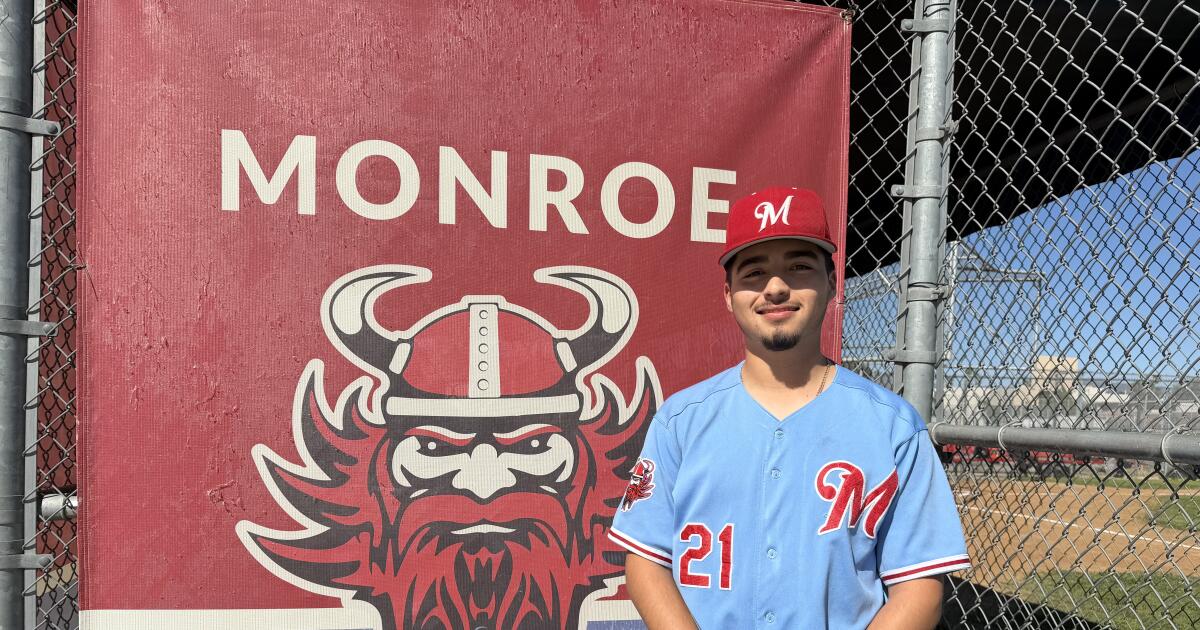
It’s an hour before Monroe High’s baseball team takes infield practice. In the dugout dressed in his uniform, Miguel Gonzalez has his scissors out giving a free haircut to a teammate.
“Ten out of 10,” infielder Alexander Hernandez said when describing Gonzalez’s barber skills.
His pitching skills aren’t bad either. He struck out 12 in six innings in his season debut. He’s 5-0 with a 0.69 ERA. He’s a four-year varsity player for the surprising Vikings, who are 13-1 to start this season under second-year coach Eddie Alcantar.
The fact that Gonzalez is still playing might come as the biggest surprise if you knew all the responsibilities he faces as an 18-year-old.
Alcantar was getting worried last January when Gonzalez didn’t show up for winter workouts.
“I have a rule if you don’t show up for practice, you don’t play,” Alcantar said.
They finally met and Gonzalez revealed he’s been too busy working as a barber. And then came the big news: He’s going to become a father in July.
The Monroe High baseball team is off to an 13-1 start.
(Eric Sondheimer / Los Angeles Times)
It’s a delicate balancing act between work, school, baseball and the seriousness of being a parent as a teenager.
“I’ve been able to figure scheduling little by little,” Gonzalez said. “I do sleep. Maybe five hours.”
Gonzalez said he worked seven days a week as a barber during the summer. He’s been saving for his future while also making sure he did not have to ask his parents for money. He works weekends and sometimes has to leave practice after an hour for work.
As far as baseball, he added a slider this season, picked up some velocity and tries to throw three pitches for strikes.
Against Eagle Rock, he struck out 10 and gave up two hits in a 3-1 win. Against Arleta, he struck out 10 in six innings during a 6-1 victory with one walk. Against Westchester, he got two outs — both strikeouts — in a 3-1 win. Against Vaughn, he gave up two hits in six innings of a 2-0 victory..
Monroe, which used to be a City Section powerhouse in the 1970s when Denny Holt was head coach, also has received a strong season from junior Luis Martinez, who has 21 hits and is batting .500.

Pitcher Miguel Gonzalez has helped Monroe to an 13-1 start with a 5-0 record and 0.69 ERA.
(Eric Sondheimer / Los Angeles Times)
He said his parents have been supportive: “They have told me it’s a really big responsibility.”
After high school, he plans to go to an occupational school to learn more about being a barber. He’d love to continue playing baseball, but that will depend on his development and his priorities. So far, his balancing act is keeping him levelheaded and determined.
He’s been working since he was 5 when he helped his father in landscaping. He switched to cutting hair and loves it. His clients swear by him.
“He’s a good kid,” Alcantar said.

NEWYou can now listen to Fox News articles!
For the first time in more than two decades, the Illinois men’s basketball team will still be dancing when the Final Four tips off.
Iowa’s underdog run in the NCAA Tournament ended Saturday with a 71-59 loss to a dominant Illinois team. Before Illinois could cut down the nets at Houston’s Toyota Center, a buzzer malfunction caused a loud, roughly 10-minute delay.
The buzzer initially sounded signaling the end of a media timeout with just under eight minutes remaining in the first half. The horn continued blaring for about another seven minutes.
A referee talks with the scorer’s table during an official’s timeout due to a broken shot clock horn during the first half of an Elite Eight game between Iowa and Illinois in the NCAA Tournament Saturday, March 28, 2026, in Houston, Texas. (AP Photo/Ashley Landis)
Players stood on the court ready to play for a couple of minutes before both teams started to warm up as the buzzer continued to sound.
It was finally silenced, to cheers from the crowd, but then the main scoreboard and video screen that hangs over the middle of the court went dark.
The game ultimately resumed with the big scoreboard still off. Two smaller scoreboards at each end of the arena were working.
Freshman guard Keaton Wagler scored 25 points to help secure Illinois’ first Final Four berth since 2005.
Keaton Wagler (23) of the Illinois Fighting Illini dribbles against Isaia Howard (23) of the Iowa Hawkeyes during the first half in the Elite Eight of the 2026 NCAA Tournament at Toyota Center March 28, 2026, in Houston, Texas. (Alex Slitz/Getty Images)
This will be the sixth overall trip to the Final Four for Illinois, which has never won a national title. The Fighting Illini will face either Duke or UConn next week in Indianapolis.
The Associated Press contributed to this report.
Follow Fox News Digital’s sports coverage on X, and subscribe to the Fox News Sports Huddle newsletter.

Wolverines make Frozen Four

Bay Area residents hold rally in SF as war with Iran enters 2nd month

Dallas Jenkins says he is the ‘evangelical mascot of the LDS church’ and talks Easter celebrations

New video shows aftermath of police shooting in Downtown Miami

Boston Celtics Star Jayson Tatum Made History In Hornets Game

Florida High School Football Rankings: Top 25 teams – Oct. 21

How old is Bo Nix? What to know about Oregon quarterback ahead of 2024 NFL Draft

Cleary's 21 help Le Moyne down Central Connecticut State 69-64 in OT

99th annual Pony Swim held in Virginia

Indiana Members Credit Union announced as new anchor tenant at Bottleworks District

Scathing report claims nation’s oldest labor union ‘betrayed’ MAGA members through ‘shocking’ spending

Republican US lawmaker demands Congress vote on any Iran troop deployment

So you went to a No Kings protest. Now what?

JD Vance says he was ‘obsessed’ with UFOs, believes aliens are actually ‘demons’
The EU's recipe for trade deals : easy on beef, tough on wine
-

 Sports1 week ago
IOC addresses execution of 19-year-old Iranian wrestler Saleh Mohammadi
-

 New Mexico1 week ago
Clovis shooting leaves one dead, four injured
-

 Miami, FL4 days ago
Jannik Sinner’s Girlfriend Laila Hasanovic Stuns in Ab-Revealing Post Amid Miami Open
-

 Tennessee6 days ago
Tennessee Police Investigating Alleged Assault Involving ‘Reacher’ Star Alan Ritchson
-

 Minneapolis, MN4 days ago
Boy who shielded classmate during school shooting receives Medal of Honor
-

 Politics1 week ago
Schumer gambit fails as DHS shutdown hits 36 days and airport lines grow
-

 Science1 week ago
Record Heat Meets a Major Snow Drought Across the West
-

 Technology1 week ago
YouTube job scam text: How to spot it fast