Sports
Kevin Durant and the 15 pregame minutes that’ve helped shape his game and career


PHOENIX — Almost like clockwork, Phoenix Suns star Kevin Durant appears 90 minutes before each home game, walking onto the court, ready to get started. The road to 30,000 career points? It didn’t begin here, but the routine played a significant role.
Pregame shooting routines unfold every night across the NBA. Charlotte Hornets coach Charles Lee says they are like a “mental sanctuary” where players visualize and replicate what they’re about to face. Memphis Grizzlies coach Taylor Jenkins calls them confidence-boosting opportunities, a final primer before tipoff.
Golden State’s Stephen Curry is perhaps best known for his pregame shooting routine, but Durant’s is just as legendary.
“Did you say it was legendary?” he said one day after practice.
OK, well-known.
“Yeah, because I’ve been around for a while.”
Not true. Watching Durant work before a game is like watching Tiger Woods in his prime on the driving range. A peek behind the curtain when the curtain is left open. A glimpse of the process that leads to greatness.
Coaches constantly remind young players to work at game speed. Do what you’re going to do in a game. This is what Durant does. Every single rep. “If you go watch one of KD’s pregame workouts, like his 15 minutes on the court pregame, he’s in a full sweat,” former Suns assistant Miles Simon said. “It’s like he’s started the game already.”
Kevin Durant warms up with Suns assistant David Fizdale before an October game against the LA Clippers. “A dress rehearsal,” Fizdale calls it. (Adam Pantozzi / NBAE via Getty Images)
Players approach this in different ways. Phoenix teammate Devin Booker says his pregame session is more about mindset than shooting.
“It’s hard to emulate the game, so the more you can zone out and imagine yourself in game-like situations, the better,” he said.
Suns point guard Tyus Jones wants to see the ball go through the net. Others take a looser approach.
Before he was traded to Milwaukee, former Washington Wizards forward Kyle Kuzma did his normal shooting, but he also spent a few minutes chucking half-court shots, trying to see if he could get the ball to bounce off the hardwood and through the basket (he never did).
Durant has tweaked his routine over the years, but the foundation never changes. It’s about fundamentals.
“Balance, follow through, get my legs up under me. But also try to get a sweat in,” said Durant, who recently became the eighth NBA player in history to reach 30,000 career points. “I think that’s the main thing. Not to go through the motions, so my first hard move is when the game starts. I want to push off and see how my body feels before the game.”
Denver Nuggets coach Michael Malone cannot lie: “I have no idea what our guys do pregame,” he said.
He’s not about to tell Russell Westbrook, who’s in his 17th season, what he needs to do to get ready. Westbrook knows. But for a player like second-year guard Julian Strawther, yes, Malone said, the staff will tailor a routine to help get him ready.
Pregame shooting has come a long way.
Indiana Pacers coach Rick Carlisle recalled during his first season with the Boston Celtics that he warmed up by playing one-on-one against teammate M.L. Carr.
“Back in those days, both teams were shooting at both baskets,” Carlisle said, “and we’re weaving in and out of guys on the other team, on both ends.”
Former NBA assistant Tim Grgurich is credited for changing all this. While on George Karl’s staff with the Seattle SuperSonics in the early 1990s, Grgurich turned free-shooting pregame sessions into developmental work. At first, teams split players into guards and bigs, but as staff sizes grew, they began assigning assistants to work out players individually. The time was too valuable to waste, especially with so many younger players entering the league.
“In college, you have time to prepare,” former NBA and college coach Randy Ayers said. “Once you get into conference play, you’re only playing two games a week. In the pros, you can play five games in seven days. The individual instruction is awfully important because you have to put some rest in there for these guys with the schedule that you have.”
In Phoenix, the team’s vets decide the order in which players work (players mostly work two at a time, and not surprisingly, the rookies go first. Ryan Dunn and Oso Ighodaro take the court before fans are even allowed inside the arena). Routine specifics are usually discussed before the season and adjusted as the season unfolds. Sometimes, they have to be worked out on the fly.
Before a recent game, Phoenix assistant coach Brent Barry worked with guard Vasilije Micić, who had just come to Phoenix in a deadline trade with the Hornets.
“Three makes from the corner,” Barry instructed on the court at Footprint Center. He fired chest passes to Micić, hitting the guard right in the shooting pocket. Swish, swish, miss, swish.
“Now, Vasa,” Barry said. “From the crease, shuffle down. Three makes.”
Some players wear headphones or earbuds. Booker does (he walks around the locker room with them on, too, singing as he prepares to come out for his pregame session). Teammates Bradley Beal and Royce O’Neale do as well.
During a recent trip to Phoenix, Charlotte guard LaMelo Ball wore headphones while stretching but removed them once he started shooting.
Durant has worn headphones in the past. He doesn’t anymore.
“I don’t know,” he said. “I guess I just kind of like to feel the arena a little bit. Get immersed in the atmosphere.”
Rex Chapman was the opposite. He played in Phoenix from 1996-2000, back when the organization had a practice court in the arena complex. Instead of working out pregame on the main court, Chapman hit the practice court and worked in private. His reasoning: too many distractions.
“Going out on the court, I knew there were going to be some people out there wanting to take pictures and autographs and whatnot, and I didn’t want to appear like an a–hole,” Chapman said. “I was getting ready for my job.”
Durant starts on the left baseline with short jumpers. Seven in a row. He steps back for corner 3s. He moves into the post. Bursts into the lane. Turns and fades.
Durant works with assistant coach David Fizdale, who also has coached LeBron James, Ray Allen and Dwyane Wade throughout his career.
“I try to basically set up a little dress rehearsal for what he’s going to face in the game as to how teams are going to guard him, based on his sweet spots, things that we run for him,” Fizdale said of Durant. “A dress rehearsal in a short amount of time. And to Kevin’s credit, the amount of energy he puts into his pregame is unique from a standpoint of his effort.”
This is a benefit — the relationship a player and assistant build. Phoenix guard Grayson Allen works with Chaisson Allen, an assistant he got to know during Grayson’s days with the Milwaukee Bucks.
In his 10 years, Booker has gone through several developmental coaches. Asked about the process of getting paired with an assistant, he says, “You just vibe it up.”
Durant credits Wizards head coach Brian Keefe for showing him how to work. They were together for Durant’s first seven NBA seasons, starting in Seattle and continuing in Oklahoma City. Before a recent game in Phoenix, Keefe downplayed his role, saying he learned more from Durant than Durant learned from him.
But he said it’s not an accident that players like Durant, Curry and James have ascended to this level.

Kevin Durant credits now-Wizards head coach Brian Keefe for helping develop his routine back when the two were with the SuperSonics/Thunder franchise. (Scott Taetsch / Getty Images)
“It’s a singular focus, it’s a dedication to the craft, a love of the game, but it’s (also) that consistency every day, I really believe, watching those guys through the years, that leads to who they are,” Keefe said. “Players don’t get enough credit. An 82-game schedule, pressure to play, pressure to perform, and the ones who do this are the ones who put the work in.”
From the lane, Durant moves to the left wing and fires midrange jumpers. He shifts back to the 3-point arc. The first three are catch and shoot. Then Durant shoots off the dribble. He pops out from the corner. Durant moves to the elbow. Then, near the key, where Fizdale instructs him to fake a pass to the corner and make a move to the basket.
Everything Durant does on the left side, he repeats on the right. On this night, it adds up to 120 shots from 18 spots. He steps to the foul line and shoots eight free throws, making six.
During a two-game stretch in late November, Durant made 11 of 16 from the foul line. At his next pregame workout, Durant, an 88 percent foul shooter, was determined to make 10 in a row to get back in rhythm. He swished nine straight. The 10th rimmed out. Durant turned in frustration. He lifted his black T-shirt, wiped his face and returned to the line. He made four and missed the fifth. Not good enough. On the third try, he made 10 in a row.
Durant finishes each session with a dunk. He slaps five with the assistants and managers and retreats to the locker room, ready for whatever the night brings. Fizdale says pregame development time is vital for young players, but it also can help veterans. Look at Durant, he said before a recent game.
“At 36 years old, he’s still getting better, as crazy as that sounds.”
(Top photo of Kevin Durant: Thearon W. Henderson / Getty Images; Video: Doug Haller / The Athletic)



Sports
Ex-NFL reporter Dianna Russini interaction with police officer to dodge traffic ticket comes to light

NEWYou can now listen to Fox News articles!
Police bodycam footage appeared to refute a claim made by former NFL reporter Dianna Russini earlier this year about what she did to get out of a traffic ticket.
Russini, whose relationship with New England Patriots head coach Mike Vrabel led to her resigning from her role with The Athletic in April, said on the “Stugotz and Company” show back in February that she FaceTimed the NFL coach, though she didn’t drop the name, of the officer’s favorite team after being pulled over for being on her phone.
It was a story that came up again during the New York Times’ deep dive into the Russini-Vrabel controversy, and now police bodycam footage has confirmed that wasn’t the case. However, she did name-drop a coach.
ESPN reporter Dianna Russini looks on during the NFL game between the Kansas City Chiefs and Pittsburgh Steelers at Heinz Field in Pittsburgh, Pa., on Sept. 16, 2018. (Mark Alberti/Icon Sportswire)
The footage went just over seven minutes long, as Russini was stopped in Ridgewood, New Jersey, for using her phone while driving. Not only did a FaceTime never happen, but no call at all occurred during the exchange between Russini and the officer.
What did occur, though, was Russini showing the officer texts she had been having with Minnesota Vikings head coach Kevin O’Connell, and she showed the officer her phone with the texts on it.
DIANNA RUSSINI PULLED PATHETIC MOVE WITH AN OFFICER TO GET OUT OF A TICKET, AND IT SHOULD HAVE THE NFL NERVOUS
“I’m an NFL reporter, and I just broke that Seam McDermott got fired from the Bills,” Russini told the officer almost immediately, understanding why she was being pulled over. “I was gonna pull over because I have to make calls. I know you don’t care, but I’m just letting you know my reason why. It was a work thing and it was an emergency for what I do.”
McDermott was fired the morning of Jan. 19, which was the date shown on the bodycam footage, after the Bills’ AFC Divisional Round loss to the Denver Broncos.
The officer replied that Russini had been on her phone “for a while” before pulling her over, though he did acknowledge she had a job to do.
Russini continued, telling the officer that former New York Giants head coach Brian Daboll “wants the job” with the Bills. He was connected to the team given his history with Buffalo prior to joining the Giants, but they hired in-house with Joe Brady being promoted from offensive coordinator to head coach. Daboll ended up joining Robert Saleh’s staff as offensive coordinator of the Tennessee Titans.
Dianna Russini, left, and Mike Vrabel, right, are shown in a split composite image featuring Russini with an ESPN microphone and Vrabel on the Titans sideline wearing a headset. (Imagn Images)
Russini, then, asked if the officer was a Giants or Jets fan given the New Jersey ties. When he responded by saying he was a Vikings fan, it prompted Russini to seemingly show texts with O’Connell. The conversation, which included Russini saying the Vikings’ quarterback “sucks” and “KOC’s awesome” ultimately led to the officer letting her off with a warning.
“I’m gonna cut you a break on the cellphone,” the officer was heard saying. “I understand your job requires you to be on the phone a lot. Just try to wait until you get home, OK?”
PATRIOTS SAY THEY ‘FULLY SUPPORT’ MIKE VRABEL AMID LATEST IN CONTROVERSY INVOLVING DIANNA RUSSINI
The Center Square first reported Russini’s interaction with the officer.
Fox News Digital reached out to Russini and the Vikings for comment.
Ridgewood Police Chief Forest Lyons issued a statement on the matter.
“On January 19, 2026, at 9:40 a.m., a Ridgewood police officer conducted a motor vehicle stop on Godwin Avenue involving Ms. Dianna Russini for the use of a handheld cell phone while driving,” the statement read. “After following department protocol during the stop, and reviewing Ms. Russini’s driving history, the officer exercised his professional discretion and issued a verbal warning to Ms. Russini.
Dianna Russini attends the 2026 Fanatics Super Bowl Party at Pier 48 in San Francisco, California, on Feb. 7, 2026. (Cindy Ord/Getty Images)
“The use of officer discretion in determining whether to issue a warning or a citation is consistent with Ridgewood Police Department policy and longstanding practice. Police officers are encouraged to use their judgment and, when appropriate, provide motorists with warnings as part of the Department’s commitment to fair, impartial and community-oriented policing.”
Russini resigned from her post at The Athletic amid mounting criticism over her relationship with Vrabel after photographs of them hugging and holding hands at a private resort in Sedona, Arizona, went viral. After initially trying to downplay it, saying “reporters interact with sources away from stadiums and other venues,” Russini ultimately released her resignation.
After the original photos, others dating back to 2020 showed Vrabel and Russini kissing at a bar in New York City. The pictures exclusively obtained by the New York Post were taken in the early hours of March 11, 2020.
“They were kissing, and they were all over each other,” an eyewitness told the outlet. “He had a ring on.”
Dianna Russini appears on the red carpet prior to the NFL Honors awards presentation at YouTube Theater in Los Angeles, Calif., on Feb. 10, 2022. (Kirby Lee/USA TODAY Sports)
CLICK HERE TO DOWNLOAD THE FOX NEWS APP
While Russini resigned, Vrabel was back with the Patriots after a counseling visit, which fell on Day 3 of the 2026 NFL Draft.
Vrabel said he had difficult conversations with his family, while also speaking with his players about the situation. The Patriots said before the draft they “fully support” Vrabel, allowing him to seek the counseling he desired despite four rounds of the draft still remaining.
Follow Fox News Digital’s sports coverage on X and subscribe to the Fox News Sports Huddle newsletter.

Group play is over and it’s knockout time at the 2026 FIFA World Cup.
The round of 32 is in progress, with several teams already moving on the round of 16, including tournament co-hosts Canada and Mexico. The U.S. will be looking to do the same when it faces Bosnia-Herzegovina on Wednesday.
Here’s everything you need to know about World Cup knockout stage matches being played Wednesday, Thursday and Friday across the U.S., Mexico and Canada (all times Pacific).

Wednesday’s round of 32 matches
England vs. DR Congo

England’s Jude Bellingham celebrates with teammates after scoring against Panama on June 27.
(Steve Luciano / Associated Press)
Where: Mercedes-Benz Stadium, Atlanta
Time: 9 a.m.
TV: Fox, Telemundo
The buzz: England was unbeaten in group play, but it looked sluggish, failing to score in a goalless draw with Ghana then needing two second-half scores to beat Panama. Harry Kane and Jude Bellingham have combined for five of England’s six goals while Jordan Pickford hasn’t given up a goal since the opening half of the first game. The Democratic Republic of the Congo, playing in the World Cup for the first time since 1974, made it out of the group stage for the first time ever by beating Uzbekistan with three second-half goals.
Belgium vs. Senegal

Belgium’s Leandro Trossard celebrates after scoring against New Zealand on June 26.
(Abbie Parr / Ap Photo/abbie Parr)
Where: Lumen Field, Seattle
Time: 1 p.m.
TV: FS1, Telemundo
The buzz: Unbeaten Belgium didn’t score a goal of its own until routing New Zealand 5-1 in its group-play finale. That allowed it to finish atop of its group and advance to the knockout stages, something it failed to do four years ago. Senegal started with consecutive losses, but routed Iraq 5-0, giving it the best goal differential of all third-place teams and allowing it to advance.
U.S. vs. Bosnia and Herzegovina

U.S. forward Christian Pulisic shoots during a loss to Turkey at the World Cup on June 25.
(Robert Gauthier / Los Angeles Times)
Where: Levi’s Stadium, Santa Clara, Calif.
Time: 5 p.m.
TV: Fox, Telemundo
The buzz: The U.S. won its group, winning twice in the first round for the first time since 1930. But it has won just once beyond the group stage in its history and hasn’t beaten a European team in 12 tries dating to November 2022. Bosnia-Herzegovina beat Qatar in its group-stage finale to advance to the knockout rounds for the first time. Ermin Mahmic has two of the team’s five goals.
Thursday’s round of 32 matches
Spain vs. Austria

Austria’s Marko Arnautovic celebrates after a goal against Algeria on June 27 at the World Cup.
(Reed Hoffmann / Associated Press)
Where: SoFi Stadium, Inglewood
Time: Noon
TV: Fox, Telemundo
The buzz: Spain did not allow a goal in the group stage with keeper Unai Simón making just four saves in the three shutouts. But No. 3 Spain has struggled offensively; leave out its 4-0 rout of Saudi Arabia and it scored just once. Austria needed a goal deep in stoppage time to draw Algeria and finish second in its group, advancing to the second round for the first time since 1982. Marko Arnautovic has two of the team’s six goals.
Portugal vs. Croatia

Portugal star Cristiano Ronaldo attempts an overhead kick against Colombia at the World Cup on June 27.
(Robert Cianflone / Getty Images)
Where: BMO Field, Toronto
Time: 4 p.m.
TV: FS1, Telemundo
The buzz: Call this the Geritol Cup. Unbeaten Portugal finished second in its group with Cristiano Ronaldo, 41, becoming the second-oldest male to score in a World Cup and the only man to score in six consecutive tournaments while Croatia saw Luka Modric become the oldest player in history to record a World Cup assist. Croatia has reached the semifinals of the last two tournaments, but its golden generation is aging. Portugal, a quarterfinalist in 2022, is hoping to give Ronaldo the one title he’s missing.
Switzerland vs. Algeria

Switzerland’s Johan Manzambi heads the ball against Canada at the World Cup on June 24.
(Abbie Parr / Associated Press)
Where: BC Place, Vancouver
Time: 8 p.m.
TV: FS1, Telemundo
The buzz: Unbeaten Switzerland held off Canada in its last game to win its group for the first time since 2006. The Swiss have not won a knockout-round game since 1954. Midfielder Johan Manzambi, the team’s youngest player at 20, has three of Switzerland’s seven goals. Algeria drew Austria in its group-play final to advance as a third-place team. Riyad Mahrez, 35, had a brace in that game and leads Algeria with two goals.
Friday’s round of 32 matches
Australia vs. Egypt

Egypt’s Mohamed Salah celebrates after scoring against New Zealand at the World Cup on June 21.
(Alex Grimm / Getty Images)
Where: AT&T Stadium, Arlington, Texas
Time: 11 a.m.
TV: Fox, Telemundo
The buzz: Australia finished second to the U.S. in its group but stumbled into the round of 32, going 195 minutes without a goal. It’s the first time since 1974 Australia has gone scoreless in consecutive World Cup games. The Socceroos are playing in the knockout stage for the third time in 20 years but have yet to win an elimination game. Unbeaten Egypt also finished second in its group, on a goal-differential tiebreaker. Its five goals have come from five different players. The Pharaohs, Africa’s oldest national team, will be playing in the second round of the World Cup for the first time.
Argentina vs. Cape Verde

Argentina’s Lionel Messi, left, and Jordan’s Noussair Mazraoui battle for the ball at the World Cup on June 27.
(Tony Gutierrez / Associated Press)
Where: Hard Rock Stadium, Miami Gardens, Fla.
Time: 3 p.m.
TV: Fox, Telemundo
The buzz: The last World Cup loss for Argentina came in its 2022 opener, making its nine-game unbeaten run the longest under one coach since 1986, the year it won its second championship. Speaking of streaks, when Lionel Messi came off the bench to score in the group finale, it gave him goals in a record seven consecutive World Cup games. He is tied with France’s Kylian Mbappé in the Golden Boot race, having scored six of Argentina’s eight goals. Unbeaten Cape Verde is playing in the World Cup for the first time, advancing to the knockout stages behind three straight draws, two of them clean sheets by Vozinha, the team’s 40-year-old keeper. It is the first debutant to go unbeaten in the group stage since Senegal in 2002. The smallest country ever to advance out of World Cup group play, Cape Verde had just seven shots on target in the group stage, according to FIFA.
Colombia vs. Ghana

Colombia’s Gustavo Puerta reacts during a match against Portugal at the World Cup on June 27.
(Rebecca Blackwell / Associated Press)
Where: Arrowhead Stadium, Kansas City, Mo.
Time: 6:30 p.m.
TV: Fox, Telemundo
The buzz: Unbeaten Colombia won its group but scored just once in its final two games. It’s 59 shots are tied for third in the tournament but just four of those found the back of the net. Goalkeeper Camilo Vargas, on the other hand, has been called on to make just five saves. Ghana is back in the knockout stages for the first time since 2010, advancing as a third-place team.


NEWYou can now listen to Fox News articles!
Winning two knockout stage games? That means you’re really in the running to win the World Cup.
Let’s check out the updated odds for which countries will make it to the quarterfinals at FanDuel Sportsbook as of July 1.
This page may contain affiliate links to legal sports betting partners. If you sign up or place a wager, FOX Sports may be compensated. Read more about Sports Betting on FOX Sports.
To Reach Quarterfinals
France: -1250 (bet $10 to win $10.80 total)
Argentina: -425 (bet $10 to win $12.35 total)
Morocco: -260 (bet $10 to win $13.85 total)
Brazil: -240 (bet $10 to win $14.17 total)
England: -175 (bet $10 to win $15.71 total)
Spain: -140 (bet $10 to win $17.14 total)
Colombia: -105 (bet $10 to win $19.52 total)
USA: +105 (bet $10 to win $20.50 total)
Mexico: +140 (bet $10 to win $24 total)
Norway: +160 (bet $10 to win $26 total)
Portugal: +175 (bet $10 to win $27.50 total)
Canada: +180 (bet $10 to win $28 total)
Belgium: +185 (bet $10 to win $28.50 total)
Switzerland: +195 (bet $10 to win $29.50 total)
Senegal: +370 (bet $10 to win $47 total)
Algeria: +550 (bet $10 to win $65 total)
Egypt: +650 (bet $10 to win $75 total)
Ghana: +750 (bet $10 to win $85 total)
The USA is currently one of the favorites to reach the World Cup quarterfinals (Getty Images).
Here’s what to know about this oddsboard.
Recent History: The quarterfinals are kinda a given for France, at least in recent years. The French have made it to at least the quarterfinals in five of the last seven World Cups, and they have made the final in four of the last seven years, winning the tournament twice. Les Bleus are now heavy favorites at -1250 to beat Paraguay and get back to the quarterfinals.
The Host Nations: Before this summer, Canada had never won a World Cup match in two tournament appearances. But that has all changed. Canada is through to the Round of 16 after beating South Africa in the Round of 32. As for Mexico, it has recorded four straight scoreless wins to start the tournament for the first time in its nation’s history. El Tri will look to get back to the quarterfinals for the first time in 40 years after dominating Ecuador in the Round of 32. After its win over Ecuador, Mexico jumped from +290 to +140 to make the quarters. The U.S. looks to replicate the other two host nations’ knockout stage performances against Bosnia and Herzegovina on Wednesday.
-
 Lifestyle20 minutes ago
Greetings from London, where Banksy’s flag man is a warning cry
-
Education23 minutes ago
This Little Robot Cleans Windows
-

 Technology28 minutes ago
Comcast’s split could make or break Peacock
-

 World35 minutes ago
State Department congratulates Keiko Fujimori as Peru’s president-elect following razor-thin vote count
-

 Politics38 minutes ago
Mamdani ripped for claiming victory over capitalism after NYC’s multi-billion dollar taxpayer funded bailout
-

 Health43 minutes ago
American vaccines that transformed public health over 250 years: ‘Outweighs harm’
-

 Sports50 minutes ago
Ex-NFL reporter Dianna Russini interaction with police officer to dodge traffic ticket comes to light
-
 Business58 minutes ago
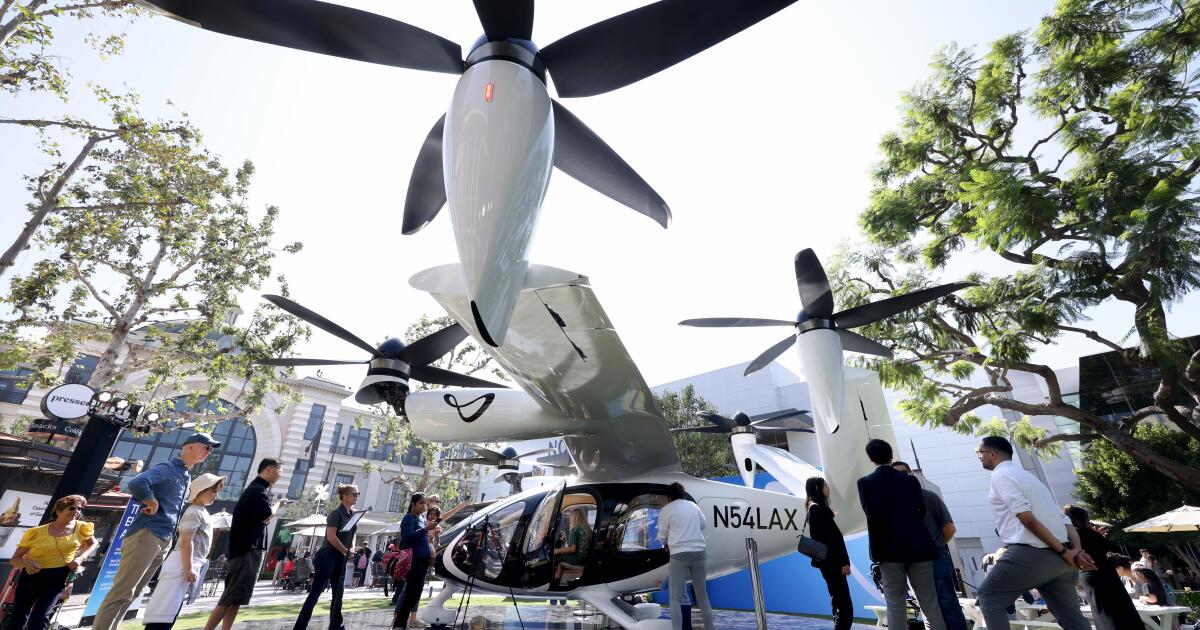
Joby Aviation creates a joint venture with Toyota to build air taxis

