West Virginia is a team that Kentucky was designed to beat, but that doesn’t always happen.
West Virginia
Kentucky takes down West Virginia, will face Texas in Sweet 16


The Mountaineers are small, ferocious, and force turnovers at an elite rate. Kentucky needed to counter that with the size West Virginia just doesn’t have.
Early on, they did just that.
1st half showcases the size difference
West Virginia’s average height is 5’9, and they love to press. Kentucky should be able to just find Strack or Key and allow runners to come off them. The Cats opened up handling the pressure pretty well. Amelia Hassett hit two first-quarter 3’s, and Clara Strack had 4 and 4. But West Virginia was also handling the Cats’ size pretty well.
6’1 Kierra Wheeler had 4 points and 4 rebounds herself as she battled down low in the opening frame. Teonni Key was a monster in the opening half. The senior had 11 points and 5 rebounds, but as the half wore on, the pressure started to get to Kentucky.
After the Cats stretched the lead to double figures, West Virginia would force a 10-second violation as Kentucky struggled to find Clara Strack in the middle of the press. When they did a couple of possessions later, it was a double dribble, and those are the simple kind of unforced turnovers that Kentucky can not have in a game like this.
A 13-2 run from West Virginia sent the two teams to halftime tied at 36. Kentucky shot 48% percent from the floor but had 7 turnovers, 3 from Key and 1 from Strack. West Virginia was led by 13 from Gia Cooke and 10 from Wheeler.
If Kentucky was going to get to its first Sweet 16 in a decade, it would come from Strack and Key.
2nd half started with a Kentucky streak
The Cats started the 3rd with a big flurry, a 13-2 run saw Kentucky extend back to an 11-point lead. It was kind of identical to how the 2nd quarter played out, with Kentucky handling the pressure and using its height to convert easy baskets.
West Virginia really struggled down low against Kentucky’s size. They converted just 13-of-32 from 2-point range.
Kentucky would have a 12-point lead heading to the 4th, just 10 minutes away from a first Sweet 16 appearance since 2015-16.
It started with a bang as West Virginia would throw a haymaker. The Mountaineers would go on a 12-2 run to start the 4th, and Kentucky did look rattled. But to their credit, they slowed it back down and went down low to Key and Strack. The two stars on the day for Kentucky would answer and get back up 8 behind a beautiful post move from Strack.
Gia Cooke, as she did all day, answered. She hit a huge 3 to stem the Cats’ momentum and bring West Virginia back to within 5. The guard would finish with 23.
Tonie Morgan would rise up with 2 minutes to go; she missed the jumper, but a huge hustle play from Clara Strack would give Kentucky another chance to build on its 4-point lead.
Strack would then convert, but like she did all afternoon, Sydney Shaw hit a clutch 3 from the corner, her 6th, to bring West Virginia to within 3 with just 90 seconds to play.
Clara Strack’s turnover issues would play big as she tried to back down, and Jordan Harrison would swipe her 4th steal of the night. Two free throws later, and it was just a 1-point game.
Tonie Morgan hadn’t hit a lot of shots, just 2-for-8. But the point guard hit a massive free-throw line jumper to get Kentucky back up 3 with 55 seconds to go.
West Virginia would hit 2 more clutch free throws, and with 8 seconds to go, Hassett had a wide-open 3. It clanged off the rim, and the Mountaineers would have the last shot.
The Mountaineers had not led since early in the 4th quarter. Gia Cooke shook Teonni Key and had an open jumper that rimmed out. Key would secure the rebound, and Kentucky called a timeout.
On the inbound play, the ball would be hit off Morgan’s shoe. West Virginia would get a chance for a tip-in with .2 left.
West Virginia couldn’t get a shot off, and the Cats will be heading to the Sweet 16 for the first time since 2016. And they did it on the road.
Up next is (1) Texas, which the Cats lost to by 11 earlier this year. That game was a lot closer than the final score, as the Cats were actually within 1 with just over 5 to go.
The game will be in Fort Worth, so it will be another road game. But we should all enjoy this Sweet victory.



West Virginia
How midsummer wild berries connect people, wildlife, and West Virginia’s forests – West Virginia Explorer

CHARLESTON, W.Va. — In midsummer, West Virginia’s forests yield one of their richest annual harvests. Blackberries spill over abandoned fence rows. Raspberries brighten sunny hillsides. Blueberries and huckleberries ripen on the state’s highest mountains.
For generations, families have carried buckets into the woods to gather berries for cobblers, jams, and pies. Yet these fruits nourish far more than Appalachian traditions. Each summer, millions of berries feed an extraordinary variety of wildlife, helping sustain everything from songbirds and wild turkeys to white-tailed deer and black bears.
Wildlife experts say the annual berry crop is one of the Appalachian forest’s most important natural food sources, influencing where animals travel, how they raise their young, and even how often people encounter bears.
Nature’s midsummer pantry
By July, West Virginia’s forests enter one of their most productive seasons. Forester William N. Grafton, a longtime specialist with the West Virginia University Extension Service, wrote in the West Virginia Encyclopedia that the Mountain State is home to “dozens of native berry plants, ranging from trees and shrubs to vines and herbs.”
Among the berries most prized by both people and wildlife, he wrote, are blackberries, blueberries, huckleberries, strawberries, serviceberries, and raspberries.
“July and August are the best months for juicy, tart blackberries,” Grafton wrote. “These months are also best for raspberries (black, red, and wineberry).”
Blueberries and glossy huckleberries continue to ripen from July through September, especially along forest margins, open woodlands, and high mountain ridges.
According to Grafton, these delicious fruits—known to wildlife biologists as “soft mast”—provide critical nutrition for numerous species during summer. Black bears, deer, raccoons, foxes, squirrels, chipmunks, wild turkeys, grouse, and countless songbirds depend on seasonal berry crops as they build energy reserves for the months ahead.
Berry patches also provide much more than food. Dense blackberry thickets offer nesting cover, escape habitat, and shelter for birds and small mammals, making them among the most valuable habitats along forest edges, old fields, and woodland openings.
Why berry season changes bear behavior
The arrival of berry season can also help explain a pattern many West Virginians notice each year. Black bears often become highly visible in late spring, wandering through neighborhoods in search of easy meals before natural foods become abundant. By July, however, reports of bears visiting residential areas frequently decline.
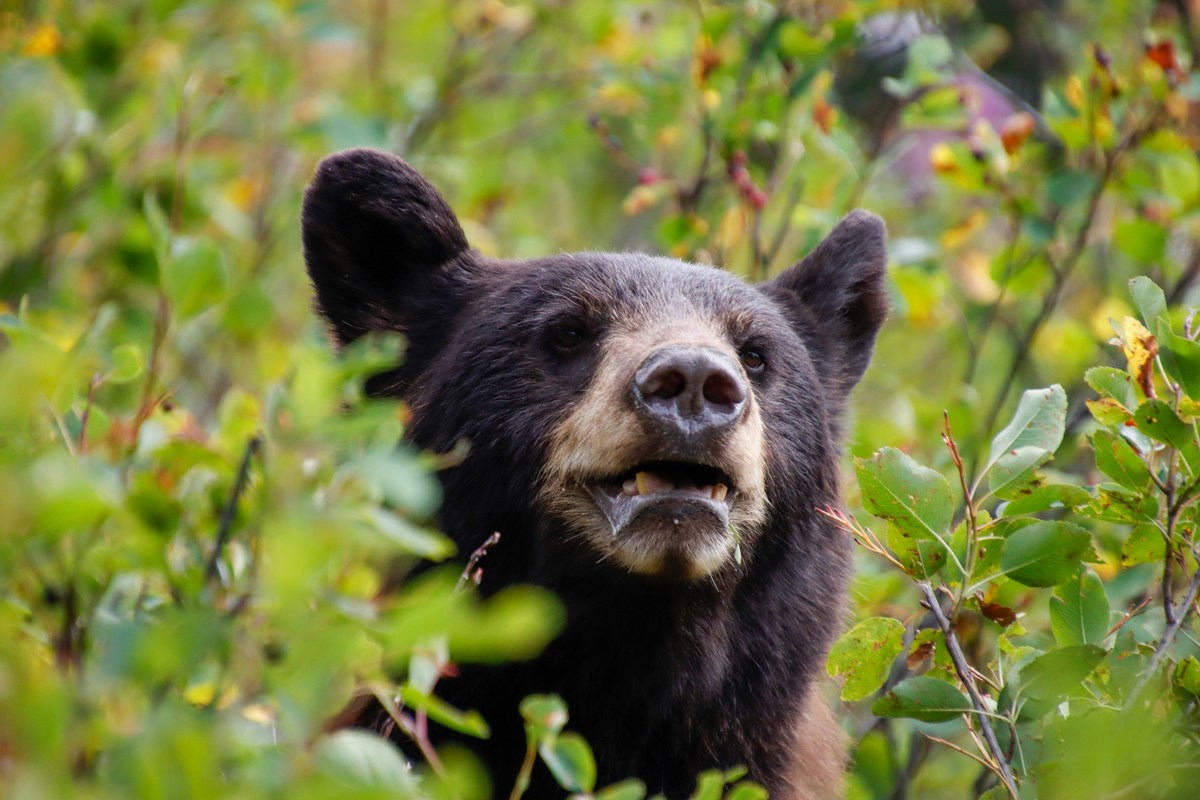
“The decrease in cumulative conflicts in the month of July coincides with the ripening of raspberries, blackberries, and blueberries,” according to Colin Carpenter, black bear project leader with the W.Va. Division of Natural Resources.
As these natural foods become plentiful, bears spend more time feeding deep in forests and less time searching neighborhoods for garbage, bird feeders, livestock feed, or pet food.
“Bear movements are tied to food sources,” Carpenter says. “Bears that roam around residential areas in search of food are less likely to stay if they do not find anything to eat.”
While bears remain opportunistic feeders throughout the summer, abundant wild crops help keep many of them focused on natural forage rather than human-provided food sources.
Read more: Why more West Virginians are seeing black bears this summer
A tradition rooted in Appalachia
Long before grocery stores, midsummer berry season was among Appalachia’s most anticipated harvests.
Native peoples gathered wild berries for food and medicine, and later settlers preserved them as jams and jellies, baked them into pies, and canned them for winter. For many families, berry picking became both a necessity and a cherished summertime tradition.

For Matt Welsch, a West Virginia food historian, chef, and advocate for Appalachian foodways, berry picking remains one of the state’s most enduring seasonal rituals.
“I grew up picking berries on the farm,” Welsch says. “It was a family activity, a communion, and it always ended in a treat, whether that was something simple like fresh berries over cornbread with sugar and milk or a fresh fruit pie.”
Although the fruits now fill supermarket shelves year-round, he says gathering them in the woods offers something modern conveniences cannot replace.
“They say splitting your own wood warms you twice,” Welsch says. “Gathering forest berries is a treat twice over. Berries are in every grocery store these days, but nothing compares to those fresh from the woods. Picking berries is a touchstone for who we really are.”
That tradition remains especially strong in West Virginia’s high country. Grafton noted that “hundreds of people make annual forays to Dolly Sods, Spruce Knob, and nearby areas to pick blueberries,” a seasonal pilgrimage that continues today as hikers combine mountain adventures with one of the state’s most celebrated natural harvests.
Elsewhere, blackberry patches flourish along abandoned farmsteads, old logging roads, utility corridors, reclaimed meadows, and sunny woodland edges, offering some of the easiest and most rewarding wild foods to gather.
Welsch says those outings often became treasured family memories, even if they didn’t always seem that way at the time.
“I don’t want to put on airs,” he says. “I remember a lot of griping when we’d head out to pick berries. But even at my crabbiest, I couldn’t deny what coming home with a full pail meant. The griping was part of it. So was the pie.”
Reading the health of the forest
To wildlife biologists, berry patches reveal much more than where to find summer fruit.
The abundance—or scarcity—of the fruits reflects weather patterns, forest health, and habitat quality. Strong berry years provide ample nutrition for wildlife, helping many species raise young successfully and prepare for the changing seasons. Poor berry crops, caused by late frosts, drought, or other environmental conditions, can force animals to travel farther in search of food.
For black bears especially, the difference can be noticeable. When natural foods are scarce, bears are more likely to investigate neighborhoods and campsites in search of alternative meals. When berry crops are abundant, many remain deep within forests, where food is plentiful.
For Welsch, berry patches also remind people that they share the mountains with countless other creatures.
“My favorite thing to do out there is look for animal signs,” he says. “Tracks and scat show me I’m part of a larger ecosystem, standing in the same patch the bears and the birds are working. It connects me with the land. I treasure that feeling.”
Knowing which berries to pick
Not every colorful berry growing in the woods is safe to eat. Grafton advised that “white or whitish fruits generally should be regarded as toxic and poisonous.”
Plants such as poison ivy, poison sumac, doll’s-eyes, white coralberry, and mistletoe produce berries that should be avoided.
He also warned that the unripe fruits of may-apple and groundcherry are toxic, and that the seeds of cherries and pokeberries contain poisonous compounds. Even experienced foragers harvest only berries they can identify with certainty.
Fortunately, West Virginia’s best-known edible berries—blackberries, raspberries, blueberries, huckleberries, strawberries, and serviceberries—are among the easiest to recognize when ripe.
Why wild berries taste different
Welsch believes wild berries have flavors that cultivated fruit simply cannot duplicate.
“Wild berries had to fight for everything, so the flavor is concentrated,” he says. “A grocery-store blackberry was bred to survive a truck ride. A wild one was bred by the hillside it grew on. More acid, more perfume, less water.”
His favorite preparation remains the simplest. “Cornbread, sugar, milk, berries,” Welsch says. “That’s the one I reach for first because that’s what berries meant on the farm.”

Today, he also enjoys using wild fruit in savory dishes, especially blackberry gastriques and sauces served with locally raised beef.
“A blackberry-based steak sauce is a current favorite,” he says. “Wild blackberries, a splash of vinegar, and a good cut of beef will tell you everything about a West Virginia summer.”
More than a summer harvest
Every berry patch tells a larger story about West Virginia’s forests. It feeds migrating birds before autumn, fuels growing bear cubs through summer, shelters rabbits and nesting songbirds beneath tangled canes, supports pollinators, and sustains a seasonal tradition that has connected generations of West Virginians to the land. It also preserves recipes, family memories, and food traditions that remain deeply rooted in Appalachian culture.
For visitors exploring the state’s back roads and mountain trails this July, the ripening fruits are evidence of a healthy Appalachian landscape where people and wildlife continue to share the same seasonal harvest—a reminder that some of West Virginia’s oldest traditions begin with something as simple as a blackberry by the trail.
West Virginia
West Virginia town fires entire police force after chief resigns, sergeant alleges evidence room break-in

Former Barrackville Police Chief Zachary Freeburn. (Barrackville Police Department Facebook)
A tiny West Virginia town is at the center of a growing controversy after its entire police department was abruptly relieved of duty just days after its police chief resigned, sparking public backlash, allegations of government overreach and growing demands for transparency.
“Effective immediately, the entire Barrackville Police Department has been relieved of duty by the Mayor and City Council,” the department wrote in a Facebook post on Tuesday.
“We are sincerely grateful for the support, trust, and encouragement shown to us by the Barrackville community throughout our service. It has been an honor and a privilege to serve and protect this town.”
DC POLICE OFFICIALS FACE TERMINATION AFTER FEDERAL PROBE UNCOVERS ALLEGED MANIPULATED CRIME DATA BY DEPARTMENT
The announcement stunned residents and marked the apparent collapse of the small department just months after officials celebrated hiring a new chief to rebuild the agency.
In December 2025, the department announced Zachary Freeburn’s appointment as its new full-time chief of police, highlighting his graduation from the West Virginia State Police Academy, his bachelor’s degree in criminal justice and his advanced Drug Recognition Expert certification.
“We look forward to continuing to rebuild and strengthen our department to better serve our community, and we are excited to once again have a full-time officer leading our agency,” the department wrote at the time.
CITY MANAGER ‘BEGGED’ FIRED CINCINNATI POLICE CHIEF FOR MORE OFFICERS ON STREET AS CRIME SKYROCKETED

Former Barrackville Police Chief Zachary Freeburn accepts an award during a West Virginia law enforcement event in 2025. (Barrackville Police Department Facebook)
Less than seven months later, that effort had unraveled.
Last week, the department announced that Freeburn had resigned “effective immediately.” The agency said Sgt. Hunt would serve as officer in charge while assuring residents that police operations would continue.
“Until further notice, Sergeant Hunt will serve as the officer in charge of the Barrackville Police Department to ensure the continued operation of the department,” the department said, adding that questions about the leadership transition could be addressed at the next town council meeting.
NEWARK MAYOR QUESTIONS STATE POLICE TACTICS AT DELANEY HALL AFTER SHERRILL’S ORDER, CALLS AGENCY ‘A SWORD’
Instead, the department itself was relieved of duty days later.
A letter Freeburn wrote before the department was dismissed offers his account of why he stepped down.
The letter, which was shared with WBOY and intended to be read at the July 7 town council meeting before it was canceled, alleges that shortly after the newly elected town council took office, he was called into a closed-door meeting where he was told a council member would directly supervise the police department and implement operational changes.
Freeburn wrote that he objected because he believed those directives violated West Virginia law governing municipal police departments. He said that when he attempted to discuss the proposed changes, he was told, “If I give you a directive you follow it… I am in charge and what I say goes.”
He described the situation as creating what he believed would become a hostile work environment and said those concerns ultimately led him to resign.
In the letter, Freeburn also wrote that one of the biggest complaints he heard from residents was a lack of transparency at town hall. He said he chose to resign so the issues could be brought into the open, expressing hope that residents would finally receive “the transparency that they have been asking for.”
The letter notes it was written before the announcement that the entire police department had been relieved of duty.
Former Barrackville Police Sgt. Hunt, who has been publicly identified only by his last name, told WBOY that he discovered the police evidence room had allegedly been entered when he arrived at the department Tuesday morning.
Hunt alleged town officials had previously discussed conducting an inventory of the department without officers present. He also claimed that during a meeting with Mayor Tom Straight and members of the town council, Councilmember Alex Neville acknowledged taking a set of police keys.
According to Hunt, after he accused town officials of entering the evidence room, he and another officer, who together made up the department’s entire sworn force, were immediately relieved of duty. Hunt also said he informed town officials that he intended to seek whistleblower protections.
Fox News Digital has not independently verified Hunt’s allegations.
The controversy appears to have been brewing even before the department was dismissed.
Following Freeburn’s resignation, a Barrackville resident launched an online petition urging the town council to reinstate him, arguing that he had been “forced to resign due to what many residents believe was unnecessary overreach by the newly elected Town Council.”
The petition calls on town leaders to reconsider the circumstances surrounding the resignation, restore public confidence through transparency and reinstate Freeburn as police chief.
“Our Police Chief quickly earned the trust, respect, and appreciation of our community through his professionalism, leadership, integrity, and commitment to keeping Barrackville safe,” the petition states. “Although his time serving our town was brief, his impact was undeniable.”
Organizers also urged residents to attend the July 7 town council meeting to voice their concerns. The meeting was later canceled.
In a Facebook post, the Barrackville Town Council announced the meeting had been canceled because of “a lack of sufficient information regarding items listed under unfinished business.”
The cancellation has only fueled questions from residents, many of whom flooded social media demanding answers.
“Time to do some deep background on the city council. The truth is not being told,” one commenter wrote beneath the police department’s announcement.
Another resident joked, “Who is gonna look over the 5 residents in Barrackville now?”
Barrackville, a town of about 1,200 people in north-central West Virginia, is located about 25 miles southwest of Morgantown.
Marion County Sheriff Roger Cunningham previously told WBOY that the sheriff’s office will continue responding to calls in Barrackville, as it routinely does throughout Marion County, ensuring residents continue receiving law enforcement services despite the town no longer having an active police department.
Town officials have not publicly explained why the entire department was relieved of dutyor responded to the allegations raised by former officers.
Fox News Digital has reached out to the Barrackville Police Department, Straight, members of the Barrackville Town Council and the Marion County Sheriff’s Office for comment. Fox News Digital has also contacted the West Virginia Municipal League seeking clarification on the authority of municipal officials over police department operations under state law.
Get the latest updates on this story at FOXNews.com

Following a federal court decision in June 2026, the U.S. Department of Agriculture instructed retailers in West Virginia to permit Supplemental Nutrition Assistance Program beneficiaries to buy soda with SNAP benefits, formerly known as food stamps.
-

 Movie Reviews11 minutes ago
‘Gail Daughtry and the Celebrity Sex Pass’ Review: We’re Off to Hump the Wizard
-

 World19 minutes ago
Backlash on ethanol-blend fuel intensifies in India, puts carmakers in the dock
-
Politics29 minutes ago
Crews Drape Tarp Over White House in Latest Trump Restoration
-

 Health44 minutes ago
GLP-1 Users’ Guide to Protein Snacks: Here’s What a Dietitian Actually Recommends
-
 Lifestyle59 minutes ago
‘The Invite’ is a marriage comedy with sex and heart
-

 Technology1 hour ago
I spent a week using the Trump phone — it sucks
-

 World1 hour ago
With US unleashing attacks, Iranian official threatens that the Islamic Republic will deliver a ‘hard slap’
-

 Politics1 hour ago
WATCH: Trump’s Energy chief reveals what escalating Iran tensions could mean for gas prices

