To understand Maggie Michael’s paintings, start from the bottom.
Washington, D.C
Review | Maggie Michael may be D.C.’s most vital, volatile painter


In “Understory,” a show of Michael’s recent works on view near Union Market, motion is always key. Tall vertical paintings such as “Boulder Monument (Orange)” (2020/2022) and “Moon Fall (Mt. Hood, Mt. Sopris, Clay)” (2024) evoke the volcanic action of an idea rising to the surface and spilling over. The latest works by Michael — perhaps the most vital and visible D.C. painter since Sam Gilliam — unfold as a series of volatile discoveries.
Michael’s lyrical painting is a reminder of the power of pure abstraction as a lens for finding the world, as it is and as it could be. That Michael’s first major solo show since 2016 arrives at an all-time nadir for abstract-expressionist painting only makes the show more riveting.
Ten years ago, things were different. An overheated market was fixated on highly abstract post-minimalist painting, inviting a craze by collectors for “zombie formalism.” But abstraction is no longer top of mind for curators and dealers. Instead, museums and galleries across the country are deeply engaged with figurative painting, tackling urgent issues about identity and representation. Some critics say the rebound has gone too far, subbing a fad for abstraction with a fever for “zombie figuration.”
Michael’s style recalls mid-century ideals about the value of painting. Objects make frequent appearances on her canvases. A small grid-like device shows up in “Pink for Kiefer, Homage to Midgard” (2023-2024) and other works, a way of mentioning the hard-edge geometric tradition in abstract painting while also toying with the notion of the surface. The snakeskin that Michael pins to “Night Studio” (2024) is a casual quotation of Robert Rauschenberg, whose sculptural combines stretched the notion of painting with taxidermy and tires. She has an arsenal of abstract-expressionist strategies at her disposal, but as a stylist, she makes them all her own.
Michael produced 15 of the paintings in “Understory” while working as an artist-in-residence at the Joan Mitchell Center in New Orleans. During her residency, Michael says, she tried to produce a diptych or triptych in tribute to Mitchell, the New York School artist who relished large-format paintings, but it didn’t happen. That’s not so surprising. Michael is a tighter painter, and her style is much more densely plotted. For “Understory,” which occupies a space that once served as a Lululemon store, Michael uses the former fitting rooms to showcase a rotation of more than a dozen small paintings, some as little as 10 inches square — small in scale but not in scope.
With its epic sweep, “Chagall’s Horse Lands in Utah” (2021-2022) could easily take up an entire wall. In the painting, the loosest figure of a horse charges under an ocher orb that might signify a setting sun. Michael frames this circle with a stencil from player-piano print roll, another one of the artist’s signature marks. This painting summons the vast reaches of a twilight dreamscape, but the actual production is quite condensed. Michael delivers novellas that read like myth.
“Chagall’s Horse Lands in Utah” could be a fitting title for Michael’s entire project. Her approach to drafting abstract sagas draws on a rich and distinctly American painterly tradition. One of her own paintings tests the rule: “American Seance for CoBrA (Malachite)” (2022) stands apart from the others, with a muddled, primitive, almost Crayola-like brushstroke. Both the title and style nod to CoBrA — a collective of postwar European painters from Copenhagen (Co), Brussels (Br) and Amsterdam (A) — and specifically within this group Karel Appel, the founder from Amsterdam. Nestled within this very non-American and un-Michael-like piece is a section of painting that resembles malachite, a mineral whose radial copper banding is prized by Navajo and Hopi tribes in the Southwest.
These vivid undercurrents bubble up in one painting after another, although the sheer size of “Understory” means that viewers might miss such moments. The show, assembled by Michael herself, features nearly 50 paintings staged on multiple levels. At 3,000 square feet, the space is vast enough that it doesn’t feel cramped or forced; in fact, only an especially prolific artist could hope to fill it. But “Understory” risks being overwhelming. Two or three subsets of paintings in this show could easily stand on their own.
The most difficult painting on view might also be the most figurative. The composition of “Olympia’s Odalesque” (2017/2018) speaks directly to Édouard Manet’s “Olympia” (1863), the reclining nude Venus whose hand rests on her thigh like a tarantula. In Michael’s composition, a hard-edge rectangle intersected by a chevron conveys the thrust of a chaise longue within a frame. But the figure-ish shape inside that frame is cramped, its head missing, with only a nipple-like protrusion to suggest any feminine identity — a bleak reading of the original.
It may take another biennial or two for expressionist paintings to come back into vogue. Abstraction has lost its place, perhaps, but none of its power. Swoops of texture and gesture in a painting such as “Antelope Falls, Nude Descending” (2024) can unlock a primal feeling, as poetry or music manifests goose bumps or heart palpitations. Michael’s paintings dwell in that rush of blood, that sense of sensation.
If you go
Maggie Michael: Understory
1256 Fourth St. NE. unionmarketdc.com.



February 27, 2026, was a flash point in the cold war between Silicon Valley and Washington, D.C.
The AI giant Anthropic had drawn a red line with the Pentagon, forbidding the military from using its product for autonomous weapons or the mass surveillance of Americans. The Pentagon retaliated by ending their contract and designating Anthropic a supply-chain risk. Anthropic has since sued to overturn this designation.
The feud-turned-legal battle is an acute example of a long-festering dynamic: technologists who want control over the use of their creations and who do not trust the government to understand or regulate their products, and policymakers wary of an unelected tech oligarchy that has become its own power center in American society.
Trae Stephens is no stranger to this dynamic.

(Photo courtesy of North Dakota National Guard. via the North Dakota Monitor)
(North Dakota Monitor) – North Dakota will send 60 National Guard members to Washington, D.C., starting in April, for an estimated three months to help police the city.
The move is in support of President Donald Trump’s August executive order declaring an emergency in D.C. The president said assistance from states is necessary to address what he described as rampant crime in the nation’s capital.
“Safeguarding the citizens, federal workers and elected leaders in our nation’s capital is a matter of national security, and we appreciate these Soldiers volunteering for this important mission,” Gov. Kelly Armstrong said.
Most of the 60 North Dakota members will come from the 131st Military Police Battalion, based in Bismarck, according to the announcement.

Thousands turned out at the dozens of No Kings rallies scattered across Maryland, part of the millions expected across the country for the third such event. In Maryland, turnout was particularly heavy in Hagerstown, near a proposed ICE detention facility.
News14 minutes ago
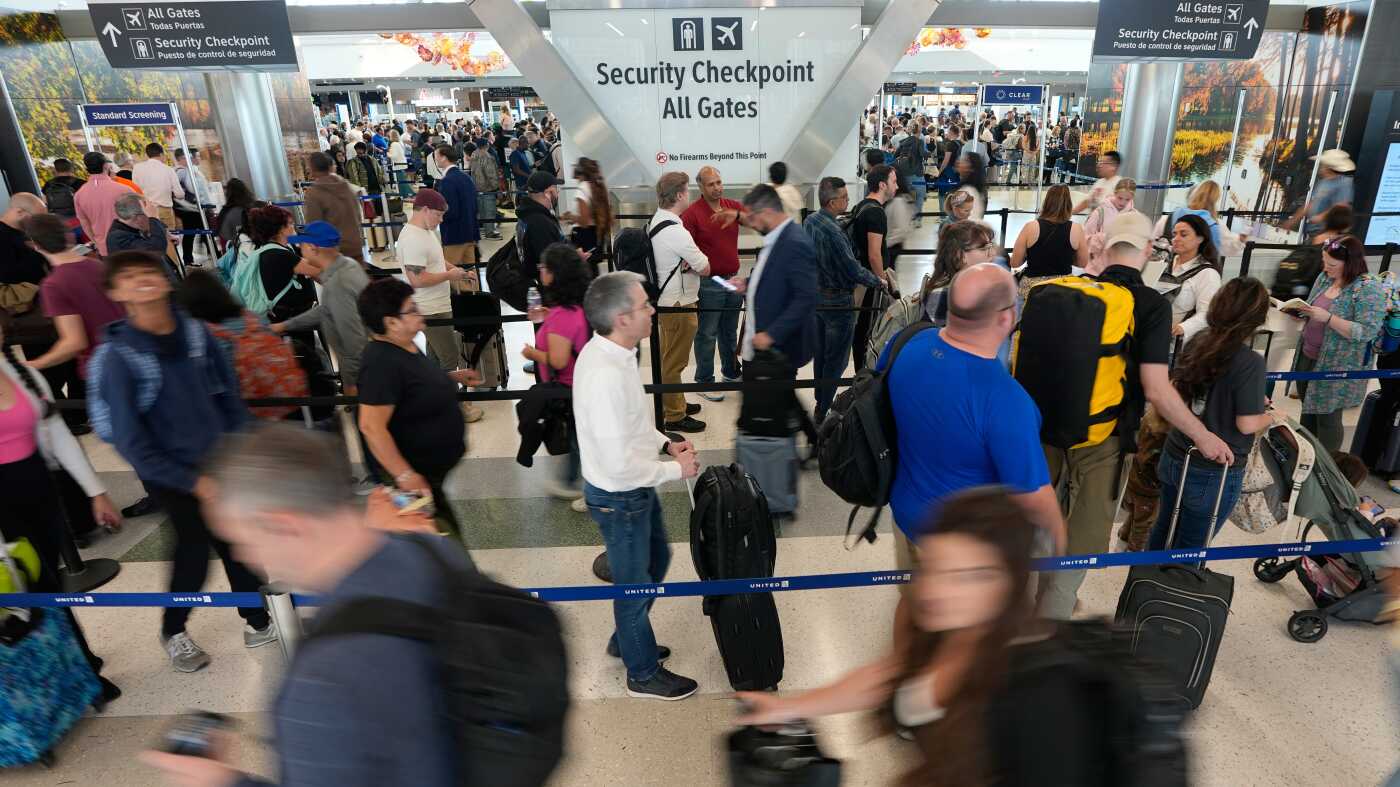
ICE officers could remain at airports after TSA workers are paid

Detroit, MI2 hours ago
Wolverines make Frozen Four

San Francisco, CA2 hours ago
Bay Area residents hold rally in SF as war with Iran enters 2nd month

Dallas, TX3 hours ago
Dallas Jenkins says he is the ‘evangelical mascot of the LDS church’ and talks Easter celebrations

Miami, FL3 hours ago
New video shows aftermath of police shooting in Downtown Miami

Florida1 year ago
Florida High School Football Rankings: Top 25 teams – Oct. 21

Oregon2 years ago
How old is Bo Nix? What to know about Oregon quarterback ahead of 2024 NFL Draft

Connecticut2 years ago
Cleary's 21 help Le Moyne down Central Connecticut State 69-64 in OT

Virginia2 years ago
99th annual Pony Swim held in Virginia

Indiana2 years ago
Indiana Members Credit Union announced as new anchor tenant at Bottleworks District
News14 minutes ago
ICE officers could remain at airports after TSA workers are paid

Politics11 hours ago
Scathing report claims nation’s oldest labor union ‘betrayed’ MAGA members through ‘shocking’ spending

World12 hours ago
Republican US lawmaker demands Congress vote on any Iran troop deployment

News12 hours ago
So you went to a No Kings protest. Now what?

Politics23 hours ago
JD Vance says he was ‘obsessed’ with UFOs, believes aliens are actually ‘demons’
-

 Sports1 week ago
IOC addresses execution of 19-year-old Iranian wrestler Saleh Mohammadi
-

 New Mexico1 week ago
Clovis shooting leaves one dead, four injured
-

 Miami, FL4 days ago
Jannik Sinner’s Girlfriend Laila Hasanovic Stuns in Ab-Revealing Post Amid Miami Open
-

 Tennessee6 days ago
Tennessee Police Investigating Alleged Assault Involving ‘Reacher’ Star Alan Ritchson
-

 Minneapolis, MN4 days ago
Boy who shielded classmate during school shooting receives Medal of Honor
-

 Politics1 week ago
Schumer gambit fails as DHS shutdown hits 36 days and airport lines grow
-

 Science1 week ago
Record Heat Meets a Major Snow Drought Across the West
-

 Technology1 week ago
YouTube job scam text: How to spot it fast