Washington, D.C
Inauguration Day Weather Likely To Be Coldest Since 1985 | Weather.com


Inauguration of Ronald Reagan, 1985, which had to be moved into the rotunda of the U.S. Capitol due to extreme cold.
(Architect of the Capitol photo courtesy of the Library of Congress, Prints & Photographs Division)
- The presidential inauguration ceremony will take place on what could be the coldest inauguration day since 1985.
- The forecast high for Washington, D.C., is in the upper teens to low 20s.
- It is likely that Donald Trump will be inaugurated indoors due to the cold.
- The high on Inauguration Day has only been below freezing once since 1985, in 2009.
The 2025 United States Presidential Inauguration is now more likely to be moved indoors due to the coldest weather for an inauguration in 40 years for Washington, D.C., with a high in the upper teens to low 20s.
This will be the first inauguration to be held indoors in 40 years. The record for the coldest January inauguration is currently held by the second inauguration of Ronald Reagan in 1985, when the temperature at noon for the swearing-in ceremony was only 7 degrees, according to the National Weather Service.
The weather for this year’s inauguration is forecast to somewhat mimic that of 1985, which took place on Jan. 21. The high temperature that day was 17 degrees, with sunny skies and afternoon wind chills in the minus 10 to minus 20-degree range. The parade was ultimately canceled, and the swearing-in ceremony had to be held indoors.
The Rotunda is prepared as the inclement weather alternative for each inauguration in the event of inclement weather, according to the Associated Press.
The 2025 Inauguration will be similarly sunny, with wind chills in the lower teens or single digits and winds gusting up to 35 mph in the afternoon. During the ceremony, the temperature will hover in the lower 20s.
Alternate plans are required for the more roughly 250,000 guests ticketed to view the inauguration from around the Capitol grounds and the tens of thousands more expected to be in general admission areas or to line the inaugural parade route from the Capitol to the White House.
Trump said some supporters would be able to watch the ceremony from Washington’s Capital One area on Monday, a day after he plans to hold a rally there. He said he would visit the arena after his swearing-in.
The current forecast high for Inauguration Day is only a couple of degrees above the current record for coldest afternoon high on Jan. 20, though it would break the record for the coldest Inauguration to take place on that date.
Only one other year had a sub-freezing high on inauguration day: Barack Obama’s first inauguration in 2009.
The warmest January Inauguration Day took place in 1981 for Ronald Reagan’s first inauguration, meaning Reagan’s two inaugurations hold the record for the warmest and coldest January Inauguration.
Warmer inaugurations have happened though: Before the 20th Amendment was enacted, Inauguration Day traditionally took place on March 4, which has an average high of 50.2 degrees. Jan. 20 has a cooler average high of 42.9 degrees.
The all-time record high for a U.S. presidential inauguration was set in August 1974 with the Inauguration of Gerald Ford with a high of 83 degrees, though that was a non-traditional inauguration date prompted by the resignation of Richard Nixon.
Here’s a look at some other notable inauguration day weather.
Snowiest Inauguration: William Taft, 1909
On the day of William H. Taft’s 1909 inauguration, nearly 10 inches of snow fell, setting the record for inauguration day. The snow and wind began the day before, with strong winds toppling trees and telephone poles. Trains were stalled and city streets clogged. All activity was brought to a standstill. Sanitation workers shoveled sand and snow through half the night. It took 6,000 men and 500 wagons to clear 58,000 tons of snow and slush from the parade route.

Inauguration of William H. Taft, 1909
(Library of Congress)
Fun fact: Historically speaking, there is approximately a 30% chance of snow on the ground in Washington, D.C., from a previous system for the date Jan. 20.
Worst Inauguration Day Travel: JFK, 1961
On the eve of John F. Kennedy’s inauguration in 1961, 8 inches of snow fell causing the most crippling traffic jam of its time. Hundreds of cars were stranded and abandoned. The president-elect had to cancel dinner plans and, in a struggle to keep other commitments, is reported to have had only 4 hours of sleep. Former President Herbert Hoover was unable to fly into Washington National Airport because of the weather and missed the swearing-in ceremony. By sunrise, the snowfall had ended and the skies cleared but the day remained bitterly cold.
An army of men worked all night to clear Pennsylvania Avenue, and despite the cold, a large crowd turned out for the swearing-in ceremony and inaugural parade. At noon, the temperature was only 22 degrees with the wind blowing from the northwest at 19 mph making it feel like the temperature was just 7 degrees.
Fatal Inaugurations: William Henry Harrison, 1841, and Franklin Pierce, 1853
The weather has caused two inaugurations to have fatal implications, and the most historically significant fatality was that of William Henry Harrison in 1841. Harrison decided to brave the elements and deliver the longest inauguration speech ever, an oration lasting an hour, and 40 minutes.
It was a cloudy, cold and blustery day, and the National Weather Service has estimated the temperature at noon to be approximately 48 degrees.
Harrison, who wore neither hat nor overcoat, also rode a horse to and from the Capitol ceremony. He subsequently caught a cold that developed into pneumonia. Harrison died a month later.

Inauguration of President Franklin Pierce, 1853
(Library of Congress)
The second inauguration with a fatal effect was that of Franklin Pierce in 1853. The morning of the inauguration, there was heavy snow that continued until about half an hour before the ceremony. Skies looked to be brightening by noon, but the snow resumed shortly after Pierce took the oath of office.
The heavy snow dispersed much of the crowd and ruined plans for the parade. Abigail Fillmore, first lady to the outgoing President Millard Fillmore, sat on the cold, wet, exposed platform during Pierce’s swearing-in ceremony. She caught a cold that developed into pneumonia and died at the end of the month.
Rainiest Inauguration: Franklin D. Roosevelt, 1937
The first inauguration to be held on Jan. 20 – Franklin D. Roosevelt’s second inauguration in 1937 – also set the record for the heaviest rain on inauguration day. The day was cold and rainy, with sleet and freezing rain in the morning. Between 11 a.m. and 1 p.m., a period that includes the swearing-in ceremony, nearly three-quarters of an inch of rain fell.

Inauguration of Franklin D. Roosevelt, 1937
(Library of Congress)
Roosevelt insisted on riding back to the White House in an open car with half an inch of water on the floor. Total rainfall for the day was 1.77 inches, which remains the rainfall record for Jan. 20.
First Outdoor Oath: James Monroe, 1817
The first seven inauguration ceremonies from 1789 to 1813 were conducted indoors, making James Monroe’s 1817 inauguration the first that was held outdoors in the weather. Luckily, it was warm and sunny that day, with an estimated temperature at noon of 50 degrees.
Sara Tonks is a content meteorologist with weather.com and has a bachelor’s and a master’s degree from Georgia Tech in Earth and Atmospheric Sciences along with a master’s degree from Unity Environmental University in Marine Science.
The Associated Press contributed to this report.



Washington, D.C
Community gathers for RFK stadium site open house meeting as Commanders prepare for DC return

WASHINGTON – Community members gathered on Tuesday night to review redevelopment plans for the RFK Stadium site and offer feedback as the Washington Commanders prepare for a return to the District.
The steel structure of the old stadium has now been removed, and officials say comments on the project’s environmental impact statement are due at the end of April. The final master plan is taking shape with input from residents.
Community gathers for RFK stadium site open house meeting as Commanders prepare for DC return
FOX 5’s Melanie Alnwick said a strong crowd gathered in D.C. Tuesday to speak with developers and city planners. The RFK site is divided into six districts, including the Plaza District, Riverfront District and Stadium District, each with proposed features for residents to evaluate. Members of the community viewed design concepts, asked questions and used green and red stickers to mark what they supported or opposed.
In the Kingman Park District, a primarily residential area, residents raised concerns about preserving green space and the placement of parking garages.
Groundbreaking for the Plaza District is scheduled for 2029, with the stadium targeted to open in 2030. The Commanders are investing $2.7 billion in the project, the largest private investment in city history, with another $1 billion coming from D.C. taxpayers.
City leaders say the redevelopment could create up to 6,500 housing units, 30,000 construction jobs, 2,000 permanent jobs and generate an estimated $5.1 billion in tax revenue.
Community gathers for RFK stadium site open house meeting as Commanders prepare for DC return
Another community meeting is set for Saturday at St. Coletta Church, with a site walk planned in April. More online.
St. Coletta Meeting Details
- When: Saturday, March 28, 10 am to 12 pm
- Where: St. Coletta of Greater Washington, 1901 Independence Avenue SE (Closest Metro: Stadium-Armory)
Online Survey
For those unable to attend an in-person event, the District will offer an online survey where residents can provide feedback on the master plan. The survey will request input on topics similar to those discussed at the events. The Office of Planning will combine this feedback with comments received at the in-person events, via email, and at the community visioning meetings that were held from October 2025 through February 2026.
- The survey link will be available from March 30-April 10 at OurRFK.dc.gov.
Community Site Walk
On Saturday, April 18, neighbors of the RFK Stadium campus are invited to join a walking tour led by staff from the Office of Planning. The walk will include visits to areas that are important to the redevelopment and stopping points for discussion. This interactive outdoor workshop will allow stakeholders to step into the shoes of a planner and share their ideas for the site’s future.
- When: Saturday, April 18, 10 am
- Where: Stadium-Armory Metro Station, 192 19th Street SE
- RSVP: A registration link will be available soon at OurRFK.dc.gov.
The Source: Information in this article comes from The Office of DC Mayor Muriel Bowser and previous FOX 5 reporting.

‘No Kings’ protests across DC
Thousands of people took to the streets of Washington, D.C., and across the U.S. on Saturday to protest President Donald Trump’s administration as part of massive “No Kings” protests.
WASHINGTON – Washington, D.C., and the surrounding DMV area are set to host the third major “No Kings” march and rally this Saturday, March 28, 2026, as part of a wave of nationwide demonstrations planned for the same day.
Event details:
Organized locally by area chapters of Indivisible and allied grassroots groups, the event aims to draw protesters to downtown Washington and surrounding counties to oppose policies of the Trump administration and to voice broader concerns about civil rights and democratic norms.
The march will kick off at 10 a.m., with participants gathering at Memorial Circle near Arlington Cemetery, with additional access from the Blue Line or nearby parking at the Fashion Centre at Pentagon City, according to the event organizers. There is no public parking in the immediate area, but participants can be dropped off at the circle.
People take part in a “No Kings” protest in Washington, D.C., the United States, on Oct. 18, 2025. (Photo by Li Rui/Xinhua via Getty Images)
From there, the procession will head across the Memorial Bridge into Washington, D.C., passing the Lincoln Memorial and continuing on to the Washington Monument.
At the conclusion of the march, participants can walk to a downtown rally, from 1:30 p.m. to 4 p.m.
A broader movement
Big picture view:
A nationwide series of “No Kings” protests is set for March 28—over 3,000 events are scheduled.
These protests are organized by groups including Indivisible and the broader 50501 Movement, which have coordinated previous actions in June and October 2025 that drew millions of participants nationwide, including in Washington, D.C.
Other ‘No Kings’ rallies in the DMV
Dig deeper:
In addition to the main rally in downtown D.C., several other demonstrations tied to “No Kings 3” are scheduled around the DMV this Saturday.
In Arlington, Virginia, activists are organizing a march across the Memorial Bridge beginning at 10 a.m., with protesters expected to continue into West Potomac Park before joining larger crowds in the District proper, for example.
There are hundreds of “No Kings” events scheduled to take place this Saturday throughout the DMV. You can click here to find a list of all of them.
The Source: Information from “No Kings” organizers, Indivisible, Mobilize and previous FOX 5 DC reporting.

ASHEVILLE, N.C. (FOX Carolina) – The Great Mother March has begun a 500-mile pilgrimage from Asheville, North Carolina, to Washington, D.C.
Organizers said the 32-day journey is a women’s empowerment pilgrimage inspired by the Buddhist monks’ Walk for Peace.
“This is a universal movement,” founder Whitney Freya, an artist, author and sacred activist, said. “Everyone has a mother. Every tradition reveres a Great Mother. And we all depend on Mother Earth. This march is a call to honor those truths while reminding us what is possible when we move together, with intention, hope, and love.”
The march is expected to end April 22, Earth Day, when participants reach the steps of the U.S. Capitol.

Here’s a look at the group’s route:

Organizers said the group will walk alongside the Appalachian Mountains through rural communities in North Carolina and Virginia, with planned stops including Black Mountain, Old Fort, Marion, Linville and Boone, North Carolina.
From there, the group plans to travel via Todd and West Jefferson, North Carolina, and the River Country Campground along the New River, to the Peace Pentagon near Independence, Virginia.
The marchers are expected to arrive in Galax, Virginia, on April 1, then continue to Hillsville, Floyd, Ferrum and Rocky Mount, arriving in Rocky Mount on April 5.
The group is expected to reach Lynchburg on April 9 and travel up U.S. 29 to Waynesboro, arriving April 12.
Organizers said the marchers plan to arrive in Charlottesville on April 13 and spend April 14 at IX Art Park to rest and prepare for the final leg to Washington.
From Charlottesville, the group plans overnight stops in Barboursville, Orange, Culpeper and Warrenton, Virginia, before arriving in Manassas on April 19. Additional stops include the Workhouse Arts Center in Lorton, Virginia, and Alexandria, Virginia, ahead of the group’s arrival in Washington on April 22.
Feel more informed, prepared, and connected with FOX Carolina. For more free content like this, download our apps.
Copyright 2026 WHNS. All rights reserved.

8 Of The Quietest Alaska Towns
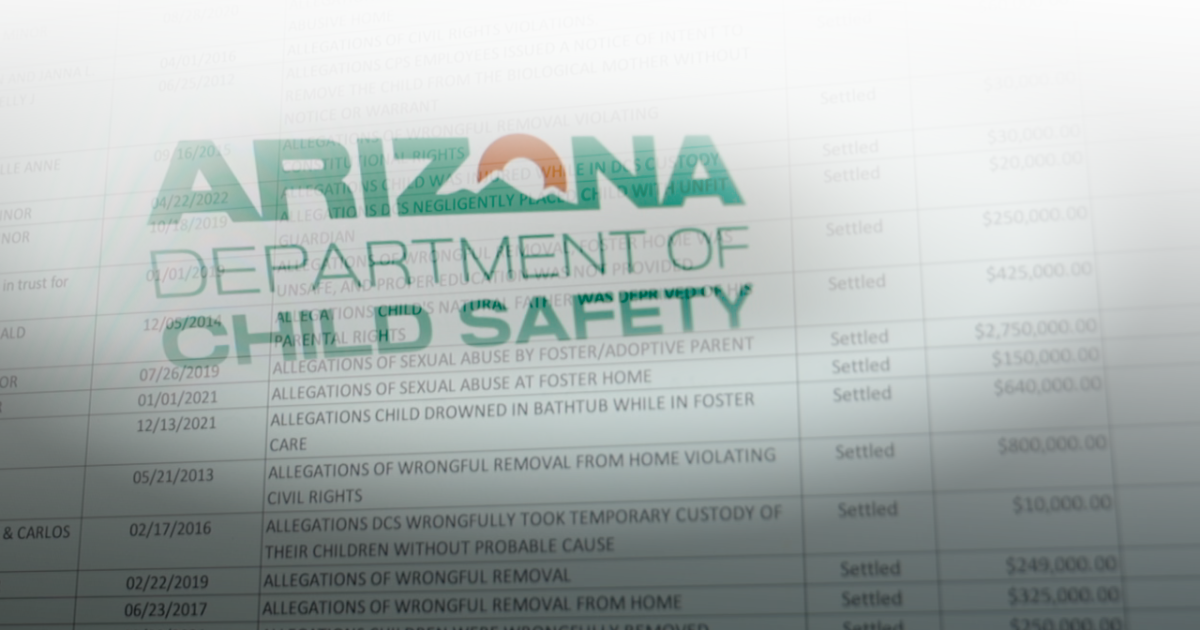
Arizona Senate committee passes three bills aimed at reforming the Department of Child Safety

Community rallies behind Arkansas mother, GoFundMe more than doubles in less than 24 hours

U.S. Forest Service issues Southern California rattlesnake warning after two deadly bites

Man found dead in Colorado’s Black Canyon of the Gunnison

Florida High School Football Rankings: Top 25 teams – Oct. 21

How old is Bo Nix? What to know about Oregon quarterback ahead of 2024 NFL Draft

Cleary's 21 help Le Moyne down Central Connecticut State 69-64 in OT

99th annual Pony Swim held in Virginia

Indiana Members Credit Union announced as new anchor tenant at Bottleworks District

White House unleashes on Raskin for clinging to ‘deranged’ Jack Smith ‘lies’ in latest Trump docs flare-up

‘Keffiyehs seized, left to die’: Inside the Palestine Action hunger strike

LaGuardia Crash Timeline: Moments Before Air Canada Plane Collided With Fire Truck

Chicago alderwoman apologizes for ‘wrong place at the wrong time’ comment on slain student

Fake Euronews website targets Hungary election with false claims
-

 Detroit, MI7 days ago
Drummer Brian Pastoria, longtime Detroit music advocate, dies at 68
-

 Georgia1 week ago
How ICE plans for a detention warehouse pushed a Georgia town to fight back | CNN Politics
-

 Movie Reviews7 days ago
‘Youth’ Twitter review: Ken Karunaas impresses audiences; Suraj Venjaramoodu adds charm; music wins praise | – The Times of India
-
 Science1 week ago
Industrial chemicals have reached the middle of the oceans, new study shows
-

 Science1 week ago
How a Melting Glacier in Antarctica Could Affect Tens of Millions Around the Globe
-

 Sports4 days ago
IOC addresses execution of 19-year-old Iranian wrestler Saleh Mohammadi
-

 Culture1 week ago
Test Your Memory of Great Lines From Classic Irish Poems
-

 New Mexico3 days ago
Clovis shooting leaves one dead, four injured