Washington, D.C
Changes, upgrades coming to DC’s 911 system after major outages

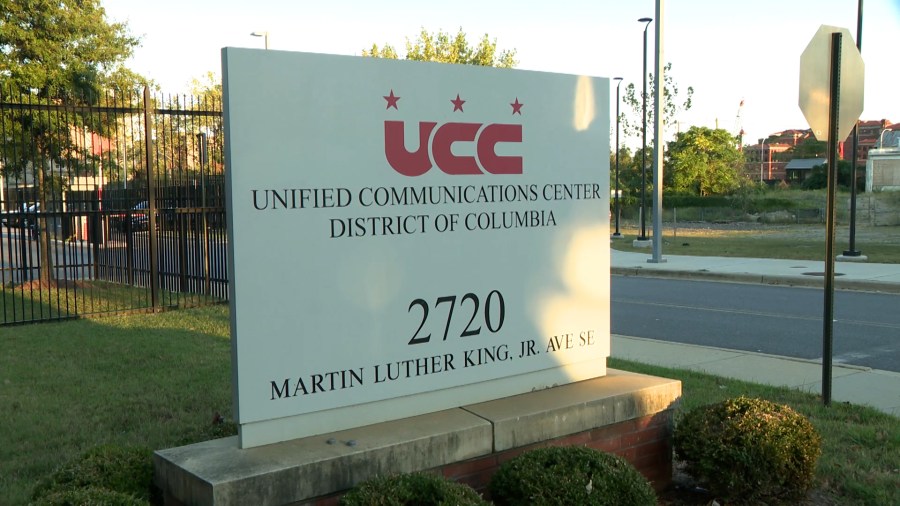
WASHINGTON (DC News Now) — There have been several high-profile incidents of D.C.’s 911 system going down.
Now, the Office of Unified Communications is getting a much-needed upgrade.
DC’s 911 call center under new leadership, direction
The IT issues are just part of the problem. There are also major staffing issues that some allege have led to errors.
City officials spoke for the first time publicly since a baby died while the system shut down earlier this month.
Since December of last year, D.C. City Administrator, Kevin Donahue, said there have been 18 incidents of the 911 system going down for a period of time.
“Eight of the 18 had some pretty significant effects. It has more systemic in nature and most of those dealt with dispatch,” Donahue said.
One of those outages on Aug. 2 lasted two hours. Donahue said a contract employee pushed a change to every workstation at the 911 center instead of the planned one or two stations.
“Totally unacceptable. Totally outside of the norm and expectation of what this person should have done,” Donahue said.
The contractor was fired that day and the Metropolitan Police Department is investigating what happened.
“Whether it was a mistake, perhaps lack of training, lack of similarity, or whether it was negligence of a criminal nature is an open question,” Donahue said.
DC 911’s call center to offer $800 bonus to employees who show up for work
During that time a five-month-old died. The family first couldn’t contact 911 and then with pen and paper, dispatchers sent medics who were already on another call to the address.
Donahue said everyone followed protocol.
“But the protocol wasn’t sufficient to be able to accurately understand that we had a unit that the system showed us available, but in fact wasn’t,” Donahue said.
OUC Director Heather McGaffin said her staff did all they could.
“My condolences to the family. Losing a child is unimaginable. Our call takers did everything that they could in those moments to reassure and offer guidance during that time,” McGaffin said.
Donahue said they have a 22-point plan to address the computer-aided dispatch outages.
The most important part is equipment upgrades.
“The equipment we have was not able to keep up with the demands that are being placed on it,” Donahue said.
DC’s 911 response to shooting worries woman after waiting on hold for nearly 90 seconds
Around $2.5 million of upgrades wasn’t going to start until the new fiscal year on Oct. 1 but because of these incidents, the IT has money now to start doing upgrades.
“We have to learn from that and change how we do things so that there’s not going to be another instance of a family in a similar circumstance,” Donahue said.
Another big component of the problems with 911 is staffing.
Twenty-two call takers are starting at the end of this month. Nineteen vacant dispatcher positions will be filled through promotions from within OUC.
D.C. handles about 1.8 million calls a year. Call takers and dispatchers handle 70 or 80 calls per 12-hour shift.
DC’s 911 Call Center coming under fire
McGaffin said when they’re fully staffed they’ll look at reducing shift hours from 12 to eight or 10.
“We hold people accountable. We retrain and we separate when we have to,” McGaffin said.
Copyright 2024 Nexstar Media, Inc. All rights reserved. This material may not be published, broadcast, rewritten, or redistributed.
For the latest news, weather, sports, and streaming video, head to DC News Now | Washington, DC.


WASHINGTON — The Federal Aviation Administration received 12,000 applications in 24 hours after its annual air traffic control hiring window opened Friday, a figure Transportation Secretary Sean Duffy described as record breaking amid the agency’s new campaign to recruit video gamers to the job.
In a post on X over the weekend, Duffy said the 12,000 applications marked “the most in one day since the FAA was created 68 YEARS ago!” He told Fox News in an interview Sunday that 11,000 of those applicants were considered qualified and 8,000 have already been sent a skills test required to move forward in the process.
Duffy specifically credited the Transportation Department’s fresh effort announced earlier this month — just a week ahead of the opening of its hiring window at midnight April 17 — to seek out those who play video games to apply.
“To reach the next generation of air traffic controllers, we need to adapt,” Duffy said in a press release on the new campaign at the time. “This campaign’s innovative communication style and focus on gaming taps into a growing demographic of young adults who have many of the hard skills it takes to be a successful controller.”
The transportation chief told Fox News on Sunday that the idea was sparked by a poll the agency took of students at an FAA academy in Oklahoma City in which all but three of the 250 people randomly surveyed said they were gamers.
“And so we thought, listen, there’s a connection here,” Duffy said. “They problem solve, they are spatially aware, they do multiple things at the same time. It is very reminiscent of what air traffic controllers do.”
Since then, Duffy said the agency has reached out to the community, including with a video appearing to target gamers he posted earlier this month. He called the response the agency has received “remarkable.”
“YOU can be the future of air traffic control,” Duffy said in a post on X earlier this month that included the video ad. “It’s not a GAME, its a CAREER.”
The push comes as the FAA has been plagued with air traffic controller staffing issues for years, a reality that has been amplified amid recent government shutdowns, which leave them working without pay until the matter is resolved.
During the government shutdown last fall, Duffy told CNN in an interview that the FAA was seeing 15 to 20 air traffic controllers retiring a day, up from four before the lapse in funding. He added at the time that the FAA was short “about 1,000 to 2,000” air traffic controllers in general and noted he had embarked on an effort to pay experienced people in the position to stay on the job and not retire.
A report by the U.S. Government Accountability Office released earlier this year found that the number of air traffic controllers in the country has declined by about 6% over the last 10 years. The GAO cited government shutdowns in 2013 and 2018-2019, as well as the COVID-19 pandemic, as contributing factors in the decline, noting both disrupted training.
In the report, the GAO also noted that there has been a 10% increase in the number of flights that rely on the air traffic control system over the same period, exacerbating the issue.
President Donald Trump’s 2027 budget proposal to Congress includes a request of a $481 million increase to “continue to support the Administration’s air traffic controller hiring surge, as well as enhancements to aviation safety, commercial space operations, and updates to FAA’s outdated telecommunications systems,” according to a fact sheet from the White House.
There are a number of prerequisites to qualify to be an air traffic controller, including being under 31 years old and being able to “Speak English clearly enough to be understood over communications equipment,” according to the FAA website.
Those interested must also pass a medical exam, as well as the agency’s air traffic pre-employment tests. The FAA notes that less than 10% of all applicants meet all of the requirements and are accepted into the training program.
Washington, D.C
The director of the Congressional Budget Office—known for its gloomy national debt data—is very optimistic that a crisis will be avoided entirely | Fortune

Dr Phillip Swagel is an optimist, both by nature and when he looks at the U.S. economy.
This fact is perhaps at odds with what one might assume: Swagel is the director of the Congressional Budget Office (CBO), the nonpartisan agency that offers independent budgetary and economic analysis to Congress.
Very often—an inevitable occupational hazard—the subject of national debt and the interest the U.S. Treasury pays to maintain is its central focus. The numbers are eye-watering: Public debt stands at more than $39 trillion. The interest expense on that borrowing now exceeds $1 trillion a year. Indeed, the latest budget update from the CBO highlights that the government—according to preliminary estimates—paid out nearly $530 billion between October 2025, when the fiscal year starts, and March 2026. This equates to more than $88 billion in interest payments a month, or more than $22 billion a week.
The CBO’s figures are routinely cited by policymakers, think tanks, and lobbyists as alarming evidence that the U.S. needs to find a more sustainable fiscal path or risk dire straits.
Swagel doesn’t subscribe to the notion that the U.S. will face a crisis of its own making. His justification is simple: He was at the Treasury during the 2008 financial crisis, and joined the CBO months before the COVID pandemic began. He has watched as the U.S. economy, seemingly against all odds, has clawed its way out of economic crises before.
That’s not to say Swagel isn’t a staunch advocate of setting the U.S. on a more sustainable fiscal path—rather, he trusts the people in power to do so when the time comes.
Why the optimism?
Among those concerned about national debt are notable names: JPMorgan Chase CEO Jamie Dimon, Federal Reserve Chairman Jerome Powell, and Bridgewater Associates founder Ray Dalio. Tesla CEO Elon Musk is also worried about federal spending and has endorsed a plan floated by Berkshire Hathaway founder Warren Buffett that would render members of Congress ineligible for reelection if they allow deficits to exceed 3% of GDP.
On the other hand, optimistic economists suggest that, despite the value of the debt, it’s not actually an issue: the bond market is holding steady, indicating a reliable market of buyers. Likewise, the U.S.’s own central bank buys huge swaths of the debt, meaning, in the simplest of layman’s terms, the economy can essentially print its own money. There are holes in this argument, not least the fact that Fed chairman nominee Kevin Warsh has suggested he would like to reduce the Fed’s balance sheet and may therefore be less inclined to finance borrowing.
Swagel’s positive outlook doesn’t rely on the argument that a crisis hasn’t happened yet, so therefore it never will: “[My optimism] is rooted in my experience,” Swagel tells Fortune in an exclusive interview in Washington D.C. “First being at Treasury during the financial crisis and seeing very difficult times and the country coming together with an effective response—not saying it’s perfect, lots of controversy—but it was effective.”
“The second thing is policymakers are smart, they’re thoughtful. Interacting with members of Congress makes me optimistic. I know you read about all the squabbles … I’m completely aware of this, but the policymakers that are thinking about these things are thoughtful and effective. Not necessarily always effective at passing legislation, but that’s part of our political system, it was set up to make it difficult ot pass legislation.”
Decisions on the horizon
Swagel’s optimism that Congress will be pushed into action will be tested sooner rather than later, likely at some point in the next six years, he told Fortune. This is partly due to the fact that, according to the Committee for a Responsible Federal Budget (CRFB) both Social Security and Medicare will become insolvent within that time period.
“Making progress to address the fiscal trajectory would be a positive for the U.S. economy,” Swagel said. “Credible steps would lead to lower interest rates that would make the subsequent adjustment easier, there is a reward to virtue. It’s a positive thing, we can’t go on [with] the scolding narrative. My sense is that members of Congress understand the fiscal situation, it’s not that everyone single one has looked at our one-pager of numbers and understands the debt to the third decimal point, but they understand something needs to be done.”
“It doesn’t have to be done immediately, but at some point reasonably soon.”
Swagel is of the opinion that bond investors haven’t increased risk premiums not because they’re not worried about a fiscal crisis, but because they have priced in preventative action from Congress—in his mind “a vote of confidence that my optimism is not misplaced.”
“As a country, we face up to these problems. It’s not happening now, I’m not sure it’s going to happen in the rest of this year or even the next year, or the next two years. But we will face up to it, and the market in some sense expects us to, because otherwise interest rates would be higher,” he explained.
The Cheesecake Factory
The role of the CBO, to some extent, is to provide policymakers with their options if and when they do choose to take action on federal deficits. It’s a menu not unlike the Cheesecake Factory, Swagel says: Large, inclusive of a range of modifications and options, and delivered without judgement.
“Right now it’s maybe a pick three, and you’re looking at a six or seven course menu,” joked Caleb Quakenbush, director of fiscal policy at the Bipartisan Policy Center, in an interview with Fortune. “The longer you delay, the more you’re gonna have to add to your tab, and those options become more expensive.”
Indeed, economists and analysts aren’t necessarily worried about the absolute level of government debt, rather the debt-to-GDP ratio. Depending on whom you ask, the debt-to-GDP ratio stands at around 122% of GDP at present. This measure demonstrates an economy’s spending versus its growth, and the risk associated with lending to a nation that isn’t growing fast enough to handle its spending. To rebalance that ratio, an economy could either cut spending or increase growth—the latter being by far the less painful option.
The growth option is becoming less feasible, Michael Peterson, CEO of fiscal think tank the Peter G. Peterson Foundation, told Fortune in an exclusive interview: “I think it requires government action because we’ve waited so long. We’ve added so many trillions, and the current deficit is so big at 6% that the level of growth you would need really exceeds what is feasible.
“Growth needs to be a part of it, but it’s sort of a vicious cycle. The longer we delay, the more debt we have, the slower growth is going to be. The more we get this under control, I think the greater optimism there is, interest rates go down, more growth comes from that. It’s sort of a virtuous or vicious cycle depending on your policy response.”

TALLAHASSEE, Fla. (WCTV) – Seventy-two veterans took a trip Saturday to our nation’s capital to visit memorials honoring their service in the armed forces.
This year marks the 12th trip to Washington, D.C. for Honor Flight Tallahassee.
Early Saturday morning, veterans and their guardians met to take a charter flight up to D.C.
Throughout the day, veterans were taken to the World War II memorial, as well as the Korean and Vietnam War memorials. The veterans also visited Arlington National Cemetery and the Tomb of the Unknown Soldier.
More Tallahassee news:
The day ended with a wonderful welcome home celebration.
Our Jacob Murphey, Julia Miller, Taylor Viles, and Grace Temple accompanied the veterans, capturing moments from throughout the day.
The team will have live coverage from Washington, D.C. on Monday to share more from the day’s events.
We will continue to have coverage throughout the month of May, leading up to our Honor Flight special on Memorial Day.
To keep up with the latest news as it develops, follow WCTV on Facebook, Instagram, YouTube, Nextdoor and X (Twitter).
Have a news tip or see an error? Write to us here. Please include the article’s headline in your message.
Be the first to see all the biggest headlines by downloading the WCTV News app. Click here to get started.
Copyright 2026 WCTV. All rights reserved.
-

 New York18 minutes ago
Gotti Grandson Is Sentenced to 15 Months for Covid Relief Fraud
-

 Detroit, MI48 minutes ago
Why a Detroit family’s $300 brick repair job turned into a fraud investigation
-

 San Francisco, CA60 minutes ago
Sea lion pup found in San Francisco’s Outer Sunset malnourished but ‘feisty’
-

 Dallas, TX1 hour ago
Dallas Cowboys 2026 NFL Draft debate heats up
-

 Miami, FL1 hour ago
Man arrested in Miami for alleged sexual battery on 10-year-old girl – WSVN 7News | Miami News, Weather, Sports | Fort Lauderdale
-

 Boston, MA1 hour ago
Former BYU star Clayton Young crushes lifetime best in Boston — on short notice
-

 Denver, CO1 hour ago
Colorado boasts two of the best coffee shops in the Americas, according to new ranking
-

 Seattle, WA1 hour ago
Delta flight from Seoul to Atlanta diverted to Seattle after report of suspicious package