Virginia
Take Two: Reviewing UVa's ugly home loss loss to SMU


The Result: Virginia got taken behind the woodshed in their home finale, losing to SMU 33-7 on Saturday. While the Mustangs used the win to clinch a spot in the ACC Championship Game, UVa dropped their third-straight home contest, and fell to 5-6 on the season, 3-4 in ACC play.
The Turning Point: Arguably Virginia’s best drive of the game came early in the 2nd quarter, after an SMU missed field goal kept the Hoos within a touchdown. UVa initially converted a 4th and 1 at the SMU 19, but the play was called back because Virginia had 12 men in the huddle out of a timeout. Virginia settled for a field goal attempt that was missed, and SMU added another touchdown to their lead on the next drive.
The Stat That Tells the Story: Anthony Colandrea was sacked nine times on Saturday for 69 negative yards. Another game full of pressure means that Colandrea has now been sacked 19 times in UVa’s last two home games.
Wahoo of the Week: Perhaps for the final time, we’ll give it to Malachi Fields, who was UVa’s top receiver on Saturday. In what will likely be his final home game, Fields caught four passes for 42 yards, including a circus touchdown catch in the fourth quarter, UVa’s only points of the game.
Offense:
It was another brutal day for UVa’s offense. The Hoos didn’t turn the ball over, but it didn’t really matter in a game where they couldn’t get anything going. We mentioned the nine sacks, which were obviously a major issue, but a lot of those sacks came on third or fourth downs, when the drive was already in a precarious position.
UVa finished with a woeful 173 yards of offense, with 108 through the air and 65 on the ground. The big story of the week was the quarterback position, where UVa rode with Colandrea once again, in a decision that certainly didn’t pay off on Saturday. Given the issues up front and in the running game, we can’t put the loss completely at the feed to UVa’s QB, but Colandrea didn’t play well. He went 18-for-27 in the loss for those 108 yards, and a miracle touchdown late in the game that saved UVa from being shut out. The passing game couldn’t find any big plays, and struggled to do much of anything positive. Virginia’s biggest play on offense in the game was a 15 yard pass play to Fields late in the fourth quarter, which underscores the lack of chunk plays and the offense’s overall ineffectiveness.
UVa’s ground game wasn’t much to speak of, either. Colandrea would have had good rushing numbers if not for all the sack yardage. Both Kobe Pace and Xavier Brown got hurt in the game, and unfortunately for Brown, his injury will end his season. Noah Vaughn got a lot of the work in their place, and rushed 10 times for 44 yards, and had a few decent runs along the way.
A few other odds and ends: UVa was a terrible 3-for-15 on third down. And a couple of those conversions came late in the game, as the Hoos were 1-for-11 at one point in the fourth quarter. Virginia was 1-for-3 in the red zone; the missed field goal accounted for one of the two empty drives inside the 20, and the other came when Colandrea got sacked on 4th and 8 at the 18, failing to take advantage of an interception.
It was just another terrible showing for Des Kitchings’ offense. UVa was terrible in basically every way except for turnovers. The protection was bad, the receivers didn’t make plays, and sticking with Colandrea didn’t pay off. And now, there’s not a lot of hope for a turnaround going into the season finale at Virginia Tech.
Grade: F
Defense:
Despite the score, UVa’s defense held up as best they could against a good SMU offense. The Mustangs gained 434 yards on the day, and Kevin Jennings had a ton of success in the passing game, going for 323 in the win. SMU also picked up 111 on the ground, which is actually down for them vs. their typical production. Virginia’s defense simply wasn’t able to get SMU off the field much. The Mustangs went 8-for-14 on third downs, and were 6-for-6 in the red zone with four touchdowns and a pair of field goals.
Despite the lopsided result, UVa did end up +2 in turnovers. Corey Thomas picked off a pass in the third quarter, though the game was already pretty lopsided then. Later, freshman Billy Koudelka forced a fumble on a rush, and Chico Bennett recovered. That play gave UVa the ball at the SMU 27, and led to Virginia’s only score of the day. Unfortunately, while the Hoos got those two takeaways, they didn’t force enough negative plays otherwise. UVa had just one sack and four TFL’s in the losing effort.
As for individual standouts, Jam Jackson led the Hoos with nine tackles, and Jonas Sanker added seven, in his final home game. Kam Butler recorded a pair of QB hurries, as well.
The defense was far from perfect, but the offense was much more to blame for the lopsided nature of UVa’s loss on Saturday.
Grade: D
Special Teams:
Virginia’s special teams units didn’t make plays to help the team’s effort on Saturday. Virginia’s punt coverage unit had one bust, allowing a 48-yard punt return to SMU’s Roderi Daniels Other than that, Daniel Sparks did a good job, averaging 47.6 yards per punt with a long of 57 yards. There were no issues with kickoffs either, as SMU had no returns on the day.
In the kicking game, Will Bettridge made his PAT late, but missed from 41 yards out after that illegal substitution penalty that denied UVa a 4th and 1 conversion and forced the field-goal try. Virginia didn’t do much in the return game, with no kick returns and one 13-yard Ethan Davies punt return. There was one kick return snafu though, with Kam Courtney trying to catch a ball that was set to be fielded by Chris Tyree, causing a muff but ultimately UVa recovered. Still, the mistake cost UVa some field position.
Grade: D
Coaching Staff:
Virginia didn’t do the things they needed to do to have a chance on Saturday, and they were completely outclassed as a result. All eyes this week were on the quarterback position, and Tony Elliott ultimately decided to stick with Colandrea. There’s a lot that goes into these decisions, but coaches are judged on the results of their many choices. This one, clearly, didn’t work. UVa had 0 points through 55 minutes of action, and were one heave on 4th down for six away from getting shut out for the first time in seven years. It’s not all on Colandrea, but it’s malpractice not to try and do something different at some point, as what they were doing wasn’t working. The old saying goes, the definition of insanity is doing the same thing over and over and expecting different results. So I guess you could say that what UVa did offensively this week was insane.
Elliott said on radio after the game that he didn’t see a good enough effort, and that was on him. You can only use the “that’s on me” card so many times before people start to agree, and say that it IS on you. Not to mention, UVa’s coaching staff got in the way in our turning point of the game, when they sent in the wrong personnel package for fourth down out of a timeout, leading to the illegal substitution penalty, potentially taking points off the board.
Right now it feels like UVa’s staff, particularly on offense, is comfortable to just keep doing their thing, in belief that the switch will flip and the things they do will start working. Virginia simply doesn’t have enough talent or discipline to win the way they have to, with the lack of big plays forcing the team to win through being extremely efficient play-by-play. And at this point, their plan will either be executed well enough to give UVa a chance to a signature win in Blacksburg next weekend, or they’re going to flame out again, end their season, and go into an offseason with no discernable progress for the program, and no good will from an eroding fanbase.
Grade: F


(WSET) — Virginia State Police has issued a senior alert on behalf of the Campbell County Sheriff’s Office on Thursday.
According to VSP, the Campbell County Sheriff’s Office is looking for Gregory Dale Jordan.
VSP describes Jordan as white, sex: male, age: 63 years old, height: 6’0”, weight: 210 lbs., with green eyes and white hair.
According to VSP, Jordan was last seen on Wednesday on Sunburst Road in Campbell County. His clothing description is unknown. He has a long white beard. He is believed to be on foot.
SEE ALSO: Bullet found in stray dog’s neck during surgery at Lynchburg Humane Society
The missing senior suffers from a cognitive impairment, and the disappearance poses a credible threat to their health and safety, as determined by the investigating agency, VSP said.
You’re asked to contact the Campbell County Sheriff’s Office [24/7 dispatch] with any information regarding their whereabouts at (434) 332-9574, VSP said.
Virginia
West Virginia commit announces decision by blasting ‘Country Roads,’ lighting a couch on fire
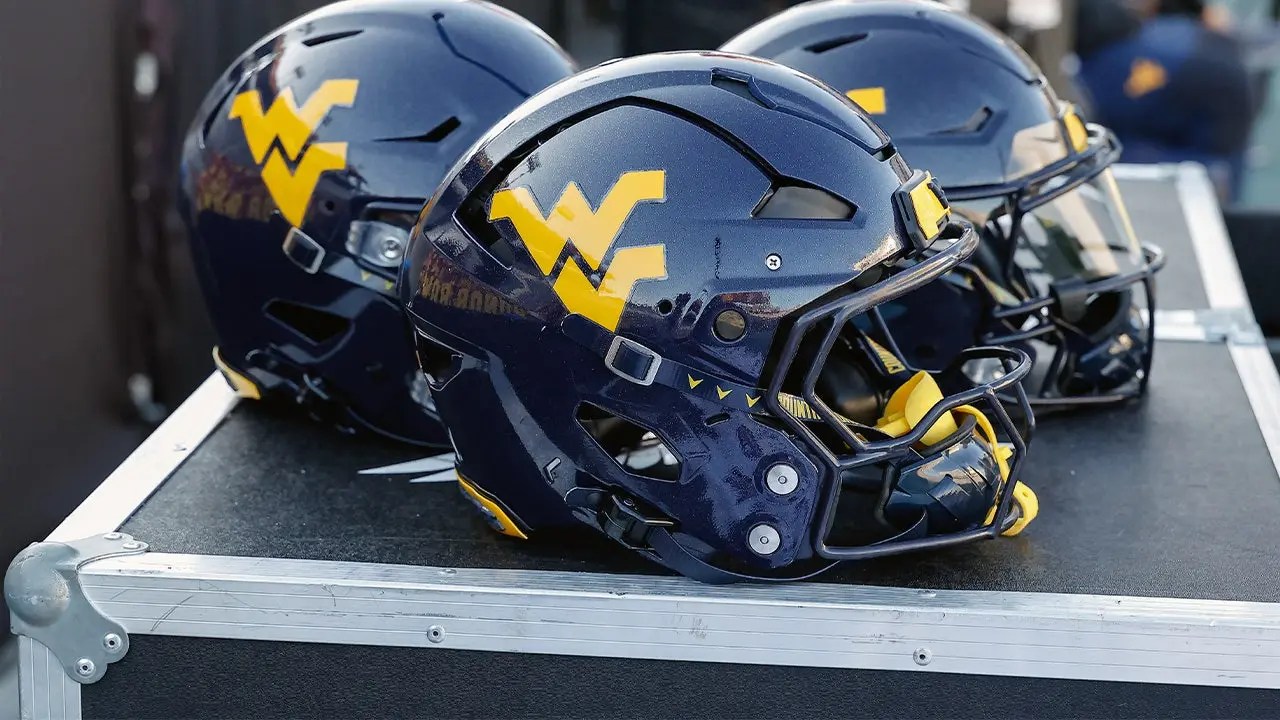
A big moment in any student-athlete’s career is announcing what school they’re committing to, and I don’t think you’re going to find an announcement better than one we’ve got coming from one of the newest West Virginia Mountaineers.
What’s that smell? It… it smells like a couch burning to the sounds of the Mountaineers’ beloved John Denver “Take Me Home, Country Roads.”
You bet your sweet a– that’s what it is.
There’s a growing chance that any recruit who lights a couch on fire is going to end up wearing one of these. (Photo by Kevin Abele/Icon Sportswire via Getty Images)
Ethan Lawson is a 6’6″, 300-lb offensive lineman and part of the 2027 recruiting class.
THE 2007 MOUNTAINEERS REMAIN COLLEGE FOOTBALL’S GREATEST ‘WHAT-IF’ STORY NEARLY TWO DECADES LATER
According to Sport Illustrated he has fielded offers from a bunch of programs including Appalachian State, Liberty, Air Force, Army, Navy, Duke, Wake Forest, UConn and more.
But, they all missed out because Lawson posted his decision on X, and well… I think he was always West Virginia material.
Bobcat Goldthwait was burning couches on camera before it was cool.
But, alright, there’s no doubt about it: someone is about to sell some jerseys.
ZERO BS. JUST DAKICH. TAKE THE DON’T @ ME PODCAST ON THE ROAD. DOWNLOAD NOW!
And if there’s not a furniture store in Morgantown that brings in Lawson and fellow offensive line recruit Kevin Brown (who also lit a couch on fire because that’s becoming a thing) for an ad, then… then, well, I don’t know what, but it would be quite the missed opportunity.
It’s early, but Rich Rodriguez’s West Virginia Mountaineers lead college football in recruits burning couches. (Ben Queen-Imagn Images)
Hey, like it or not, sometimes in the age of NIL it can be a popularity contest. If fans like you, it could mean greater visibility and more lucrative deals. Perhaps that was the mission here, and we all know it worked.
CLICK HERE TO DOWNLOAD THE FOX NEWS APP
I refuse to believe any Mountaineers fans saw that video, heard the song and then didn’t reflexively raise a beer (even if they didn’t realize they were drinking one and say, “Hell yeah, brother.”)
We’ll see if the sort of thing translates onto the field, but even if it doesn’t, I feel like there’s money to be made making appearances and lighting furniture on fire at frat parties.

BRISTOL, Va. (WCYB) — Crews put out a house fire in Bristol, Virginia, on Wednesday morning, according to officials.
The Bristol, Virginia Fire Department was dispatched at 3:09 a.m. for the fire in the 900 block of Vermont Avenue. The house was unoccupied at the time fire crews arrived on the scene.
Firefighters encountered heavy smoke and flames in the front of the house. They were able to quickly extinguish the fire under challenging conditions. The fire scene remains active and an investigation is underway. No injuries have been reported.
-

 Ohio4 minutes ago
Ohio auditor describes how widespread Medicaid fraud affects taxpayers | Fox News Video
-

 Oklahoma7 minutes ago
One injured in auto-pedestrian crash in northwest Oklahoma City
-

 Oregon12 minutes ago
Woman dies after falling into Devil’s Punchbowl on Oregon coast
-

 Pennsylvania19 minutes ago
Half of child deaths left unreviewed in Pennsylvania since 2020 as counties struggle with ‘unfunded mandate’
-

 Rhode Island22 minutes ago
He grew up in the kitchen. Then he rewrote the menu, and the future of his parents’ restaurant – The Boston Globe
-

 South-Carolina27 minutes ago
Here’s when, where you can vote in South Carolina 2026 primary election
-

 South Dakota34 minutes ago
Schedule, prediction for 2026 South Dakota softball state tournament
-

 Tennessee37 minutes ago
Tennessee AMC theater worker, 85, receives $146K from strangers for retirement after viral video

