The Virginia Cavaliers earned a 79-70 win over the No. 20 Louisville Cardinals on Tuesday night, claiming their first ranked-win of the Ryan Odom era in emphatic fashion against a tough ACC opponent on the road.
Virginia
Five takeaways from Virginia basketball’s 79-70 win vs. No. 20 Louisville


Virginia went on a 14-0 run to start the game, but Louisville responded with an 8-0 run to shrink the deficit. Although Louisville never managed to take the lead, some hot stretches frazzled Virginia, resulting in scrambled defense and a rushed offense for the back end of the first half.
While Virginia’s second half was cleaner, both teams struggled with foul trouble, with Virginia tallying 22 fouls to Louisville’s 21. The whistles were consistent on either end of the court – but frustrating and stunted momentum.
Familiar face Isaac McKneely had his best game in a Louisville uniform to date, leading the Cardinals in scoring with 23 points. His five made threes were all too familiar for Wahoo fans.
While Virginia showcased some strong stretches, there’s a lot to learn from the ranked, ACC matchup. Here are our five takeaways for the win over Louisville.
Malik Thomas steps up while Thijs De Ridder goes quiet
The graduate student guard had a statement game, leading the team in scoring with 19 points and hitting 6-of-8 from beyond the arc. He tallied five rebounds and three assists, but paid for it in four turnovers in his 25 minutes of play.
It’s a welcome sign for Thomas, who is rounding into shooting form after starting the season below his career average (37.4%). After going 0-for-5 from deep against Stanford on Saturday, he was in takeover mode against the Cardinals.
Thijs De Ridder coughed the ball up five times. But, unlike Thomas, didn’t make up for it, offensively. He contributed a quiet nine points, shooting 0-for-3 from the arc while picking up eight rebounds. The team’s leading scorer displayed some clean post defense early on, but was slow on the help as the game progressed.
Even in imperfect games, Virginia’s talent carries them through
The team’s talent is remarkable. For starters, Virginia has nearly a full roster of three-point shooters. Even against Louisville when shooters like De Ridder goes 0-for-3, Chance Mallory finishes 0-for-4, and Tillis shoots 0-for-1, the team still hit 41% from behind the arc – led by Thomas’s statement 6-for-8.
To have enough depth to make up for three dry shooters is an X-factor Virginia isn’t used to having.
Not to mention the team’s 79% success from the line (23-for-29) compared to Louisville’s 67% (12-for-18). With consistent (and some questionable) whistles, the team’s foul shooting was reliable and, in many games that end foul-for-foul, will prove decisive if they continue to improve at the charity stripe.
Whether it’s three-point shooting or the shot-blockers in the post, the team is fueled by talent – so much so that even technically imperfect games against Louisville stand out on the stat sheet and end with a clear victory. The challenge for the ‘Hoos isn’t whether they have championship talent, but whether they can consistently – and cleanly – execute come March. UVA just beat a respected, ranked conference team. But what matters more is if Virginia can still learn from and improve after victory, since the lessons tend to be more obvious in defeat.
The Wahoo defense lacked some fundamentals
While Johann Grunloh and De Ridder started the game with strong defense, guarding the rim with minimal fouls and textbook big-man play. But, defense got sloppy, with guards trailing on the drive and lacking solid help defense – allowing too many buckets from the paint.
In a statistical sense, the ‘Hoos look strong – especially when considering nine blocks and 30 defensive rebounds. In a more technical sense, Virginia lacked some defensive fundamentals. While they tightened it up in the second half, most of the players struggled with on-ball defense, with guys like Dallin Hall and Sam Lewis repeatedly failing to stay in front of their man and guarding along the hip. Plus, the help defense was slow–with Louisville succeeding on uncontested or poorly contested drives to the basket. In the end, Virginia gave up 26 points in the paint, compared to Louisville giving up only 12.
While a number of players were getting beaten off the dribble, Jacari White showcased impressive footwork and made a noticeable difference on the floor. His contributions go beyond the stat sheet and are in the sound defensive play that often isn’t talked about.
Virginia’s rushed offense counted on the three – maybe too much
There’s no argument that Virginia is now a three-point threat. They make a lot of them. The team shot 41% from beyond the arc – an encouraging team statistic. The bigs started the game with a couple of statement threes. But once the lead crept in during the first half, the team rushed their offense, forcing the fast break or taking the first shot – not the best one.
While it worked out in the end, Virginia does better when they set up their offense. In fact, for much of this season, they’ve displayed some beautiful, textbook ball movement that sets them up for the perimeter shot or the dump down low. After Louisville started to close on their deficit in the first half, Virginia took too many fast breaks and early-shot-clock threes. While they made enough, with their talent, they could have secured a run-away game. Their rushed offense led to 13 team turnovers for Virginia—which Louisville converted into 19 points.
Against Louisville, Virginia showed that their offense can get frazzled. And when it does, they put a lot of trust in the three. On Tuesday, guys like Thomas made it count. But, the shots won’t always fall.
Virginia has a deep bench–and Odom is using it well
Consistent substitutions are becoming a part of head coach Ryan Odom’s philosophy. As we’ve seen all season, ten players hit the court for double digit minutes against Louisville – which compares starkly to Bennett-area basketball that relied on the first six or seven players.
Virginia’s roster has depth, and he’s regularly subbing in players – sometimes two or three at a time. And, it’s a strategic move. First, the opponent doesn’t get the chance to base their defensive game plan around a single star player. Instead, opponents like Louisville are forced to defend the entire roster, keeping them on their toes.
Plus, it keeps Virginia’s players fresh and allows for correction on the court, instead of expecting guys to play through whatever funk they may fall in.
In the long term, it may even be a retention strategy. If players feel like they’re getting a fair slice of the game–and contributing to it–they may feel more allegiance to the program or see more room for opportunity for their own development.
Regardless, it contributes to a team mentality. With a stacked roster, it likely fuels some unselfish basketball.



Virginia Tech football head coach James Franklin and three players — defensive tackle Kemari Copeland, safety Tyson Flowers and running back Marcellous Hawkins — will be present Thursday at the 2026 ACC Kickoff at the Hilton Charlotte Uptown (Charlotte, N.C.). Here are three things I think Hokies fans should hope to learn about the Hokies at media days, centered around which players will be taking questions.
No. 1: How has it been incorporating new athletic director Brian White?
White was named the university’s new athletic director and vice president in June; he previously served in the same roles at Florida Atlantic University. Under the helm of White, the men’s basketball team, coached by Dusty May — he later won a NCAA title with Michigan, and he’s now the head coach of the NBA’s Dallas Mavericks — made it to the Final Four in the 2022-23 season. While White’s chops lie more in hoops, his influence on football could also arrive via the chips that he’s surrounded with around the Hokie Club. Virginia Tech has made an effort in finding replacements for its university president (Tim Sands) and athletic director (Whit Babcock), and it’s also procured a record $75 million investment, the majority of which is directed towards the athletic department. How that process of integrating White, who specializes in finances, is going is one of the more intriguing notes to cover.
No. 2: Is there anyone on the secondary that jumps out to either Franklin or Flowers?
The secondary remains one of the more fascinating position groups on Virginia Tech’s roster entering the 2026 season. While Flowers is the established veteran and unquestioned leader of the unit, there are plenty of snaps available around him following offseason departures. Media days won’t provide a depth chart, but they can offer insight into which younger defensive backs have separated themselves during summer workouts.
It will be interesting to hear if there’s a specific player who has caught his attention. Cornerback Joshua Clarke could be one to watch given that he projects into the two-deep after a torn ACL cost him the 2025 campaign. Whether it’s Clarke, an experienced transfer acclimating to Blacksburg like Troy transfer Jaquez White or a younger corner beginning to emerge, those types of comments often provide an early indication of how the coaching staff and players view the rotation before preseason camp begins.
The same goes for Franklin. Coaches are naturally careful with personnel discussions in July, but even subtle praise can be revealing.
No. 3: How does the running back/defensive line depth shape up?
Virginia Tech operated slightly short-handed at running back for the duration of fall camp, missing true freshman Messiah Mickens throughout. Hawkins was hobbled, and though he went through several individual workouts, he did not play in the spring game. How he’s doing is one of the points to note, and while it doesn’t appear to be a serious injury at first glance, clarity is always helpful.
As for the defensive tackle room, Emmett Laws is currently out with an undisclosed injury that defensive coordinator Brent Pry did not go into more detail on. Any update on his availability would be encouraging, particularly for a defensive front that is counting on developing quality depth behind its projected starters. Kemari Copeland and Elhadj Fall appear to be the likely starters at tackle, but beyond Aycen Stevens being at one of the edge spots, who starts at the other is yet to be determined.
Add us as a preferred source on Google
Follow

As Roanoke hosts the USA Cycling Mountain Bike National Championships this week, one of the region’s leading advocates for outdoor recreation is taking on a new role at the state level.
Gov. Abigail Spanberger has appointed Pete Eshelman to the Virginia Tourism Authority, marking his second term on the board after previously serving from 2018 to 2023.
For the past 15 years, Eshelman has helped lead the Roanoke Regional Partnership and the Roanoke Outside Foundation, promoting outdoor recreation as an economic development strategy. He said the region’s mountains, rivers and trails have become more than tourism assets; they have become tools for attracting businesses and new residents.
“We took for granted where we live—the beauty, the lakes, the mountains, the rivers, the trails—and we treated them like wallpaper,” Eshelman said. “But then we became intentional with them.”
Eshelman said investing in quality of life has helped distinguish the Roanoke Valley from competing communities.
“I always say quality of life is an economic sector,” he said. “When we invest in that, we see how it attracts companies like RINGANA. We see how it attracts people that can choose wherever they want to move to and live, but they’re choosing to move here over Asheville, North Carolina or Charlottesville because of that quality of life.”
That strategy has helped shape events including the Blue Ridge Marathon, GO Outside Festival and continued investments in parks, trails and outdoor recreation throughout the region.
“It’s not that Roanoke had a bad image; we just didn’t have an image,” Eshelman said. “What we’ve been able to do is show people these are our strengths as a community.”
Now, Eshelman hopes to bring that same approach to communities across Virginia through his appointment to the Virginia Tourism Authority.
“It’s really important that as decisions and policy decisions are being made at the state level that Roanoke has a voice and a say,” said Eshelman. ”I am very proud to do that.”
Eshelman believes the model that has helped transform Roanoke’s reputation can be replicated elsewhere.
“The work we’re doing here, this model, is replicable across other communities,” he said. “I think that whole ‘rising tides lift all ships’ mentality is really strong across economic development, across tourism, across our region and across the state.”
Despite Roanoke’s growing national recognition as an outdoor destination, Eshelman said the work is far from finished.
“We haven’t arrived,” he said. “We have a lot more that we can do. We have to put our foot down on the gas and do even more to kind of keep this competitive edge.”
As communities across the country compete for businesses, workers and visitors, Eshelman said he believes Roanoke’s greatest advantage has been in its own backyard all along.
Copyright 2026 by WSLS 10 – All rights reserved.

PORTSMOUTH, Va. (WAVY) – A new study ranks Virginia fourth among the best states for retirees.
The study by home care agency Polaris Home Care analyzed social and economic factors, including crime rates, annual medical costs, housing costs, and state salaries. This analysis revealed an index score out of 100 for every state based on retirement accessibility.
Virginia received a score of 87.48/100.
Virginia performs well across key factors, notably benefitting from one of the highest average annual earnings of $68,597.
The agency says the state has one of the lowest violent crime rates at 208 incidents per 100,000 people and a total crime rate around 24% lower than the national average at 1,850.7 incidents per 100,000 population, highlighting the above-average safety levels offered in the state.
Idaho ranks as the most retirement-friendly state, with Arizona and North Dakota coming in second and third, respectively.
Complete rankings:
Rank
State
Retirement Index Score (/100)
1
Idaho
100.00
2
Arizona
90.67
3
North Dakota
90.48
4
Virginia
87.48
5
Alabama
86.34
6
Wyoming
84.42
7
Florida
83.77
8
Mississippi
83.56
9
Minnesota
82.98
10
Michigan
82.88
11
North Carolina
82.50
12
Kentucky
81.84
13
Utah
81.74
14
Nevada
81.67
15
Rhode Island
81.36
16
West Virginia
81.24
17
Wisconsin
78.93
18
New York
78.16
19
Hawaii
77.83
20
South Dakota
76.52
21
Colorado
76.12
22
Connecticut
75.82
23
Maryland
74.96
24
Washington
74.74
25
Indiana
74.32
26
Pennsylvania
73.93
27
Tennessee
73.73
28
Massachusetts
73.23
29
Maine
73.13
30
Iowa
73.07
31
Delaware
70.50
32
Arkansas
70.20
33
Vermont
69.22
34
South Carolina
68.94
35
New Mexico
68.43
36
Oklahoma
68.38
37
Montana
68.20
38
New Hampshire
67.28
39
Ohio
66.60
40
Georgia
66.35
41
Kansas
64.41
42
New Jersey
63.38
43
California
63.26
44
Oregon
62.86
45
Illinois
62.64
46
Louisiana
61.55
47
Nebraska
61.52
48
Texas
53.49
49
Missouri
49.69
50
Alaska
41.44
-
 News26 minutes ago
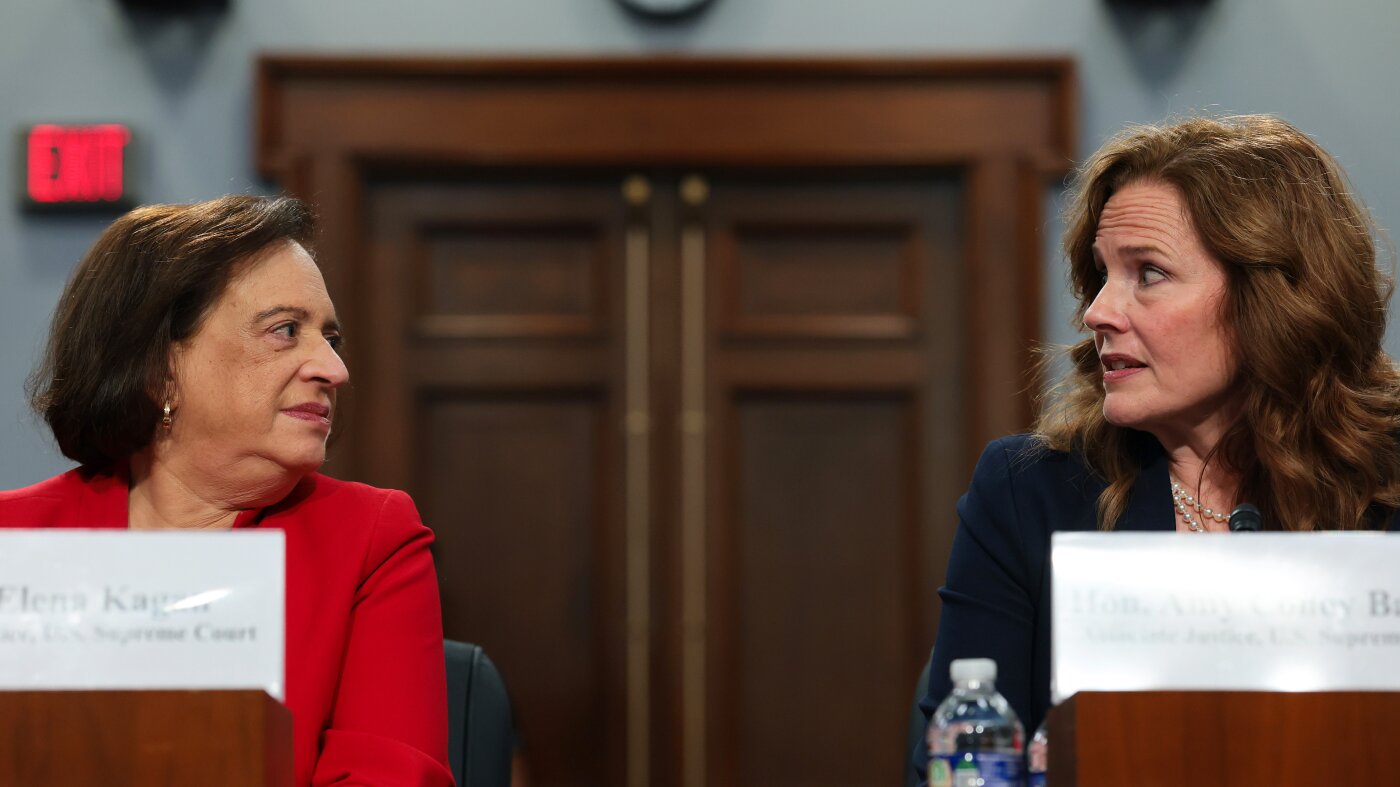
Supreme Court Justices give chilling accounts of threats to their safety
-

 Los Angeles, Ca2 hours ago
Stabbing at Chino Hills liquor store ends in attempted murder arrest
-

 Detroit, MI2 hours ago
A small group of citizens rally for mental health coverage in Detroit
-

 San Francisco, CA3 hours ago
1 dead, 2 missing after boat capsizes near Alcatraz in San Francisco Bay
-

 Dallas, TX3 hours ago
Death penalty off the table for man accused of beheading Dallas motel manager, prosecutors say
-

 Boston, MA3 hours ago
Chickadee, the popular Mediterranean restaurant in Seaport, is shutting down – The Boston Globe
-

 Denver, CO3 hours ago
Denver Nuggets 7-Year NBA Veteran Gets Honest On Peyton Watson
-

 Seattle, WA3 hours ago
Top 25 Seattle Seahawks Going into 2026 NFL Season: #17 Grey Zabel

