Virginia
4 Modern Pakistani Restaurants to Try in Northern Virginia


Washington’s Pakistani food scene remains one of its most under-sung strong suits, and it’s only getting stronger. Ambitious Pakistani eateries are blossoming in the Northern Virginia suburbs—and plotting expansions across the District and Maryland.
With them, they’re bringing fried puris ballooned up beside buttery chickpeas and cardamom-scented semolina halwa; sizzling chicken and lamb in wok-like karahis topped with slivers of ginger; and chargrilled chapli kebab patties studded with whole coriander and chilies.
This new class of Pakistani eateries, clustered in Fairfax and Loudoun counties, serves uncompromising food in polished, contemporary spaces.
“Just selling halal food isn’t the benchmark anymore,” says Suhail Kamran, who owns Cha Street Food, in Tysons and Sterling. “It has to taste amazing, and your space and customer service needs to be complementing it as well.” Here are four favorite new-wave Pakistani spots.
Chaska
location_on 45630 Falke Plaza, Sterling

The second-story open-air terrace has such a commanding view of Dulles Airport that you can make out the logo of each landing plane while you eat. At first, it didn’t occur to owner Waqas Shah, who also runs a pizza shop downstairs, to open a separate restaurant in the space. But Shah—who was born in Rawalpindi, Pakistan, but grew up in Loudoun County—had been dreaming about opening a serious Pakistani grill.
“We’ve been eating this food since I was little,” Shah says. “Basically, we wanted to offer that to the community, to bring back memories for the folks that are here.”
Although Chaska’s menu incorporates dishes like karahi and even burgers, kebabs are the thing to get. The bright-orange marinade of the chicken tikka permeates the meat, and Shah’s grill cooks also work magic with ground beef, in the form of tubular seekh kebabs and burger-shaped chapli kebabs. The mixed grill offers a chance to try them all, supplemented with fragrant long-grain rice and slow-cooked chickpeas.
Chaska’s lofty location presents challenges—delivery drivers often give up on finding it, and diners have to climb a long flight of stairs—but Shah and his five brothers have worked to make it as welcoming as possible. Inspired by Pakistani truckers’ tradition of decorating their rigs with psychedelic colors and quotations, they emblazoned each step on the staircase with sayings in Urdu. “It’s hard to go to a restaurant where you have to go up the stairs,” Shah says, “so we try to engage people while they’re coming up.”
Namak Mandi
location_on 5884 Leesburg Pike, Falls Church


Veteran nightclub owner and restaurateur Sami Khan’s previous projects all have their charms, but most are undistinguished—a lounge in DC and a few Mediterranean and Mexican spots around Virginia. It’s when he chose to focus on something closer to his native home that he created one of the region’s best South Asian restaurants. Namak Mandi, which opened in 2020 on a busy stretch of Leesburg Pike, is named after the historic salt-market district of Peshawar, a crossroads of Afghan and Pakistani cuisines. “People go from all over the country to eat there,” Khan says. “Their karahi is the most special thing.”
Fittingly, karahi—a thick, tomato-based curry—is also the most special thing at Khan’s restaurant. It hits the table sizzling-hot, a fiery chicken stew reduced down to a concentrate at the bottom of the steel karahi pan, which also functions as its serving dish. As important as the karahi, though, is the bread that accompanies it. The oblong naans, fresh from the tandoor, arrive speared on hooks atop wooden pedestals that Khan has fashioned himself, inspired by Peshawari restaurants he’s visited in the UK.
This summer, Khan opened a second location, in downtown DC (1030 15th St., NW). At the Falls Church original, which is decked out with sofa-like seating upholstered with Pashtun tribal patterns, Khan says his clientele is still 80 percent Pakistani. At its newer sibling—which serves an Indian-accented weekday buffet along with Peshawari specialties in a more modern space—Khan is hoping to introduce his food to a new audience.
Cha Street Food
location_on 8056 Tysons Corner Center, Tysons; 45633 Dulles Eastern Plaza, Sterling

This mini chain has already transformed from a food truck to a storefront in Tysons Corner mall boasting a friendly indoor-outdoor space strung with lights and colorful hanging lamps. Next, owner Suhail Kamran wants to expand his “pandemic idea” into DC and Maryland and eventually up the East Coast.
Kamran says he and his family missed the tea houses of Pakistan—here there’s no obvious American equivalent—and initially called the business Cha Tea House.
“The Indians and the Pakistanis got it, but everyone else thought we’d just have a bunch of tea,” he says. “In Pakistan and India, a tea house has a lot more than just tea.” Cha Street Food certainly does. Its menu hops back and forth between the continents, from paratha rolls to masala-spiced fried-chicken sandwiches.
Kamran, a second-generation Pakistani American with kids born here, wanted to incorporate traditional flavors into familiar American formats. He makes Kashmiri pink chai into a milkshake, loads French fries with spiced keema (minced meat), and flips chapli kebabs and masala potato patties onto hamburger buns. Falooda ice cream is another crowd-pleasing treat. “For our kids,” Kamran says, “I had to make it easy for them to understand.”
That’s not to say the food doesn’t draw heavily on tradition. Before opening Cha Street Food, a few of Kamran’s business partners flew to Karachi with one purpose: to learn the art of paratha rolls from a street vendor. “I don’t know what got into them, to be honest,” Kamran jokes. Clearly, their trip was fruitful: The parathas—wrapped around kebabs, crispy paneer, or grilled chicken—are supple and pleasantly flaky.
Desi Breakfast Club
location_on 83065 Centreville Rd., Herndon

Even if you’ve never tried halwa puri before, it might become a breakfast craving that never leaves you. For one thing, with this typical Pakistani morning meal, you don’t have to choose between sweet and savory. Use a crispy, air-filled puri, puffed up in the fryer, to scoop alternating bites of halwa (warm, sweet semolina pudding) and masala chickpeas. If you eat meat, opt for a third add-on: chicken keema with green peas.
“If you go to Lahore on Saturdays and Sundays in the morning, halwa puri is on everyone’s mind,” says Malik Ahmad, who opened this all-day-breakfast restaurant in 2021.
While Ahmad was in high school, his parents opened Charcoal Chicken, an exemplary kebab shop that still operates in nearby Chantilly. His love for their cooking traditions, and his American childhood, inspired him to open Desi Breakfast Club, which he thinks of as a kind of diner.
“Diners are everywhere,” Ahmad says. “They’re the backbone of America.”
Ahmad’s place has a sizable menu. Nihari, one of the world’s heartiest breakfasts, is great here—a slow-cooked, gingery beef stew with a slick of orange ghee floating on top. Chai is hot, cheap, and nicely spiced. French toasts, bagels, and omelets are available. But the halwa puri is the destination-worthy plate.
Now Ahmad manages both his parents’ restaurant and Desi Breakfast Club. He’s a testament to the changing nature of Northern Virginia’s Pakistani dining scene. “Charcoal Chicken was a hole in the wall,” he says. “My parents didn’t do any marketing, it was just word of mouth and their hard work.”
But Ahmad, like the proprietors of Chaska and Cha Street Food, is part of a new wave of Pakistani restaurants harnessing social media, coming up with fun fusion dishes, and creating cool design elements to attract new customers. “It’s all these second-generation kids,” he says.
This article appears in the November 2024 issue of Washingtonian.



CLARKSBURG, W.Va. (WBOY) — West Virginia has plenty of state symbols, be it the black bear as the state animal, the cardinal as the state bird or the rhododendron as the state flower, but did you know that the Mountain State also has its own official gun?
The Hall Flintlock Model 1819 was first manufactured in Harpers Ferry by John H. Hall in 1811 and was adopted by the United States Army in 1819, making it the first breech-loading rifle ever adopted by a country’s military.
-
Model 1819 Hall Breechloading Rifle presented by Congress to Gustavous A. Bird for his participation in the Battle of Plattsburgh 9/11/1814 by John C. Bird via the Smithsonian Institution -
Model 1819 Hall Breechloading Rifle presented by Congress to Gustavous A. Bird for his participation in the Battle of Plattsburgh 9/11/1814 by John C. Bird via the Smithsonian Institution


All of this information is listed in Senate Concurrent Resolution 7, which was introduced and passed during the 2013 West Virginia Legislative session, and officially recognizes the Model 1819 as the official firearm of the State of West Virginia.
On top of being created in West Virginia, the resolution also points out that the rifle saw use during the Civil War, an event that directly led to West Virginia’s statehood.
While having an officially recognized state firearm may seem far-fetched, West Virginia is not the only state that has one. As a matter of fact, a fifth of the states in the country have officially designated a state firearm, including West Virginia’s neighbors in Kentucky and Pennsylvania.

CHARLOTTE, N.C. — In this world of college football, with the transfer portal and recruiting battles, bad blood is present more than ever before between head coaches.
That’s not the case between the Virginia Tech head coach and Clemson head coach Dabo Swinney, however. In fact, Franklin revealed at ACC Kickoff on Thursday that the two are actually close friends, dating back to their time at the Nike trip that various coaches take over the summer.
“Dabo’s my guy,” Franklin said on Thursday. “We go way back. We’ve been on the Nike trip for a long time. His wife and my wife are friends.”
The long-time Penn State head coach is making the move to the ACC after being fired from the Nittany Lions in October. 12 seasons of being with the program had Franklin hold a 44-21 record against top 10 opponents, an impressive record for a new conference foe of Swinney’s.
But when that trip comes around, there’s a camaraderie between Swinney and Franklin and both of their wives. In fact, the two hang out with each other instead of the other coaches at times. It simply comes to an “edgy” time in college athletics that raises tempers.
“I’m going to be honest, I wouldn’t say we’re necessarily like the type of people that love a lot of other coaches and a lot of other programs,” Franklin said. “It’s hard when you just compete year-round.”
On Swinney’s end, there are a few who could immediately come to mind among Clemson fans. Perhaps the most recent would be Ole Miss coach Pete Golding, who played the most significant role in the tampering of former linebacker Luke Ferrelli.
It’s a select list of coaches who make the good side of the Tigers’ head coach, and Franklin is certainly on that list. On the other hand, Hokies’ head coach has Swinney on his own shortlist.
“Obviously, tremendous respect for what he has built at Clemson and what he’s done at Clemson, and what he’s done for the ACC,” he said.
The two will see that close relationship face off at Memorial Stadium this upcoming season. Clemson will host the Hokies on Oct. 24 in what could be a potential title-eliminator for the ACC Championship.
Of course, the last game that we’ve seen the Tigers play in was against Franklin’s former team in Penn State at the Bad Boy Mowers Pinstripe Bowl. That game ended in a 22-10 contest that saw a foundation of Franklin players end Clemson’s season in disappointment.
Swinney will see many of those players once again in October, including starting quarterback Ethan Grunkemeyer, in that contest. The anticipated Hokie starter recorded 260 yards and two passing touchdowns on the Tigers in the Bronx that day.
Although friends become foes, another ACC coach has given Swinney his flowers for what he’s been able to do for the conference. In the upcoming moments, Franklin will look to prepare his team to prove itself on one of the biggest stages in the ACC, while Swinney looks to put his team back at the top of a conference he’s dominated for over 15 years.
Follow

MARTINSVILLE, Va. (WSET) — Extreme drought conditions in parts of Virginia have prompted an emergency drought warning for a wide swath of the region, including Bedford, Campbell, Charlotte, Franklin, Halifax, Henry, Mecklenburg, Patrick, Pittsylvania and Roanoke counties, along with the cities of Danville, Roanoke, Salem and Martinsville.
The governor has warned that if conditions worsen, she will activate mandatory nonessential water-use restrictions.
In Martinsville, city leaders have issued a voluntary water conservation notice and are urging residents and businesses to cut back where they can. The request comes as local businesses that rely heavily on water say the drought is already affecting day-to-day operations.
SEE ALSO: Botetourt County residents adjust daily routines as voluntary water restriction continues
John Hughes, owner of John’s Car Wash, said the dry conditions have hit his business hard in recent weeks. “For the last 3 weeks, it’s been hitting pretty hard. We done three yesterday and haven’t done anything today with the drought and hot weather. Yeah, I’m really concerned about it,” Hughes said.
Restaurants are also feeling the strain. David Kitzmiller, an owner of Be Wiched, said water is essential for routine tasks such as washing dishes and preparing some menu items.
“We use a lot of water for washing dishes and some of our recipes if they limit us in anyway defiently can’t produce and its a scary aspect,” Kitzmiller said.
Kitzmiller added that cutting back is not always realistic for businesses that must meet sanitation needs. “Not really feasible for a business that depends solely relies on water to wash their dishes, so that can’t definitely be an impact there,” he said.
City leaders emphasized that the conservation request is voluntary for now, but they are encouraging everyone to do their part by taking shorter showers, turning off the faucet when it is not in use, washing only full loads of laundry, and limiting outdoor watering whenever possible.
-
 Lifestyle8 seconds ago
L.A. Affairs: After losing our spouses, we found love again. But were we cheating on our children?
-
 Politics6 minutes ago
A new piece of Democrats’ midterm strategy: Being ‘practical’
-
 Science12 minutes ago
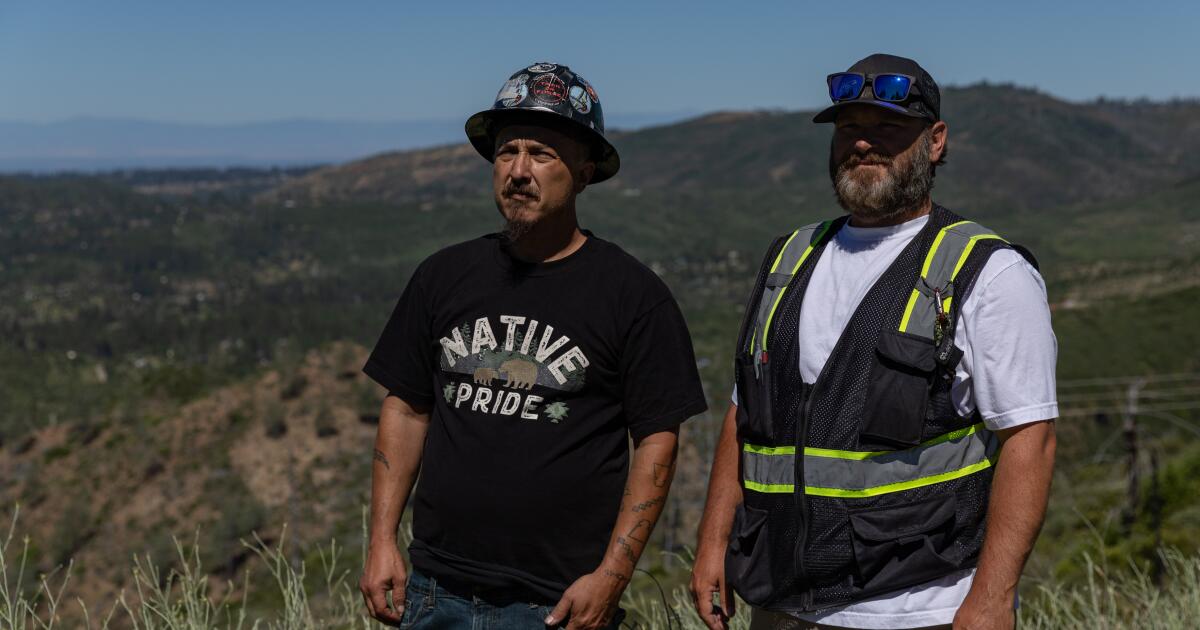
After wildfires destroyed 95% of this California tribe’s forests, members uncovered 1,200 ancestral sites
-
 Sports18 minutes ago
World Cup championship and third-place game: Start times and how to watch
-

 World30 minutes ago
Rule of Law in Hungary shows ‘radical change’ under Magyar, EU says
-

 News1 hour ago
Where Wildfire Smoke Is The Worst Right Now—And What To Do About It
-

 Los Angeles, Ca3 hours ago
LADWP begins long-term repairs after West Hollywood water main rupture
-

 Detroit, MI3 hours ago
Livestream: Mayor Sheffield, Detroit health chief to address wildfire smoke threat

