Texas
UT System’s free tuition plan sparks resistance from some Texas lawmakers


WASHINGTON — State Rep. Brian Harrison, R-Midlothian, said Friday he plans to meet with top University of Texas System officials after they announced a plan to provide free tuition and waived fees to students whose families make $100,000 or less.
While many elected officials have praised the initiative, Harrison criticized it as an “abuse of power” that makes Texas higher education “more socialist than California.”
Harrison said Friday he’s unswayed by statements from the system and supporters who say the move will be funded from university endowments, not taxpayers.
Harrison compared such statements to someone saying they’re removing water from the shallow side of a pool, not the deep end. It’s all the same water.
“Money is fungible, so that doesn’t satisfy me in the slightest,” Harrison said.
The new initiative is an expansion of the Promise Plus Program, a needs-based financial aid initiative, and comes amid widespread concerns about the impact of inflation and college costs on families. Gov. Greg Abbott recently prohibited Texas colleges and universities from raising tuition for the next two years.
UT System Chancellor James B. Milliken hailed the expansion as a “game changer” that will make “enormous, real difference” to improve college access for all Texans.
Not everyone is a fan.
Harrison and like-minded House colleagues have compared it to President Joe Biden’s student loan forgiveness plan that drew intense blowback from conservatives and was largely struck down by the courts. They also said such a consequential change in policy should come from the elected lawmakers serving in the Legislature.
“There must be consequences,” Harrison said on X. “UT’s budget must be cut, and bureaucrats should be fired.”
He led 10 Republican lawmakers, most of them incoming freshmen, in a letter to the regents demanding answers to a litany of questions, including the price tag of the expansion and the source of that money.
“What specific statutory authority did the regents rely on to make a decision this consequential, which will have direct financial consequences for our constituents, many of whom are already struggling to put gas in their tanks and food on their tables?” the lawmakers wrote.
UT System spokesman Paul Corliss has said the program is not funded through taxes or any kind of public subsidy.
“Rather it is funded through existing UT System endowments,” Corliss said.
Rep. Donna Howard, D-Austin, hammered that point in a response to Harrison on social media.
“There are no tax dollars involved,” Howard said on X. “Higher Ed institutions are already helping families afford college. This expands philanthropic endowments and helps meet affordability goals of [Abbott and the Texas Higher Education Coordinating Board].”
Harrison and his colleagues will have to contend with many members of the public embracing a plan that already is encouraging young people to adjust their higher education aspirations.
Frank Whitefeather, a high school senior, stayed up until 2:30 a.m. Friday working on his college application essay.
He was freshly motivated after the announcement that students whose families make less than $100,000 annually will get free tuition and waived fees at the University of Texas at Austin and other schools in the UT System.
“I wouldn’t be in debt,” said Whitefeather, 17. “I wouldn’t have to have student loans.”
Whitefeather, who attends Dallas ISD’s Sunset High School, thinks the UT news also could change many of his peers’ lives. It’s already changing his plans. Whitefeather hopes to study engineering and be his own boss one day. Texas A&M and UT Austin were his top two choices, but the free tuition announcement has pushed UT ahead.
Harrison said the university system is being contradictory by simultaneously saying it has enough money to offer tuition-free education, but also that a tuition freeze could leave it cash strapped and require more funding from the Legislature.
“I guarantee you they’re going to be requesting more tax money from the Legislature next session,” he said.



Women’s Final Four teams describe their team in one emoji
South Carolina, Texas, UConn, and UCLA give one emoji to describe their team ahead of the Final Four matchups.
Sports Seriously
PHOENIX — The UCLA and Texas women’s basketball teams are back in the Final Four for the second consecutive season. One team will advance a little further after both were beaten in the 2025 semifinals.
Texas (35-3) appeared in its last championship in 1986, when the Longhorns went 34-0. UCLA (35-1) has never been to a title game.”For us being back here again in the Final Four, it’s a hard task to do,” Texas forward Madison Booker said. “Right now, we’re trying to take it day by day. I think being present where you are. I think also sitting back and looking back at what you accomplished this season, kind of saying good job to yourself.”
USA TODAY Sports All-American Lauren Betts leads the Bruins with 17.2 points and 8.6 rebounds per game and a 57.9% field goal percentage. Booker, also a USA TODAY All-American pick, paces the Longhorns with 19.3 points and 6.7 rebounds per game.
Here’s what to know and how to watch the Final Four matchup between UCLA and Texas:
UCLA vs. Texas: Final Four date, start time
The UCLA Bruins and Texas Longhorns will face off Friday, April 3 at the Mortgage Matchup Center, home of the NBA’s Phoenix Suns and WNBA’s Phoenix Mercury.
- Time: 9:30 p.m. ET (6:30 p.m. PT)
- Date: Friday, April 3
- Location: Mortgage Matchup Center (Phoenix)
How to watch UCLA vs. Texas: TV channel, streaming
UCLA vs. Texas will air live on ESPN at 9:30 p.m. ET, with streaming options on Fubo and ESPN Unlimited.
Watch Women’s NCAA Tournament games on ESPN Unlimited

UCLA players share what makes Audi Crooks a special player
Players from UCLA are asked about Audi Crooks after she enters the transfer portal and what makes her a special player.
Sports Seriously
PHOENIX ― Texas women’s basketball coach Vic Schaefer could barely speak when he was recently asked about Iowa State coach Bill Fennelly and the mass exodus he’s experiencing with his program.
On Thursday, Cyclones center Audi Crooks announced her intention to enter the transfer portal. Crooks’ departure marked the 10th Iowa State player to reveal they will be leaving the team to pursue other options. A large number of players switching teams isn’t uncommon in the transfer portal era, but Fennelly’s program has been hit particularly hard in recent days.
When Schaefer was asked about what Fennelly is experiencing from a coach’s perspective, he paused, shaking his head and rubbing his hands together, deep in thought and visibly emotional. Eventually, he gave a heartfelt response to on-site media in the room ahead of Texas’ Final Four matchup on Friday against UCLA (9:30 p.m. ET, ESPN).
“I mean, you’re talking about somebody that’s literally given his life to this game. It is hard. I’m obviously friends with Bill. His whole family has given so much to this game, to so many young women,” said Schaefer.
“It’s just not the same. It’s just not the same job it was five years ago, certainly not what it was 10, 15, 20 years ago. It’s just way different. … There was a thing called the dinosaur a while ago. What happened to them? They couldn’t figure it out. What happened? They became extinct. We better figure it out, or we’re going to become extinct. That’s just the way it is.”
Ultimately, Schaefer later admitted that he was saddened by what was happening to Fennelly.
“I’m so disheartened and disappointed, especially for him, because I know what he’s given to this game his whole life,” Schaefer said.
Fennelly released a statement on Thursday, sharing how much college basketball has changed and reassuring fans that Iowa State would move forward.
“It goes without saying that college sports have undergone tremendous change the past few years, and our program has obviously been impacted by the current landscape this spring. While I am sad and disappointed that some of our players have chosen to pursue other opportunities, I want to thank them for their time at Iowa State and wish them all the best as they move on,” Fennelly said.
“I look forward with enthusiasm to next season and promise you, we will have a team that represents all of you the Iowa State way.”

Subscribe to The Y’all — a weekly dispatch about the people, places and policies defining Texas, produced by Texas Tribune journalists living in communities across the state.
A shipping container in Fort Davis is at the center of a new experiment in bringing telehealth to an aging rural population.
Perched in the Davis Mountains of West Texas, Jeff Davis County faces steep barriers to care. Nearly one in five residents lacks reliable broadband. The only doctor in Fort Davis, the county seat, is semi-retired, and most people make the 30-minute drive to Alpine for care. With a median age of 58, among the highest in the country, the need for consistent medical care is growing, even as access, both in-person and virtually, remains a challenge.
The retrofitted 40-foot container houses the new Davis Mountain Clinic in Fort Davis, a telehealth hub created through a partnership between Texas A&M and Texas Tech universities to connect residents with remote medical and mental health professionals.
But for rural Texas, expanding telehealth for aging populations depends on more than video calls. It requires reliable broadband, digital literacy for older residents, trusted community health workers, and practical ways for clinicians to weave virtual visits into everyday care.
Since opening in October 2025, the Davis Mountain Clinic has added something many rural telehealth programs lack: a physical place with reliable connectivity and a local registered nurse, Carol Brewer, who can take vital signs, perform physical exams, and guide patients through virtual visits with providers who may be hundreds of miles away.
Brewer, who is also the director of the clinic, said this approach creates a whole new world of access for the community, especially for older patients who may feel less comfortable navigating virtual appointments.
“The majority of the patients I see are part of an older population,” Brewer said. “The advantage is, when they come here to see the doctor, I manage the technology on my end, they don’t have to deal with that at all…I’m the hands of the physician via telehealth. I have a stethoscope and an otoscope. So they can hear their lung sounds, heart sounds, bowel sounds, or look in their eyes, ears, nose. I facilitate that.”
Brewer’s hands-on approach highlights how telehealth can be tailored to the realities of an older, rural population, where technology alone isn’t enough, and personal guidance can make the difference between care received and care missed.
“People who live in rural areas are older, sicker, and poorer than people who live in urban areas. Because of that, there are absolutely practical applications for telehealth and its clinical applications,” said Billy U. Philips, PhD, the former executive vice president of the The F. Marie Hall Institute for Rural and Community Health and current Grover E. Murray Professor at Texas Tech University. “But when you overlay with age dimension, then the delivery of care is really going to depend on local and personal circumstances.”
Brewer sees the importance of local connection and community in her work every day.
“I had a patient that came and saw the doctor [virtually] yesterday. His wife had dropped him off, and I gave him a ride home afterwards, because his wife had to go down to Alpine,” Brewer said. “There are just things that we can do for the patients that they’re not going to get anywhere else.”
Brewer said that even though the county has just 1,200 residents, she often sees several patients each day. Some come for virtual appointments, while others need help managing aging-related care, navigating insurance, or even obtaining copies of their medical records.
“I had a patient whose daughter came by and said she didn’t think her mom looked well, and her vehicle was out of commission, so she couldn’t get her to the doctor. I went to their home and checked on her mom, and sure enough, her oxygen levels were low and she wasn’t wearing her oxygen,” Brewer said. “We got her back on [the oxygen] and stabilized her, and while I was there, I called to set up a doctor’s appointment. The daughter was arranging another way to get her mom to the doctor. It’s a small community, so if they can’t come to me, I go to them.”
This hybrid delivery of care offers hands-on support while also connecting a rural community to specialists and providers in different corners of the state.

Technology challenges
A 2025 report from the Texas Broadband Development Office found that Jeff Davis County faces significant broadband challenges due to its small, aging population, mountainous terrain, and high proportion of residents with disabilities or limited English proficiency. These factors make deploying reliable, affordable internet costly and complex, often requiring public subsidies to make broadband expansion feasible.
But these hurdles aren’t unique to Jeff Davis County.
In rural parts of Texas’s Coastal Bend, along the Texas Gulf Coast, available broadband is not equivalent to reliable broadband.
“Even if you pay for the platinum packages, you may at best receive only so-so service,” said Amy Kiddy Villarreal, director of the Coastal Bend Aging and Disability Resource Center. “Internet availability and quality are among the biggest hurdles [to accessing telehealth].”
Philips said that across rural Texas, broadband is often limited, unreliable, and costly, creating obstacles for telehealth and other digital services. While commercial expansion may improve access over the next decade, for now some residents rely on shared community spaces, like clinics, senior centers, and libraries, to get online.
These hubs not only provide connectivity but can also offer guidance for older or less tech-savvy residents, helping them navigate the digital tools they need for health care and daily life.
Highlighting the practical challenges of expanding connectivity, Philips emphasized the need for flexible solutions that give rural residents real choice: “The question now is: how do we get things done in such a way that rural populations have choice and have competitive pricing, and have places where they can have access, even if it isn’t in their home?” he said.
This effort is underway in the Coast Bend region.
“Coastal Bend Council of Governments’ new broadband planning effort is working to bring better, faster internet to the parts of the Coastal Bend that need it most and will make telehealth visits more available and dependable for older adults,” Villarreal said. “By identifying where service is lacking and collaborating with local health care providers and community leaders, this plan lays out the groundwork for more reliable telehealth at home and in trusted community spaces. Together, these improvements help ensure that people in rural areas can access the care they need, when they need it.
Digital literacy promotes health
Across rural Texas, distance is more than a matter of miles, it can be the difference between receiving timely care or going without it. In the Permian Basin, a region in southwestern Texas, older adults can travel hours for a routine doctor’s visit. Limited broadband access, few primary care providers, and scarce public transportation create steep barriers.
Alma Montes, director of Area Agency on Aging of the Permian Basin, is tackling these issues head-on with a commitment to helping older people in rural Texas age in place.
“In these rural towns, they really are the best places to age. In all my years doing this work, smaller communities are where you want to be when you’re older. You can drive longer, there’s no traffic, and everything, from your house to the senior center, is just a few blocks away,” Montes said. “You feel empowered longer. You’re connected to a community where people check in on you, know your routine, and notice if something’s off. It’s just a shame primary care isn’t there for them, because it truly is a great place to grow old.”
In these Permian Basin communities, social cohesion is strong, but health infrastructure is thin. Residents lean on neighbors and family, yet often have to leave town for basic services. Montes found that older adults’ struggles with telehealth weren’t just about access to broadband or devices.
Through a partnership with Aetna, her team distributed tablets and trained about 50 seniors to use email and access virtual care. The bigger barrier wasn’t connectivity, she said; it was unfamiliarity. Many older residents were wary of technology they haven’t used before, making ongoing support essential for the successful implementation of telehealth.
Montes said that investing in these skills, tools, and community partnerships paid dividends beyond just telehealth access.
“We want to improve their overall well-being. Even if we didn’t fully get them to telehealth, there were gains along the way. They can now email family, send and receive photos, connect on social media, even Skype with loved ones. And we know, especially after COVID, that social connection has a real impact on health,” Montes said. “So even if they’re not all doing telehealth visits, they’re using technology in ways that positively affect their health.”
Community health workers
In many rural communities, and particularly among immigrant families, concerns about privacy, scams, and surveillance shape how residents engage with new systems. That’s where trusted local resources, like community health workers, become essential.
Community health workers are trained, certified locals who help residents navigate care, connect to services and access basic health support.
“Out in these rural communities, part of the [telehealth implementation] has to do with trust and whether you know the person,” Philips said. “Some patients have heritages that make them potential targets for law enforcement operations or other authorities. So you need a trusted figure–a navigator or community health worker–that’s known to that community and trusted. We equip those individuals to serve as a bridge, helping people understand and use the technology available to them.”
Training programs across rural Texas aim to expand the pool of community health workers and equip them both to be a local resource and a facilitator to accessing more expansive care virtually.
Practicing telemedicine
For Dr. Ariel Santos, a trauma and acute care surgeon and director of the Texas Tech Telemedicine Program, telemedicine allows him to triage patients across rural West Texas, determining when situations demand air ambulances or when a patient can be treated locally.
“As a trauma surgeon, I’d rather be consulted earlier when there’s a trauma patient,” Dr. Santos said. “Telemedicine can be used to triage patients…It can either expedite treatment, or it can help determine that a patient doesn’t need to be transferred.”
Dr. Santos said these calls can save tens of thousands of dollars in unnecessary medical transfers and also reduce the number of visits a patient has to make as they receive continuity of care.
“I could use [telemedicine] to pre-op the patient, meaning to prepare them before seeing them in person,” Dr. Santos said. “And postoperatively, I could see the patient and check on the wound easily, without them needing to spend time and money traveling.”
Dr. Santos also sees telemedicine’s potential beyond trauma. One key example is Project ECHO (Extension for Community Healthcare Outcomes), a virtual collaboration model designed to support rural providers in caring for complex patients.
In rural Texas, caring for older adults with dementia often means working without nearby specialists. The Dementia Care ECHO program uses a hub-and-spoke structure, connecting geriatric experts at a central “hub” with local primary care teams, long-term care staff, and community providers, the “spokes,” through virtual sessions. Multidisciplinary teams, including doctors, dietitians, pharmacists, and social workers, guide providers through real patient cases, helping them deliver specialized care that might otherwise be out of reach.
“Through the ECHO program, we can leverage geriatricians’ speciality using technology,” Dr. Santos said.
For patients and caregivers, it brings expert support closer to home, though limited broadband continues to challenge access in many communities.
The future of rural telehealth
Telehealth offers an alternative pathway for delivering care for both patients and providers. However, experts warned that telehealth should not be seen as a replacement for in-person care, but rather a supplemental service that expands access, especially for rural populations.
“Telehealth is not a substitute for good, high quality primary care,” said Brock Slabach, chief operations officer at the National Rural Health Association (NRHA). “So in my opinion, it should be delivered as a tool for primary care and for specialists to be able to enhance the care continuum and hopefully, in many cases, reduce the need for in-person visits.”
The Davis Mountain Clinic offers one example of balancing telehealth with in-person care delivery.
“I think it’s a great model for other rural communities,” Brewer said. “The physicians we work with are very supportive. They’re very helpful, and they are also invested beyond just the services that they’re providing. They’re wanting to help in the community, they’re asking for ways that they can serve the community.”
As rural communities continue to innovate in health care, discovering new ways to better serve their patient populations, they also face threats from cuts to broadband, health care, and education funding.
Philips said that without sustained investment, rural communities may struggle to maintain the trajectory of growing telehealth programs and broadband access, putting patients’ health and the progress made in digital care at risk.
“A lot of these opportunities to adopt and adapt technology were funded by federal resources that are now heavily constrained,” Philips. “As a country, we have to decide whether we value rural people enough to supply them with the health care and other kinds of essentials, including digital literacy, that will allow us to keep them healthy.”
Disclosure: Texas A&M University and Texas Tech University have been financial supporters of The Texas Tribune, a nonprofit, nonpartisan news organization that is funded in part by donations from members, foundations and corporate sponsors. Financial supporters play no role in the Tribune’s journalism. Find a complete list of them here.
This article was written with the support of a journalism fellowship from The Gerontological Society of America, The Journalists Network on Generations, and The Commonwealth Fund.
This article first appeared on The Daily Yonder and is republished here under a Creative Commons Attribution-NoDerivatives 4.0 International License.

Massachusetts secures $1B for water infrastructure

Minnesota housing reform proponents remain hopeful for movement

Desoto County native helps guide NASA’s Artemis II moon mission

Skeptical MO senators consider bill legalizing video lottery games

Montana Fouts Named to USA Softball 2026 Athlete Pool: Roll Call

Florida High School Football Rankings: Top 25 teams – Oct. 21

How old is Bo Nix? What to know about Oregon quarterback ahead of 2024 NFL Draft

Cleary's 21 help Le Moyne down Central Connecticut State 69-64 in OT

99th annual Pony Swim held in Virginia

Indiana Members Credit Union announced as new anchor tenant at Bottleworks District

Video: Trump Struck Iran. Now Farmers Are Paying the Price.

What B-52 bombers bring to Iran fight — and what it means for the war now

Podcast: Hungary elects: what is at stake and who is likely to win?
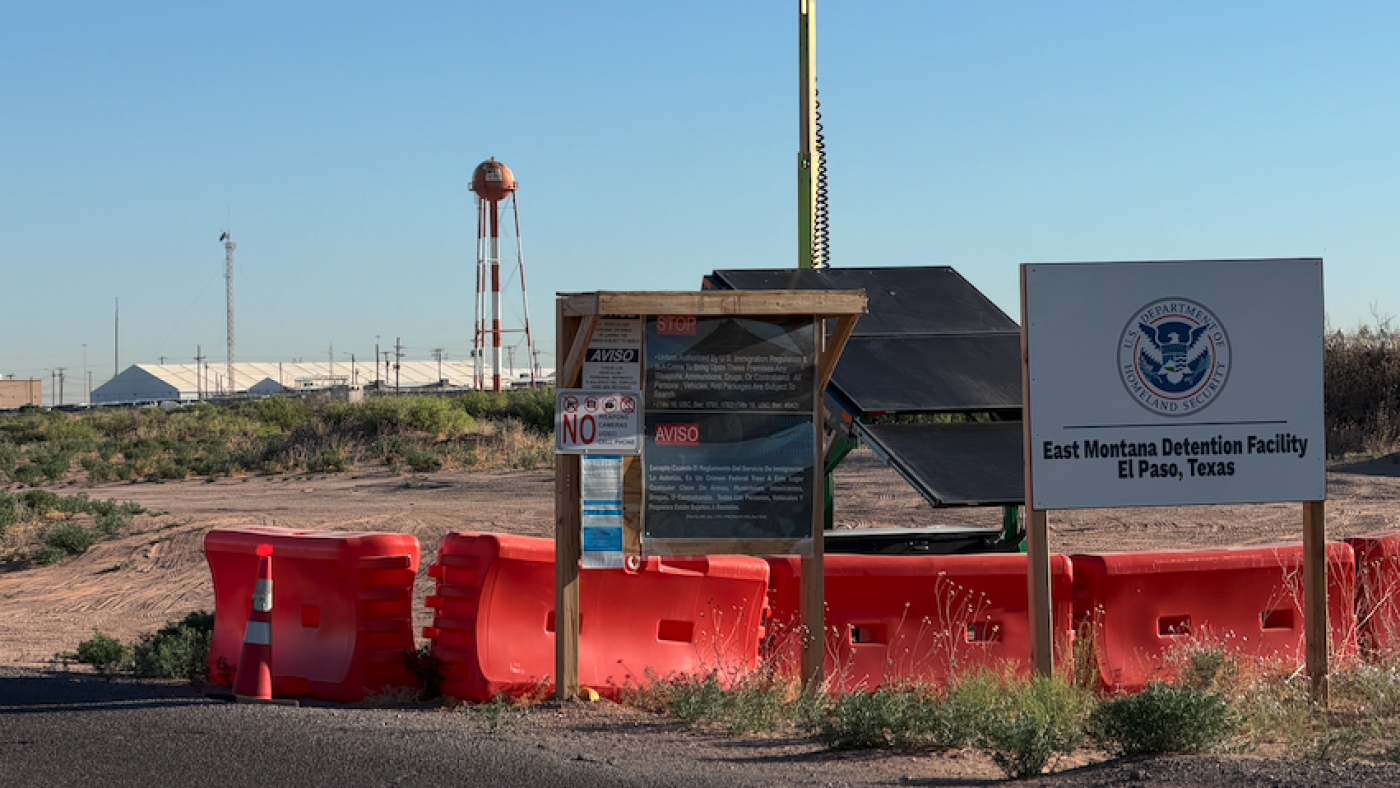
ICE detention deaths are on a record pace. One Texas facility bears the brunt

GOP rails against ‘s— sandwich’ deal as all eyes turn to House to end DHS shutdown
-

 South-Carolina5 days ago
South Carolina vs TCU predictions for Elite Eight game in March Madness
-

 Culture1 week ago
Wil Wheaton Discusses ‘Stand By Me’ and Narrating ‘The Body’ Audiobook
-

 Miami, FL1 week ago
Jannik Sinner’s Girlfriend Laila Hasanovic Stuns in Ab-Revealing Post Amid Miami Open
-

 Culture1 week ago
What Happens When We Die? This Wallace Stevens Poem Has Thoughts.
-

 Minneapolis, MN1 week ago
Boy who shielded classmate during school shooting receives Medal of Honor
-

 Vermont5 days ago
Skier dies after fall at Sugarbush Resort
-

 Education1 week ago
Video: Transgender Athletes Barred From Women’s Olympic Events
-

 Politics5 days ago
Trump’s Ballroom Design Has Barely Been Scrutinized