Texas
Money from outside House District 21, and Texas, dominates fundraising in Phelan-Covey race | Houston Public Media


Dade Phelan Facebook, Dave Covey Facebook
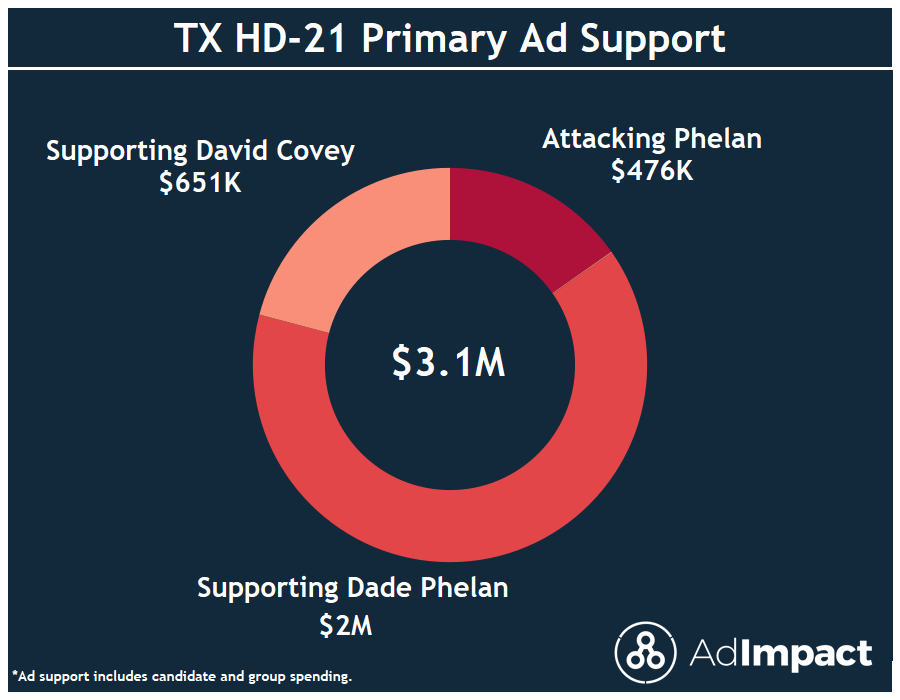
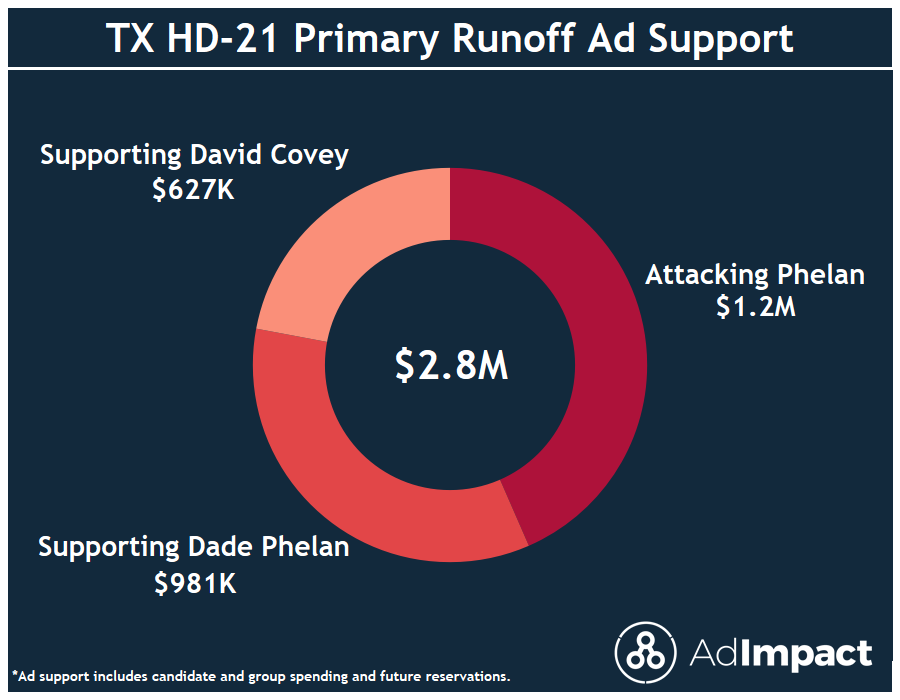
Early voting in the May 28 Texas primary runoffs ends today. One of the highest-profile contests in the state is the Republican runoff in House District 21 between Texas Speaker of the House Dade Phelan and former Orange County GOP chairman David Covey. The race could prove the most expensive state legislative contest in Texas history.
Monday night, former Governor Rick Perry introduced Speaker Phelan to a capacity crowd at Courville’s, a Cajun restaurant and catering venue just off US-90 in Beaumont. One of the first things Phelan did as he took the stage was to apologize to his family.
“I apologize for your mailboxes,” Phelan said. “I apologize for what you’ve seen on TV. The lies, the lies, the lies are unimaginable. We’ve never seen anything like it in the history of Southeast Texas.”
Andrew Schneider
Phelan was referring to the political attack ads directed at him. He’s running for his sixth term in the Texas House and claimed the money spent on House District 21 is breaking state records. It’s certainly having an outsized impact in the district, a three-county region along the Louisiana border that’s also known as “the Golden Triangle.”
“I’ll remind you, when you buy $100,000 in TV in Beaumont, it’s like buying $500,000 in Houston,” he said.
And the money is not just going into TV commercials. It’s paying for social media campaigns and mailers, including one with a doctored photo showing Phelan hugging the former U.S. Speaker of the House, and Democrat, Nancy Pelosi. Phelan said much of the money comes from a handful of very wealthy individuals supporting his opponent, David Covey, who has never run for state office before.
“Here we are in a runoff,” Phelan said, “because he has taken money from two West Texas billionaires, and now some guy from Pennsylvania, who I’ve never heard of until the last six weeks, who just came in and spent millions of dollars against me.”
Covey’s Donors
Phelan didn’t name them, but he was talking specifically about two conservative oil executives from the Midland area, Tim Dunn and Farris Wilks, along with Pennsylvania tech investor Jeff Yass. All three have been pouring millions of dollars into efforts to defeat politicians who have opposed school choice.
Yass is one of the largest contributors to the Club for Growth, a conservative 501 nonprofit based in Washington, D.C. The Club has spent nearly $1.8 million on advertising to defeat Phelan who’s been accused of blocking school vouchers. They also blame the House Speaker for giving away power to Democrats.
“Basically, we don’t feel you can call yourself a conservative if you oppose school freedom,” said David McIntosh, the president of the Club for Growth and a former Indiana congressman. “I think it’s an important symbolic victory if Mr. Covey wins, and the reason would be, it basically sends a signal to other Republicans: You don’t want to try to get power in this fashion.”
This fashion, meaning by giving some House committee chairs to Democrats. It’s a traditional power-sharing arrangement in the Texas Legislature that’s fallen sharply out of favor with conservative Republicans. Many blame the process for preventing the passage of school choice, among other priorities.
According to campaign finance reports filed with the Texas Ethics Commission, since July of last year, oil executive Tim Dunn has donated just over $8.6 million to a pair of political action committees, Defend Texas Liberty and Texans United for a Conservative Majority, either directly or through an entity known as Hexagon Partners. Oil executive Farris Wilks donated about $2.8 million over the same period.
Tim Dunn and Farris Wilks provided virtually all the donations to Defend Texas Liberty and Texans United for a Conservative Majority over the current cycle. Those two PACs in turn donated $800,000 to David Covey’s campaign. Covey received another $700,000 directly in donations from a third Texas billionaire, insurance broker Alex Fairly of Amarillo. Neither Dunn, Wilks, nor Fairly responded to requests for interviews. For context, Covey’s campaign has raised just over $2.5 million since July of last year, and more than three out of every five dollars came from three men.
“Texas has no campaign finance limits whatsoever,” said Anthony Gutierrez, executive director of Common Cause Texas. “So, if you’re a billionaire, and you want to throw millions of dollars into the political system to change who’s in office, you can do that.”
Gutierrez, who studies campaign finance, is convinced that the Phelan-Covey race could easily be the most expensive race for a State House district in Texas history, though he said no one will know for certain until the Texas Ethics Commission publishes the final campaign finance reports of the cycle in July.
Asked about the potential influence of these three men, David Covey told Houston Public Media, “Dade Phelan has raised more money from out-of-state donors than the total amount of money I have raised. The amount of money Phelan received from outside of the district is greater than 5 times the amount of money I raised.”
Phelan’s Contributors
Covey’s claim isn’t without merit, and it speaks to an important point about the influence of money in a region like the Golden Triangle.
“Generally, money is probably the most important factor in any political campaign,” said political consultant Bill Miller, whose firm, Austin-based HillCo Partners, has donated to Phelan’s campaign. “I think there’s so much money that’s been raised, and is being raised, that money is irrelevant. And there’s very few races where you can say that. But this race — because it’s a small area, and there’s so much money — I don’t think that either side will want for money to do whatever it is that they believe will help them win the race.”
Campaign finance records show Phelan has raised more than $9.4 million this cycle. The largest individual donor to Phelan by far is Miriam Adelson, widow of Sheldon Adelson and owner of the Las Vegas Sands Corporation. Adelson’s company is one of the main forces pushing to legalize casino gambling in Texas.
Adelson donated more than $13 million to a pair of political action committees, Texas Defense and Texas Sands. Those two PACS in turn donated more than $800,000 to Phelan. Adelson also donated another $100,000 to Phelan’s campaign directly. Altogether, she’s supplied 1 dollar out of every 10 Phelan has collected. More than half of that money came in the critical two months following Phelan’s second-place finish in the first round of primary voting.
Phelan’s next biggest contributor is the Associated Republicans of Texas Campaign Fund. The fund’s parent body, the Associated Republicans of Texas, bills itself as a non-profit dedicated to maintaining a Republican majority in the Texas Legislature. The group has raised $7.5 million since last July. One of its biggest benefactors is Houston-based John L. Nau III, the chairman and CEO of Silver Eagle Beverages, one of the nation’s largest Anheuser-Busch distributors. Nau, who co-chairs the Associated Republicans’ board of directors, gave the organization $2.1 million over the past ten months.
Phelan has received just over $238,000 from the Associated Republicans of Texas Campaign Fund. That’s only 3% of the group’s total fundraising over the current cycle, but virtually all of it followed Phelan’s second-place finish to Covey in the first round of primary voting in March, making it a crucial lifeline.
What comes next?
It’s far from normal to see so many millions of dollars in campaign donations flowing through this district. The last time Phelan fought a competitive race was his first legislative contest back in 2014. In that cycle, he raised just 2% of what he raised for this primary. So, I asked Phelan whether it’s time for tougher state campaign finance rules.
“It’s less of a finance issue than some of the campaign graphics and some of the images and some of the voiceovers that are obviously not realistic,” Phelan said. “They’re not accurate. And they’re obviously deep fakes. And AI, as it gets more and more refined, is very problematic in campaigns. We saw it in my campaign. We’re seeing it in other campaigns across the state of Texas. It’s a misdemeanor right now, and I don’t think that’s strong enough at all.”
Whether any such legislation comes to pass hangs on the outcome of this race: if Phelan loses, campaign finance limits will fall on whoever succeeds him as Speaker of the House.
Regarding the broader question of campaign finance regulation, Phelan is more philosophical, as someone who’s in the lead when it comes to fundraising can afford to be.
“It’s a First Amendment right to spend your money,” he said. “I get it. And I don’t know how the state of Texas will address that and still be under the constitutional standards that we expect from free speech.”



The Texas Longhorns haven’t slowed down throughout the 2026 season as they now hold a 29-1 record and continue to push the longest winning streak in program history farther along, as the Longhorns’ winning streak now stands at 27 games.
The Longhorns have strung together consistency and dominance over the last weeks of the season, as recently the Longhorns have become the unanimous top team in the country, earning the top spot, ranking as the No. 1 team in the nation.
And now No. 1 Texas will get back to the gauntlet that is SEC play with a conference series against one of its bitter rivals in the dirt edition of the Lone Star Showdown against the No. 15 Texas A&M Aggies. The Longhorns get ready to host, welcoming in the Aggies to Red and Charline McCombs Field with the first game of the series set for Friday, March 27, at 6 p.m. CT.
How to Watch Texas vs. Texas A&M
Who: No. 1 Texas Longhorns and No. 15 Texas A&M Aggies
What: Lone Star Showdown
When: March 27-29
Where: Red and Charline McCombs Field in Austin, TX
TV/Streaming: Friday on SEC Network+, Saturday on ESPN2 and Sunday on ESPN
Radio: Longhorn Radio Network
Meet the Opponent
The Aggies head into the Lone Star Showdown series with a 23-9 overall record and have found success through their two conference series of the season, with a 5-1 record in the SEC. Away from home, the Aggies have split four of their away games with a 2-2 record on the road.
With the flip of the calendar from non-conference to conference play, the Aggies find a rhythm on the field, taking their conference opener against the then No. 17-ranked LSU Tigers on the road 2-1 and followed that up with a sweep at home against the Kentucky Wildcats, outscoring the Wildcats 26-9 over the three-game series.
The Longhorns batting order will battle against an Aggies pitching staff that heads into the weekend series with a 3.10 ERA and 1.09 WHIP. As a whole, the Aggies pitching staff has recorded 193 strikeouts while holding their opponents to a .225 batting average.
The leader of the Aggies pitching staff is sophomore Sydney Lessentine, as her 72 innings pitched is the most by any other Aggies pitcher. In her 19 appearances this season, Lessentine tallies a 2.43 ERA and .82 WHIP along with 60 strikeouts and holds opponents to a .196 batting average.
Sign up to our free newsletter and follow us on Facebook, X and Instagram for the latest news.

COVINGTON, TX – Clouds of grey and brown smoke rolled through the field as yards of fire roared across dead grass. About 30 acres of Austin and Kelli Rollins’ property burned on the March morning, leaving blackened remnants just a couple dozen yards from the house.
But what looked like a natural disaster was the result of careful planning.
Prescribed burns, like the one onthe Rollinses property, can benefit wildlife populations, encourage the growth of native prairie grasses and limit damage from wildfires. Throughout Texas’ history, fires occurred naturally every three to seven years. Most native species are fire-adapted, Texas A&M’s Prescribed Burn Coordinator David Brooke said, but human fire suppression tactics have substantially decreased fire frequency and changed the landscape.
“From the Edwards Plateau, Hill Country up towards Dallas [and the] Panhandle, our habitat was a lot more open. It’s supposed to be rolling plains, prairies … with intermittent tree cover. What we’re seeing now is woody encroachment,” Brooke said.
At the Rollinses, the prescribed burn began with an introductory meeting to discuss strategy and a test fire on a corner of the lot. The team, largely consisting of members of the North Texas Prescribed Burn Association, edged the field with a water line, creating a moisture barrier to prevent flames from spreading in the wrong direction. Just a few yards behind the lengthening water line, volunteers used drip torches to create a “black line,” a thin burned strip meant to contain the larger plumes of fire that would come later.
The tip of a drip torch is used to set fire to Austin and Kelli Rollins property outside of Covington, Texas, March 18, 2026. They used a controlled burn to regenerate the pasture surrounding their home. Tom Fox / Staff Photographer
The crew collaborated with the wind, starting the test fire at the most downwind corner and expanding the black lines perpendicularly. Winds whipped, around 20 miles per hour, approaching the regulatory safety limit. By working backwards from the fire’s natural destination, the team limited the chance of flames escaping their control.
“Essentially what we’re doing is building a catcher’s mitt so when we light everything up, [the black line] will be there to stop it,” Brandon Martin said, who serves on the board of the prescribed burn association.
North Texas Prescribed Burn Association members perform a controlled burn at a Covington, Texas ranch

Martin, dressed in a hard hat and flame retardant clothing, assisted with this prescribed burn as a volunteer, but he also knows fire professionally through his role in emergency management at the Tarrant Regional Water District. As well as providing advice, he actively spread flames with a drip torch. Torch canisters are filled with fuel that, when turned down, trickles past a burning wick and ignites as it falls to the ground.
This fire is part of an effort to return the field to native prairie, a landscape Martin said depends on fire to thrive. Regular burning limits the growth of saplings and bushes, keeping the environment clear of exotic species that can outcompete native grasses.

North Texas Prescribed Burn Association member Don Nelson radios wind speed and direction to the rest of the crew during a controlled burn on the property of Austin and Kelli Rollins outside of Covington, Texas, March 18, 2026.
Tom Fox / Staff Photographer
Brooke said fire isn’t only a natural land management process, it’s also cost-effective. Invasive species can be removed mechanically with chainsaws and digging, or with chemical application. But in either instance, the labor and equipment costs are usually significantly higher than burning, especially with bigger plots.
“From an economics standpoint, it’s a heck of a lot cheaper to use fire,” Brooke said.
The resulting ash is high in nitrogen and phosphorus, which fertilizes the soil. With a little rain, Brooke said fields are often covered in green shoots within a matter of weeks, with a reinvigorated landscape emerging in the following months.
However, Brooke noted “one burn isn’t a silver bullet,” since invasive species could also be fed by these fresh nutrients. But if landowners can commit to following the three- to seven-year historic fire frequency, “it gives your native species the edge.”

Austin Rollins grabs a pressure sprayer to extinguish a spot fire during a controlled burn on his property near Covington, Texas, March 18, 2026.
Tom Fox / Staff Photographer
New growth also attracts a variety of wildlife, as it is highly palatable and an ideal habitat to spot predators. Brooke said he’s seen a number of landowners undertake prescribed burns to improve the hunting prospects.
Prescribed burns are best known for their power to stopthe spread of wildfire. The lack of fuel for a wildfire after an intentional burn can lower the fire’s intensity and help save structures. Brooke pointed to the town of Borger, which has a history of proactive wildfire management.
In the fall of 2023, they burned a 7-mile-long, 250-foot wide strip along the edge of town, creating a “black line” that proved crucial months later. When one of the 2024 Panhandle wildfires approached the town, it stopped just outside of several neighborhoods at the fire break. Firefighters credited the work with saving homes and possibly lives.
For landowners considering undertaking controlled burns themselves, Brooke said Texas is a “right-to-burn” state – guaranteeing landowners the right to burn on their own property – but there are still regulations to follow. County burn bans must be observed, local authorities notified and some state agencies regulate weather conditions to manage the smoke.

The North Texas Prescribed Burn Association used a backing fire to control a burn on the property of Austin and Kelli Rollins outside of Covington, Texas, March 18, 2026. They burned approximately 30 acres.
Tom Fox / Staff Photographer
Wind speeds are required to be between six and 23 miles per hour during a burn. If the breeze is too low, smoke won’t clear properly and it could settle on nearby roads, potentially causing an accident. If gusts are too high, fire behavior becomes more unpredictable.
Some counties also require a copy of the burn plan to be submitted in advance, which accounts for things like weather, the crew, suppression tactics (such as water, specialized rakes and leaf blowers) and smoke modeling.
Ultimately, given the high winds, the team on the Rollinses land decided to burn back to the black line in smaller strips instead of one roaring blaze. But even those sections could generate significant heat as the orange glow jumped from stem to stem. The gusts cleared most smoke quickly, but each time a new strip ignited, the plumes towered into the distance.
When just a few smoldering spots remained, the group gathered to debrief and share H-E-B sandwich trays. Pairs inquired about other teams’ strategies, but mostly, the crew was pleased with the safety and their progress – finishing the project in about three hours.
“Man, it’s beautiful,” Kelli Rollins said as she took a picture of the charred field against the blue sky. “I know that’s a weird thing to say, but it is.”

A modified Tesla Model X drives into the tunnel entrance before an unveiling event for the Boring Company Hawthorne test tunnel in Hawthorne, south of Los Angeles, California on December 18, 2018. – On Tuesday night December 18, 2018, Boring Co. will
DALLAS – After a months-long competition to convince tech mogul Elon Musk’s Boring Company to choose a U.S. city for a transit tunnel project, one Texas city has made the cut for the final three in consideration.
‘Tunnel Vision Challenge’ finalists
What we know:
The “Thrilling Three” in the running for the Tunnel Vision Challenge, announced in January, are Dallas, New Orleans, LA, and Baltimore, MD.
Dallas is in consideration for a “University Hills Loop.” When the challenge first launched on Jan. 18, the options of “a Loop tunnel, a freight tunnel, a pedestrian tunnel, a utility tunnel, a water tunnel, or any other use case where a tunnel would be useful” were pitched. All three finalists are Loop tunnels, which the company tags as “Teslas in Tunnels!”
Wednesday’s announcement says the projects will be up to one mile long and 12 feet in diameter.
What’s next:
The Boring Company said in their Wednesday announcement that, if possible, it “would be awesome” to build all three Loops.
The company plans to, along with the project stakeholders, enter into a rigorous diligence process which includes “meetings with elected officials, regulators, community leaders, and business leaders; geotechnical borings; and utility and subsurface infra investigation.”
They say they plan to build any and all final projects that are found to be feasible.
Possible second Texas project
The company said there were other projects that caught their attention as interesting projects, which they plan to attempt in the near future.
These include the “Morgan’s Wonderland Tunnel” in San Antonio, as well as the “Hendersonville Utility Tunnel” in Tennessee.
The Source: Information in this article comes from The Boring Company.

Power outage impacts more than 5,000 customers in Midtown Atlanta

Man dead, 2 others hurt in overnight shooting in Minneapolis

Cooler temps Friday with some afternoon sun, warmer weekend | March 27, 2026

CMU acquires Chatham’s Eastside location, will lease back part of property

Trump to sign emergency order to pay TSA agents as Augusta airport preps for golf week

Florida High School Football Rankings: Top 25 teams – Oct. 21

How old is Bo Nix? What to know about Oregon quarterback ahead of 2024 NFL Draft

Cleary's 21 help Le Moyne down Central Connecticut State 69-64 in OT

99th annual Pony Swim held in Virginia

Indiana Members Credit Union announced as new anchor tenant at Bottleworks District

Video: Will ICE Change Under Its New Leader?

DHS shutdown breakthrough comes at cost for Republicans as funding fights nears end

Rubio joins crucial G7 talks as Iran war set to dominate second day

A surprise resignation could open the door for an independent to win a Montana Senate seat

Video: Savannah Guthrie Says She Believes Her Mother Was Taken for Ransom
-

 Detroit, MI1 week ago
Drummer Brian Pastoria, longtime Detroit music advocate, dies at 68
-

 Science1 week ago
How a Melting Glacier in Antarctica Could Affect Tens of Millions Around the Globe
-
 Science1 week ago
I had to man up and get a mammogram
-

 Movie Reviews1 week ago
‘Youth’ Twitter review: Ken Karunaas impresses audiences; Suraj Venjaramoodu adds charm; music wins praise | – The Times of India
-

 Sports6 days ago
IOC addresses execution of 19-year-old Iranian wrestler Saleh Mohammadi
-

 New Mexico5 days ago
Clovis shooting leaves one dead, four injured
-
 Business1 week ago
Disney’s new CEO says his focus is on storytelling and creativity
-

 Texas1 week ago
How to buy Houston vs. Texas A&M 2026 March Madness tickets