Tennessee
Tennessee ‘tough on crime’ bill will not make us safer and take away from rehabilitation


Public safety should be a top priority for Tennessee, along with proper treatment of law enforcement and of taxpayers. We must incentivize rehabilitation.

Nashville program brings live music — and hope — to prisons
Former musician Nathan Lee started a non-profit called Send Musicians to Prison that has been bringing live music to incarcerated people for 15 years.
When our state lawmakers propose laws that aim to be tough on crime, everyone deserves to know the facts about those laws – and what is and isn’t actually tough on crime. While it may seem that longer sentences behind Senate Bill 2044 contribute to public safety, the facts show a different story: This bill disincentivizes rehabilitation, making Tennessee prisons and our communities less safe.
The unfortunate truth about SB 2044 is that it will spur the consequences that excessive sentencing laws are known to create: bloated public spending, wasted law enforcement resources, and higher recidivism rates.
Legislation like SB 2044 do not make Tennessee safer. Rather than addressing the causes of crime or improving the ability to close cases, this bill simply disincentivizes rehabilitation in Tennessee prisons. Tennessee’s earned time credits – and their opportunity to shorten a sentence for eligible people – serve as a vital incentive for incarcerated people to improve their behavior and learn from educational, vocational, and rehabilitative programs, which help the Department of Corrections and improve public safety by encouraging incarcerated people to change their lives.
Public safety is at risk when incentives are weakened
Earned time credits are redirected away from the expiration of a person’s sentence, and instead apply to the person’s parole eligibility date. This amounts to an empty incentive as Tennessee’s parole board denies nearly three-fourths of all applicants, and SB 2044 has given no guarantee for parole grants and no mechanisms for early termination of parole supervision.
Simply put, weakening incentives is bad for public safety. When Arizona eliminated parole and earned time credits in 1993, prison rule violations increased by 50%, enrollment in educational programs dropped by 20%, and the reoffending rate jumped 4.8 percentage points. Tennessee’s prisons are currently severely understaffed. The last thing we should do make Tennessee prisons less safe and make life harder for those who live and work in them.
For the roughly 25% of people who do get an earlier parole, they will still need to spend the remainder of their sentence under parole supervision. That means expending additional resources from Tennessee’s parole officers and numerous pitfalls for returning citizens to manage as they try to successfully reintegrate to their communities and the workforce.
Research shows that most reoffending occurs within the first two years of parole supervision — leaving periods of supervision beyond that more an hindrance than a meaningful public safety policy. Requiring someone who has shown a commitment to reentry and successful adherence to the rules should be able to earn their way off of supervision. SB 2044 prevents that.
More: Incarcerated men find ‘new beginning’ at Tennessee prison’s first addiction program
Tennessee lawmakers knew this bill would cost a lot in the future
SB 2044 is especially tough on taxpayers. Outside of Medicaid, incarceration costs have been the second-fastest growing budget item for most states in recent years, and this bill adds to those costs.
The fiscal note for this bill indicates “significant increases in state expenditures to accommodate longer incarceration times and parolees being supervised for longer periods of time.” The Fiscal Review Committee reiterated the substantial cost at the Senate Finance, Ways, and Means Committee Hearing last month.
While the exact future cost from this bill is unknown, it amounts to a signed invoice to taxpayers to fund something that will have enormous cost and will negatively impact Tennessee prisons with no proven benefit to public safety.
Public safety should be a top priority for Tennessee, along with proper treatment of law enforcement and of taxpayers. We must incentivize rehabilitation. While SB 2044 aims to provide public benefit, it fails to meet the mark.
Matthew Charles, of Nashville, is a criminal justice expert and Senior Policy Advisor of FAMM.



The Tennessee Lottery offers several draw games for those aiming to win big.
Here’s a look at July 11, 2026, results for each game:
Winning Powerball numbers from July 11 drawing
08-10-14-45-59, Powerball: 05, Power Play: 2
Check Powerball payouts and previous drawings here.
Winning Lotto America numbers from July 11 drawing
15-17-29-44-46, Star Ball: 04, ASB: 02
Check Lotto America payouts and previous drawings here.
Winning Cash 3 numbers from July 11 drawing
Morning: 3-0-3, Wild: 0
Midday: 4-9-4, Wild: 9
Evening: 2-5-2, Wild: 7
Check Cash 3 payouts and previous drawings here.
Winning Cash 4 numbers from July 11 drawing
Morning: 2-8-8-0, Wild: 5
Midday: 9-7-5-5, Wild: 5
Evening: 7-9-7-0, Wild: 2
Check Cash 4 payouts and previous drawings here.
Winning Daily Tennessee Jackpot numbers from July 11 drawing
01-11-13-14-17
Check Daily Tennessee Jackpot payouts and previous drawings here.
Winning Powerball Double Play numbers from July 11 drawing
05-07-17-26-28, Powerball: 05
Check Powerball Double Play payouts and previous drawings here.
Winning Millionaire for Life numbers from July 11 drawing
04-13-14-30-39, Bonus: 04
Check Millionaire for Life payouts and previous drawings here.
Feeling lucky? Explore the latest lottery news & results
Are you a winner? Here’s how to claim your lottery prize
All Tennessee Lottery retailers will redeem prizes up to $599.
For prizes over $599, winners can submit winning tickets through the mail or in person at Tennessee Lottery offices. By mail, send a winner claim form, winning lottery ticket, a copy of a government-issued ID and proof of social security number to P.O. Box 290636, Nashville, TN 37229. Prize claims less than $600 do not require a claim form. Please include contact information on prizes claimed by mail in the event we need to contact you.
To submit in person, sign the back of your ticket, fill out a winner claim form and deliver the form, along with the ticket and government-issued ID and proof of social security number to any of these locations:
Nashville Headquarters & Claim Center: 26 Century Blvd., Nashville, TN 37214, 615-254-4946 in the (615) and (629) area, 901-466-4946 in the (901) area, 865-512-4946 in the (865) area, 423-939-7529 in the (423) area or 1-877-786-7529 (all other areas in Tennessee). Outside Tennessee, dial 615-254-4946. Hours: 9 a.m. to 4 p.m. Monday through Friday. This office can cash prizes of any amount.
Knoxville District Office: Cedar Springs Shopping Center, 9298 Kingston Pike, Knoxville, TN 37922, (865) 251-1900. Hours: 9 a.m. to 4 p.m. Monday through Friday. This office can cash prizes up to $199,999.
Chattanooga District Office: 2020 Gunbarrel Rd., Suite 106, Chattanooga, TN 37421, (423) 308-3610. Hours: 9 a.m. to 4 p.m. Monday through Friday. This office can cash prizes up to $199,999.
Memphis District Office: Chiles Plaza, 7424 U.S. Highway 64, Suite 104, Memphis, TN 38133, (901) 322-8520. Hours: 9 a.m. to 4 p.m. Monday through Friday. This office can cash prizes up to $199,999.
Check previous winning numbers and payouts at https://tnlottery.com/.
When are the Tennessee Lottery drawings held?
- Powerball: 9:59 p.m. CT Monday, Wednesday, and Saturday.
- Mega Millions: 10:00 p.m. CT Tuesday and Friday.
- Cash 3, 4: Daily at 9:28 a.m. (Morning) and 12:28 p.m. CT (Midday), except for Sunday. Evening game daily, seven days a week, at 6:28 p.m. CT.
- Daily Tennessee Jackpot: 9:00 p.m. CT daily.
- Tennessee Cash: 10:34 p.m. CT Monday, Wednesday, and Friday.
- Powerball Double Play: 10:30 p.m. CT Monday, Wednesday and Saturday.
- Millionaire for Life: 10:15 p.m. CT daily.
This results page was generated automatically using information from TinBu and a template written and reviewed by a Tennessean editor. You can send feedback using this form.
Tennessee
Former Tennessee Football Position Coach Beats Out Vols For Commitment of Elite Recruit | Rocky Top Insider

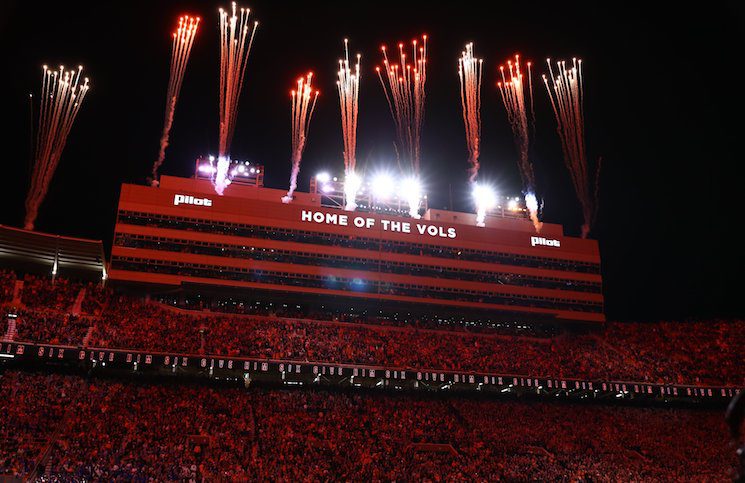
Tennessee football made the final cut for one of the top linebackers in the class of 2027, Roman Igwebuike, but couldn’t seal the deal. Instead, he’s taking his talents to Notre Dame as he announced his commitment to the Irish on Saturday evening.
It was a former Josh Heupel Era UT position coach who led the charge for Igwebuike, as well. Brian Jean-Mary, the Vols’ linebackers coach from 2021-23, now leads the linebacker room at Notre Dame and was the primary recruiter for Igwebuike.
Jean-Mary left Tennessee for a position at Michigan as defensive run game coordinator/linebackers coach. However, with the coaching change in Ann Arbor this offseason, he landed on his feet and joined the Irish’s staff as Marcus Freeman’s run game coordinator/linebackers coach.
More From RTI: Nike Reportedly Not Willing to Help Ohio State’s Recruitment of David Gabriel Georges
Igwebuike is one of the top linebackers in the class of 2027. On 247 Composite, he ranks as the No. 123 player in the country, No. 9 linebacker and No. 8 player from the state of Illinois. He is from Chicago, where he plays for Mount Carmel.
“Well-rounded linebacker that has a chance to be a linchpin in the middle for a College Football Playoff hopeful after a productive prep career outside of Chicago,” 247 director of scouting Andrew Ivins wrote. “Looks the part with a muscular 6-foot-3, 225-pound frame. Sees it well from the shelf as he reads his keys and flows to the football. Navigates busy intersections at a higher level and can slip underneath blocks. Comfortable dropping into space and is rather effective as a spy…”
Igwebuike’s primary recruiter at Tennessee was linebackers coach William Inge. He has made trips to Knoxville to see the Vols, including the Orange and White Game this past April, but never announced an official visit to UT.
Tennessee currently holds 16 commitments in the 2027 class, which ranks 43rd in the country on 247. This features two linebackers, both legacies, in four-star Kenneth Simon II and three-star JP Peace.

Tennessee freshman forward Chris Washington Jr met with the local media earlier this week in his first press conference after committing and signing with the Vols back in the spring.
Washington discussed why he chose Tennessee, what position he has mostly been working at this summer and much more. Here’s everything Washington said.
More From RTI: What Director of Sports Performance Garrett Medenwald Said About Tennessee Basketball Offseason
On what led to him de-committing from Alabama, eventually committing to Tennessee
“Honestly, I just felt like that for me and my family, that was just the best decision for me. And I found my right school, I feel like.”
On his first impressions of the team
“Like I said, me and the guys, we came a long way just from this first month, you know, getting help from DeWayne, and the team, it’s just been a blessing.”
On what the first month has been like for him personally
“Honestly, just getting better day by day. Coach Barnes, he’s coaching me hard. So honestly, just stacking days, just getting better day by day.”
On what Rick Barnes is harping on with him right now
“My defense. The whole country know I can score the ball, so just me, just working on my rotations, being right in the gaps. Defense.”
On what position he is working at.
“Right now, they got me playing four.”
On if they sold development based on his film or Tennessee’s track record
“I mean, honestly, just the track record of like guys he did put in the league, you know what I’m saying? I want to be pro, so like I said, I came to Tennessee, I felt like they’re gonna get me there, he’s gonna get me there.”
On who have been the verbal leaders on the team
“My boy DeWayne and my boy Kenbell (Duncan Campball), them two. They’ve been kind of really helping me.”
On how Tennessee sophomore forward DeWayne Brown has helped the newcomers understand what it’s like to play for the Vols
“I be in practice sometimes, I’ll get lost and he’ll kind of just help me a little bit. I mean, honestly, him just guiding us when we mess up.”
On his relationship with the rest of his freshman class: Manny Green, Ralph Scott and Marquis Clark; if he knew about them on the AAU circuit
“It’s been a great relationship. I didn’t play those guys on the circuit, so for us to be all on the same team, it’s a good thing.”
On playing AAU basketball in Knoxville; if that helped his decision
“It’s great, you know? It’s just amazing, honestly. I’m just glad to be here.”
On how he is liking the new Adidas uniforms
“I’m loving it. We’re in Adidas gear. I’m liking it, I’m loving it.”
On his strengths on offense
“I’d say getting to the rim, getting to my spots, and my (ability) to catch and shoot.”
On where his spots are
“Really just getting to the mid-range, getting down hill.”
On watching last year’s Vols get drafted
“Coach Barnes, him getting those guys there, I know my time’s gonna come.”
On his freshman class
“Oh, we got the best class, I feel like, honestly. We got a good class.”
Why he feels Tennessee has the best freshman class
“Shoot, we all can score, honestly. (Barnes) recruited a lot of scores this year. Even our freshman class, we can all get a bucket.”
-

 Kentucky10 seconds ago
Kentucky Wildcats News: MLB Draft Day 2
-

 Louisiana7 minutes ago
Check out the Outdoors calendar for fishing events
-

 Maine10 minutes ago
Maine Democrats seek a Platner-like change agent — ‘without the baggage’
-

 Maryland15 minutes ago
Business Leader Key to Maryland Buying Preakness Rights
-

 Michigan22 minutes ago
Sturgis closure may be ‘first of more’ for Michigan rural hospitals
-

 Massachusetts25 minutes ago
Commentary: Massachusetts needs a journalist shield law
-

 Minnesota30 minutes ago
Minnesota was center of immigration enforcement. Here’s how its playing out legally.
-

 Mississippi37 minutes ago
Mississippi Lottery Mississippi Match 5, Cash 3 results for July 11, 2026

