Lifestyle
Richard Pryor’s daughter studies the N-word — a word he used, then disavowed


Comedian Richard Pryor performs on stage at the Los Angeles Hollywood Bowl on Sept. 19, 1977.
Lennox McLendon/Associated Press
hide caption
toggle caption
Lennox McLendon/Associated Press
Historian Elizabeth Stordeur Pryor has spent much of her career tracing the N-word through slavery, Jim Crow, the civil rights movement and hip-hop. But what she didn’t tell her audiences was that her father, Richard Pryor, was the comedian who put the word at the center of American comedy in the 1970s.
“I was a scholar of the N-word — and so was he,” Pryor says of her father.
As the child of a white mother and a Black father, Pryor describes her own relationship to the N-word as a “super complicated” one. She remembers teaching a college class in which one of her white students used the word while quoting Blazing Saddles — a film her father co-wrote. Pryor froze: She had vowed never to use the word in her classroom, but suddenly there it was.

“I [was] just kind of like like a deer in the headlights,” Pryor says. “I was really worried about the Black students. … Something I had never considered when I thought about teaching is what happens when the racism that we study and we teach comes in? … How do I work through that in the moment?”
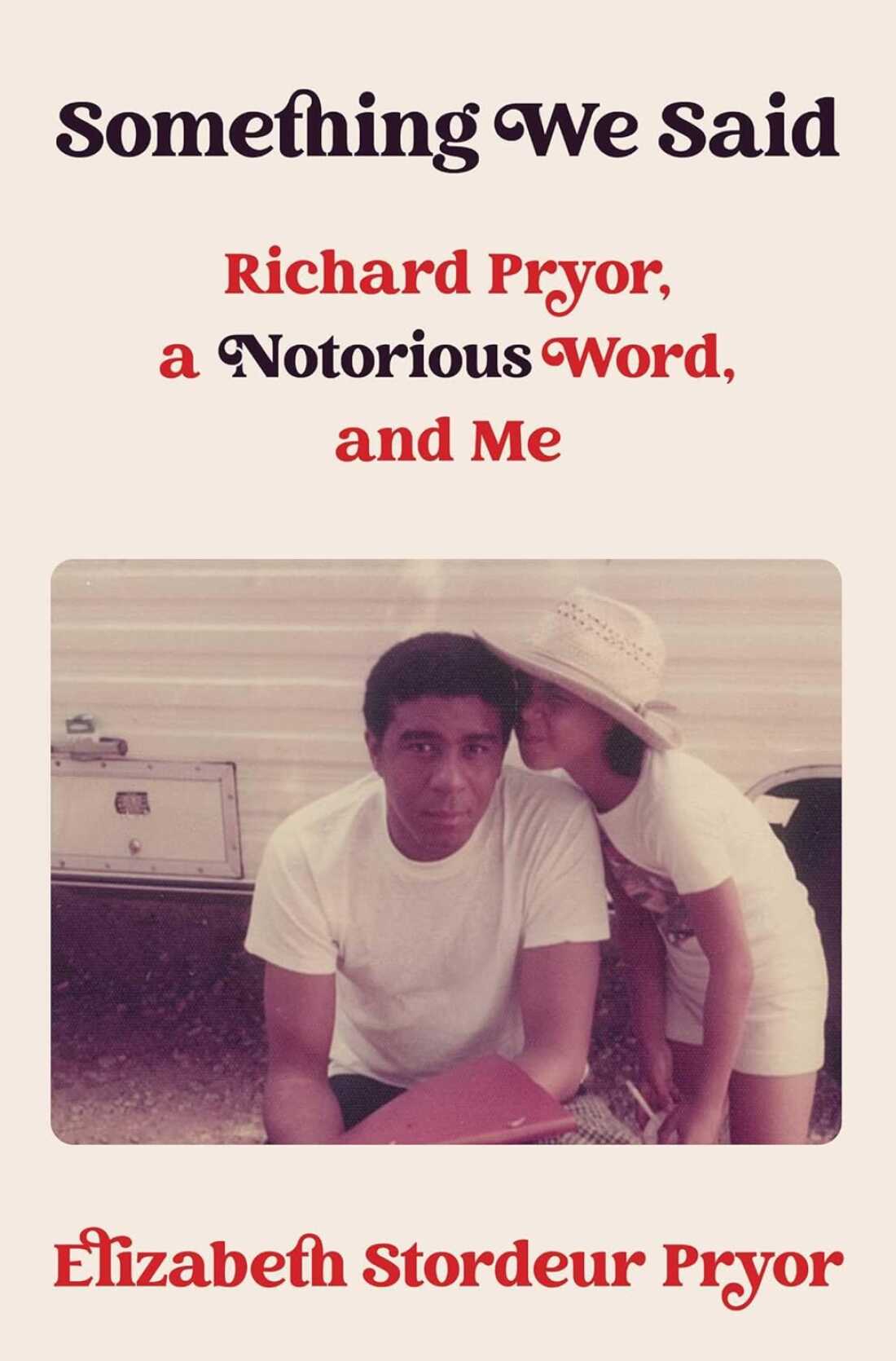
Pryor’s new book, Something We Said: Richard Pryor, A Notorious Word, and Me, is part memoir and part history of one of the most divisive words in the English language. Late in his career, after spending time in Kenya, Richard Pryor vowed never to use the word again.
“One of the things I admire about that moment when he disavows the word is he said, ‘This is for me. I’m not telling you what to do,’” she says. “There is a piece [of him] where he understood that the word had a function in Black culture. He does talk about, though, as an artist, losing control of what the word was doing.”
Interview highlights
On her father’s use of the N-word
[In] one of the first meaningful conversations I ever had with [my dad] as a little girl, he told me, “Don’t let nobody ever call you that.” And then he used it, and then his friends used it. …
I think it’s really important to emphasize that when I’m saying that he used the word that it was in the subversive way, that it was the language of protest, and that he was building on a Black tradition of protest, that Black people had used this word kind of as a slap in the face to white racism. You know, “We know how to take our punches and our knocks, and we’re not afraid of this thing that you’re trying to demean us as.” And so bringing that use, the way that Black people perceived of the N-word, onto stage was really powerful in the 1970s.
On talking about the N-word with her college students
Teaching the word is still incredibly difficult. I have to say, the conversations are always hard, but I feel like it’s important because my students walk away knowing that this is not a conversation, like I said, about free speech. It’s really about how how we interact, how we want to bring as many people as we can to the table. And if we do that, that means that we’re going to be thinking about who we’re sitting at the table with and how things will impact them.
On meeting her dad for the first time when she was 6
We were in Newark, New Jersey, … and my mom is acting kind of … nervous. And we knocked on the door of a hotel room, and he opened in a towel. And I was like, this is my father. Like, not only do I get a father, but I get this guy. What? I just felt like I won. I loved him immediately. Instantly. His eyes were so warm, and he was so handsome. And I just fell head over heels. … I saw my face [in his face]. … He created a bridge immediately between us and invited me to cross over.
On vying for her father’s attention as a kid

I wanted to be smart enough and creative enough, and I would try to show off. I did theater. I did improv. He would come to my plays and come to my performances. [I] tried to get intellectual with him, like when I was in college. And I had a Black awakening and he basically, like, sent me some stuff so I could awake Blackly, I guess. … He sent me the documentary on Malcolm X that had been filmed, I think, in 1972. And then he sent me The Last Poets’ [song] … “N-words are Scared of Revolution,” to listen to. And I did. I felt like he was inviting me into a secret world, and I wanted to go there. …
At the end of his life, when he couldn’t speak anymore, I would go over and read from the narrative of Frederick Douglass to him, and I could see that he was feeling proud … of being read Frederick Douglass by me.
On Richard Pryor’s upbringing with a sex worker mother and the first laugh that changed everything.
Oh, my dad. He told me a story about being 5 years old and, I don’t know why, but he’s wearing a little cowboy suit, and he was in front of the house and all the people were there, his grandmother, all the sex workers, and his father and his uncle. And he slipped in dog poop and they just start cracking up. And so he got up and he made himself slip in it again, and they couldn’t stop laughing. And so he did it again and again. And it’s pretty painful to think of the lengths that he felt that he needed to go to get their adoration and attention.
Anna Bauman and Thea Chaloner produced and edited this interview for broadcast. Bridget Bentz, Molly Seavy-Nesper and Meghan Sullivan adapted it for the web.


On-air challenge
Based on the clue, name two words that have the same number of letters and begin and end with the letters provided. (Ex. Rocks / five letters / S and E —> Slate, Shale)
1. European languages in 7 letters starting with S and ending with .
2. Ancient stringed instruments / 4 letters / L and E
3. Birds / 6 letters / P and N
4. Parts of the body / 5 letters / T and H
5. Things seen in a classroom / 5 letters / C and K
6. Newsstand magazines / 7 letters / E and E
7. Books of the Bible / 4 letters / A and S
8. Foods from Italy / 5 letters / P and A
Last week’s challenge
Next weekend will be the 186th convention of the National Puzzler League, in Bloomington, Ind., which I’ll be attending as always. Two other people who will be there are Henri Picciotto and Joshua Kosman, who created this week’s challenge. Name two words that are opposites. They share a single letter. Remove that shared letter from each word, put a hyphen between the two starting words, and you’ll get a term you sometimes see in food ads. What are the two words?
Challenge answer
Slow, fast –> low-fat
Winner
Debra Waller of Burlington, Kentucky
This week’s challenge
This week’s challenge comes from Steve Baggish, of Arlington, Mass. Take the 10-letter name of a popular TV series for which most of its seasons have been filmed in a foreign country. Remove the first and last letters, and the remaining letters can be rearranged to spell the name of a country. What are the two names?
If you know the answer to the challenge, submit it below by Thursday, July 16 at 3 p.m. ET. Listeners whose answers are selected win a chance to play the on-air puzzle.

“Portraits 2019 – 2026” by Tyler Matthew Oyer at Night Gallery
“Location Unknown, 2023 – TANA 2023.”
(Tyler Matthew Oyer and Night Gallery)
Experience Tyler Matthew Oyer’s photographic exhibition, “Portraits 2019-2026.” This immersive show moves through seven years of portraits through Oyer’s lens, capturing subjects’ raw individuality. Showcasing “the panoramic and the intimate,” the photographs line the entirety of the gallery in identical scales and frames, emphasizing that every face carries equal presence and beauty. The exhibition coincides with Oyer’s fifth portrait book release, which features selections from his extensive archive. Open July 18 through Aug. 15. 2050 Imperial St., Los Angeles. nightgallery.com
Paloma Wool opening

Paloma Wool’s first permanent store in L.A. houses footwear, bags, a fresh new menswear line and exclusive specialty projects. This new space contrasts a bright, vivid backdrop with dark furnishings, alluding to the brand’s edgy, crisp designs. Open now. 8410 Melrose Ave., Los Angeles. palomawool.com
Noah Los Angeles opening

Founders Brendon Babenzien and Estelle Bailey-Babenzien bring the East Coast to L.A. this summer with the opening of Noah’s first West Coast location. Blending classic menswear with skate and surf culture, the space also features an in-store skate bowl, reflecting the brand’s roots while tapping into Los Angeles’ laid-back vibe. Open now. 911 N. Orange Drive, Los Angeles. noahny.com
H. Lorenzo opening

H. Lorenzo’s new flagship store reflects the brand’s commitment to highlight both established and emerging designers from around the world. It also showcases rare collectible furniture, including pieces by woodworker George Nakashima. By day, the space takes on an ever-evolving approach to display; by night it transforms into a hub for cultural programming and community gatherings. Open now. 8801 Beverly Blvd. West Hollywood. hlorenzo.com
Bang & Olufsen opening

Bang & Olufsen’s new flagship is using music to connect people from all over the world, reimagining the classic retail experience into an immersive sound house perfect for showcasing Los Angeles’ vibrant and diverse entertainment culture. Customers can experience the brand’s latest technology in a setting inspired by Nordic design and Southern California living. Open now. 370 N. Robertson Blvd., West Hollywood. bang-olufsen.com
Maison Louis Marie opening

Upgrade your scent game this summer with a visit to Maison Louis Marie’s new flagship store in Silver Lake. Designed in collaboration with Via Clover, the fragrance house has curated a light, modern space, blending French and Californian aesthetics where customers browse everything from Fleur de la Passion hair and body mist to No. 10 Aboukir candles at their own pace. Open now. 3920 Sunset Blvd., Los Angeles. maisonlouismarie.com
Molteni&C L.A. flagship redesign and new collection

Italian craftsmanship and contemporary living come together in Molteni&C’s newly redesigned Beverly Hills flagship. After exploring thoughtfully curated living spaces featuring coffee tables designed by Vincent Van Duysen, be sure to check out the brands’ latest Outdoor Collection, ideal for the heat of L.A.’s long summers. Open now. 147 N Robertson Blvd., West Hollywood. molteni&c.com
Zegna’s new fragrance line

Zegna’s new fragrance line, Memorie, is shaped by place, ritual and intention. Inspired by the Alps of northern Italy, each of the six scents captures a moment, place or object from founder Ermenegildo Zegna’s life, preserving memory through fragrance. Available now. zegna.com
“Animals” by Alex Gardner at Perrotin

“Catapult,” 2025. Acrylic on canvas. Unframed: 48 1/16 x 96 1/16 inches. Framed: 51 7/8 x 99 3/4 x 5 inches.
(Don Lewis/Alex Gardner; Perrotin)
Join Long Beach artist Alex Gardner for the final days of his first solo exhibition in a decade as he reimagines the meaning of fatherhood at Perrotin. Through a series of acrylic paintings, Gardner explores intimate connections between parents and children, partners and siblings, inviting viewers to identify themselves within his signature faceless figures. Open through July 11. 5036 W. Pico Blvd., Los Angeles. perrotin.com

A promo image of Peter Sagal, Jason Narducy, and Alzo Slade
NPR and James Richards IV/NPR and Jason Narducy
hide caption
toggle caption
NPR and James Richards IV/NPR and Jason Narducy
This week, we’re live in Milwaukee with musician Jason Narducy. Plus, panelists Alonzo Bodden, Adam Burke, and Negin Farsad talk the World Cup, Love Island, and new rules for summer travel.
-

 Indianapolis, IN3 minutes ago
Quiet and comfortable tonight with the heat gradually returning this week | July 12, 2026
-

 Pittsburg, PA9 minutes ago
Pittsburgh Pirates Select Incoming Tennessee Baseball Transfer Outfielder In MLB Draft | Rocky Top Insider
-

 Augusta, GA15 minutes ago
Launch Augusta hosts 9th annual health care camp at Augusta University
-
 Washington, D.C21 minutes ago
Sen. Graham’s death shocked Washington. What will be his legacy? : Consider This from NPR
-

 Cleveland, OH27 minutes ago
ADA TAYLOR Obituary – Middleburg Heights, OH (1947-2026)
-
 Austin, TX33 minutes ago
‘We all deserve to get back home’: Austin vigil honors Houston man killed by ICE
-
 Alabama39 minutes ago
The positions Alabama football will continue to recruit in the 2027 recruiting class
-

 Alaska45 minutes ago
Bering Sea heat wave cited as trigger for nosedive in Yukon River chinook salmon

