North Carolina
Court sides with homeowners in NC ski country who want short-term rentals

:quality(70)/cloudfront-us-east-1.images.arcpublishing.com/cmg/MNZS7GIT2BBZFFNAGOTCMQ635Q.png?ssl=1 "Court sides with homeowners in NC ski country who want short-term rentals")
HIGH COUNTRY, N.C. — After a homeowners association in the North Carolina High Country tried to block short-term rentals during ski season, a court has ruled against the HOA.
The Reserve II sits feet from the slopes on the top of Sugar Mountain in Avery County. Jeff and Martha Wells have had their home there for more than 10 years. At one time, they rented their condominium.
They spoke to Channel 9â²s Dave Faherty about the three-year-long battle over whether or not short-term rentals should be allowed there.
âI feel like the people who are suing really have the right to a short-term rental because they bought with that intent,â Martha Wells said.
In January 2021, the board of the homeowners association received complaints of overcrowding, noise, garbage, and unauthorized parking during ski season. Itâs why they voted to ban short-term rentals during the winter months.
Tom Drasites lives just down the street and told Faherty that ski season can be overwhelming at times.
âThree-day weekends, bachelor parties, kids coming in and partying hard — Iâm not too much into it. Iâd rather have a long-term rental,â he said.
The court of appeals found that the trial court was correct when it ruled in favor of the homeowners. They wanted short-term rentals, explaining âan amendment to a condominium associationâs declaration which contained a prohibition on short-term rentals was unreasonable where the original declaration expressly contemplated the units being rented.â
Jeff Wells believes many of the problems came during the pandemic, which was when he said short-term rentals increased in the mountains.
âPeople werenât following any of the rules,â he said. âTheyâd leave their trash out. And theyâd bring extra cars. Thatâs what started the whole thing.â
Faherty is still trying to find out if the homeowners association will have to pay all of the attorneyâs fees for the court battle.
(WATCH BELOW: High Country skiers get snow just in time for holiday weekend)
©2024 Cox Media Group



North Carolina
Carrie Everett, crowned Miss North Carolina in 2024, dies of stomach cancer, family says

Carrie Everett, who was crowned Miss North Carolina in 2024, has died of stomach cancer, family members tell WRAL News.
Everett’s parents told WRAL News their daughter died late Sunday night, asking for privacy. They shared the following statement:
“Carrie Everett transitioned on Easter Sunday with her family and friends surrounding her with love. The family is spending time together as they celebrate her memory. They ask that you continue to pray for them [and] celebrate her memory.”
Everett attended North Carolina Central University, where she majored in vocal performance. She was diagnosed with stomach cancer in July 2025, when she was 21, after scans found masses in her abdomen.
In March, family members posted on a GoFundMe page that Everett’s chemotherapy treatments weren’t working and shared plans to move her out of state for treatment.
Everett spoke to WRAL News last year after the diagnosis, sharing her plans to go back to college and her dreams of becoming a gospel singer.
A year earlier, after claiming her Miss North Carolina title, she told WRAL News her parents immigrated to the United States from West Africa. Growing up, she said her family struggled with finances, and the journey to the crown was a challenging one, and many of the gowns she wore during the pageant were borrowed or from thrift stores.
Everett was the fourth Black woman to win the title since the pageant began in 1937. She dreamed of working in girl’s education and creating accessibility for future generations.


Will UNC pick a SEC basketball coach to replace Hubert Davis?
Blake Toppmeyer lists the best candidates to replace Hubert Davis at UNC Chapel Hill.
Tommy Lloyd signed a new deal.
So did Nate Oats.
Dusty May is a “no” as well.
So where does North Carolina turn now for its open men’s basketball coach position? Here are 10 names to consider:
Billy Donovan, Chicago Bulls
Donovan is the big fish still swimming in the pond. Can UNC hook him? Donovan has been linked since the Tar Heels fired Hubert Davis on March 24. The Bulls’ season ends April 12, and they won’t be in the playoffs. Is UNC willing to wait and miss out on the first week of the transfer portal? For the right fit, why not? Plus, the Bulls are reportedly set for a front office shakeup, so it may be time to jump ship.
After 11 years away from college basketball, is Donovan ready for a return to campus? College ball is basically pro ball, anyway now. He’d be the candidate most UNC fans are pinning their hopes on after other high-profile rejections.
Mark Byington, Vanderbilt
Byington, 49, played at UNC Wilmington and was an assistant at Virginia and Virginia Tech, so he’s got some familiarity with the state and ACC. He may not have the name recognition as some of the other coaches linked to the job, but he’s averaged 25 wins across his past four seasons as a head coach, including 27 victories this season in his second year at Vanderbilt
He’s never made a Sweet 16, but he’s never been at a program like North Carolina, either.
Todd Golden and Nate Oats had never been to a Sweet 16 before coaching at Florida and Alabama, respectively. Now, they’re two of the best coaches in the sport.
Sean Miller, Texas
Miller is a winner. He’s coached in 14 NCAA tournaments, reached the Sweet 16 nine times and the Elite Eight four times.
Miller spent five seasons on Herb Sendek’s NC State staff, so knows the state. His firing at Arizona will raise some red flags with his involvement in 2017 Adidas FBI probe, but if Rick Pitino, Will Wade and Bill Self (among others involved) can still coach at the top level, why shouldn’t Miller?
He just finished his first season at Texas, going 21-15, taking the Longhorns from the First Four to the Sweet 16, and a last-second tip-in away from the Elite Eight.
Ben McCollum, Iowa
McCollum is a proven winner at multiple levels and a program builder. The 44-year-old coach won four Division II national championships before jumping to the Division I level. He’s won more than 80% of his games, leading Drake to 31 wins before making the move to Iowa and taking the Hawkeyes to the NCAA Tournament this season. Imagine what he could do with a blue-blood program?
Scott Drew, Baylor
Two years ago, Drew claimed a spot near the top of Kentucky’s wish list. He turned down the Wildcats, a humbling blow to UK. Two years later, you must wonder whether Drew would benefit from a restart. His Baylor team went 16-16 and got trampled within the Big 12. Drew last reached a Sweet 16 in 2021, when he produced a national title.
Take the macro view, and Drew’s Baylor accomplishments are phenomenal. He rescued from the trash bin a program that had been rocked by a deadly scandal. He took the Bears up, up, up, until they reached the top of the sport.
Zoom in, and you realize Drew’s best days at Baylor are behind him. He’s still widely respected, and if Drew, 55, is ever going to leave Baylor, right now is likely his last best chance.
Josh Schertz, Saint Louis
Schertz was in the mix for the NC State job before saying he was staying with SLU. Would UNC make him reconsider?
Like McCollum, Schertz cut his teeth coaching in Division II, reaching four Final Fours at Lincoln Memorial. His 2024 Indiana State team was electric — and an NCAA Tournament snub before reaching the NIT final. He’s rebuilt Saint Louis in just two seasons and plays a brand of basketball that’s easy on the eye.
Grant McCasland, Texas Tech
All but one of his 12 seasons as a head coach have been in Texas. It’ll likely be hard to pry him East, especially with the deep pockets in Lubbock.
But he’d be an interesting option. Another former Division II and JUCO head coach, McCasland’s teams win. He won the NIT at North Texas in 2023 and led Texas Tech to the Elite Eight in 2025. Had JT Toppin not gotten hurt this year, who knows how far the Red Raiders could have advanced.
Jerry Stackhouse, Golden State assistant
Stackhouse is a candidate if the Tar Heels stay in the family, His Vanderbilt tenure was up and down, and before the Commodores really dipped into the NIL space. He had two winning seasons in his five years in Nashville, but that 28-60 SEC record will be hard for UNC fans to swallow.
Mike Malone, former NBA coach
An underrated possibility, the 54-year-old Malone is a championship-caliber coach and has a daughter who plays volleyball at UNC. He’s been around the Tar Heels’ basketball program at times and has history as a college and NBA coach. Malone led the Denver Nuggets to an NBA title in 2023.
T.J. Otzelberger, Iowa State
If UNC wants to build its identity around defense, Otzelberger is the guy to do it. The 48-year-old coach has produced top-10 defensive units in four of his five seasons at Iowa State. The Cyclones are elite at creating turnovers. The Heels would have a clear identity and structured program under Otzelberger. Considering what he’s built in Ames, this could be UNC’s safest, most reliable option.
USA TODAY Sports reporters Blake Toppmeyer and John Brice contributed to this report.
North Carolina
Pair charged at NC coast after little girl’s face held under water beneath Sunset Beach pier, police say

RALEIGH, N.C. (WNCN) — A woman and a man are facing child abuse charges after a Friday afternoon report that a little girl was held upside down with her face under the surf beneath a Sunset Beach pier along the North Carolina coast, police said.
The incident was reported just after 6:30 p.m. Friday along the beach under the Sunset Beach Pier, according to a Saturday evening news release from the Sunset Beach Police Department.
Police on the Brunswick County island, located at the South Carolina line, said there were “social media posts and videos” of the incident.
“The safety and well-being of every child in our community remains our highest priority,” police said.
Police said they were asking for witnesses in the case or anyone who has additional information.
“The charges stem from a 911 call reporting that a male was intentionally holding a child upside down by her legs, with her face submerged in the water against her will while she was screaming and crying,” the news release said.
CRIME TRACKER — Sign up for CBS 17’s newsletter with the latest in local crime
Christopher Maurice Lee, 38, of Arcadia at Grande Dunes near Myrtle Beach, South Carolina, and Lesley Suzanne McClam, 26, of nearby Calabash, each charged with a count of misdemeanor child abuse, according to arrest warrants and the news release.
Police and a warrant said Lee was the “primary suspect” and that he is dating the girl’s mother.
The arrest warrant for Lee said he was “repeatedly placing (the) child’s head under water/attempting to while (the) child screamed and stated ‘stop.’ Did so again once child was out of water.”
Police said the charge is “the most serious level of misdemeanor offenses.”
Lee was released on a $1,000 secured bond.
The North Carolina Department of Social Services has been notified and is conducting an investigation in coordination with the Sunset Beach Police Department, officers said.
Police added that anyone with information should contact Sunset Beach Police Detective Sergeant Miloszar at (910) 880-8512.
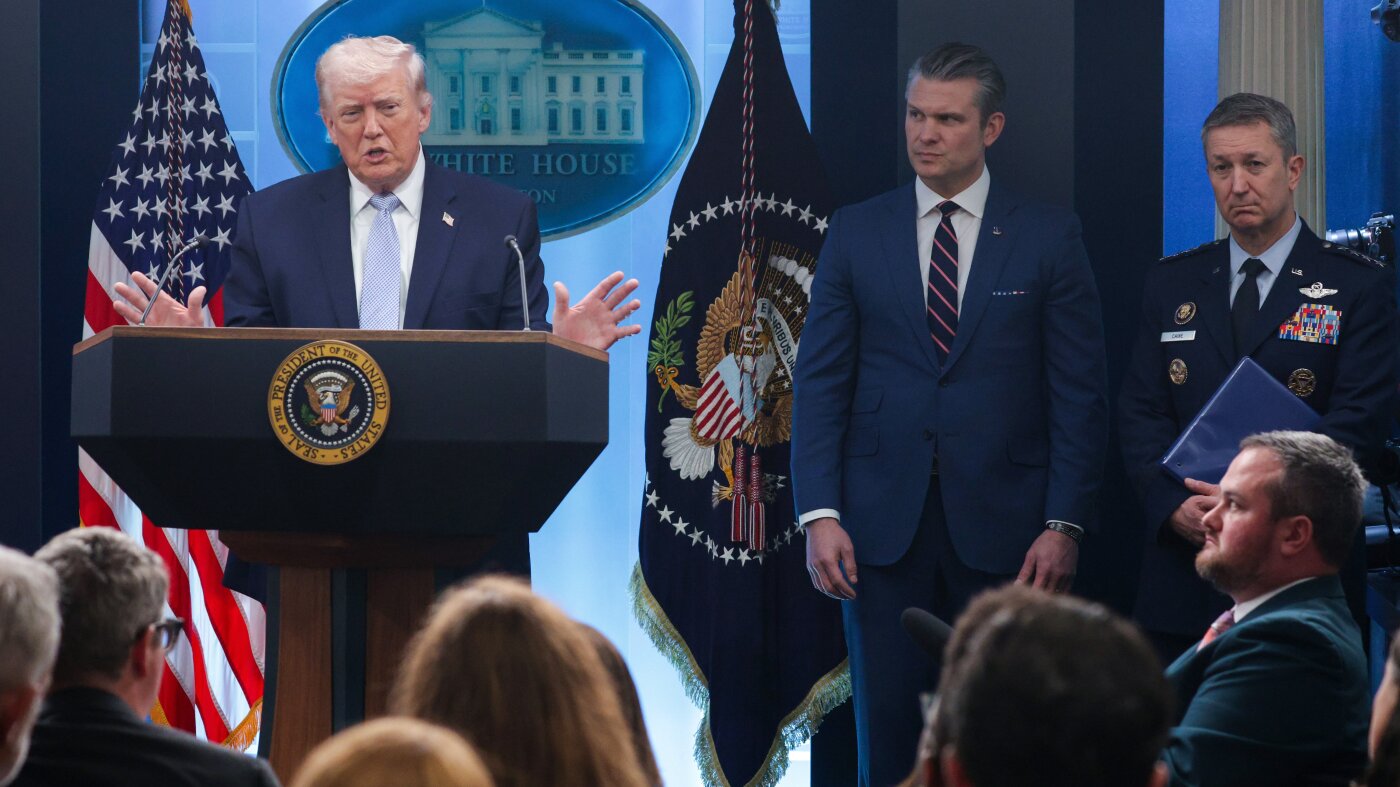
Trump reiterates threats to bomb Iran’s power plants and bridges

How a Family of 3 Lives on $25,000 in Corona, Queens

Trick Trick joined Waka Flocka onstage at ‘The Boys 4 Life Tour’ stop in Detroit – Detroit Metro Times

NFL Experts Continue to Link Former 49ers WR Back to San Francisco

What we learned in FC Dallas’ win vs DC United

Florida High School Football Rankings: Top 25 teams – Oct. 21

How old is Bo Nix? What to know about Oregon quarterback ahead of 2024 NFL Draft

Cleary's 21 help Le Moyne down Central Connecticut State 69-64 in OT

99th annual Pony Swim held in Virginia

Indiana Members Credit Union announced as new anchor tenant at Bottleworks District
Trump reiterates threats to bomb Iran’s power plants and bridges

Trump threatens Iranian infrastructure over Strait of Hormuz | BBC News

GOP races to pass ICE, Border Patrol funding bill as priorities pile up, divisions emerge
Jet fuel crisis: Rationing triggered at four airports in Italy

NASA’s Artemis II crew readies for Monday’s lunar flyby. Here’s what you need to know
-

 South-Carolina1 week ago
South Carolina vs TCU predictions for Elite Eight game in March Madness
-

 Atlanta, GA2 days ago
1 teenage girl killed, another injured in shooting at Piedmont Park, police say
-

 Vermont1 week ago
Skier dies after fall at Sugarbush Resort
-

 Movie Reviews4 days ago
Vaazha 2 first half review: Hashir anchors a lively, chaos-filled teen tale
-

 Politics1 week ago
Trump’s Ballroom Design Has Barely Been Scrutinized
-

 Atlanta, GA1 week ago
Fetishist ‘No Kings’ protester in mask drags ‘Trump’ and ‘JD Vance’ behind her wheelchair
-
 Entertainment5 days ago
Inside Ye’s first comeback show at SoFi Stadium
-

 Politics1 week ago
JD Vance says he was ‘obsessed’ with UFOs, believes aliens are actually ‘demons’