Maryland
Firefighting drones under development at University of Maryland


COLLEGE PARK, Md. (7News) — With wildfires growing more intense and destructive across the globe, a team of researchers at the University of Maryland is developing autonomous drone technology aimed at stopping fires before they spiral out of control.
Their work comes at a critical time. According to a recent United Nations report, extreme wildfires — those that spread faster, burn hotter, and cover larger areas — are on the rise. Experts warn that the likelihood of catastrophic fires could increase by 33% by 2050. Globally, these wildfires are responsible for a staggering 80% of all fire-related damages and are a major contributor to greenhouse gas emissions, with devastating effects on ecosystems.
In 2023 alone, Canada experienced 6,118 active wildfires, burning over 15 million hectares and forcing nearly 200,000 residents to evacuate, including 25,000 who fled their homes just in recent weeks. In the Western U.S., wildfire frequency has soared 400% since 1970, burning six times more land and lasting nearly five times longer.
SEE ALSO | Wildfire smoke: DC area could see hazy skies over the next few days
Given the growing scale of the problem, experts say traditional firefighting methods simply aren’t enough — That’s where the University of Maryland’s team is hoping to step in.
Led by graduate students and faculty from departments including Aerospace Engineering and Fire Protection Engineering, the group is designing autonomous drones capable of detecting and suppressing wildfires in their earliest stages. The technology is being developed as part of the XPRIZE Wildfire Competition, a 4-year, $11 million global competition focused on developing innovations that will help humanity safely coexist with wildfire, while preventing the most destructive blazes.
“The idea is to detect wildfires before people even know they’ve started,” said Fernando Raffan-Montoya, Assistant Professor in the Fire Protection Engineering department. “We’re aiming for a system that’s low-cost, easy to deploy, and fully autonomous.”
Their concept involves two types of drones: surveillance drones that monitor high-risk and remote areas, and suppression drones that respond immediately when a fire is detected. These drones will carry advanced payloads capable of being deployed from above a fire with — not just water, but potentially fire retardants or other suppression agents.
“Think of wildfire season — this could be permanently ‘on’ in a sense,” Raffan-Montoya added. “A network of drones always watching, always ready.”
SEE ALSO | University of Maryland’s HoloCamera simulates strokes to enhance medical training
The goal aligns with the XPRIZE Wildfire challenge, which tasks teams with developing autonomous solutions that can detect and assess wildfires in 10 minutes or less — a response time that’s four times faster than current best practices. Speed is critical in firefighting: the faster a fire is detected and understood, the more effectively it can be contained.
“They open up this new frontier of possibilities — of trying to detect and suppress wildfires before humans even know they’re there,” said PJ Collins, a Minnesota native and aerospace engineering graduate student who grew up dealing with hazardous smoke from Canadian wildfires.
The Maryland team stands out not only for its technological innovation but also f
or its interdisciplinary approach. Collaborators span across aerospace, fire science, environmental systems, and robotics, working together to build solutions to one of the planet’s most pressing environmental threats.
As wildfires increase in intensity, frequency, and unpredictability, researchers say this kind of innovation is no longer optional — it’s necessary.
“We need new, innovative tools to keep up with the increasing threats and mounting challenges posed by extreme wildfire events,” Raffan-Montoya emphasized.
With billions in damages, millions of acres lost, and lives at risk, this homegrown Maryland initiative could soon be a critical line of defense in the global fight against wildfires.



MARYLAND (WBFF) — Essex resident Breezy Ludwig says a daily $1.40 commute through the Fort McHenry Tunnel spiraled into a staggering $54,000 in tolls and fines — a debt she still can’t fully explain.
Ludwig’s case is not isolated. Across Maryland, drivers are reporting toll debt ballooning into the tens of thousands of dollars. Some dispute the accuracy of their E-ZPass charges or say they weren’t aware of them, while others say they simply can’t afford the high penalties.
Now, bipartisan lawmakers are stepping in with legislation aimed at giving the state more flexibility to reduce what some call “egregious” debt.
Ludwig said she first noticed duplicate toll charges in 2020, along with an unexpected switch to pay-by-plate and video toll rates of $4 and $6 per trip. As fines of $25 per unpaid toll piled up, she spent hours trying to resolve the issue through the E-ZPass call center.
Over time, the charges grew to what she described as a “paralyzing” $54,000. The Maryland Transportation Authority (MDTA) ultimately agreed to settle with her for $8,000.
“I kind of felt like I was losing it when this happened to me,” Ludwig said. “It balloons to this inflated number that’s terrifying and feels immobilizing.”
The MDTA confirmed that it settled with Ludwig and her husband to reduce their fines but said they can’t comment further on their case due to privacy concerns. Call center wait times have significantly decreased to about 30 seconds – much faster than they were during the COVID-19 pandemic and their transition to a new call center and system, according to MDTA.
Ludwig’s experience mirrors complaints from other drivers who say relatively small toll balances quickly snowball into overwhelming debt. Some have taken their concerns directly to lawmakers in Annapolis.
A bill sponsored by Republican Senator J.B. Jennings would allow MDTA to reduce debts even after they’ve been transferred to the Department of Budget and Management’s Central Collection Unit (CCU).
Jennings said constituents are often told that once debt is sent to CCU, it is out of MDTA’s control. His bill is intended to provide flexibility, not eliminate responsibility.
“You have to pay your toll. And you should pay some, you know, your interest, and somewhat of a fine,” Jennings said during a bill hearing. “But sometimes it just gets so egregious.”
Charges as high as $100,000
Jennings’ office regularly hears from constituents who owe $10,000 or more in E-ZPass debt, according to Rebecca Powell, Jennings’ communications director. And Ludwig’s case is not the most extreme story lawmakers have heard.
At recent hearings, Marylanders described debts that escalated dramatically:
Heather Gerry said she owes nearly $100,000.
Brett Wilson said $900 in tolls grew to $30,000 before he realized there was a problem.
Nursing student Shawniece Turner said she is “completely scared” to drive because she cannot renew her registration with $35,000 in outstanding fines and tolls.
“The tolls still must be paid, but the penalties should reflect the actual cost of collection, not trap people in a cycle of debt,” Powell said in a text message.
Democratic Del. Jen Terrasa, who cross-filed the bill, said errors and rapid notices can quickly compound.
“The notices come so fast and furious, and if your information is wrong in the first place, it can add up and move on, and you owe so much more than you ever would have owed in the first place.”
The legislation gained momentum this week after inquiries from Spotlight on Maryland, passing out of the Senate Judicial Proceedings Committee Tuesday and passing the full Senate on Thursday. Its future remains uncertain with just over a week left in the legislative session and no response from Gov. Wes Moore’s office on whether he would sign it.
Impact on state revenues
It’s unclear what impact the bill could have on the state’s revenues.
The MDTA told Spotlight it referred a little more than $43 million in video toll debt and approximately $158 million in civil penalty debt to CCU in the 2024 fiscal year.
“We’re not saying that much is going to be relieved, at all,” Jennings said. “It’s just giving them the ability, should a constituent go to them, or they work it out with a constituent.”
State analysts say the impact on revenue may be limited.
A Department of Legislative Services fiscal note found that while MDTA and CCU warned of potential revenue loss, the effect would likely be minimal because MDTA already has authority to recall delinquent accounts. The bill could instead streamline how debt is reduced.
CCU currently collects a 17% fee on outstanding debt, with a portion going to the state’s general fund.
In a statement, MDTA said any changes must balance relief with “maintaining fairness to the 95% of the population that pays their tolls.”
For drivers like Ludwig, that balance still feels out of reach.
“I mean any penalty – civil penalty – that is four times the original violation amount is meant to punish and to paralyze,” Ludwig said. “‘Predatory’ is the perfect word for it.”
Have a news tip? Contact Brooke Conrad at bjconrad@sbgtv.com or 443-578-2126, or contact the Spotlight team at SpotlightOnMaryland@sbgtv.com or 410-467-4670. Spotlight on Maryland is a joint venture by The Baltimore Sun, FOX45 News

ST. MARY’S COUNTY, Md. (7News) — An investigation is underway into a shooting at Myrtle Point Park in St. Mary’s County on Wednesday evening.
The sheriff’s office said multiple 911 calls were received around 6:53 p.m. alerting to shots fired. However, no injuries have been reported.
SEE ALSO | Man found dead after being run over by vehicle in Prince George’s County
Myrtle Point Park is a waterside park located in California, Maryland, with a beach, picnic area and trails. It remains closed Thursday while deputies continue to investigate.
BE THE FIRST TO COMMENT
If you have any information on the shooting, call 301-475-8008.


VICTOR JOECKS: Statewide Nevada primaries to watch this June

Video: Light icy mix, slick spots possible

Man arrested in New Jersey after missing woman’s body discovered in Georgia woods, GBI says

2026 El Santuario de Chimayó and Tomé Hill pilgrimages

North Carolina man to serve 15 years after having sex with Cumberland County 12-year-old

Florida High School Football Rankings: Top 25 teams – Oct. 21

How old is Bo Nix? What to know about Oregon quarterback ahead of 2024 NFL Draft

Cleary's 21 help Le Moyne down Central Connecticut State 69-64 in OT

99th annual Pony Swim held in Virginia

Indiana Members Credit Union announced as new anchor tenant at Bottleworks District

Video: Trump Struck Iran. Now Farmers Are Paying the Price.

What B-52 bombers bring to Iran fight — and what it means for the war now

Podcast: Hungary elects: what is at stake and who is likely to win?
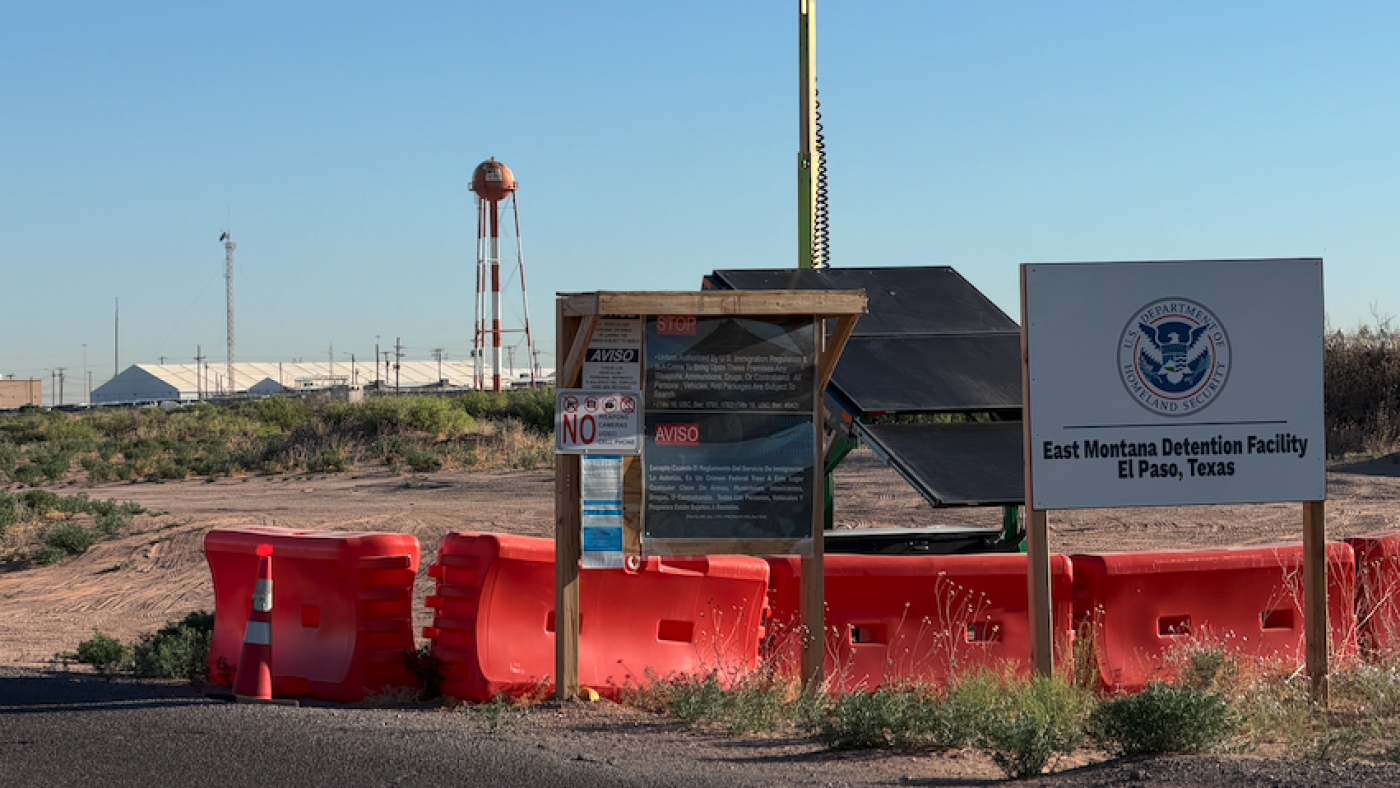
ICE detention deaths are on a record pace. One Texas facility bears the brunt

GOP rails against ‘s— sandwich’ deal as all eyes turn to House to end DHS shutdown
-

 South-Carolina5 days ago
South Carolina vs TCU predictions for Elite Eight game in March Madness
-

 Culture1 week ago
Wil Wheaton Discusses ‘Stand By Me’ and Narrating ‘The Body’ Audiobook
-

 Miami, FL1 week ago
Jannik Sinner’s Girlfriend Laila Hasanovic Stuns in Ab-Revealing Post Amid Miami Open
-

 Culture1 week ago
What Happens When We Die? This Wallace Stevens Poem Has Thoughts.
-

 Minneapolis, MN1 week ago
Boy who shielded classmate during school shooting receives Medal of Honor
-

 Vermont5 days ago
Skier dies after fall at Sugarbush Resort
-

 Education1 week ago
Video: Transgender Athletes Barred From Women’s Olympic Events
-

 Politics5 days ago
Trump’s Ballroom Design Has Barely Been Scrutinized